How to Build and Maintain a Home First Aid Kit
A guide to Planning the Kit and Inventory, Packing Wound Care and Essential Tools, Adding Medicines, Guidance, and Personal Needs, Storing Kits for Real Access, Checking, Restocking, and Disposing Safely
A first aid kit is useful only when its supplies are appropriate, sealed, accessible to authorized caregivers, and supported by current instructions and training. Use these 24 steps in our Health collection to build a household-specific kit and maintain it, while calling emergency services for serious illness or injury rather than treating the kit as a substitute for professional care.
How do you build and Maintain a Home First Aid Kit?
 Howcompass | How to Build and Maintain a Home First Aid Kit
Planning the Kit and Inventory
HowcompassAssess who uses the kit
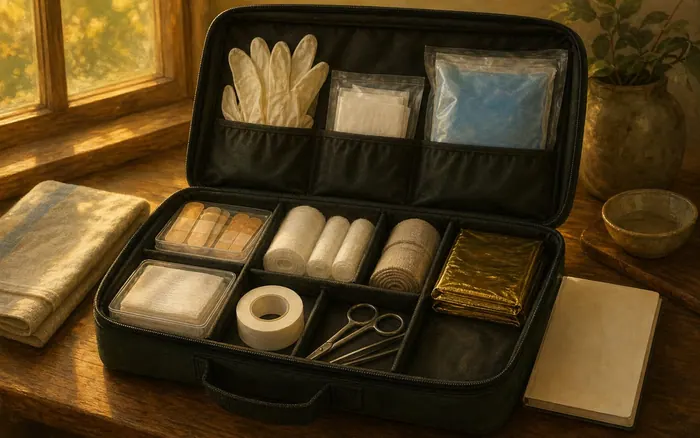
Assess who will use the kit and which minor injuries it should support. Consider household size, children, older adults, allergies, chronic conditions, accessibility needs, common cooking or workshop activities, and whether pets require a separate kit, then identify who can safely access medicines and sharp tools. Write down the intended home, vehicle, work, or travel setting instead of buying a generic assortment without a purpose, and plan professional emergency care and training alongside the supplies.
 Howcompass
Choose a durable case and storage spot
Choose a durable container and a consistent primary storage location. Use a case with secure closures and enough compartments to keep sealed dressings, tools, personal items, and instructions separate, then check that authorized adults can open and carry it without searching through unrelated household clutter. Select a cool, dry location appropriate for the contents and out of reach of unsupervised children and pets, rather than automatically using a damp bathroom cabinet or a vehicle with temperature extremes. Cupboard and shelving ideas sit under home and garden guides.
 Howcompass
Build a checklist from a trusted baseline
Build a checklist from a recognized baseline and adjust it to the household. The American Red Cross family first aid kit list provides suggested items and quantities for a family of four, including dressings, bandages, tape, gloves, a breathing barrier, tools, and instructions. Use that list as a starting point rather than a universal prescription, scale quantities for your household, and add clinician-recommended items without assuming more products always make a safer kit. Judge each suggested item with think critically and make decisions.
 Howcompass
Separate shared supplies from personal medicines
Separate shared supplies from personal medicines and emergency instructions. Keep prescription products, epinephrine, glucose, or other person-specific items in their original packaging and clearly assigned to the intended person according to clinician directions, while placing shared bandages and tools in their own compartments. Do not combine loose tablets in an unmarked container or make one person's prescription available for general household use, and keep sensitive medical details private while ensuring an authorized caregiver can find essential emergency information. Caregivers handling several medicines need care for an ageing parent routines.
 Howcompass
Record items, dates, and replacement owners
Create an inventory showing each item, quantity, location, expiration date, and replacement owner. Record sealed packet counts, tool condition, medicine storage requirements, and the date of the last review, then place a concise copy where it can be read before the kit is unpacked. Our home inventory guide offers a useful documentation approach, but this medical checklist should avoid unnecessary diagnoses or other private details and should be updated whenever an item is used, moved, or replaced.
Packing Wound Care and Essential Tools
 Howcompass
Pack bandages and absorbent dressings
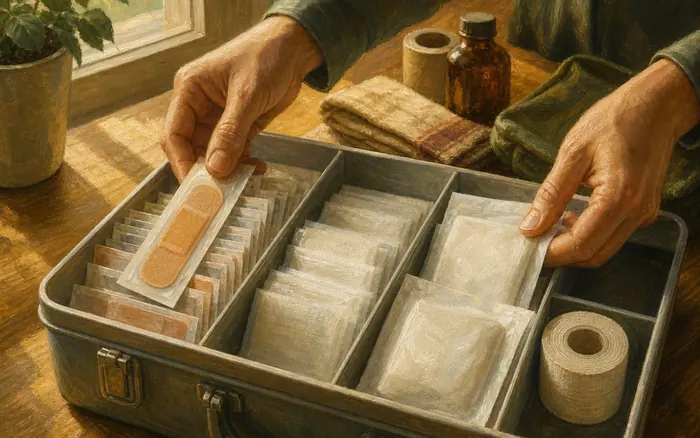
Pack assorted adhesive bandages and absorbent compress dressings in sealed packaging. Include sizes suitable for small cuts and larger areas, check that wrappers are intact, and store them where they remain clean and dry rather than loose in a pocket. The Red Cross baseline list suggests 25 assorted adhesive bandages and two 5-by-9-inch absorbent compress dressings for a family of four; adjust quantities to your household and remember that serious bleeding requires emergency assistance, not just additional dressings. Clean and dress the wound itself with our minor cut or graze steps.
 Howcompass
Add gauze, bandages, and adhesive tape
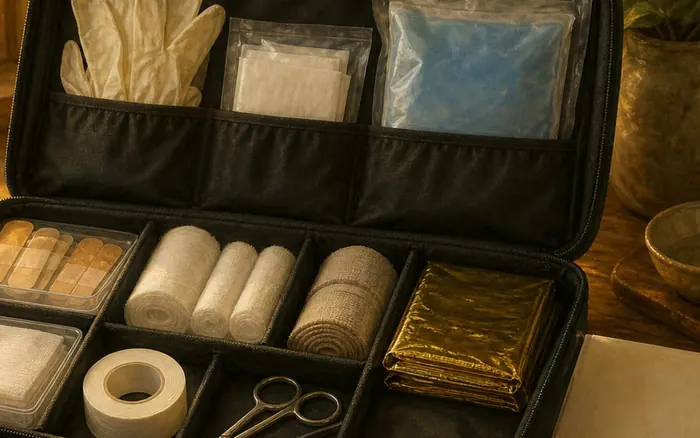
Add sterile gauze pads, roller bandages, triangular bandages, and adhesive cloth tape. Keep different gauze sizes together with the rolls and tape needed to secure a dressing, and follow current first aid instructions rather than improvising tight wrapping or using a bandage to restrict circulation. The Red Cross kit checklist provides family-of-four quantities for gauze pads, roller and triangular bandages, and tape, so use those figures to check your inventory and replace any opened or contaminated sterile items. More dressing techniques are filed under health and safety guides.
 Howcompass
Include gloves and a breathing barrier
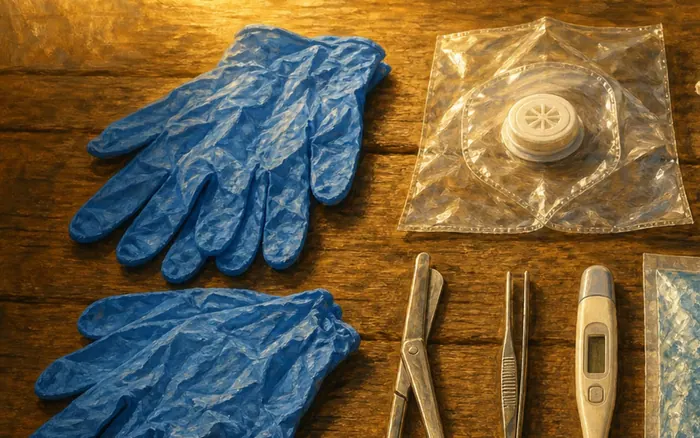
Include nonlatex gloves and a breathing barrier with a one-way valve. Pack enough glove pairs for more than one caregiver or incident, choose sizes that authorized users can put on correctly, and keep the barrier sealed with its instructions. The Red Cross kit guidance includes both items, but a barrier is not a substitute for CPR and AED training, and nobody should attempt rescue breathing or other skills beyond their training when emergency dispatchers can provide instructions. A home blood pressure log shows which household risks to plan for.
 Howcompass
Choose safe, usable tools
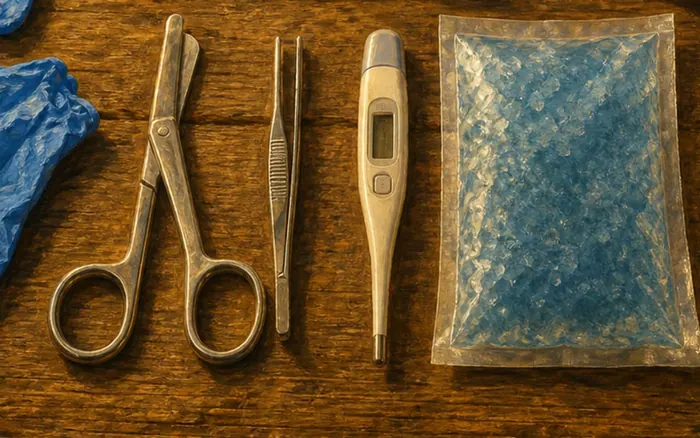
Add practical tools such as scissors, tweezers, and a non-mercury, non-glass thermometer. Select tools that are easy to clean and store safely, keep points and cutting edges protected from children, and follow the manufacturer's cleaning and use instructions rather than placing used tools back among sterile supplies. The Red Cross baseline list includes tweezers and a non-mercury/non-glass thermometer, while scissors are common in complete kits; add only tools your household understands and can access responsibly. Treat sharp tools with the care described for carving a pumpkin lantern.
 Howcompass
Pack a cold compress and emergency blanket
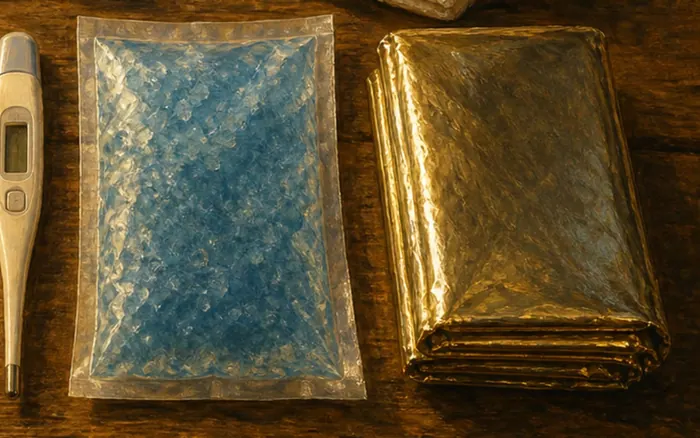
Pack an instant cold compress and an emergency blanket with their instructions. Keep the compress sealed so it will activate when needed, inspect the blanket package for tears, and store both away from heat and sharp objects that could damage them. Follow current first aid guidance for cold application and protection from the elements rather than placing extreme cold directly on skin or using a blanket as a treatment for an unexplained condition, and replace a used or damaged single-use item during the next inventory review.
Adding Medicines, Guidance, and Personal Needs
 Howcompass
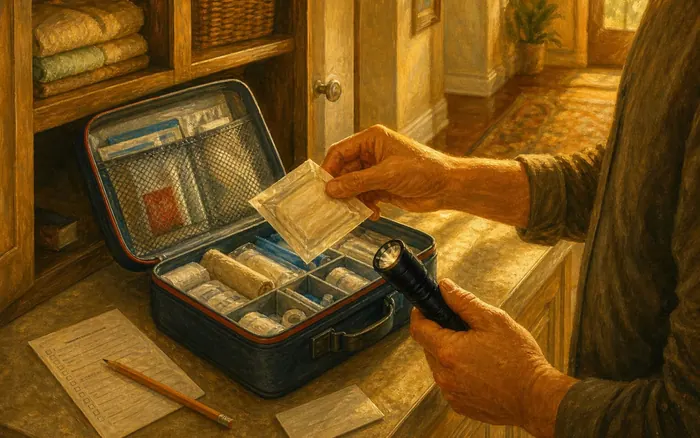
Check ingredients before adding antiseptics
Select antiseptic wipes and optional ointments after checking ingredients, age limits, and allergies. The Red Cross family list includes antiseptic wipes, antibiotic ointment, and hydrocortisone packets, but these products are not suitable for every person or every wound. Ask a pharmacist or clinician when you are uncertain, keep products in original labeled packets, and never apply a household medicine to someone simply because it was included in a generic kit checklist. The label habit from compare packaged food labels transfers to medicine packets.
 Howcompass
Review over-the-counter medicines with a pharmacist
Review optional over-the-counter medicines with a pharmacist or clinician before adding them. Discuss the intended user, allergies, other medicines, pregnancy, age, and relevant conditions, and keep any selected product in its original packaging with dosing instructions and expiration information. A Red Cross kit list may include aspirin, but that does not make aspirin or any other medicine appropriate for everyone; do not share prescription drugs, improvise doses, or delay emergency care because an over-the-counter product is available. First-time flat dwellers make this choice during living independently setup.
 Howcompass
Add clinician-directed personal emergency items
Add clinician-directed personal items for allergies, diabetes, chronic conditions, or accessibility needs. Ready.gov home safety guidance recommends customizing the kit with a doctor or pharmacist and describes examples such as an epinephrine injector, glucose products, emergency glucagon, or naloxone for households where they are appropriate. Keep each person's current prescription and action plan distinct, ensure authorized caregivers know the plan within their training, and never borrow another person's emergency medicine or store it contrary to its label. File each action plan with your family emergency communication plan copies.
 15Howcompass
Print emergency numbers and poison control details
Include a current first aid guide, verified emergency numbers, and poison-center information. Add local emergency and clinician contacts to our family communication plan, keep the product or substance container available when seeking advice, and make the information readable without a phone password or internet connection. In the United States, HRSA Poison Help is 1-800-222-1222 and connects callers to a local poison center; call immediately rather than waiting for symptoms, and use the appropriate poison-service number elsewhere.
 Howcompass
Arrange first aid and CPR training
Arrange practical first aid, CPR, and AED training for household members and caregivers. Choose a reputable course appropriate to adults, children, or infants in your care, practice the skills covered by the instructor, and record renewal dates alongside the kit inventory. Ready.gov home safety guidance recommends taking a CPR and first aid class, because knowing where the kit is and how to respond to a life-threatening emergency is as important as owning supplies; the kit itself does not certify or train a user. Rehearse both skills during a home fire escape plan practice.
Storing Kits for Real Access
 Howcompass
Store the kit away from heat and damp
Store the main kit in a cool, dry, secure place that authorized adults can reach quickly. Avoid damp bathrooms, direct sunlight, and locations that expose medicines or adhesive products to damaging heat or moisture, and follow any stricter storage instructions on individual packages. The FDA medicine-storage guidance explains that improper storage, including a damp bathroom cabinet, can reduce effectiveness even before the printed expiration date, so balance child-resistant security with reliable caregiver access. Skip the humid bathroom cabinet, as organize a small kitchen advice suggests.
 Howcompass
Prepare a smaller kit for travel
Prepare a smaller portable kit for the vehicle, workplace, or activities away from home. Adapt its contents and quantities to the trip and local conditions, and use the Red Cross kit guidance, which recommends a kit at home and in the car and knowing where one is available elsewhere. Do not leave temperature-sensitive medicines in a hot or freezing vehicle, duplicate prescriptions without a safe plan, or assume the portable kit covers every item in the main household inventory.
 Howcompass
Keep sterile supplies sealed and separate
Protect clean supplies from moisture, contamination, and accidental opening. Keep sterile dressings and medication packets sealed, close the case after use, separate clean tools from items awaiting cleaning or disposal, and avoid transferring products into unlabeled bags or containers. Check that a leaking wipe, torn wrapper, or damaged case cannot contaminate neighboring supplies, and remove compromised items from service rather than relying on an expiration date alone to decide whether they are usable. Seal packets the way you would toiletries in a carry-on bag.
 20Howcompass
Show everyone where the kit lives
Orient household members and authorized caregivers to the kit's location and boundaries. Show them how to open the case, find the guide and contact card, identify personal versus shared items, and call for professional help, while keeping medicines and sharp tools away from unsupervised children. Review the arrangements with babysitters, relatives, and new caregivers as appropriate, and never make the storage location so secret or difficult to open that a trained adult cannot reach essential supplies during an emergency. Assign roles as clearly as in happy family routines.
Checking, Restocking, and Disposing Safely
 Howcompass
Inspect the kit twice a year
Inspect the kit regularly and after every use with a recurring calendar reminder. Choose a practical twice-yearly household review, add another check after travel, an incident, or a change in storage conditions, and assign a named person to complete it rather than assuming someone else will. The Red Cross maintenance guidance says to check kits regularly and replace used or out-of-date contents, so record each inspection even when no replacement is needed.
 Howcompass
Check dates, packaging, and batteries
Check expiration dates, package integrity, tool condition, and any battery-powered components. Compare every medicine and sterile product with the inventory, remove expired, damaged, leaking, discolored, or unidentifiable items from use, and follow device instructions for thermometer batteries or other maintenance. The FDA expired-medicine guidance warns that expired drugs can be risky and may not work as intended, so do not keep an outdated product as a backup merely because the package still looks full. Photograph the inventory page and keep it in your digital photo library.
 Howcompass
Restock to your customized quantities
Restock used and missing supplies to the quantities on your customized checklist. Replace single-use packets, gloves, dressings, cold compresses, and other consumed items promptly, then update the expiration and location fields in the inventory. Check that new products meet the same allergy, age, material, and storage requirements as the items they replace, and avoid silently changing brands or formulations when a household member relies on a particular clinician-directed product. Set aside restock money inside your monthly savings plan.
 Howcompass
Dispose of medicines through take-back
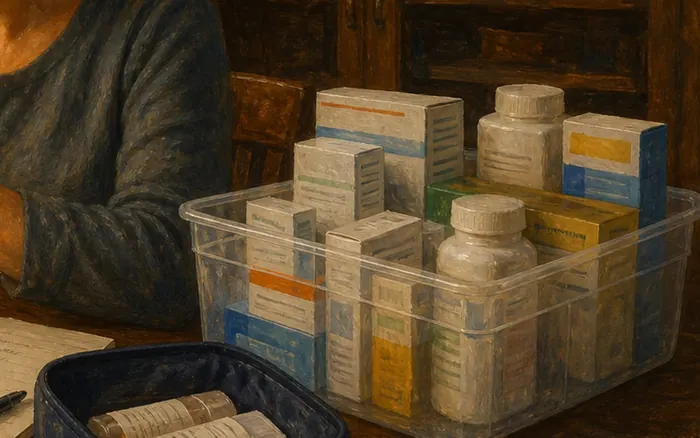
Dispose of unwanted medicines through an authorized take-back or mail-back option whenever available. Follow the product's disposal instructions and the FDA medicine-disposal guide, which prioritizes drug take-back locations and prepaid mail-back envelopes and provides further instructions when those are unavailable. Do not flush a medicine unless current FDA instructions specifically direct it for that product and take-back is not readily available, and never leave loose expired medicines in a shared kit or ordinary trash where children or pets can find them. Household disposal pages are collected under home and garden guides.
 Howcompass
Rethink the kit after household changes
Review the entire kit after household, health, activity, or caregiving changes. Update quantities, personal action plans, emergency contacts, accessibility arrangements, and portable kits, then schedule refresher training when skills or course credentials need renewal. Keep separate animal supplies in our pet emergency kit guide rather than improvising with human medicines, and finish each review by confirming that the main kit is back in its designated location and the next inspection remains on the calendar.
Frequently Asked Questions
Question: What should a basic home first aid kit contain?
The American Red Cross publishes a suggested family-of-four list covering adhesive and compress dressings, gauze, bandage rolls, tape, antiseptic and optional ointment packets, nonlatex gloves, a breathing barrier, a cold compress, an emergency blanket, a thermometer, tweezers, triangular bandages, and first aid instructions. Use it as a baseline, then adapt quantities and personal items with a clinician or pharmacist rather than assuming every listed medicine suits every person.
Question: How often should I check a first aid kit?
Check it regularly and after every use. A recurring twice-yearly household review is a practical reminder, but travel, an incident, damaged storage conditions, or a change in personal needs should trigger an earlier check. Replace used, expired, damaged, or unidentifiable contents and record the inspection.
Question: Is a bathroom cabinet or car a good place to store the kit?
Not automatically. FDA warns that damp bathroom storage can harm some medicines, and vehicles can expose supplies to heat or freezing conditions. Choose a cool, dry, secure location accessible to authorized adults, follow each product's storage instructions, and adapt portable kits so temperature-sensitive medicines are not left in unsuitable conditions.
Question: When should I call Poison Help instead of searching the kit?
In the United States, call Poison Help at 1-800-222-1222 immediately when poisoning is possible; HRSA says not to wait for symptoms. Keep the product container nearby and provide the person's details and exposure information. Use the appropriate local poison service elsewhere, and call emergency services for a life-threatening situation rather than delaying while looking for a kit remedy.
Tips
- Keep the inventory and first aid guide in the same accessible compartment so a caregiver can understand the kit before unpacking it.
- Use transparent internal pouches for categories such as dressings, tools, and personal items, but keep every medicine in its original labeled packaging.
- Pair the kit review with another recurring household safety check and record replacements immediately rather than relying on memory.
Warnings
- A first aid kit does not replace emergency services, a clinician, poison-center advice, or practical first aid/CPR/AED training; call the appropriate emergency number for a serious or worsening condition.
- Do not give aspirin, ointments, antihistamines, or any other medicine solely because it appears on a generic kit list—check age, allergies, interactions, and clinician or pharmacist guidance, and never share prescriptions.
- Keep medicines and sharp tools secure from children and pets, follow storage labels, and use authorized take-back options for unwanted medicines rather than loose trash disposal or routine flushing.
Things You'll Need
- A durable, organized first aid case and a consistent secure storage location
- A household checklist and inventory with quantities, expirations, and owners
- Sealed bandages, compresses, sterile gauze, bandage rolls, and medical tape
- Nonlatex gloves, a one-way breathing barrier, safe tools, and a thermometer
- Clinician-approved personal items, a first aid guide, and verified emergency contacts
- A recurring inspection calendar and current medicine take-back information
Related Howcompass Guides




References (5)
- Make a First Aid Kit: What to IncludeAmerican Red Cross
- Home SafetyReady.gov
- Don't Be Tempted to Use Expired MedicinesU.S. Food and Drug Administration
- Disposal of Unused Medicines: What You Should KnowU.S. Food and Drug Administration
- What You Can DoPoison Help, Health Resources and Services Administration
Sources are listed so you can read the underlying guidance yourself. Our editorial policy explains how guides are reviewed.
Did this article help you?
0 readers found this helpful — add your vote.
No comments yet — be the first to share your results.