How to Make a Home Fire Escape Plan and Practice Two Ways Out
A guide to Preparing the Household and Alarm Coverage, Mapping and Clearing Two Ways Out, Assigning Roles and Emergency Actions, Practicing Safe Drills, Handling Special Situations and Maintenance
A home fire-escape plan works only when every occupant can hear or receive the alarm, use the planned exits, and reach the same outdoor meeting place without returning for belongings. Use these 24 steps in our Family Life collection with your building rules, local fire-service advice, and each household member's abilities, and ask the fire department or building manager for specialist help where a standard route is not safe or accessible.
How do you make a Home Fire Escape Plan and Practice Two Ways Out?
 Howcompass | How to Make a Home Fire Escape Plan and Practice Two Ways Out
Preparing the Household and Alarm Coverage
HowcompassList everyone who needs help escaping
List everyone who lives in or regularly stays at the home and what help they may need. Include children, older adults, disabled people, visitors, anyone who may not wake or hear an alarm, people who need mobility or communication support, and pets whose presence could affect a safe exit. Assign responsibilities without assuming a child or a single caregiver will always be present, and connect the arrangements to our family emergency communication plan so contact and backup information remains current.
 Howcompass
Walk every room and exit together
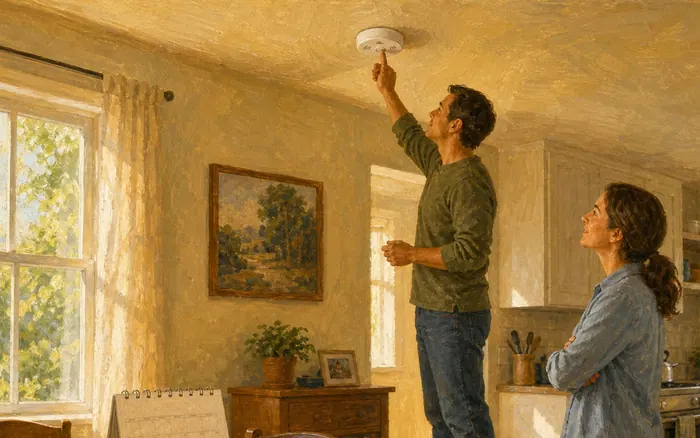
Walk through every level, room, sleeping area, and likely exit with the household. Look at the actual doors, windows, stairs, hallways, balconies, security features, and outdoor obstacles rather than drawing an idealized layout from memory, and note which routes work in darkness or ordinary bad weather. Do not open a secured area or climb through an upper window merely to inspect it; ask the property manager or a qualified professional about exits that appear blocked, damaged, or unsafe. Our family preparedness guides all start from the same walk-through, because memory is unreliable about doors and stairs.
 Howcompass
Test every smoke alarm on schedule
Test smoke alarms according to their instructions and confirm that occupants can respond to the sound or alert. Use the test button and any approved interconnected-alarm function, keep the manufacturer's maintenance schedule, and replace batteries or alarms as directed rather than disabling a nuisance alarm. The U.S. Fire Administration older-adult fire-safety guide recommends monthly testing and replacement after ten years or sooner if an alarm fails, while local rules and the device instructions may require additional action. Alarm testing belongs on the same list as the other home maintenance jobs we cover, since a forgotten test is the usual reason a dead battery survives.
 Howcompass
Record alarm locations and service dates
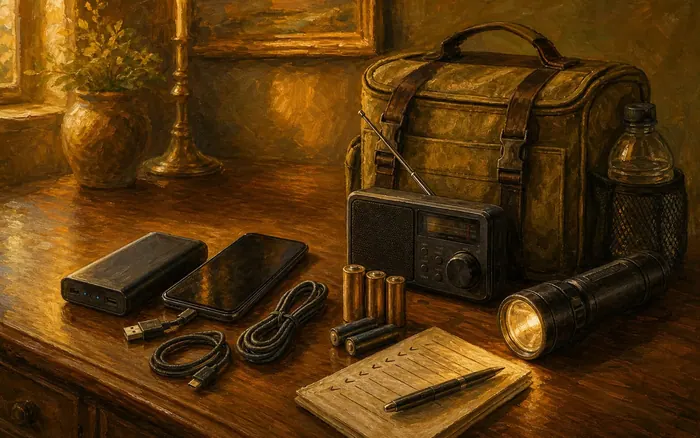
Mark alarm locations and maintenance dates on the household plan. Record each sleeping-room, sleeping-area, level, basement, and other required alarm together with its test and replacement information, and note any visual, vibrating, or low-frequency notification device used by an occupant. Keep the log simple enough to update after every test, and contact the building manager or a qualified installer when coverage, interconnection, or audibility is uncertain instead of assuming one corridor alarm protects every room. When coverage depends on someone else acting, an email that gets a reply is worth more than a corridor conversation with the building manager.
 Howcompass
Store emergency numbers and the address
Save the local fire-emergency number, full address, and building instructions in an accessible form. Make sure adults and appropriate older children can state the address and contact emergency services from outside, and include landlord, building-manager, and accessibility-support contacts for nonemergency route problems. Use verified numbers for your location rather than assuming 911 works everywhere, and keep emergency contacts separate from routine service requests so a blocked exit or failed alarm receives the right response. Our phone refresh guide covers the lock-screen and storage basics that let a frightened person dial in seconds rather than unlocking a full screen of apps.
Mapping and Clearing Two Ways Out
 7Howcompass
Draw a floor plan of every level
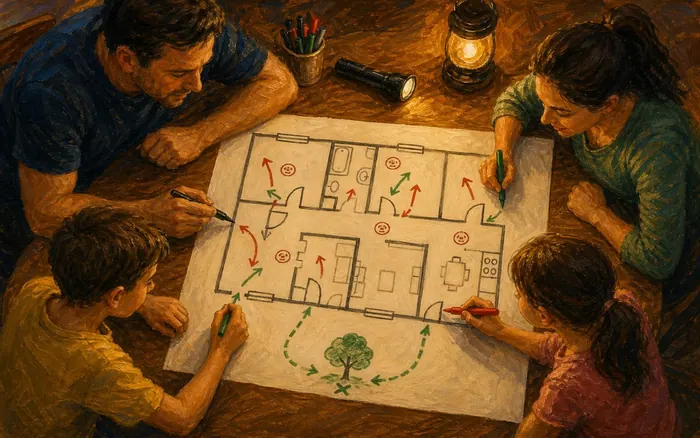
Draw a simple floor plan showing every level, room, door, window, and smoke alarm. Use the actual walk-through to mark sleeping areas, stairs, and outdoor access, then identify two ways out of every room where possible so one route can be used if fire or smoke blocks the other. The NFPA home escape-planning guidance recommends drawing the plan and marking two exits, including doors and windows, and offers an escape grid for households that want a template. Shoot each room as you go, using the framing advice in our phone photography guide, so you can redraw the layout later without returning.
 Howcompass
Mark the primary route from each room
Mark the primary route from each room to the safest available outdoor exit. Follow the path an occupant would actually take through halls and stairs, check that it does not depend on a locked interior space or another person's routine, and use a consistent arrow or color alongside text or symbols so the plan remains understandable without color alone. Include an accessible alternative for anyone who cannot use the main stairs, and do not route people through a garage, balcony, or other area that could become more hazardous without professional confirmation. Our room-by-room childproofing guide uses the same sweep and is worth borrowing even in a house with no small children, because it catalogs what blocks a path.
 Howcompass
Verify a usable second exit per room
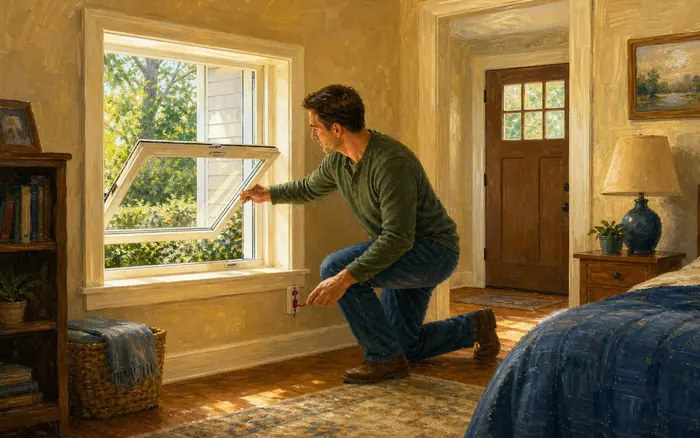
Identify and inspect a usable secondary exit wherever the building allows one. Check that a second door or appropriate window can open easily, that security bars have a working emergency release, and that the route outside does not end at a dangerous drop, locked gate, or inaccessible surface. The NFPA escape-route guidance says to make sure doors and windows are not blocked and open easily; obtain qualified help for a barred, painted-shut, or damaged exit instead of forcing it during an emergency plan review. Painted-shut frames and stiff fittings are ordinary repairs, and our home repair guides treat them as fixable rather than something to force in an emergency.
 Howcompass
Clear obstacles from every escape route
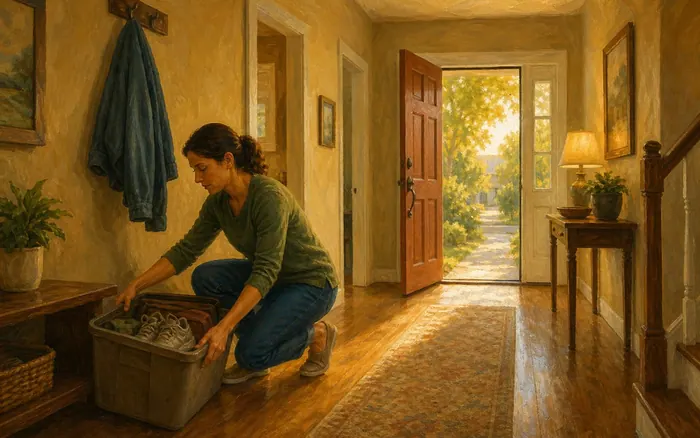
Clear every hallway, staircase, doorway, window, and outdoor path used by the plan. Move boxes, shoes, furniture, toys, seasonal decorations, and other obstacles, then check that doors and windows still operate after the area is rearranged. The U.S. Fire Administration home escape-plan guidance emphasizes keeping exits unblocked, so include the route beyond the doorway and avoid storing a go-bag, mobility aid, or pet carrier where it becomes a new tripping hazard. Seasonal dressing is the usual culprit, so our winter decoration guide is worth reading for the way it keeps garlands and candles away from traffic paths.
 Howcompass
Review upper-floor exits with professionals
Review upper-floor routes and escape equipment with appropriate professional guidance. Learn the building's protected stairs and approved alternatives, and if you choose a home escape ladder, select a suitable listed product for the window and follow its storage, inspection, and training instructions. Never practice climbing from an upper storey during an ordinary family drill or wait for someone to assemble unfamiliar equipment during a fire; ask the local fire service for advice when occupants cannot safely use the available exits. The same judgement about ladders, height, and when to call someone in is worked through in our guide to hanging shelves securely.
Assigning Roles and Emergency Actions
 Howcompass
Assign a helper and a backup
Assign a primary helper and a backup for anyone who cannot evacuate alone. Agree on how to wake, alert, guide, or physically assist the person within each helper's training and ability, and keep necessary glasses, hearing devices, medication alerts, or mobility equipment accessible without making their retrieval a reason to delay an urgent exit. The NFPA older-adult safety guidance recommends designated and backup helpers, so revise the plan whenever an assigned person moves away or the occupant's needs change. Where an occupant needs hands-on assistance, our guide to caring for an ageing parent covers the practical reality of lifting, guiding, and waking someone quickly.
 Howcompass
Plan for pets without delaying escape
Include pets in the route and role assignments without delaying human escape. Decide who can safely carry or lead each animal if it is immediately available, keep carriers or leads in their normal accessible locations, and practice calm handling during ordinary conditions. Our pet emergency go-bag guide covers supplies and transport, but during a fire nobody should search through the home, return inside, or let a frightened animal block a safe exit; tell firefighters if an animal is missing.
 Howcompass
Teach the response to smoke and heat
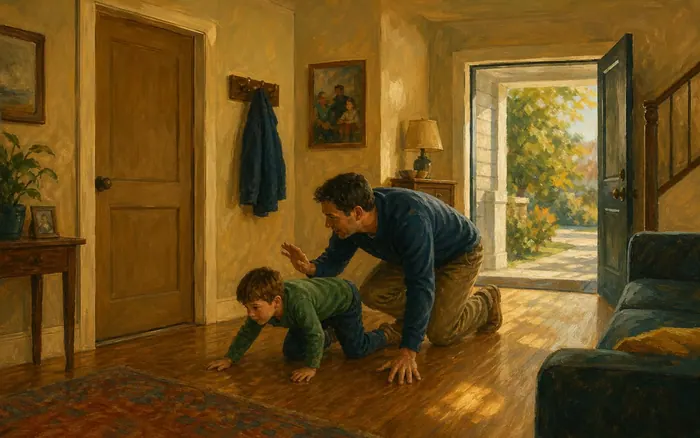
Teach the planned response to smoke, closed doors, and blocked routes. Leave immediately by the safer available exit, use the second way when smoke or heat makes the first unsafe, get low if you must pass through smoke, and close doors behind you when that can be done without delaying escape. The U.S. Fire Administration fire-action guide advises leaving a door closed if heat is felt and using the second exit; never open a hot door, create a real smoke exercise, or practice any action that exposes the household to danger. After everyone is out, treat the grazes a hurried exit causes with our advice on caring for a minor cut, and leave anything more serious to the crew.
 Howcompass
Pick one fixed outdoor meeting place
Choose a permanent outdoor meeting place a safe distance from the home. Use a mailbox, light pole, tree, neighbor's house, or another recognizable location where firefighters can find the household and occupants are not standing in a driveway or other response path, then mark it on the floor plan. The NFPA meeting-place guidance recommends a safe-distance location in front of the home, and everyone should know to go there directly rather than waiting at different doors or vehicles. Our family routine guides make the same argument for a single agreed point, because two people waiting at two doors means someone walks back inside.
 Howcompass
Call from outside and stay outside
Plan to call the fire department from outside and never return inside. Assign an adult or capable person to call from a charged phone or a safe neighbor's location, provide the address and information about anyone still inside, and follow the dispatcher's instructions. The NFPA escape guidance says “once you're out, stay out,” so nobody should re-enter for people, pets, documents, medication, or valuables; leave rescue to trained firefighters with appropriate equipment. A flat battery or a locked handset is the usual failure, and our mobile phone guides cover keeping both under control.
Practicing Safe Drills
 Howcompass
Walk the routes before timing anything
Walk every primary route during daylight before attempting a timed drill. Let each occupant show how they would leave their room, open the required exits, and reach the meeting place while an observer watches for confusion, inaccessible hardware, poor lighting, or obstacles. Do not run, push, use real smoke or flames, or turn the exercise into a race; the goal is a repeatable safe response, not the fastest possible time. Our guide to starting running and strength training makes the progressive case for the same order: correct technique at walking pace before any speed is added.
 18Howcompass
Drill the whole plan twice a year
Practice the complete plan with the household at least twice a year. Use the alarm's test function to start when appropriate, evacuate by the planned route, assemble at the meeting place, and account for everyone without calling emergency services as a test. The NFPA educational message reference recommends daytime and nighttime drills at least twice yearly, and children should master the plan before a sleeping-time exercise and know that a drill is intended to prepare rather than frighten them. Twice-yearly drills stick far better when they hang off an existing family routine, such as the clock change that already shifts your evenings.
 19Howcompass
Practice alternates only where safe
Practice alternate routes and assistance arrangements only where they are safe. Repeat the drill using a different safe exit when the primary path is imagined to be blocked, rotate primary and backup helpers, and check that everyone can receive the alert and reach the meeting place with their actual mobility or communication needs. Keep upper-floor ladder deployment, entering smoke, and other hazardous actions outside ordinary drills, and obtain professional training for anything that cannot be practiced safely in the home. Where hearing, mobility, or dexterity is the limiting factor, our Health guides cover adapting the task to the person instead of assuming the standard route works.
 Howcompass
Review each drill and name the fixes
Review the drill immediately and record specific problems and owners. Ask which alarm or instruction was unclear, which route slowed someone down, whether a door or window stuck, and whether anyone reached the wrong meeting place, then assign a practical correction and a date to retest it. The NFPA drill guidance recommends evaluating and improving the plan, so do not treat a completed walkthrough as proof that the next real evacuation will work. A plain weekly review journal is a good template for that record: what happened, who owns the correction, and when it gets retested.
 21Howcompass
Rerun the plan after any household change
Update the plan after moves, renovations, new occupants, or changed abilities. Recheck the floor plan, alarms, helpers, secondary exits, meeting place, and contact details whenever furniture, locks, security bars, sleeping arrangements, or building rules change, and repeat the relevant walkthrough before relying on the revised route. Replace an outdated copy rather than leaving different versions in different rooms, and explain the current plan to everyone rather than assuming they will notice the changes. If the plan lives on a wall, the mounting method in our framing and mounting guide keeps a legible copy fixed where people actually look.
Handling Special Situations and Maintenance
 Howcompass
Learn the high-rise evacuation rules
Learn the specific alarm, stair, evacuation, and sheltering instructions for an apartment or high-rise building. Identify all available exit stairs, keep them clear, and follow building management and fire-department directions during an alarm; the U.S. Fire Administration high-rise escape guidance says to use stairs and not elevators unless directed by the fire department, while the NFPA notes that some high-rise situations may call for defending in place. Review the building plan in advance rather than deciding from a hallway which instruction applies. Interconnected alarms and phone alerts depend on coverage across floors, which our whole-home network guide explains well enough to test.
 Howcompass
Prepare documents without delaying escape
Keep essential documents and emergency supplies accessible without making them part of the immediate fire response. Store protected copies and ordinary evacuation supplies in their normal place, and never delay leaving a burning home to collect a bag, keys, medication, records, or valuables. Our home inventory guide can help with recovery documentation created in advance, while the fire plan itself remains focused on getting people out and letting responders know what or who may remain inside.
 Howcompass
Brief overnight guests the moment they arrive
Orient overnight guests and temporary occupants to the current plan on arrival. Show them the alarm signal, the two nearest safe exits, any accessibility arrangements, the full address, and the outdoor meeting place, and adjust helper assignments when children, older adults, or unfamiliar guests are present. Include short-term renters and caregivers as appropriate, and never assume that a visitor will understand a drawing posted in another room during smoke or darkness. Making the arrival speech a standing family routine removes the awkwardness and means nobody has to improvise it while carrying suitcases.
 Howcompass
Put reviews on a shared calendar
Schedule recurring alarm, route, and plan reviews with named household owners. Put monthly alarm checks and twice-yearly drills on a shared calendar, track replacement dates and building-management requests, and assign someone to confirm that corrections actually happened. Review the plan after every drill and significant household change, using the NFPA escape-planning checklist as a final check for two exits, clear routes, assistance arrangements, and a meeting place rather than treating the document as a one-time project. Named owners and review dates are the whole mechanism of a weekly one-to-one, and the household version works for exactly the same reason.
Frequently Asked Questions
Question: How often should we practice a home fire-escape plan?
NFPA guidance recommends practicing with everyone in the home at least twice a year, including daytime and nighttime exercises where appropriate. Review the plan after moves, renovations, new occupants, or changes in mobility and alertness as well. Practice should reveal and correct problems without using real smoke, flames, or unsafe surprises.
Question: Should children practice escaping at night?
Children should first understand and master the plan in a calm daytime setting. NFPA suggests allowing children to learn fire-escape planning before a sleeping-time drill, and notes that telling them about the drill before bed can prepare them without making fear the objective. Assign an adult to wake anyone who does not respond reliably to the alarm.
Question: What should someone do if they cannot get out safely?
Follow the fire dispatcher and building's emergency instructions immediately. USFA guidance for people unable to exit includes keeping the room door closed, blocking smoke entry where possible, calling the fire department, and signaling for help from a window with a light-colored cloth or flashlight. Do not jump or attempt an improvised climb; give responders your exact location and any access or mobility information they need.
Question: What should the household do if the smoke alarm sounds in the middle of the night?
Everyone gets up, checks the door with the back of the hand, and leaves by the planned route if it is cool and clear, closing doors behind them. If the door is hot or smoke is in the hallway, they use the second exit agreed for that room or shut the door, seal the gap with a towel, and call the fire service from a window with the address. Nobody stops to dress properly, find a phone, or wake another room on the way out, because that is what the assigned helper and the alarm's test function are for. Rehearse both branches twice a year so the choice is automatic rather than argued at the time.
Tips
- Keep a simple copy of the floor plan near the normal household information area, but teach the routes in person so nobody needs to find and read the paper during an alarm.
- Use an announced drill the first time children, guests, or new caregivers participate, then adjust later exercises to their readiness without creating fear or unsafe surprises.
- Photograph maintenance and route corrections for the household record while keeping address, access, and occupant details out of public albums and social posts.
Warnings
- When a smoke alarm sounds in a real emergency, get out immediately and stay out; never return for people, pets, medication, documents, or belongings—tell the fire dispatcher who or what may still be inside.
- Never use real smoke, fire, surprise danger, or an upper-floor climb in a household drill, and do not ask anyone to attempt a route beyond their mobility, training, or the building's approved design.
- Follow local fire-department and building instructions for high-rises and accessible evacuation; some buildings or situations require defending in place rather than entering a smoke-filled corridor.
Things You'll Need
- A current floor plan with rooms, doors, windows, alarms, and two exits where possible
- Working smoke alarms and any required visual, vibrating, or other accessible alerts
- Clear primary and secondary routes with usable doors, windows, and stairs
- Primary and backup helpers for occupants or pets who need assistance
- A permanent outdoor meeting place and verified emergency contact information
- A drill calendar, maintenance log, and owners for route or alarm corrections
Related Howcompass Guides




References (5)
- How to Make a Home Fire Escape PlanNational Fire Protection Association
- Home Fire Escape PlansU.S. Fire Administration
- Fire Safety for Older AdultsU.S. Fire Administration
- Safety Tips for Older AdultsNational Fire Protection Association
- Educational Messages Desk ReferenceNational Fire Protection Association
Sources are listed so you can read the underlying guidance yourself. Our editorial policy explains how guides are reviewed.
Did this article help you?
0 readers found this helpful — add your vote.
No comments yet — be the first to share your results.