How to Live Independently for the First Time as a Student
A guide to Planning Housing, Money, and Essential Documents, Building Sustainable Food, Laundry, and Home Routines, Staying Safe, Well, and Connected, Balancing Study, Work, and Personal Growth
Independence is less about doing everything alone and more about knowing your routines, limits, and where to ask for help. These 26 steps in our Youth collection take you from a realistic housing budget to a safe, manageable first term. Start with the student budgeting guidance from MoneyHelper, then adapt every checklist to your country, campus, health needs, and tenancy.
How do you live Independently for the First Time as a Student?
 Howcompass | How to Live Independently for the First Time as a Student
Planning Housing, Money, and Essential Documents
HowcompassBuild a weekly budget from certain income
Calculate a realistic weekly budget from guaranteed income. List money you can actually rely on for the term, subtract rent and other fixed commitments, then divide what remains across food, transport, course materials, bills, personal spending, and savings. Include start-up costs and a contingency rather than treating a loan instalment or first paycheck as money that can be spent immediately. If this is your first wage, our guide to budgeting a part-time wage works through the same order of operations on a smaller number.
 Howcompass
Compare housing on total cost, not rent
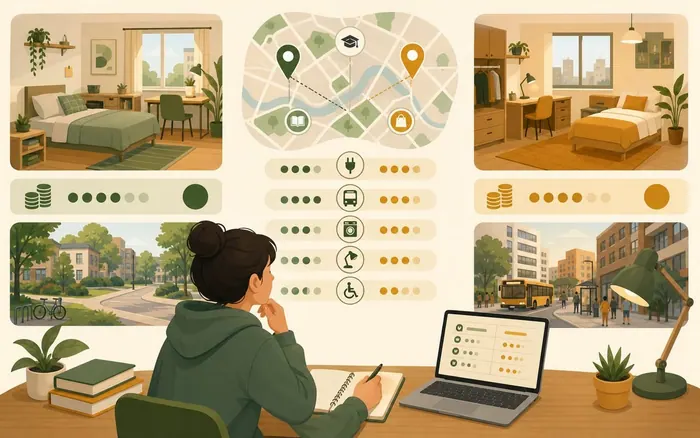
Compare housing by total cost and daily practicality. Ask about utilities, internet, deposits, insurance, furnishings, transport, laundry, and the full contract length, not just the advertised weekly rent. Walk the route to campus and essential shops where possible, and consider quiet, accessibility, privacy, and housemate arrangements alongside price. Pricing the running costs into a household budget first often closes a rent gap that looked decisive in the advert.
 4Howcompass
Read the contract before you sign or pay
Read the housing contract and inventory before signing or paying. Check dates, deposit protection, notice terms, guest rules, repairs, utilities, joint liability, and what happens if circumstances change, then ask the student housing service or a qualified local adviser about anything unclear. Never rely on a verbal promise that contradicts the written agreement; request an agreed change in writing. Put each promised change into an email that gets a reply so the agreement leaves a dated trace rather than a shared memory.
 Howcompass
Photograph the property on key day
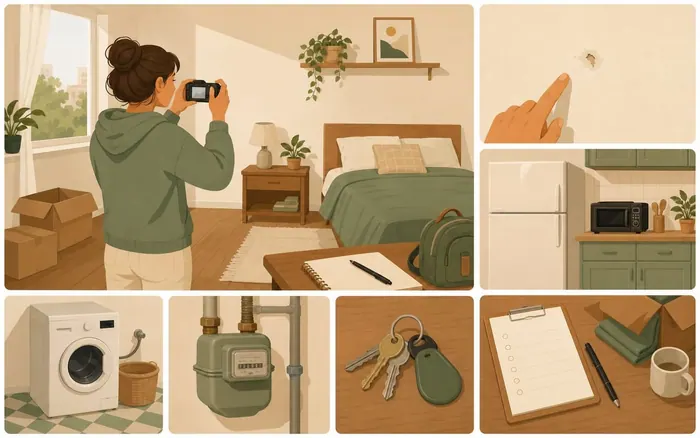
Document the property's condition when you collect the keys. Take dated photos of every room, existing damage, supplied furniture, appliances, and meter readings where you are responsible for utilities, then compare them with the inventory promptly. Report discrepancies through the required channel and keep copies so pre-existing problems are easier to distinguish later. Keeping those dated images findable a year later is the exact problem our digital photo library guide addresses.
 Howcompass
Open accounts and secure payment reminders
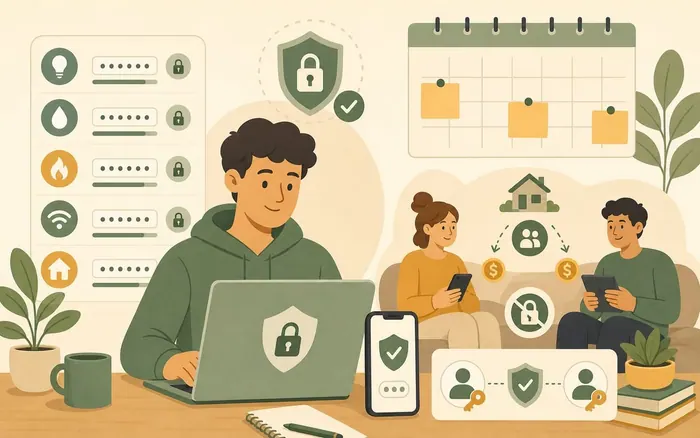
Set up essential accounts and payment reminders securely. Arrange only the utilities and services included in your responsibilities, note due dates, and use unique passwords with multi-factor authentication where available. Clarify whose name is on each account and how housemates will share approved costs without exchanging banking passwords or one-time security codes. Still opening the account itself? Our first bank account guide covers whose name belongs on each service and how direct debits are authorised.
 7Howcompass
Start an emergency buffer for irregular costs
Create a small emergency buffer and plan irregular expenses. Start with an achievable amount for an urgent journey, replacement key, prescription, or essential repair, then add monthly or weekly contributions for annual fees, textbooks, travel home, and seasonal clothing. Keep this money separate where practical and ask your university about hardship support before an unexpected bill becomes a crisis. The same habit scales up in our guide to building an emergency cash fund, which treats a term's surprises as a target rather than luck.
 Howcompass
File identity, health, and tenancy documents
Organize identity, health, tenancy, and emergency information. Store original documents securely and keep appropriately protected copies of the details you may need, along with emergency contacts, insurance terms, campus support numbers, and your accommodation address. Check whether belongings or health insurance is included, provided by family, or needs separate arrangement rather than assuming coverage. The filing logic in our guide to an organized travel document system transfers neatly to tenancy, insurance, and health paperwork.
Building Sustainable Food, Laundry, and Home Routines
 Howcompass
Split the room into sleep and study zones
Set up a sleep-friendly bedroom and a defined study zone. Keep bedtimes and waking times reasonably consistent, reduce late-night light and noise where you can, and place your main study materials somewhere that signals focus. A small room can serve both purposes if you pack away work at night and protect a realistic wind-down routine. A realistic sleep and morning routine is what makes the wind-down survive exam week rather than vanishing in week three.
 10Howcompass
Learn a rotation of cheap balanced meals
Learn a small rotation of affordable, balanced meals. Choose five simple breakfasts, lunches, and dinners that share ingredients, then write a repeatable shopping list around them and a few healthy snacks. Our guide to cooking five affordable student meals provides a starting point you can adapt to dietary needs and available equipment.
 Howcompass
Keep four basic food-safety habits
Shop, store, and cook food with basic safety habits. Wash hands, separate raw and ready-to-eat foods, cook thoroughly, refrigerate perishables promptly, and label leftovers with the date instead of relying on smell alone. Follow the four steps to food safety and check the appliance temperatures and storage times recommended for your location. Our food safety and storage guides give the same rules a concrete shape when you are cooking in an unfamiliar kitchen.
 Howcompass
Agree shared cleaning routines early
Agree on shared-kitchen and cleaning routines early. Decide how to label food, handle dishes, take out waste, buy shared supplies, and clean counters, floors, and bathrooms without assuming one person will notice and do everything. Keep the arrangement visible and specific, then revisit it calmly when exams, guests, or work schedules change. Our family routines guide makes the same argument: write the chore down somewhere visible instead of waiting for someone to notice it.
 Howcompass
Wash and dry clothes without ruining them
Learn to wash and dry your clothes without damaging them. Sort by care label, color, and fabric requirements, measure detergent, leave enough space for airflow when drying, and check whether the building has rules about drying racks or machine use. Keep a small laundry bag and a backup set of essentials so laundry never becomes an all-night emergency before class. Once washing is routine, our steam iron guide keeps the interview and work clothes you do have looking deliberate.
 Howcompass
Limit upkeep to safe, permitted fixes
Handle minor upkeep only within your ability and tenancy rules. Learn how to use the supplied appliances, ventilate safely, prevent blockages, and report leaks, faulty alarms, broken locks, mold, pests, or electrical problems through the proper channel. Do not attempt gas, wiring, structural, or other hazardous repairs yourself; document the issue and ask what urgent action to take. Learning to clear a slow drain safely is about the limit of sensible self-help before you report the problem properly.
 Howcompass
Plan transport and a safe way home
Plan everyday transport and a safe way home after late activities. Check reliable routes, last departure times, accessibility, bicycle or pedestrian safety, and the cost of an occasional licensed taxi or rideshare before you need them. Share late plans with someone you trust and keep enough battery and money for the return journey rather than improvising when tired. If pedalling is your route, practise riding a bicycle in city traffic in daylight before you need it tired after dark.
Staying Safe, Well, and Connected
 Howcompass
Register with health and support services
Register with appropriate health and support services early. Find the local doctor, dentist, pharmacy, campus wellbeing team, disability support, and out-of-hours options, and arrange repeat prescriptions or ongoing care before supplies run short. Save urgent and emergency numbers for your location, and seek help promptly rather than waiting for a problem to affect every part of student life. Our health guides assume you have somewhere to turn before a small problem becomes a term-ending one.
 Howcompass
Check safety without disabling protections
Check household safety without disabling any protective feature. Learn the escape routes, keep exits clear, follow rules for cooking and electrical devices, and confirm that required smoke or carbon-monoxide alarms are present and maintained through the landlord or accommodation team. Lock doors and windows appropriately, but never compromise ventilation, fire safety, or another person's ability to leave. The room-by-room hazard sweep in our childproofing guide works well on a rental you have never lived in before.
 Howcompass
Spot rental, job, and banking scams
Protect yourself from rental, job, banking, and social-media scams. Be suspicious of urgency, unusual payment methods, requests for upfront fees, and messages asking for passwords or verification codes, then verify the opportunity through a separately sourced official contact. Avoid sharing your new address, daily routine, documents, or financial details publicly, and ask for advice before sending money if something feels wrong. If a link already got through, our malware removal and browser reset guide explains how to contain an account compromise.
 Howcompass
Build connection through repeated meet-ups
Build connection through repeated, low-pressure activities. Attend one club, class, volunteer session, faith or cultural group, sports activity, or regular café meet-up where conversation can develop naturally over time. Our guide to starting a student club or society also helps if the group you want does not exist; you do not need an instant circle of close friends.
 20Howcompass
Keep old support while making new routines
Stay connected to existing support while allowing yourself to adjust. Schedule calls or messages with family and old friends without making every weekend a retreat from your new environment, and expect homesickness to fluctuate rather than follow a fixed timetable. Mind's student life and mental-health resource discusses connection, routine, loneliness, and seeking support when difficult feelings persist. Our guide to keeping a long-distance friendship alive offers a cadence that maintains those ties without cancelling your new life.
 Howcompass
Set calm boundaries with housemates and guests
Set respectful boundaries with housemates, guests, and yourself. Discuss quiet hours, overnight visitors, shared food, borrowing, cleaning, privacy, and how to raise a problem before resentment builds, and keep your own sleep, study, and spending limits visible. A calm boundary is specific and enforceable by you; it is not an attempt to control every preference another person has. The wording we suggest for boundaries at a family gathering holds up equally well when the disagreement is about bins and quiet hours.
Balancing Study, Work, and Personal Growth
 Howcompass
Map every deadline in one calendar
Map academic deadlines and recurring commitments in one calendar. Add lectures, labs, work shifts, appointments, travel, and assignment milestones, then block weekly reading and review time before the calendar fills. Our guide to studying effectively for exams can help you turn those blocks into active practice rather than last-minute rereading.
 Howcompass
Cap part-time work at a sustainable level
Set a sustainable limit for part-time work and other commitments. Check any visa, course, or funding conditions that apply, calculate travel and recovery time as well as paid hours, and reduce commitments if sleep or required study repeatedly disappears. Use our guide to balancing weekend work with revision to plan exam-period changes with your employer early.
 Howcompass
Log new skills as you acquire them
Record new skills and experience as you gain them. Keep a simple achievement file with class projects, volunteering, responsibilities, measurable outcomes, and feedback, then use it when applying for a campus role or internship. Our first student CV guide shows how to present useful experience even without a long employment history.
 25Howcompass
Use campus support before problems escalate
Use orientation and student-support services before problems escalate. Learn how to contact academic advisers, librarians, disability and accessibility teams, financial support, housing advisers, and counseling services, and save the relevant links or appointments in your calendar. Asking early is an independent-living skill, not evidence that you are failing to cope alone. Asking early is the same move that makes a first 90 days in a new job work, and it reads as competence rather than failure.
 26Howcompass
Review month one and change one routine
Review the first month and adjust one routine at a time. Compare actual spending, food, sleep, study, travel, and social time with your original plan, then choose the largest source of friction rather than redesigning everything at once. Keep what works, ask for help with what does not, and give new routines enough repetition before judging them. A short weekly review journal keeps that comparison honest, because a bad fortnight feels much longer afterwards than it was.
 Howcompass
Pick one milestone for the next stage
Choose one manageable milestone for your next stage of independence. Plan a volunteering application, a leadership role, a new recipe rotation, a short trip with friends, or another challenge that builds on your current routines rather than overwhelming them. Our first independent Interrail guide and the European Youth Portal offer ideas for eligible travelers and volunteers; check age, location, and program requirements before committing.
Frequently Asked Questions
Question: What should I organize before moving into student housing?
Prioritize the verified contract, total budget, move-in inventory, essential documents, basic food and sleep routines, and emergency contacts. Decorative purchases and advanced optimization can wait until you understand the space and your actual weekly needs.
Question: How much should a student work while living independently?
There is no universal safe number because course demands, health, visa or funding rules, commute time, and recovery differ. Start conservatively, include unpaid travel and preparation time, and reduce hours if required study or regular sleep is repeatedly displaced.
Question: Is feeling homesick during the first term normal?
Many students experience homesickness in waves while adjusting, but there is no fixed timetable or correct way to feel. Maintain connection and routines, build low-pressure local contact, and seek campus or health support if distress persists, intensifies, or interferes with daily life.
Question: How do I split bills fairly with housemates I barely know?
Agree one method in writing before the first payment: either split each bill equally by head, or split shared costs equally and personal usage by account where the provider allows it. Put standing charges, internet, and heating on a calendar with due dates, and keep receipts for anything one person paid on behalf of the house. Review the arrangement at the start of each term, because an extra person, an empty room, or a change in hours quietly makes an equal split unfair.
Tips
- Keep a simple weekly reset for groceries, laundry, room tidying, budget review, and the coming calendar so small tasks do not all become urgent together.
- Ask an experienced student to show you the practical details of your accommodation and campus that are rarely included in official welcome materials.
- Store a photo of your accommodation address and emergency contacts in a secure, easy-to-find place for moments when you are tired or stressed.
Warnings
- Never sign or pay for housing you cannot verify, and never send passwords, banking codes, or identity documents to an unverified contact.
- Do not attempt gas, electrical, or structural repairs yourself, and do not disable alarms or block escape routes in shared accommodation.
- Persistent distress, inability to function, or concerns about immediate safety need prompt qualified or emergency support rather than another self-help checklist.
Things You'll Need
- Weekly budget and housing-cost comparison
- Contract, inventory, and move-in photo record
- Document folder and emergency-contact list
- Five-meal rotation and food-storage containers
- Laundry supplies and care-label references
- Academic calendar and weekly reset checklist
Related Howcompass Guides


References (5)
- How to Minimise the Biggest Costs of University — budgeting and accommodation costsMoneyHelper
- Student Life and Mental Health — independence, loneliness, housing, and supportMind
- Four Steps to Food Safety — clean, separate, cook, and chillFoodSafety.gov
- Every Mind Matters — practical mental-wellbeing guidance and supportNational Health Service
- European Youth Portal — study, volunteering, and youth opportunitiesEuropean Commission
Sources are listed so you can read the underlying guidance yourself. Our editorial policy explains how guides are reviewed.
Did this article help you?
0 readers found this helpful — add your vote.
No comments yet — be the first to share your results.