How to Pack a Carry-On Bag for a Short International Flight
A guide to Confirming Rules and Travel Documents, Building a Right-Sized Packing List, Separating Restricted Items and Essentials, Packing for Screening and a Possible Gate Check, Managing Departure, Boarding, and Arrival
A workable carry-on starts with the limits on your actual ticket and the rules at every departure, transfer, and arrival point, not with a bag advertised simply as “international size.” Use these 26 steps in our Travel collection to prepare both a cabin bag and a smaller personal item, then confirm current details directly with each airline, airport, border authority, and other official source for your itinerary.
How do you pack a Carry-On Bag for a Short International Flight?
 Howcompass | How to Pack a Carry-On Bag for a Short International Flight
Confirming Rules and Travel Documents
HowcompassCheck each airline allowance for your fare
Check every operating airline's cabin-bag and personal-item allowance for your exact fare. Record the permitted number of pieces, dimensions including wheels and handles, weight limit, and any route or aircraft restriction for each outbound, return, and connecting segment. IATA Travel & Baggage guidance explains that baggage rules are set by airlines and can vary with the product and route, so do not assume one carrier's allowance or a generic luggage label will be accepted by another. Baggage fees can erase a cheap ticket, so compare budget travel costs before you buy.
 Howcompass
Review rules for every airport on the route
Review security, customs, and restricted-item rules for every point on the itinerary. Check the official guidance for departure, transfer, and arrival airports and countries, including whether a second security screening or customs inspection applies to your bags. The FAA international travel overview directs travelers to destination, health, TSA, and dangerous-goods resources; use the strictest applicable requirement when rules differ instead of assuming that an item accepted at one checkpoint must be accepted everywhere. Overland transfers bring their own border crossing routines.
 Howcompass
Confirm passport and visa requirements officially
Verify passport validity, visas, travel authorizations, and other entry documents with official authorities. Check your passport's condition and required validity period, blank-page or consent-document requirements where relevant, and the rules for your nationality, purpose, transit, and length of stay. The U.S. Department of State international travel checklist recommends reviewing destination-specific entry, exit, visa, and passport requirements; use the destination's embassy or border authority for the controlling rules rather than relying on a packing blog.
 Howcompass
Save bookings in an offline format
Save bookings and required forms in an accessible offline format. Keep boarding information, accommodation details, transfer instructions, insurance contacts, and any required receipt or confirmation available without depending on airport Wi-Fi, while protecting account logins and sensitive files. Our offline map guide can help with navigation, and you should also carry any original paper document that an airline or authority requires rather than treating a screenshot as a universal substitute.
 Howcompass
Store protected copies away from originals
Make protected copies of essential documents and store them separately. Keep an appropriate paper or secure digital copy of key identification, visa, itinerary, insurance, and emergency information away from the originals, and leave suitable copies with a trusted person when useful. The State Department travel document checklist recommends multiple copies, but copies do not replace an original passport or visa and should not be shared publicly or kept in an unsecured photo gallery.
 Howcompass
Share the itinerary with one trusted contact
Share your itinerary and emergency contact plan with a trusted person. Provide the operating flight numbers, dates, destination, accommodation, and a sensible way to communicate if your phone or data service fails, without posting the same details publicly. Our family emergency communication plan can organize the contact tree and check-in expectations, which you should update if a booking or responsibility changes.
Building a Right-Sized Packing List
 Howcompass
Build the list from your real days
Build the packing list from your itinerary, weather, activities, and laundry options. Write down what each day actually requires, including sleepwear, weather protection, medication, work or event items, and destination-specific essentials, then remove duplicates that do not serve a real plan. Check whether you can wash or rewear clothing safely; our hotel sink laundry guide explains one option, but fabric instructions, drying time, and accommodation rules still determine whether it is practical.
 Howcompass
Choose coordinated layers for the climate
Choose a small set of coordinated, suitable clothing. Select layers that can combine across several outfits and match the climate, cultural expectations, and planned activities, then wear a practical bulky layer during travel if it is comfortable and does not create a security or overheating problem. Our capsule wardrobe guide can help with coordination, but do not sacrifice necessary weather protection, accessible footwear, or a required uniform merely to reduce the item count.
 Howcompass
Cut shoes and bulky items you cannot justify
Lay out shoes and bulky items and remove what you cannot justify. Limit footwear to the pairs needed for walking, weather, and any specific activity, check that they are comfortable and suitable for your feet, and fill clean shoes with small soft items only if this will not stretch them or expose clothing to dirt. Compare the laid-out load with the airline's weight and size allowance before deciding that every item is essential.
 Howcompass
Pack medicines with proof and access
Pack essential medicines and health items in their required, accessible form. Keep enough appropriately labeled medication for the journey and a reasonable delay, along with necessary documentation, prescription or clinician letters, and any required temperature-control plan recommended for your situation. Check destination and transit rules for controlled or restricted medicines before travel, declare medically necessary liquids or supplies as required at screening, and never repack another person's prescription or assume an over-the-counter product is legal everywhere.
 12Howcompass
Plan in-flight comfort within screening rules
Plan modest in-flight comfort, food, and entertainment around security and customs rules. Add an empty reusable bottle where permitted, solid snacks that are allowed for your route, a light layer, and offline reading or audio, keeping anything you need during the flight in the personal item rather than the overhead bag. Check restrictions on liquids, fresh foods, agricultural products, and strong odors, and dispose of or declare remaining food as required instead of carrying it across a border by default.
Separating Restricted Items and Essentials
 Howcompass
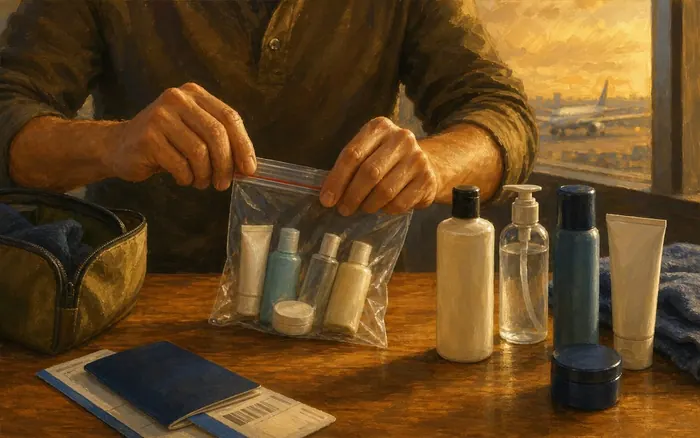
Bag liquids to the strictest limit
Prepare liquids, gels, aerosols, creams, and pastes for the strictest screening point on your route. For a TSA checkpoint, the official travel checklist describes the 3-1-1 rule: containers of 3.4 ounces (100 ml) or less inside one quart-size clear zip-top bag per passenger, with medically necessary and other exceptions handled under their own rules. Container capacity matters even when a bottle is partly empty, and other airports may apply different limits or procedures, so verify each stop rather than treating 100 ml as a universal guarantee.
 Howcompass
Keep spare batteries in the cabin
Keep power banks and spare lithium batteries in your cabin baggage and protect them from short circuits. Use original packaging, individual covers, or tape over exposed terminals as appropriate, prevent crushing and accidental activation, and check the battery's watt-hour rating and the operating airline's approval requirements. IATA lithium-battery guidance says spare batteries and power banks belong in hand baggage rather than checked baggage; damaged, recalled, swollen, or overheating batteries need specialist handling rather than being packed for a flight.
 Howcompass
Protect devices and the data on them
Protect electronic devices and the information they contain. Pack devices where they cannot be crushed, keep necessary chargers and adapters accessible, use appropriate screen locks and updates, and avoid carrying sensitive data you do not need across a border. Our password-manager and recovery-plan guide can strengthen account access, but you should also follow employer policies and applicable border, export, and device-inspection rules rather than relying on a travel case alone for security.
 Howcompass
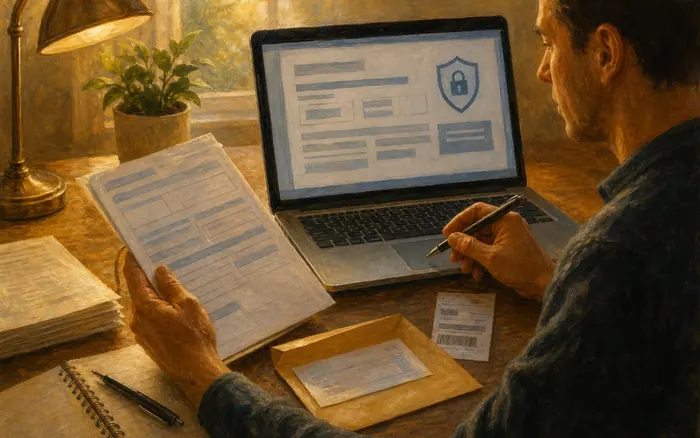
Verify questionable items against official lists
Check every questionable item against an official restricted-items source before packing it. Look up sharp objects, tools, sporting equipment, self-defense products, aerosols, fuels, batteries, and unusual foods individually instead of assuming that a household item is automatically permitted. The FAA PackSafe chart and the relevant security authority explain many dangerous-goods restrictions, but no generic checklist is exhaustive and international rules may prohibit an item even when a domestic exception exists. Save the real address of each authority, since lookalike official travel websites also target travelers.
 Howcompass
Reserve essentials for the personal item
Keep documents, medication, valuables, and irreplaceable items in the personal item that stays with you. Include the essentials needed for a delay or an unexpected gate check, and distribute necessary items so a single opened compartment does not expose everything. Do not place cash, passports, prescription medicine, keys, or irreplaceable electronics in a bag that might be taken to the hold, and keep the personal item within the airline's size and stowage limits rather than creating a second oversized carry-on.
Packing for Screening and a Possible Gate Check
 Howcompass
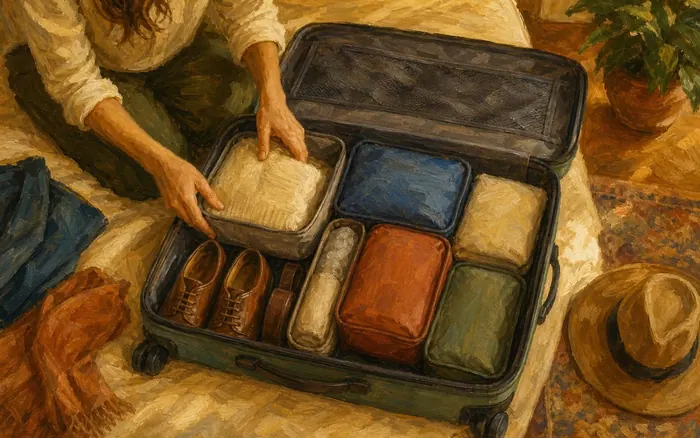
Set heavy items low and stabilize the load
Place heavier items low and stabilize the load inside the cabin bag. Position dense items near the wheel end when the bag is upright, cushion breakables away from hard edges, and arrange clothing or organizers so contents will not shift sharply when the bag is lifted or tilted. Keep the packed weight within both the airline limit and your own safe handling ability, and do not rely on an expanding zipper to make an overloaded bag manageable.
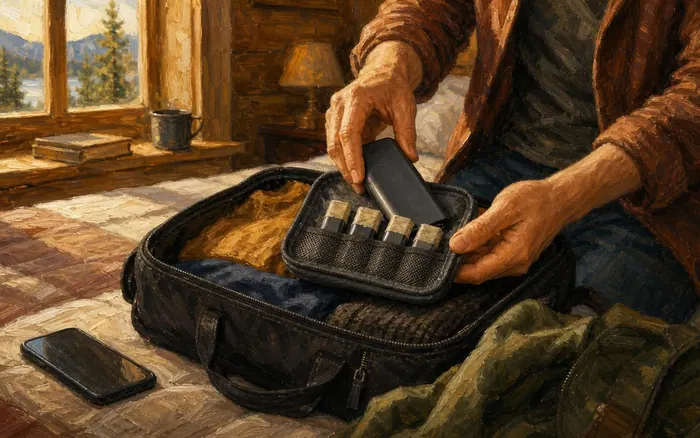 Howcompass
Stage liquids and devices for screening
Arrange liquids and electronics for the screening procedure you are actually instructed to follow. Keep the clear liquids bag and any device that may need separate screening easy to reach without unpacking clothing, while leaving them secured until an officer or the airport's current instructions direct otherwise. The TSA travel checklist describes accessible liquids preparation, but scanner technology, trusted-traveler lanes, and international procedures vary, so never argue with screening staff based on a previous airport experience.
 Howcompass
Weigh and measure the closed bag
Leave a small margin and test the packed bag's weight and dimensions at home. Close every compartment without forcing the zipper, measure the full bag including wheels, handles, and external attachments, and use a scale with enough capacity for an accurate reading. Compare the result with each airline's published allowance and leave room for a required form, snack, or gate-time repacking rather than departing exactly at the maximum. If the reading is over, cut items using the carry-on packing method.
 Howcompass
Plan the gate-check transfer in advance
Prepare a gate-check fallback that keeps essential and restricted items with you. Know which document pouch, medicines, valuables, devices, power banks, and spare batteries must move into the personal item if cabin space runs out, and make that transfer without rushing or blocking other passengers. IATA battery guidance specifically tells travelers to remove lithium batteries and devices before hand baggage goes into the hold; follow crew instructions, obtain any baggage tag or receipt, and never surrender a power bank inside a gate-checked bag. Back up the photos on those devices first, because photo backups survive a mishandled bag.
 22Howcompass
Inspect wheels, handles, and zippers
Inspect the bag's wheels, handles, seams, zippers, and external pockets before departure. Test the telescoping handle and wheel movement without overloading the bag, close loose straps that could catch, and secure zippers with an appropriate fastening where permitted while keeping required inspection access in mind. Add a discreet contact tag without exposing your home address or full itinerary unnecessarily, and note any existing damage so you can distinguish it from a new problem on arrival.
Managing Departure, Boarding, and Arrival
 23Howcompass
Confirm documents, medicine, and power before leaving
Run a final document, medication, and battery check before leaving for the airport. Touch or visually confirm the actual passport and required originals, essential medicines, phone, wallet, keys, power bank, and personal item rather than trusting an old checklist alone, and confirm that prohibited items have not returned to a pocket during ordinary use. Recheck current flight and entry alerts through official channels, then secure the bags for transport without placing essential documents in an inaccessible trunk or checked suitcase. The same list works for a travel first aid kit.
 24Howcompass
Handle passports discreetly at the airport
Keep travel documents and screening items accessible but discreet at the airport. Use a consistent zipped compartment for the passport and boarding information, take them out only when needed, and return them immediately instead of leaving them on a counter or tray. Maintain control of your bags, follow instructions from authorized staff, and allow extra time for additional screening or document checks rather than making a rushed connection with loose belongings.
 Howcompass
Stow bags exactly as the crew directs
Stow the cabin bag and personal item according to the crew's instructions. Place the permitted larger bag in an appropriate overhead compartment without forcing a full bin, and put the smaller item where required so it does not obstruct aisles, exits, or your ability to reach essential safety equipment. Ask for suitable assistance before boarding if you cannot lift the bag safely, keep items needed during the flight with you, and never place a power bank or spare battery in a bag that is then removed for hold stowage. If you feel unwell at altitude, keep motion sickness remedies in that seat pocket.
 Howcompass
Watch gate changes while guarding your bag
Monitor flight and gate information while keeping your essentials organized. Check official airport displays and airline notifications for schedule, gate, document, or baggage changes, and keep the personal item closed and with you in queues and public areas. If a gate check or rebooking occurs, repeat the battery-and-essentials separation rather than assuming the bag will stay on the same aircraft or arrive at the original destination. Treat unexpected gate-change texts as suspect, because phishing messages often mimic airline alerts.
 Howcompass
Check contents and report damage promptly
Check your belongings on arrival and report a bag problem promptly. Confirm that you have the passport, personal item, medication, devices, and any gate-checked bag before leaving the relevant airport area, then inspect for damage or missing contents and take clear photographs where appropriate. Follow the operating airline's process and deadlines for reporting, retain tags, receipts, and correspondence, and complete customs or agricultural declarations honestly rather than discarding restricted items into an airport bin without guidance.
Frequently Asked Questions
Question: Is the 100 ml liquids rule identical at every international airport?
No. TSA uses the 3-1-1 rule at U.S. checkpoints, but procedures and limits can differ by airport, country, scanner, lane, and current regulation. Check every departure and transfer point, prepare for the strictest applicable requirement, and declare medically necessary or other exempt items according to the relevant authority's instructions.
Question: Can I put a power bank in a checked or gate-checked suitcase?
No. IATA classifies power banks as spare lithium batteries and says they must remain in hand baggage, not checked baggage. If your cabin bag is taken at the gate, remove the power bank, spare batteries, and other required devices before the bag goes to the hold, and follow the operating airline's current instructions.
Question: What should I do if the airline says my cabin bag must go into the hold?
Pause in a safe place and move your passport, medicines, valuables, keys, essential electronics, power banks, and spare batteries into the personal item that stays with you. Follow crew instructions, check whether the bag needs a tag or receipt, and verify its routing. Do not let speed or embarrassment cause you to surrender items that are prohibited in checked baggage or essential during a delay.
Question: Does a connecting flight let me buy liquids after the first screening?
Usually not in the way travelers hope. Airside purchases in a secure duty-free or shop are often sealed in a tamper-evident bag with the receipt inside, and the transfer airport decides whether it accepts that bag, so check its rules before you buy. When in doubt, carry the item in checked baggage or buy it after you land, because a security officer at the transfer point can discard a container that the departure airport allowed.
Tips
- Keep a small pouch labeled in your own system for documents, medicines, power banks, and other items that must move out of a gate-checked bag quickly.
- Photograph the packed bag's exterior and any existing damage before departure, while keeping passport numbers and other sensitive details out of casual photo albums.
- Save each operating airline's allowance and restricted-item link in one offline note so a connection does not force you to search with unreliable airport data.
Warnings
- Never pack power banks or spare lithium batteries in checked or gate-checked baggage; follow current airline and dangerous-goods instructions for capacity, quantity, terminal protection, and damaged batteries.
- Do not assume a bag size, liquid rule, medicine, food, or self-defense item accepted in one country or airport will be accepted at every transfer or destination; verify the complete itinerary with official sources.
- Keep original entry documents and essential medicines with you, and do not use this guide to evade customs, agricultural, security, immigration, prescription, or airline requirements.
Things You'll Need
- A cabin bag and personal item that meet every operating airline's allowance
- Required original travel documents, bookings, and protected separate copies
- Appropriately labeled essential medicines and any required supporting documents
- One screening-compliant clear liquids bag where the applicable rules require it
- Protective pouches for electronics, power banks, and spare battery terminals
- A luggage scale, measuring tape, discreet contact tag, and final checklist
Try it with a free tool
You have read the method — now work through your own numbers or text. These free tools run in your browser, need no sign-up and link back to this guide.
Related Howcompass Guides




References (6)
- Travel & BaggageInternational Air Transport Association
- Safe Travel With Lithium BatteriesInternational Air Transport Association
- TSA Travel ChecklistTransportation Security Administration
- PackSafe Printable ChartFederal Aviation Administration
- International TravelFederal Aviation Administration
- International Travel ChecklistU.S. Department of State
Sources are listed so you can read the underlying guidance yourself. Our editorial policy explains how guides are reviewed.
Did this article help you?
0 readers found this helpful — add your vote.
No comments yet — be the first to share your results.