How to Measure Your Blood Pressure at Home and Keep a Useful Log
A guide to Choosing a Safe Monitoring Plan and Device, Preparing Your Body and Position, Taking and Recording Measurements, Building a Clinically Useful Log, Maintaining the Device and Responding Safely
Home monitoring can give your healthcare professional a broader picture than an occasional clinic reading, but the result depends on a validated device, the right cuff, consistent preparation, and an agreed interpretation plan. Use these 24 steps in our Health collection to support—not replace—professional care, and ask for individual instructions if you are pregnant, monitoring a child, have an arrhythmia, have arm or circulation problems, or have been given a specific treatment or emergency plan.
How do you measure Your Blood Pressure at Home and Keep a Useful Log?
 Howcompass | How to Measure Your Blood Pressure at Home and Keep a Useful Log
Choosing a Safe Monitoring Plan and Device
HowcompassDefine why you are monitoring at home
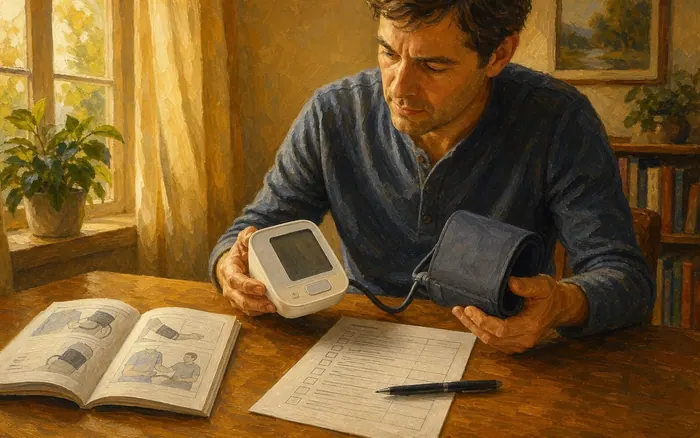
Read your care plan and define why you are monitoring at home. Ask your healthcare professional which arm, times, frequency, treatment schedule, and follow-up approach they want you to use, and clarify whether the readings are for ongoing management, a short diagnostic series, or another purpose. The American Heart Association home-monitoring guidance recommends discussing how often to measure; do not invent a target, diagnose yourself from one reading, or stop or change medication because a home result looks better or worse. Setting this up for a parent? Our guide to caring for an ageing parent covers agreeing the schedule with their clinician rather than inventing one.
 Howcompass
Pick a validated automatic upper-arm monitor
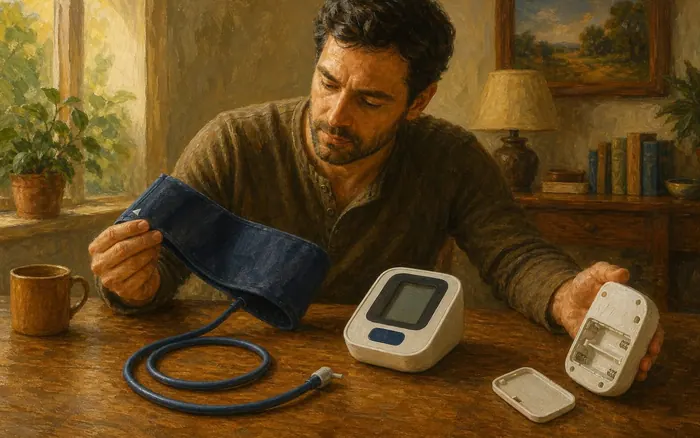
Choose an automatic upper-arm monitor validated for clinical accuracy. Check the exact model rather than assuming every device from a familiar brand has been validated, and confirm that it is appropriate for the intended user and setting. The AHA monitor-selection guidance recommends an automatic cuff-style upper-arm monitor, while the independent U.S. ValidateBP device listing can help you check validation; use a wrist or other device only when a qualified professional advises it for your circumstances. Check the stated model the way you would vet a claim online, because a familiar brand name is not validation evidence.
 Howcompass
Size the cuff from your arm measurement
Measure your arm and match the cuff to the manufacturer's size range. Use a flexible tape around the mid-upper arm as described in the monitor instructions, then compare the circumference with the marked cuff range rather than choosing by clothing size or body weight. The AMA seven-step measurement guide explains how to locate the mid-upper arm and select a cuff, and warns that an inappropriate size can produce inaccurate readings; obtain a compatible alternative cuff if the supplied one does not fit. Trusting a tape measurement over a printed size label is the same lesson our capsule wardrobe guide teaches, and here a wrong fit skews a reading.
 5Howcompass
Inspect the device before trusting readings
Inspect the monitor, cuff, tubing, connector, and power supply before relying on them. Look for cracked or leaking tubing, a loose connector, damaged fabric or fastening, corrosion, low batteries, and an error message you cannot explain, then follow the manufacturer's maintenance and calibration instructions. The AMA accuracy guidance emphasizes validated, properly maintained equipment, so do not continue using a damaged device or improvise a repair that could change its performance. Battery care, cable condition, and unexplained error messages are covered the same way in our device maintenance guides.
 Howcompass
Set up one quiet, consistent spot
Choose a quiet, consistent measurement location and prepare the area. Set up a firm chair and table with enough space for the monitor and log, silence notifications, and arrange for several minutes without conversation, television, work, or other interruptions. Keep the device at a suitable temperature according to its manual and avoid measuring in a rushed public setting when you can instead repeat your normal routine in the same calm environment. A firm chair and a table at the right height are the starting point of our ergonomic desk guide, and they matter just as much for a monitor.
Preparing Your Body and Position
 Howcompass
Wait 30 minutes after caffeine or exercise
Avoid smoking, caffeinated drinks, and exercise during the AHA's recommended pre-measurement window. Plan the reading before these activities or wait at least 30 minutes afterward, and follow any additional instructions from your healthcare professional about meals, alcohol, medicines, or other factors. The AHA preparation checklist names smoking, caffeine, and exercise; never delay or skip a prescribed medicine on your own merely to fit a generic measurement schedule. If you train in the morning, our guide to starting running and strength training helps you place sessions so the measurement window stays honest.
 8Howcompass
Rest quietly for five full minutes
Empty your bladder and then sit quietly for at least five minutes. Settle into the chair before putting the cuff on or starting the device, breathe normally, and let your body become still without reading, watching videos, or checking messages. Use the same rest period each time so the log is easier to compare, and restart the quiet rest if you get up, have a conversation, or become noticeably rushed or upset. A fixed rest slot is far easier to keep when it hangs off an existing morning routine instead of being carved out on the spot.
 Howcompass
Put the phone away before you start
Remove distractions and prepare the log before the measurement begins. Put the phone out of reach, place a pen and paper or an approved private digital log nearby, and make sure you can record both results without moving during the reading itself. Keep the monitor's instructions accessible for error messages, and do not try to multitask by reviewing earlier results while the cuff is inflating or deflating. Our study guides meet this problem constantly: five genuinely distraction-free minutes take deliberate setup, not willpower.
 Howcompass
Sit supported, feet flat, legs uncrossed
Sit with your back supported, feet flat, and legs uncrossed. Use a firm chair rather than a low sofa, place both feet on the floor or a firm support if needed, and keep your posture relaxed but upright without tensing your shoulders. The AMA home-measurement instructions recommend back, feet, and arm support with uncrossed legs; choose a stable alternative position recommended by your clinician if mobility or another need prevents this standard setup. If upright sitting is uncomfortable, the gentle mobility work in a 10-minute morning stretch makes the supported position easier to hold.
 Howcompass
Support the arm at heart level
Support the measurement arm on a flat surface at heart level. Rest the upper arm comfortably on the table with the palm upward and muscles relaxed, adding a folded cushion under the elbow if needed to achieve the correct height without lifting or tightening the shoulder. Keep the arm still and avoid holding it in the air, and follow your clinician's advice if an injury, fistula, surgery, or other condition affects which arm or position you should use. When a propped shoulder aches afterwards, our guide to cold and heat therapy covers safe relief instead of letting you slump mid-reading.
Taking and Recording Measurements
 Howcompass
Place the cuff on bare skin
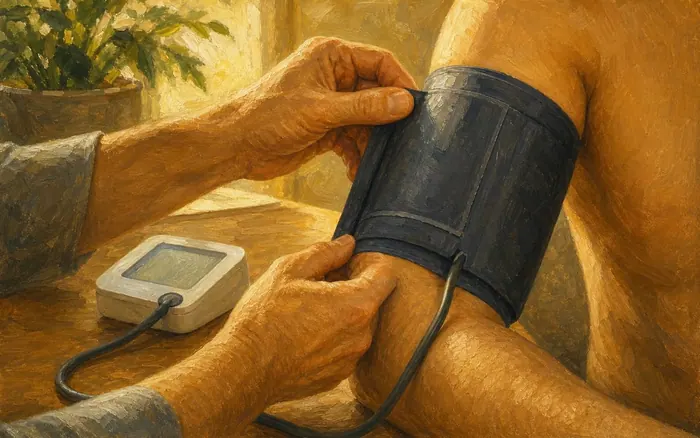
Place the cuff directly on bare upper-arm skin in the manufacturer's indicated position. Remove clothing from the arm rather than rolling a tight sleeve into the cuff, position the lower edge just above the elbow bend, and align the tube or artery marker as shown in the instructions. The AHA cuff-placement guidance specifically says not to measure over clothes; ask a professional to demonstrate if you cannot confirm the fit or alignment confidently. Our measurement technique guides keep returning to the same point: a gathered sleeve is one of the commonest sources of a false reading.
 Howcompass
Stay still and silent during the reading
Remain still and silent throughout the inflation and deflation cycle. Keep your feet, back, and supported arm in position, avoid talking or using the phone, and let the automatic monitor complete the reading without pressing buttons repeatedly. Stop and follow the manual or professional advice if you feel significant pain, numbness, or another unexpected problem, and do not tighten the cuff beyond the manufacturer's instructions to force a result. Resisting the phone during the cycle is easier when you already take proper screen breaks, as our eye strain guide recommends.
 Howcompass
Take the second reading a minute later
Take a second reading after the recommended interval without rushing the first. The AHA home-monitoring instructions advise two readings one minute apart, so remain seated and quiet during that minute and repeat the same supported position. If the device displays an error or the cuff has shifted, correct the setup before repeating rather than recording an error message as a blood-pressure number. Taking readings for someone else, our guide to caring for an ageing parent covers staying calm through that quiet minute without hurrying them.
 Howcompass
Record both values immediately, in order
Record both systolic and diastolic results immediately and accurately. Write the date, exact time, both readings, and pulse if the monitor provides it, preserving the order of the measurements instead of keeping only the lower or more reassuring result. Use the units shown by the device, normally mm Hg, and do not round, invent, or silently average values unless your healthcare professional has given you a specific calculation or app workflow. If writing the numbers means moving the arm, photograph the display instead and use the close-up framing in our phone photography guide.
 Howcompass
Add brief factual context to each entry
Add brief context that could help interpret the series. Note the arm used, medication timing as instructed, recent symptoms, unusual stress, illness, poor sleep, activity, or a disrupted measurement, keeping the comments factual and concise rather than trying to explain every fluctuation yourself. Our sleep and morning-energy log can provide a separate record of sleep patterns, but do not infer a medical cause from a coincidental note or omit a reading because you disliked the result.
Building a Clinically Useful Log
 17Howcompass
Keep arm, device, and conditions constant
Use the same arm, device, and general conditions for comparable routine readings. Follow the arm and setup your healthcare professional recommends, and keep the cuff model, rest period, body position, and measurement sequence consistent from session to session. Record any necessary change instead of hiding it, and use our healthy morning-routine guide only as a scheduling aid if your clinician has recommended morning measurements rather than letting a habit determine medical timing.
 Howcompass
Measure on the days you agreed
Measure on the days and at the times agreed with your healthcare professional. Put the recommended sessions on a calendar and include any specific plan for morning, evening, treatment changes, or the days before an appointment, while avoiding extra anxious measurements that were not requested. The AHA timing guidance recommends measuring at the same time each day and discussing frequency, so a generic twice-daily schedule is not automatically right for every person. Recurring health tasks survive on a calendar the way a household budget does: the slot has to be scheduled before it is forgotten.
 Howcompass
Read the pattern, not the single number
Review patterns across the agreed series instead of reacting to one number. Look at the complete readings, dates, times, and context, and ask your clinician how to calculate or interpret an average if one is needed for your care. Blood pressure naturally varies, so neither one high result nor one low result establishes a diagnosis by itself; do not delete outliers, selectively share only normal values, or change treatment based on a self-made trend line. Our guide to reading a research paper makes the statistical case here: spread, averaging rules, and a handful of readings decide whether a difference is real.
 20Howcompass
Bring the full log to appointments
Share the complete log and, when requested, the monitor with your healthcare professional. Bring the paper record, device memory, or a secure export to appointments and make sure the dates and measurement conditions remain attached to the numbers. The AHA recordkeeping guidance suggests bringing a monitor with built-in memory to medical appointments, and you should ask which format the clinic can actually review rather than sending sensitive health data to an unapproved address. Keeping dates attached to exported records is the same argument our digital photo library guide makes about unlabelled files.
 21Howcompass
Agree thresholds and an action route early
Clarify your personal thresholds, follow-up route, and emergency plan before you need them. Ask which results or symptoms should trigger a routine message, same-day advice, or emergency action, and record the appropriate clinic, after-hours, and local emergency contacts in a place you can reach quickly. Keep the instructions specific to your health, pregnancy status, medicines, and other conditions, and use our family emergency communication plan to coordinate contacts without substituting a relative's opinion for medical help.
Maintaining the Device and Responding Safely
 22Howcompass
Maintain the monitor on its schedule
Maintain the monitor and cuff according to the manufacturer's schedule. Clean only with approved methods, store the tubing without sharp kinks, replace batteries or parts as directed, and arrange calibration, service, or replacement when required rather than opening the device yourself. Check periodically that the model and cuff remain appropriate for your arm and needs, and record an equipment change in the log so a difference between old and new readings is not misinterpreted. Cleaning, storage, and calibration reminders sit naturally alongside our other appliance care guides.
 Howcompass
Have your technique checked against theirs
Compare your technique and device with a healthcare professional when accuracy is in doubt. Bring the monitor and log to a review, ask the professional to watch your positioning and cuff placement, and follow their process for comparing measurements rather than alternating rapidly between devices on your own. Recheck the exact model against the ValidateBP listing when replacing equipment, remembering that validation does not correct a wrong cuff size or poor measurement technique. Letting someone watch you perform a task you think you own is the same uncomfortable but useful check described in our first 90 days guide.
 Howcompass
Act on very high readings as planned
Follow your agreed action plan for very high readings or concerning symptoms. The AHA blood-pressure reading guidance says that a person with a reading higher than 180/120 but no concerning symptoms should wait at least one minute, measure again, and contact a healthcare professional promptly if it remains that high. If a reading in that range occurs with symptoms such as chest pain, breathing difficulty, back pain, numbness, weakness, vision change, or difficulty speaking, call 911 immediately, or the local emergency number outside the U.S.; do not wait for another reading, drive yourself, or take extra medication without professional direction. Our emergency planning guides cover writing the number and the address somewhere the whole household can reach in seconds.
 Howcompass
Protect the log and revisit the plan
Store the log securely and review the monitoring plan as your care changes. Limit app and cloud permissions, protect exports and shared links, and keep an accessible backup of the information your clinician needs without posting readings publicly. Our account security and recovery guide can help protect digital access, and you should ask whether to continue, pause, or change the schedule after a medication change, new diagnosis, pregnancy, or other relevant transition instead of monitoring indefinitely without review.
Frequently Asked Questions
Question: Can I use a wrist blood-pressure monitor instead?
The AHA recommends an automatic upper-arm cuff monitor for home use. The AMA notes that a wrist cuff should be reserved for situations in which an upper-arm cuff is not clinically appropriate or an appropriate size is unavailable. Ask your healthcare professional for individual instructions rather than assuming a wrist device will provide equivalent results.
Question: Should I average the two readings or keep only one?
Record both readings in order, along with the date, time, and context. Ask your healthcare professional whether and how they want an average calculated for your care. Do not keep only the lower value, discard a result because it surprises you, or invent an averaging rule that hides the underlying measurements.
Question: Can I reduce my medication if my home readings look normal?
No. Do not stop, reduce, or change prescribed medication based on home readings without consulting the healthcare professional responsible for your treatment. Normal-looking results can reflect treatment working, measurement conditions, or other factors, and the full series should be reviewed within your care plan.
Question: Do I keep logging if my home readings are already normal?
Continue for as long as your clinician asked, because a normal series is the evidence that supports a decision rather than a reason to stop collecting it. Bring the log to the appointment and ask explicitly whether to reduce the frequency, change the days, or pause altogether after any medication change. If you stop early, you lose the comparison that shows whether a recent symptom or new prescription changed anything at all.
Tips
- Keep the chair, table, cuff, and log in one consistent setup so correct positioning becomes easier to repeat on measurement days.
- Write an equipment-change note beside the first reading taken with a new monitor or cuff; this preserves context without assuming which device caused any difference.
- Ask your clinician to watch one complete home-style measurement during a review, including the rest period and second reading, rather than demonstrating only how to fasten the cuff.
Warnings
- Do not diagnose hypertension, rule it out, or start, stop, or adjust medication from home readings alone; a qualified healthcare professional should interpret the series within your overall care.
- A reading higher than 180/120 with symptoms such as chest pain, breathing difficulty, back pain, numbness, weakness, vision change, or difficulty speaking is an emergency under AHA guidance—call the local emergency number rather than waiting or driving yourself.
- Pregnancy, childhood, arrhythmia, arm or circulation conditions, dialysis access, recent surgery, and other special circumstances may require different equipment, positioning, thresholds, or urgent instructions from your clinician.
Things You'll Need
- An automatic upper-arm monitor validated for clinical accuracy
- A compatible cuff matched to your measured mid-upper-arm circumference
- A firm supportive chair and flat table for back, feet, and arm positioning
- A quiet timer and the manufacturer's current instructions
- A paper or secure digital log for both readings, time, pulse, and context
- Your medication list, clinical contacts, and personalized urgent-action plan
Related Howcompass Guides




References (6)
- Home Blood Pressure MonitoringAmerican Heart Association
- What Doctors Want Patients to Know About Home BP MeasurementAmerican Medical Association
- Seven-Step SMBP Quick Guide: Ensure AccuracyAmerican Medical Association
- U.S. Blood Pressure Validated Device ListingValidateBP
- Understanding Blood Pressure ReadingsAmerican Heart Association
- When to Call 911 About High Blood PressureAmerican Heart Association
Sources are listed so you can read the underlying guidance yourself. Our editorial policy explains how guides are reviewed.
Did this article help you?
0 readers found this helpful — add your vote.
No comments yet — be the first to share your results.