How to Prepare for a Power Outage and Respond Safely
A guide to Assessing Needs and Building an Outage Plan, Protecting the Household When Power Goes Out, Using Backup Power Without CO or Shock Hazards, Protecting Food, Water, and Health During an Extended Outage, Restoring Service and Reviewing the Plan
A power outage can affect far more than lights, and an improvised generator, grill, candle, or extension cord can make the situation more dangerous. Use these 24 steps in our Home and Garden collection to plan essential needs, keep food and medicines within professional guidance, and decide when staying home is no longer safe rather than relying on a single battery or appliance.
How do you prepare for a Power Outage and Respond Safely?
 Howcompass | How to Prepare for a Power Outage and Respond Safely
Assessing Needs and Building an Outage Plan
HowcompassList what needs electricity
Inventory every essential household need that depends on electricity. Include lighting, phones and internet, medical devices, refrigerated medicines, heating and cooling, water pumps, cooking, garage doors, locks, elevators, and accessibility equipment, then note which needs have a non-electric alternative and which require relocation or professionally planned backup power. Our home-inventory guide can support the room-by-room review, while Ready.gov power-outage guidance specifically recommends taking an inventory of electricity-dependent needs.
 Howcompass
Plan support and relocation now
Create a support, communication, and relocation plan before an outage occurs. Identify people who can check on your household, safe places with power for an extended outage, transportation options, and local warming, cooling, or charging locations, and keep paper copies of essential contacts. Use our family communication plan alongside Red Cross power-outage guidance, which recommends a support network and a decision plan for staying or going.
 Howcompass
Stock light and stored power
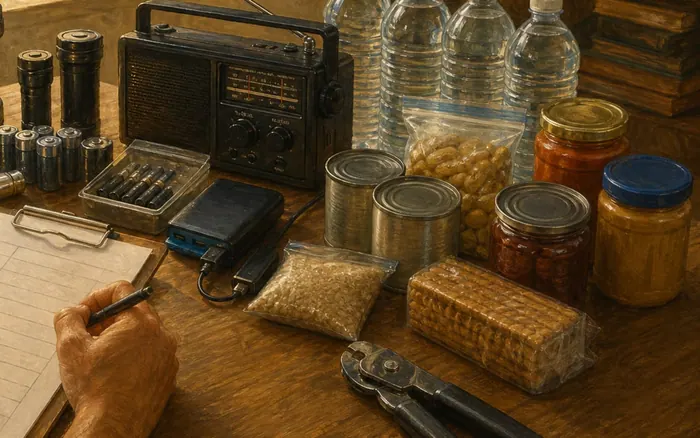
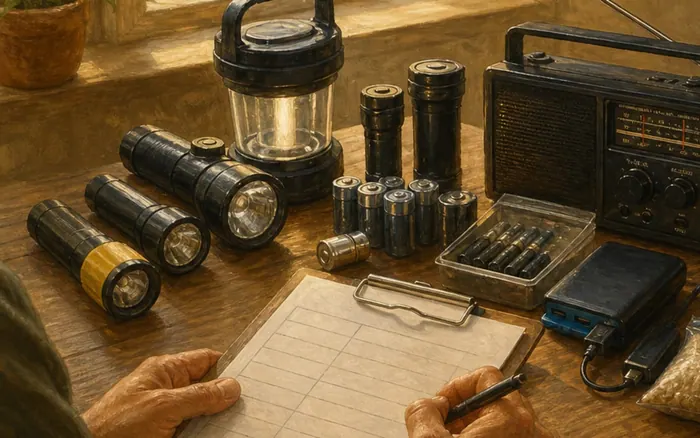
Assemble flashlights, batteries, charged power banks, and a battery or hand-crank radio. Provide an accessible flashlight for each household member, store compatible spare batteries without mixing damaged or leaking cells, and test charging equipment before an emergency rather than assuming a power bank is full. Ready.gov preparation guidance recommends flashlights and alternative power sources, while the Red Cross outage guide advises flashlights rather than candles because of fire risk.
 Howcompass
Store food and water that need no power
Stock nonperishable food, safe drinking water, a manual can opener, coolers, and frozen packs for your household. Include ready-to-eat items suitable for infants, older adults, allergies, and other dietary needs, rotate supplies before they expire, and keep food above possible floodwater; do not plan around an electric stove or a store that may also be closed. The FDA power-outage food and water guide recommends coolers, ice, thermometers, and protected food and water storage, and our pet go-bag guide can help cover animal supplies separately.
 Howcompass
Plan for powered medical needs
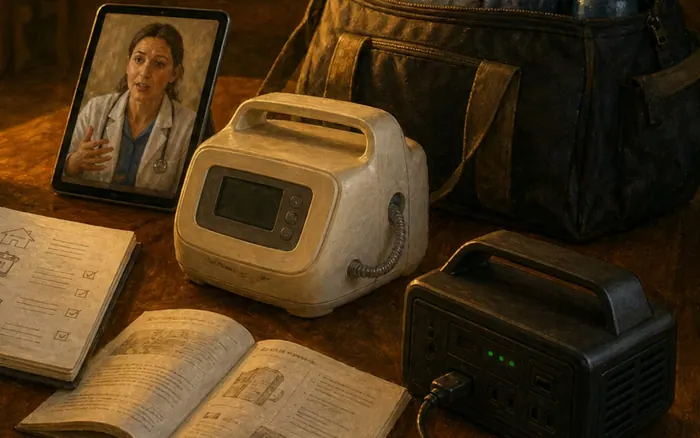
Arrange medical-device and refrigerated-medication plans with the relevant clinician, pharmacist, and equipment supplier. Ask about approved backup power, realistic runtime, charging needs, safe storage temperatures, replacement supplies, and when to relocate, then document the plan without assuming a general-purpose power bank is suitable for a medical device. Ready.gov medical outage guidance recommends discussing power-dependent devices and refrigerated medicines with a medical provider, including specific guidance for critical medication storage.
Protecting the Household When Power Goes Out
 Howcompass
Confirm the outage and report it
Confirm the outage scope and report it through the utility's official channel. Use a flashlight to check whether the problem affects the whole home or neighborhood, consult the utility's outage map or published phone number, and provide safe observations such as the time and any visible damage without approaching electrical equipment. Do not open a meter base, touch a service line, or improvise a repair, and follow instructions from local officials when the outage involves a wider emergency.
 Howcompass
Unplug electronics against surge damage
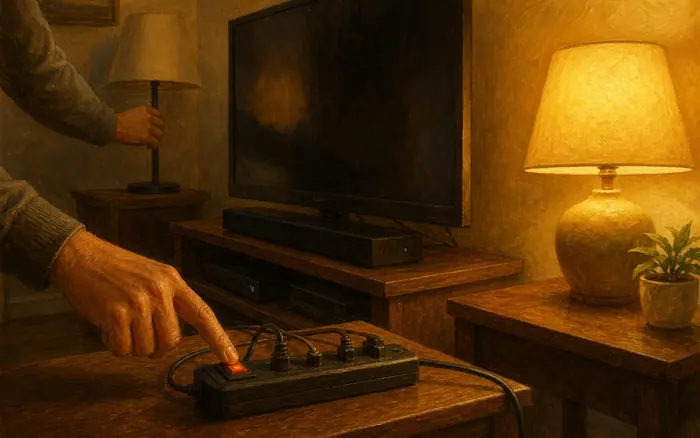
Unplug sensitive electronics and unnecessary appliances to reduce surge and restart hazards. Turn off equipment that was operating when power failed, leave one ordinary light switched on if it is safe and useful as a restoration indicator, and keep refrigerators and freezers connected according to their food-storage plan rather than repeatedly opening them. Ready.gov outage guidance recommends disconnecting appliances and electronics to avoid surge damage, while the Red Cross safety guide also emphasizes preventing overloads and fire hazards.
 9Howcompass
Log the start and keep doors shut
Record the outage start time and keep refrigerator and freezer doors closed. Place a note outside the doors if household members need a reminder, and use appliance thermometers rather than frequent opening to assess conditions. The FDA food-safety guidance estimates about four hours of safe cold storage in an unopened refrigerator and approximately 48 hours in a full freezer or 24 hours in a half-full freezer, but actual food decisions still require temperature and food-specific checks.
 Howcompass
Light and heat the house safely
Use safe lighting and temperature strategies throughout the outage. Choose flashlights or battery lanterns instead of candles, dress appropriately and move to a safer location when indoor heat or cold becomes dangerous, and never use a gas oven, charcoal grill, camp stove, or outdoor heater to heat or cook inside the home. The Red Cross power-outage guide warns against outdoor cooking equipment indoors and recommends evacuation when a home becomes too hot, too cold, or unable to support medical needs.
 Howcompass
Stay back from downed lines
Stay far away from downed lines, damaged electrical equipment, and flooded areas. Keep people and pets away from anything a line touches, follow the Red Cross power-outage guidance to remain at least 35 feet away and call 911, and do not drive over or attempt to move a wire. Avoid standing water near electrical systems and do not use wet or submerged appliances; wait for the utility or qualified electrical inspector to evaluate the hazard.
Using Backup Power Without CO or Shock Hazards
 Howcompass
Match backup power to device ratings
Choose backup power that matches the device's ratings and actual outage plan. Use a charged power bank for compatible small electronics or a properly specified uninterruptible power supply for brief shutdown or runtime needs, and inspect batteries, cables, and enclosures for damage before use. Do not infer medical-device runtime or safety from a generic capacity label; follow the device manufacturer and clinician's plan, and test approved equipment under normal conditions before an emergency.
 Howcompass
Run generators outdoors and away
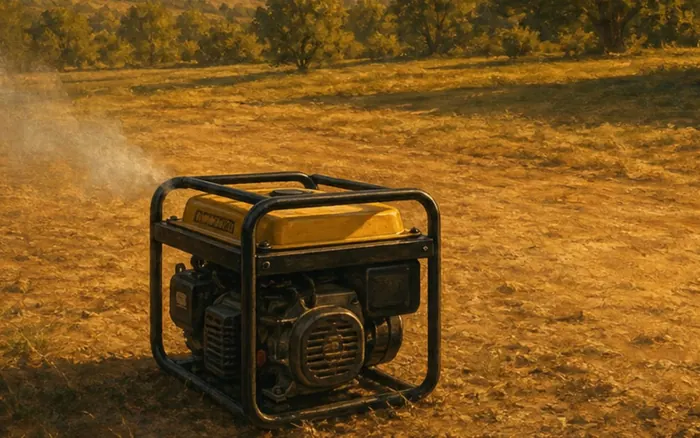
Place a portable generator outdoors only and at least 20 feet from the home, windows, doors, and vents, with exhaust directed away from buildings. Keep it away from garages, basements, sheds, porches, and carports, and follow the manufacturer's instructions for dry operation and inclement weather rather than covering it with an improvised enclosure. CPSC generator guidance prohibits indoor and garage use, and CDC carbon-monoxide guidance emphasizes outdoor placement more than 20 feet from openings.
 Howcompass
Test carbon-monoxide alarms regularly
Install and maintain carbon-monoxide alarms with battery backup, and respond immediately to an alarm or possible poisoning symptoms. Test alarms according to the manufacturer, treat them as a last line of defense rather than permission to operate fuel equipment indoors, and get everyone to fresh air and call emergency services when an alarm sounds or symptoms such as headache, dizziness, weakness, nausea, chest pain, or confusion occur. CDC CO guidance explains that carbon monoxide is colorless and odorless and can kill without warning.
 Howcompass
Connect generators only via approved methods
Connect generator loads only by a method approved by the manufacturer and electrical code. Use correctly rated outdoor cords in good condition for equipment designed to connect directly, keep connections dry and away from traffic, and have a licensed electrician install an appropriate transfer switch for any connection to household wiring. Never plug a generator into a wall outlet or otherwise backfeed the home or utility system, because that can electrocute utility workers and household members and can damage equipment.
 Howcompass
Cool the generator before refueling
Turn off and cool a portable generator before refueling, and store fuel only as its instructions and local rules allow. Use an approved fuel container, keep fuel away from living spaces, children, flames, sparks, and heat, and never refuel a running or hot generator. CPSC generator safety guidance focuses on deadly exhaust hazards, while the owner's manual and fire code provide the applicable fuel and maintenance requirements; do not improvise storage or transport inside a passenger vehicle or living area.
Protecting Food, Water, and Health During an Extended Outage
 Howcompass
Track fridge and freezer temperatures
Monitor refrigerator and freezer temperatures with appliance thermometers instead of relying on touch or odor. Keep the doors closed while taking readings as the thermometer design allows, and maintain the refrigerator at or below 40°F and freezer at or below 0°F under normal operation. The FDA power-outage guide recommends keeping thermometers in both appliances, because food can be unsafe without a clear change in smell or appearance.
 Howcompass
Use a cooler for extra cold storage
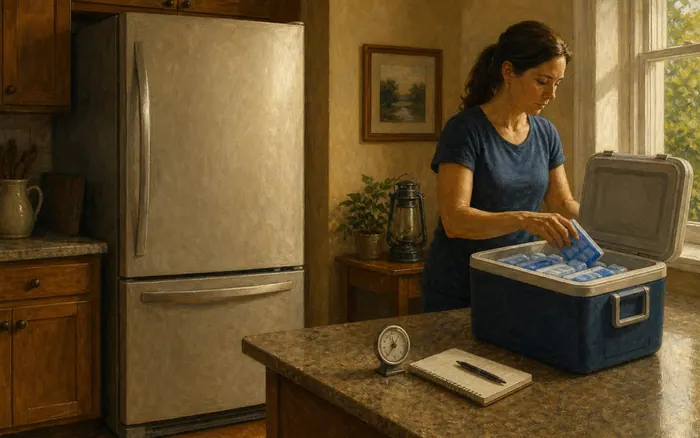
Use a cooler with sufficient ice or frozen packs when an extended outage requires additional cold storage. Group food appropriately, keep the cooler at 40°F or below with a thermometer, replenish ice without cross-contaminating food with raw-meat juices or meltwater, and avoid repeatedly opening it. USDA emergency food guidance recommends coolers with ice or gel packs for longer outages, while dry ice requires its own handling and ventilation precautions and is not a casual household substitute.
 Howcompass
Discard food by time and temperature
Discard food according to elapsed time, measured temperature, and current food-specific official charts rather than tasting it. Use USDA emergency food tables and FDA outage guidance to assess each item, and discard perishable food held above 40°F for two hours or more under USDA guidance or whenever the applicable instructions identify it as unsafe. Never taste food to test safety, and when in doubt, throw it out.
 Howcompass
Confirm drinking water with officials
Follow official drinking-water notices and use a known safe source for drinking, cooking, brushing teeth, and preparing infant formula. A power outage does not automatically mean the water supply is contaminated, so check the water utility and local health authority rather than guessing or applying a homemade treatment recipe. The FDA food and water guide recommends safe bottled water during relevant emergencies and separate flood-related precautions; discard food and packaging exposed to floodwater as the official instructions specify.
 Howcompass
Leave when home is unsafe
Relocate when indoor conditions or essential medical needs cannot be managed safely at home. Contact your support network and local officials about powered accommodation, charging, warming or cooling centers, and accessible transportation, and carry medications, device instructions, chargers, and essential supplies. Red Cross outage guidance recommends evacuation for dangerous temperatures or power-dependent medical needs, while our first-aid kit guide can support basic preparedness but cannot replace professional medical care or a reliable power plan.
Restoring Service and Reviewing the Plan
 Howcompass
Reconnect equipment gradually after power returns
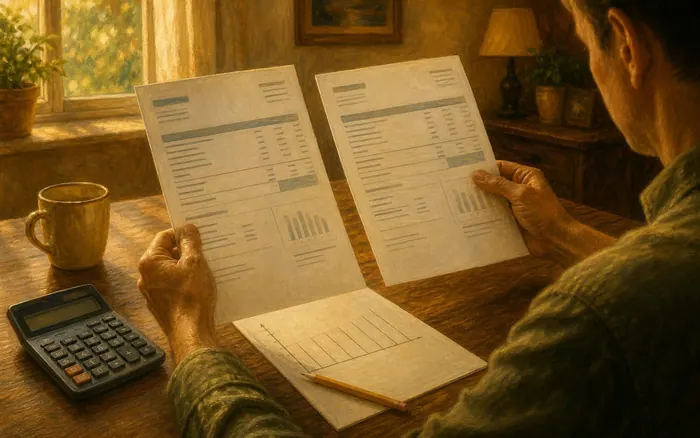
Restore appliances and electronics gradually after service is stable and equipment has been checked for damage. Plug in essential items first, observe unusual smells, sounds, heat, or tripping, and keep wet, submerged, scorched, or damaged equipment disconnected until a qualified professional evaluates it. Do not reset a gas service or repair a meter, panel, or fixed wiring yourself; follow the utility's instructions and use a licensed electrician or gas professional where required. Compare the next bill too, because a fault that keeps tripping can quietly raise your meter reading.
 Howcompass
Judge thawed food item by item
Evaluate frozen and refrigerated food separately after power returns. Check freezer temperatures and packages for ice crystals, and refreeze or cook only items that meet the current official temperature and condition criteria; FDA power-outage guidance says food with ice crystals or at 40°F or below can be safe to refreeze, while each refrigerated perishable still requires its own time-and-temperature assessment. Do not refreeze everything automatically or rescue questionable food by cooking it.
 24Howcompass
Restock supplies and log the outage
Restock the supplies and records used during the outage. Recharge approved power banks, replace batteries, water, food, and medicines according to their labels, clean reusable coolers, and record the actual runtime and any device or household problems while they are fresh. Ask a pharmacist or clinician about refrigerated medication storage or replacement rather than relying on the food rules, and keep a simple outage log with start time, temperatures, official notices, and relocation decisions for the next review.
 Howcompass
Review the plan while it is fresh
Review the entire plan with household members and relevant providers after the immediate emergency ends. Update contact and relocation details, medical runtime assumptions, generator maintenance, alarm test dates, and supplies for children, pets, and accessibility needs, and correct anything that required improvisation. Revisit the family communication, first-aid, and pet plans linked in this guide, then schedule a recurring check so batteries, food, medicines, and approved backup equipment remain ready rather than being forgotten until the next outage.
Frequently Asked Questions
Question: Can I run a portable generator in a garage with the door open?
No. CPSC and CDC say generators must not run in a home or garage, even with doors or windows open. Use one outdoors only, at least 20 feet from the home, windows, doors, and vents, with exhaust directed away and with the manufacturer's weather and operating instructions followed.
Question: How long will a refrigerator and freezer keep food cold?
FDA estimates about four hours for an unopened refrigerator and approximately 48 hours for a full freezer or 24 hours for a half-full freezer. These are estimates, not permission to ignore actual conditions. Keep doors closed, use appliance thermometers, and assess each food with current official time-and-temperature guidance.
Question: Can I tell whether food is safe by smelling or tasting it?
No. Harmful conditions do not always produce a reliable smell, appearance, or taste, and tasting can expose you to illness. Use thermometers, outage duration, package condition, and current USDA or FDA charts. Never taste food to test safety; when in doubt, throw it out.
Question: What should I do for a power-dependent medical device or refrigerated medicine?
Make a device- and medication-specific plan with the clinician, pharmacist, and equipment supplier before an outage. Ask about approved backup power, runtime, storage temperatures, replacement supplies, and relocation criteria. Do not assume a general power bank is compatible or apply food temperature rules to medicines, and relocate when essential needs cannot be maintained safely.
Tips
- Keep one flashlight beside the bed and another in a common area so nobody has to cross a dark home to find the emergency kit.
- Write the outage start time on a note outside the refrigerator and freezer to reduce unnecessary opening and improve later food decisions.
- Test approved backup equipment under normal conditions and record realistic runtime; do not discover compatibility or charge problems during an emergency.
- Keep paper contact and relocation details with the outage kit because a phone, router, or online account may not remain available.
Warnings
- Never operate a generator, charcoal grill, camp stove, or outdoor heater inside a home, garage, basement, shed, porch, or carport; opening doors or windows does not make it safe.
- Never backfeed household wiring through a wall outlet, and do not approach downed lines, standing water near electrical equipment, or wet appliances.
- Do not taste food to assess safety or apply food-storage rules to refrigerated medicines; use official food charts and medication-specific pharmacist or clinician guidance.
- A carbon-monoxide alarm does not make indoor fuel-burning equipment safe; leave immediately for fresh air and call emergency services if an alarm sounds or poisoning is suspected.
Things You'll Need
- Flashlights or battery lanterns for each household member and compatible spare batteries
- Charged, device-compatible power banks and a battery or hand-crank radio
- Nonperishable ready-to-eat food, safe water, and a manual can opener
- Refrigerator and freezer thermometers, coolers, and sufficient ice or frozen packs
- Paper contact, relocation, medical-device, and medication-specific backup plans
- Optional properly rated backup equipment, outdoor generator accessories, and CO alarms with battery backup
Related Howcompass Guides



References (6)
- Power OutagesReady.gov
- Power Outage SafetyAmerican Red Cross
- Food and Water Safety During Power Outages and FloodsU.S. Food and Drug Administration
- Keep Your Food Safe During Emergencies: Power Outages, Floods & FiresUSDA Food Safety and Inspection Service
- Generators and Engine-Driven ToolsU.S. Consumer Product Safety Commission
- Carbon Monoxide (CO) Poisoning BasicsCenters for Disease Control and Prevention
Sources are listed so you can read the underlying guidance yourself. Our editorial policy explains how guides are reviewed.
Did this article help you?
0 readers found this helpful — add your vote.
No comments yet — be the first to share your results.