How to Prepare Your Car for a Long Road Trip
A guide to Planning the Trip and Reviewing Vehicle Health, Inspecting Tires, Wheels, and Brakes, Checking Fluids, Visibility, and Electrical Systems, Packing Safely and Completing the Final Check
A reliable road trip starts several days before you load the luggage, not at the motorway entrance. Work through this 20-step checklist in our Cars and Other Vehicles collection, use your owner's manual for vehicle-specific instructions, and compare your progress with the NHTSA road-trip guidance. Leave enough time to book a professional repair rather than hoping a warning sign disappears on the road.
How do you prepare Your Car for a Long Road Trip?
 Howcompass | How to Prepare Your Car for a Long Road Trip
Planning the Trip and Reviewing Vehicle Health
HowcompassReview the manual and service history
Review the owner's manual and service history first. Check the maintenance schedule against your current mileage and the date of the last service, paying particular attention to oil, filters, spark plugs, coolant, brake fluid, and transmission service. Arrange anything due soon before the trip instead of postponing it until you return.
 Howcompass
Check the VIN for open recalls
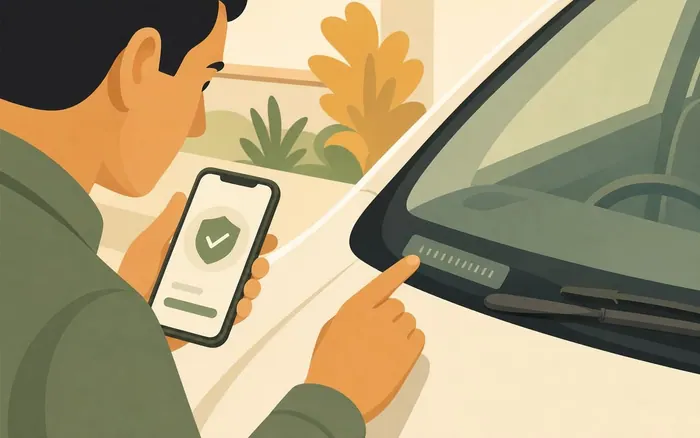
Check the vehicle identification number for open recalls. Locate the VIN at the base of the windscreen or on your registration document, then search the official NHTSA recall lookup or your local vehicle-safety regulator. Recall repairs should be completed by an authorized service provider before a long journey.
 Howcompass
Book a diagnosis for real symptoms
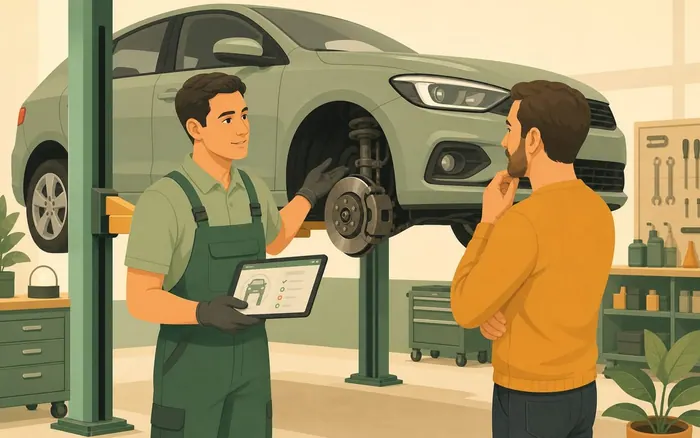
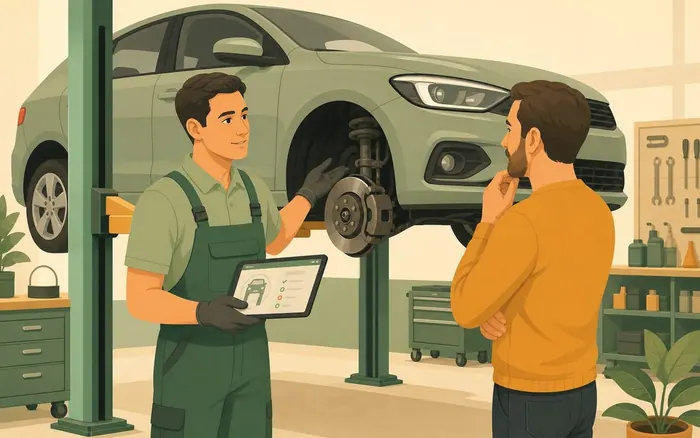
Book a professional inspection for existing warning signs. Squealing brakes, fluid spots, overheating, pulling to one side, a lit engine-warning light, or slow starting deserve diagnosis rather than a last-minute topping-up. Tell the technician your route, expected load, and departure date so they can prioritize safety-critical work.
 Howcompass
Map route, weather, and fuel stops
Map the route, weather, and refueling stops in advance. Mark fuel stations or compatible charging points, roadworks, tolls, rest areas, and places with limited mobile coverage. Share the itinerary with someone at home and keep a flexible arrival time so fatigue never pressures you into rushing.
 Howcompass
Take a revealing short test drive
Take a short test drive several days before departure. Include low-speed turns, a rough road, and safe highway speeds while listening for new noises and watching for vibration or warning lights. Test the air conditioning and ventilation too, then recheck the parking spot for fresh leaks.
Inspecting Tires, Wheels, and Brakes
 Howcompass
Set tire pressures from cold
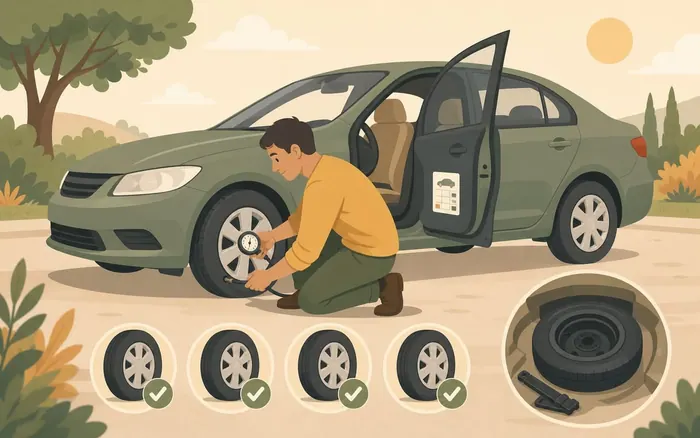
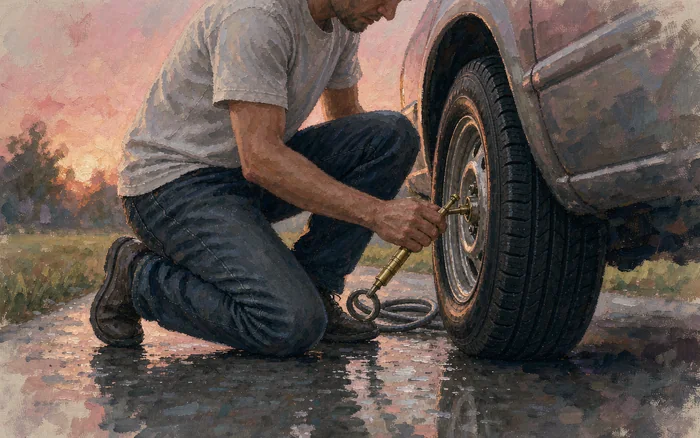
Set all tire pressures while the tires are cold. Use the pressures on the driver's door placard or in the manual, not the maximum printed on the tire sidewall, and include the spare where fitted. Follow the measurements and checks in our detailed guide to checking tire pressure and tread depth.
 Howcompass
Measure tread across every tire
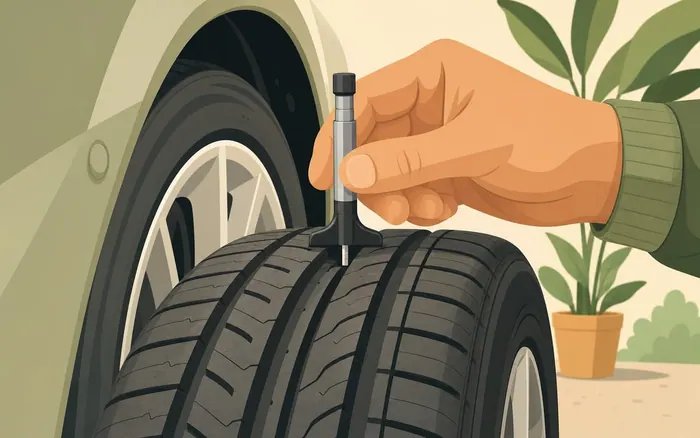
Measure tread depth across every tire. Check several grooves on the inner, center, and outer tread with a proper gauge, replacing any tire that reaches the legal limit or performs poorly in wet conditions. Uneven readings can indicate inflation, alignment, suspension, or rotation issues that need attention.
 Howcompass
Inspect sidewalls for damage
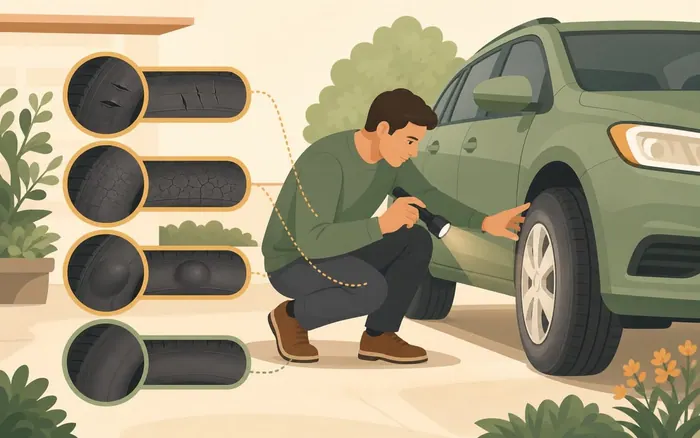
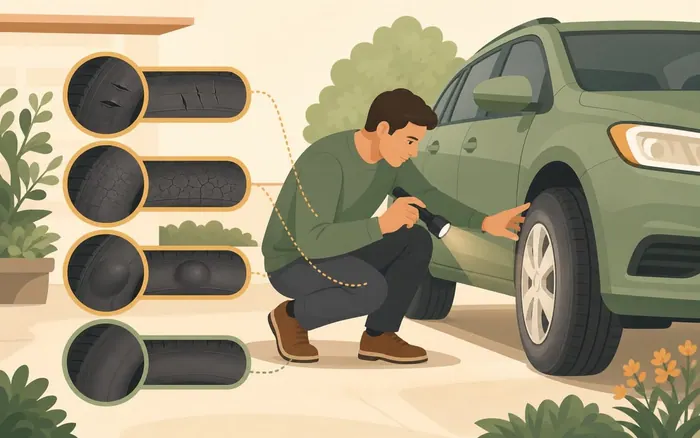
Inspect sidewalls and tread for visible damage. Look for cuts, embedded objects, cracks, bulges, exposed cords, and patches of uneven wear without putting your body near moving traffic. Have a tire professional assess any bulge, deep cut, persistent pressure loss, or unknown vibration before you travel.
 Howcompass
Confirm your puncture recovery method
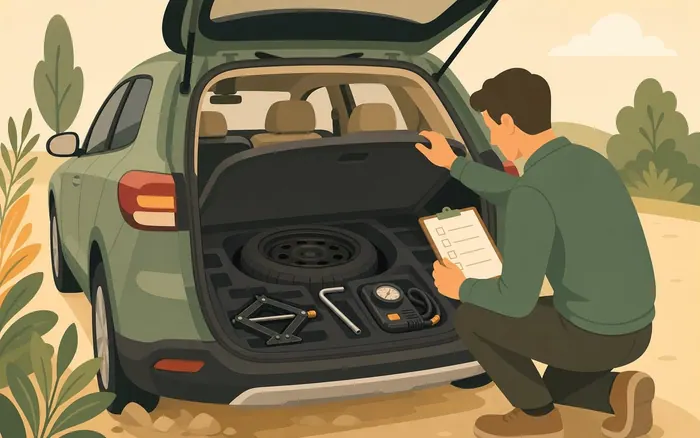
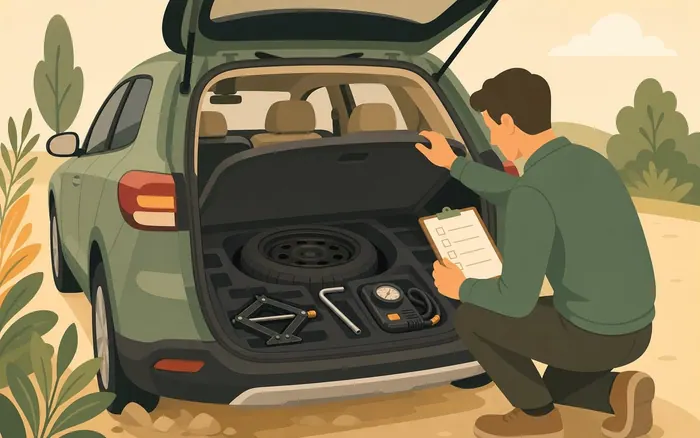
Confirm exactly how your vehicle handles a puncture. Check whether it carries a full-size spare, a temporary spare, or only an inflator and sealant kit, and verify that the jack, wheel wrench, locking-nut adapter, and instructions are present. Learn the kit's limits now; some sealants cannot repair sidewall damage or large punctures.
 Howcompass
Assess brakes on an ordinary drive
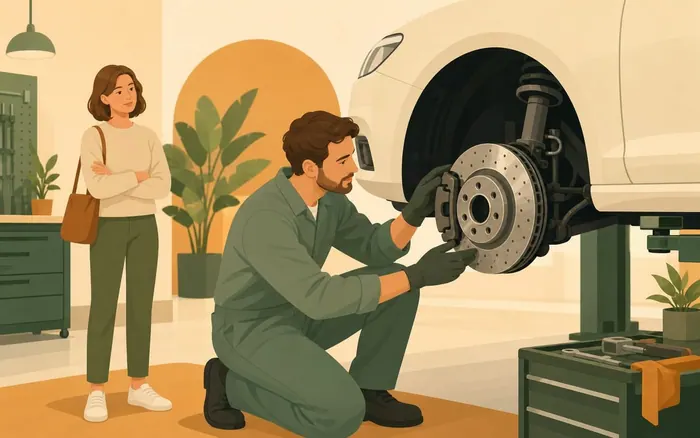
Evaluate the brakes without attempting a risky roadside test. During an ordinary drive, note grinding, squealing, a soft or sinking pedal, steering pull, or vibration when braking, and arrange an inspection if any occur. A technician should measure pad and disc condition and check the hydraulic system when wear or a fluid-service interval is due.
Checking Fluids, Visibility, and Electrical Systems
 12Howcompass
Check engine oil the right way
Check the engine oil using the manufacturer's procedure. Park on level ground, let the engine reach the state specified in the manual, and read the dipstick or electronic display without overfilling. Use the approved oil grade if a top-up is needed, and investigate a falling level or dirty, overdue oil rather than simply adding more.
 13Howcompass
Read coolant levels with a cold engine
Inspect coolant and other accessible fluid reservoirs only when safe. With the engine completely cold, confirm that translucent reservoir levels sit between their marks and look for stained or cracked hoses without touching pressurized parts. Never remove a radiator or coolant-expansion cap while the engine is hot; sudden steam and fluid can cause severe burns.
 Howcompass
Clean glass and test the wipers
Clean the glass and test the wipers and washers. Fill the washer reservoir with a season-appropriate fluid, clear insects from the windscreen and mirrors, and run each wiper through a full sweep. Replace blades that leave broad streaks, chatter, or miss sections, and use our wiper replacement guide if your vehicle uses a standard fitting.
 15Howcompass
Test every exterior light
Test every exterior light with a helper. Check dipped and main beams, tail lights, brake lights, indicators, hazards, reversing lights, and fog lights where fitted, using a reflective wall or garage door if nobody is available. Replace failed bulbs or repair faulty circuits and clean cloudy lens surfaces before night driving.
 Howcompass
Load-test the battery before departure
Assess the battery and charging system before they strand you. Look for loose hold-downs, damaged casing, and heavy terminal corrosion without creating sparks or touching both terminals, then note whether the engine cranks slowly or accessories behave erratically. Ask a technician to load-test an aging or suspect battery and check the alternator rather than relying on a successful start that morning.
Packing Safely and Completing the Final Check
 Howcompass
Pack a seasonal roadside kit
Pack a roadside emergency kit suited to the season. Include a charged phone and power bank, torch, reflective vest, warning triangle where legally appropriate, first-aid supplies, drinking water, basic tools, gloves, and any essential medication. Add cold-weather or hot-weather items using our seasonal emergency-kit checklist.
 Howcompass
Set navigation before you drive
Prepare navigation and communication before starting the engine. Download offline maps, save accommodation and roadside-assistance details, mount the phone outside the airbag zone, and set your destination while parked. Our guide to using offline maps without roaming data is useful on remote routes; never handle the phone while driving.
 Howcompass
Load and secure luggage within limits
Load luggage low, evenly, and within the vehicle's limits. Place heavy bags on the cargo floor, secure loose objects so they cannot become projectiles, and preserve the driver's view and access to safety equipment. Check the manual for payload and roof-load limits, including passengers and any tow or bike-rack equipment.
 Howcompass
Fit seats, belts, and restraints
Adjust the cabin for every occupant before departure. Set the seat, steering wheel, mirrors, and head restraints, then make sure everyone uses a correctly fitted seat belt and children use restraints appropriate to their size and local law. Keep coats, bags, and loose accessories from interfering with belts, pedals, or airbags.
 Howcompass
Walk around and check the dash
Complete one final walk-around and dashboard check. Confirm fuel or charge, tire condition, closed windows and cargo doors, clear lights and plates, and no new fluid beneath the car, then watch the instrument panel after startup for unresolved warnings. Leave rested, take regular breaks, and stop somewhere safe if you become drowsy or a serious warning appears.
Frequently Asked Questions
Question: When should I inspect my car before a road trip?
Start one to two weeks ahead so there is time for service or parts. Repeat the quick tire, fluid, light, luggage, and dashboard checks on departure day after any repairs have been completed.
Question: Can I rely on the tire-pressure monitoring system?
Treat the monitoring system as a warning aid, not a substitute for manual checks. Use a gauge on cold tires and follow the vehicle placard; systems may not warn about every slow loss or uneven-wear problem.
Question: What if my car has no spare wheel?
Read the instructions for its inflator or sealant kit and know which punctures it cannot repair. Carry roadside-assistance details and consider professional advice before remote travel; do not add a spare or jack unless the vehicle is designed for one.
Question: Is it safe to drive a car with an open recall while I wait for the repair?
It depends on what the recall covers, so read the notice rather than guessing from the headline. Some campaigns are administrative software updates you can leave until your next service, while a fault affecting brakes, steering, airbags, or fuel lines can make the vehicle unsafe to put on a long trip at all. Call the dealer with your vehicle identification number, ask how serious the defect is and how long the repair takes, and postpone the journey if they describe a safety risk or cannot fit it quickly.
Tips
- Photograph the door-placard tire pressures and keep the image with your travel documents so you do not have to search for them at a fuel station.
- Schedule the inspection at least a week before a major trip to leave time for parts, a recall appointment, or a follow-up test drive.
- Keep the emergency kit and a warm layer accessible without unloading every suitcase.
Warnings
- Never open a hot radiator or coolant-expansion cap, and never work beneath a vehicle supported only by its emergency jack.
- Do not begin or continue a trip with overheating, brake failure, a fuel smell, or another safety-critical warning; stop safely and arrange professional help.
- Do not use a phone, drive after impairing substances, or continue driving when drowsy. Rest and a safe stop are more important than the itinerary.
Things You'll Need
- Owner's manual and service records
- Tire-pressure gauge and tread-depth gauge
- Torch and clean microfiber cloths
- Correct washer fluid and any manufacturer-approved top-up fluids
- Roadside emergency kit and reflective vest
- Phone mount, charger, power bank, and offline maps
Related Howcompass Guides



References (5)
- Summer Driving & Road Trip Tips — vehicle checks and emergency suppliesNational Highway Traffic Safety Administration
- Tire Safety — inflation, tread, damage, and spare tiresNational Highway Traffic Safety Administration
- Vehicle Recall Search — check unresolved safety recalls by VINNational Highway Traffic Safety Administration
- Car Care Checklist — battery, belts, tires, lights, and fluidsAAA Washington
- Drowsy Driving — risks and preventionNational Highway Traffic Safety Administration
Sources are listed so you can read the underlying guidance yourself. Our editorial policy explains how guides are reviewed.
Did this article help you?
0 readers found this helpful — add your vote.
No comments yet — be the first to share your results.