How to Organize a Small Kitchen for Everyday Cooking
A guide to Auditing the Kitchen and Planning the Workflow, Creating Practical Preparation, Cooking, and Storage Zones, Using Cabinets, Drawers, and Vertical Space Efficiently, Keeping the System Safe and Easy to Maintain
A small kitchen works best when every frequently used item has a convenient home and the main work surface stays available for cooking. Use these 23 steps in our Home and Garden collection to organize around your actual meals, storage conditions, mobility needs, and rental rules rather than an idealized photograph.
How do you organize a Small Kitchen for Everyday Cooking?
 Howcompass | How to Organize a Small Kitchen for Everyday Cooking
Auditing the Kitchen and Planning the Workflow
HowcompassMeasure first, then clear one zone
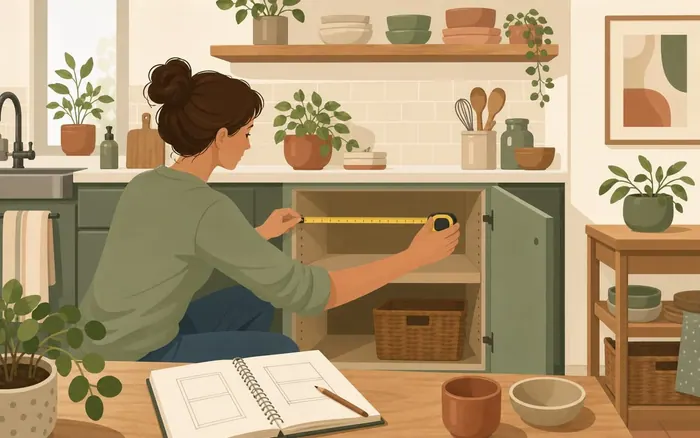
Measure the room and empty one storage zone at a time. Record cabinet interiors, shelf heights, drawer depths, door clearances, and the available counter before buying organizers, then sort a single cupboard or drawer so the rest of the kitchen remains usable. Keep a box for relocations and another for donations instead of spreading every possession across the floor. Our capsule wardrobe guide makes the same argument in another room: edit against real use before buying anything to hold the overflow.
 3Howcompass
Watch a real week of cooking
Observe a typical week of cooking before deciding what to change. Note which meals you prepare, where dirty dishes accumulate, which tools you repeatedly search for, and when more than one person needs the same space. Write down the three most frequent frustrations so the new layout solves daily problems rather than simply making shelves look uniform. The observing habit is what a weekly review journal builds, and three logged frustrations beat one afternoon of guesswork.
 Howcompass
Sort by use, condition, and space
Declutter according to use, condition, and available space. Set aside duplicates you never reach for, damaged equipment, mystery parts, and specialty items that no longer match how you cook, while checking manufacturer instructions before discarding anything essential. Follow local guidance for donations, recycling, and disposal, and use food-quality dates alongside storage directions rather than treating every printed date as an automatic safety deadline. Duplicate kit and forgotten food are quiet spending, which is why our monthly savings plan starts with an inventory too.
 Howcompass
Sketch work centers around the three appliances
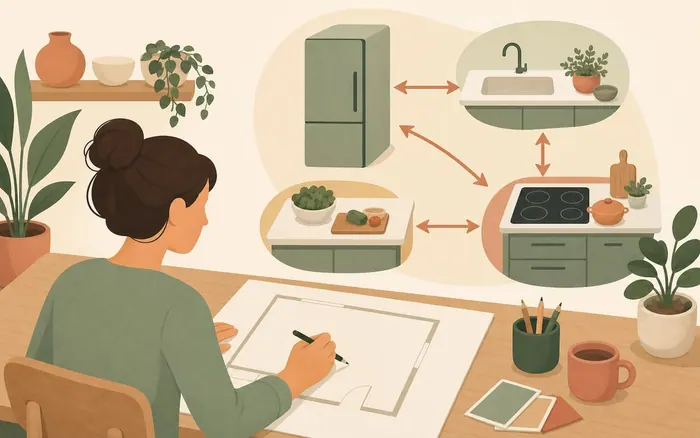
Sketch simple work centers around the refrigerator, sink, and cooker. Think through a meal from storage and preparation to cooking, serving, and cleanup, then group the equipment and counter space needed for each activity. The University of Missouri Extension work-center guide explains this task-based approach, which can be adapted even when a compact kitchen has only one continuous counter. Task-based zoning is the same method behind our ergonomic desk setup: arrange everything around the movements you actually perform.
 Howcompass
Protect one clear preparation surface
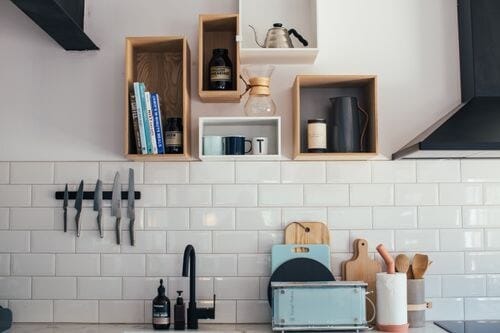
Protect one reliable preparation and landing area. Choose the clearest section of counter near the sink or cooker for chopping and mixing, and identify a separate spot where hot dishes or grocery bags can temporarily rest without blocking the hob or sink. Avoid turning this space into permanent storage for mail, small appliances, or decorative containers. A surface stays useful only if nothing else moves in, which is the exact logic our phone refresh guide applies to storage.
 Howcompass
Give every item a home by frequency
Assign every item a home according to frequency and point of use. Keep daily dishes, knives, cookware, and ingredients within comfortable reach, move occasional equipment farther away, and store heavy objects low enough to lift safely. Test the proposed locations with an empty-box simulation before committing to a full rearrangement, especially if reaching or bending is difficult. Before committing to a layout, our guide to hanging shelves securely is worth reading for reach zones, fixings, and load limits.
Creating Practical Preparation, Cooking, and Storage Zones
 Howcompass
Build a compact preparation station
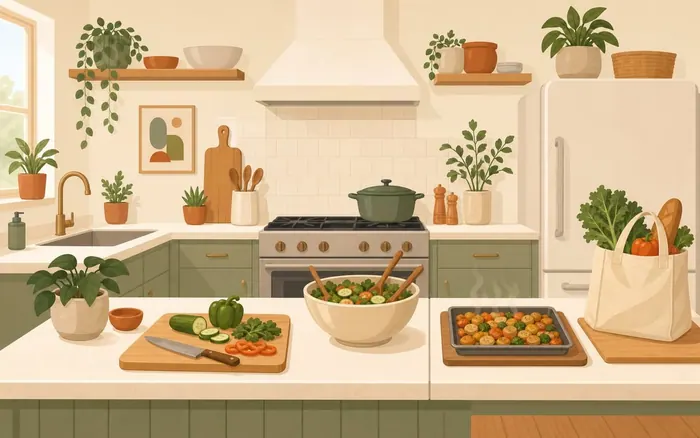
Build a compact preparation station around your most common tasks. Place chopping boards, knives, mixing bowls, measuring tools, and a small waste bowl near the protected work surface, keeping only the tools you use regularly in the prime drawer. If you bake often, our guide to baking bread at home can help you identify which measuring and mixing tools deserve a dedicated baking container.
 Howcompass
Arrange the cooking zone for safe movement
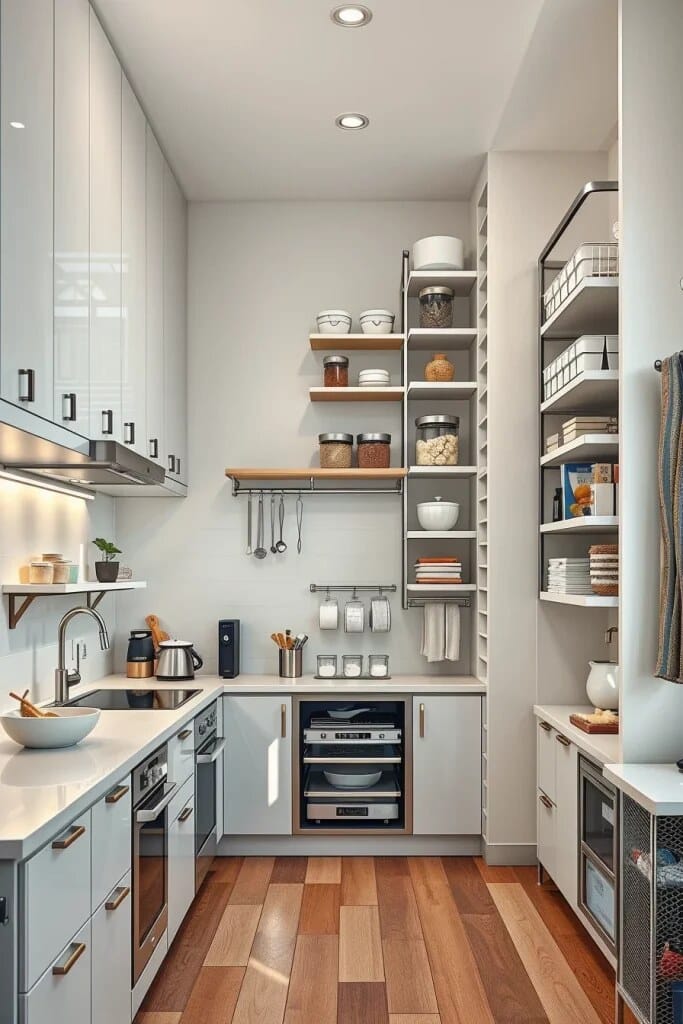
Arrange the cooking zone for safe, direct movement. Store everyday pots, pans, lids, oven gloves, and cooking utensils close to the cooker without crowding burners, blocking ventilation, or exposing items to grease and heat. Keep pot handles turned inward during use, place heavy cookware on lower shelves, and leave enough clear space to set down a hot tray safely. Our room-by-room childproofing guide catalogues the same cooker-side hazards: reach-over-the-front pans, loose handles, and clear landing space.
 Howcompass
Group the pantry and rotate stock forward
Group pantry ingredients by category and rotate older stock forward. Use broad groups such as grains, tins, baking supplies, spices, and quick meals so you can see what you already own, and add a stable riser where small packages disappear behind one another. The Illinois Extension pantry guide recommends category grouping and First In, First Out rotation to reduce duplicate purchases and waste. Bulk staples are worth stocking deliberately, and our guide to cooking dried beans and whole grains shows how much a family actually gets through.
 Howcompass
Organize the fridge for airflow and safety
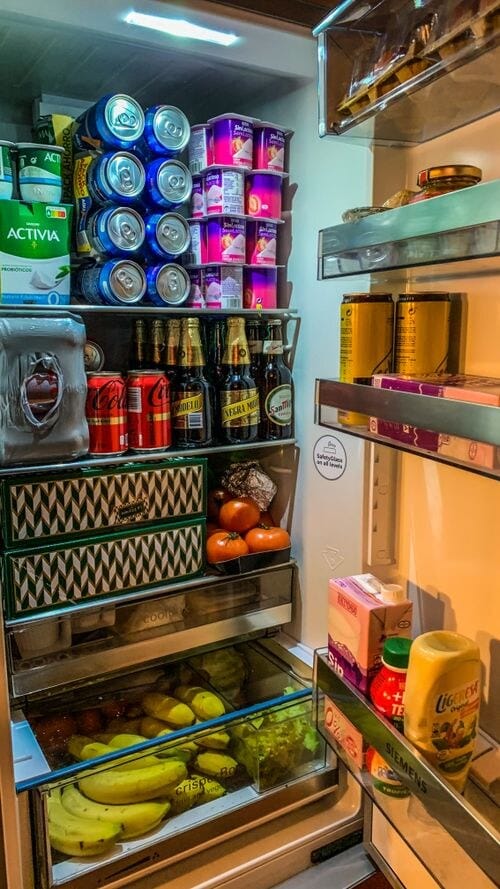
Organize the refrigerator for visibility, airflow, and food safety. Keep ready-to-eat foods covered, place raw meat or fish on a leak-proof tray on the bottom shelf, reserve the warmer door for less perishable condiments, and avoid packing shelves so tightly that air cannot circulate. Follow the FDA food-storage guidance, including refrigerating perishables promptly and keeping the appliance at or below 40°F or 4°C. Our food safety guides repeat the rule that an overstuffed fridge fails quietly, long before anyone notices the temperature.
 Howcompass
Keep chemicals away from food
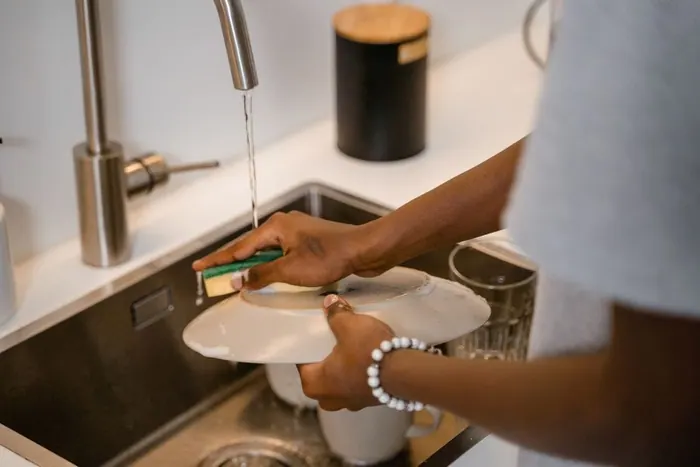
Separate cleaning supplies from food and food-contact equipment. Give dish soap, towels, brushes, and waste bags a defined cleaning zone, but move household chemicals, pesticides, and other hazardous products away from ingredients and clean utensils according to their labels. Use a secure cabinet where children or pets could gain access, keep products in their original containers, and never decant chemicals into drink bottles. Our pet safety guides cover the same cabinet problem from the other side, including detergents and plant material a curious animal can reach.
 Howcompass
Set up a beverage station you will use
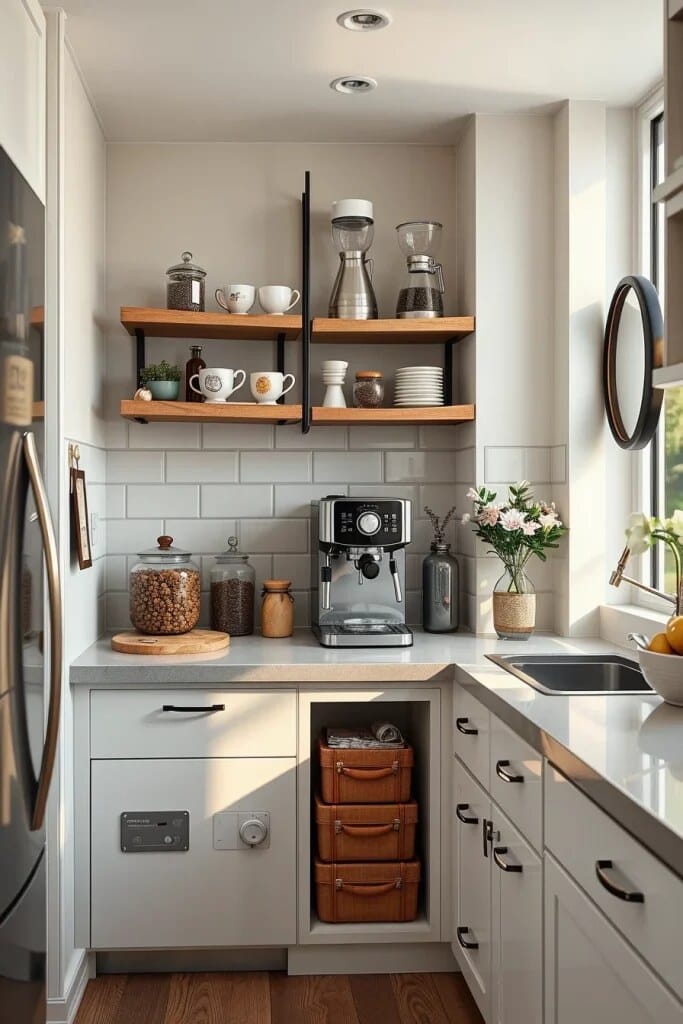
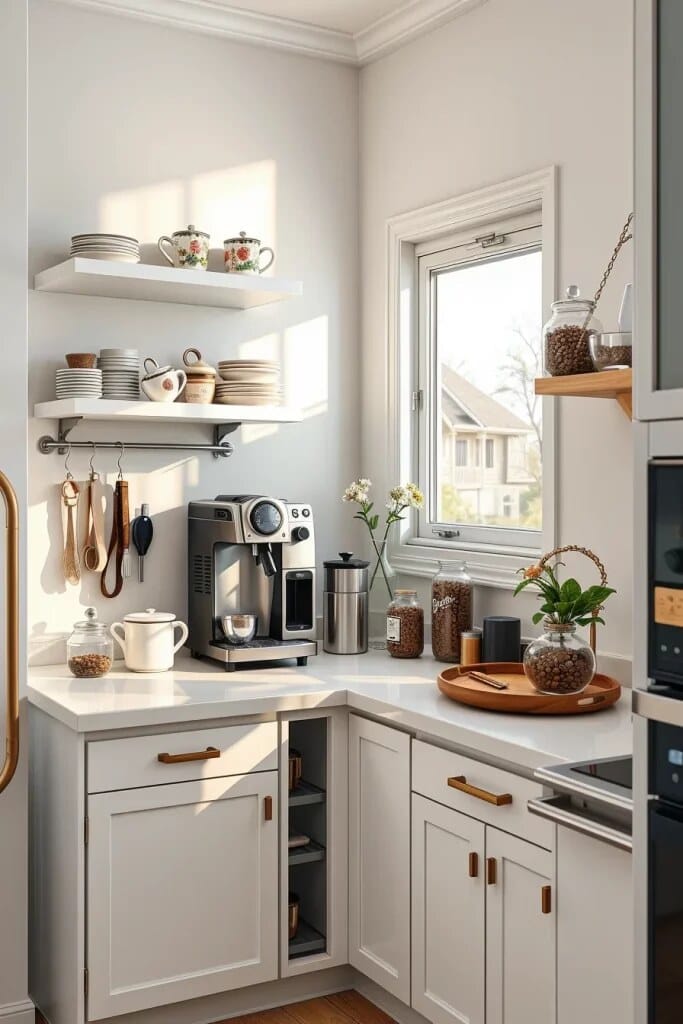
Create a beverage or breakfast station only if it matches your routine. Group mugs, tea, coffee, and the appliance you genuinely use each day near a suitable socket and water source, leaving required ventilation space and keeping cords away from the sink and hot surfaces. Our guides to descaling a kettle or espresso machine and brewing pour-over coffee cover the care and use of a compact station.
Using Cabinets, Drawers, and Vertical Space Efficiently
 Howcompass
Add shelf height only where it helps
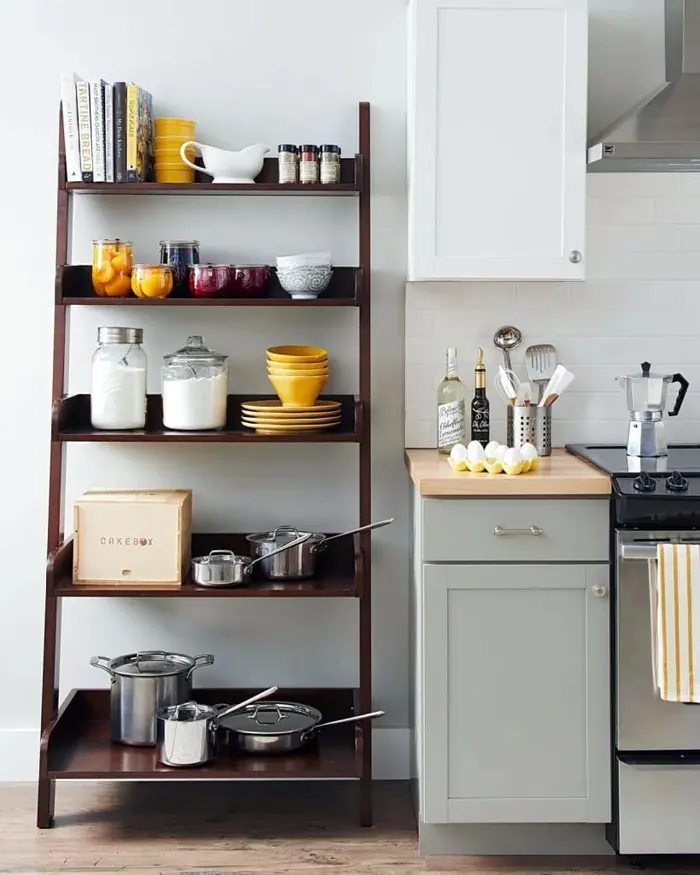
Add shelf height only where it improves safe access. Use a stable, correctly sized riser for light dishes or tins, and check the shelf and organizer load limits before stacking anything heavy. Leave enough room to lift items without twisting them around a cabinet frame, and avoid makeshift platforms that can slide, bow, or conceal damaged packaging. The load-limit caution in our shelf hanging guide applies directly to any riser or inserted shelf you add to a cabinet.
 Howcompass
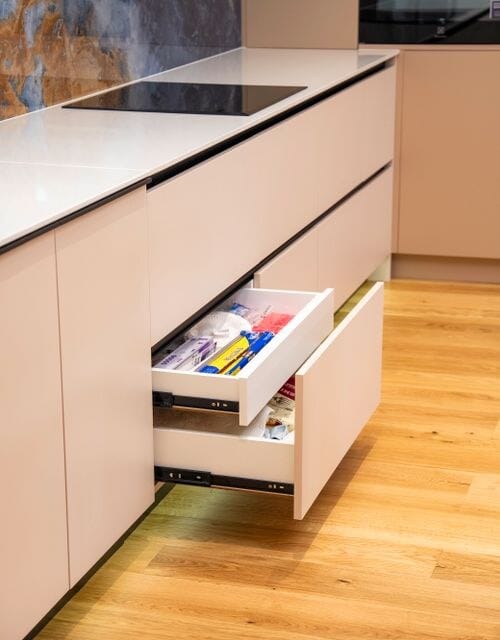
Divide drawers around your real tools
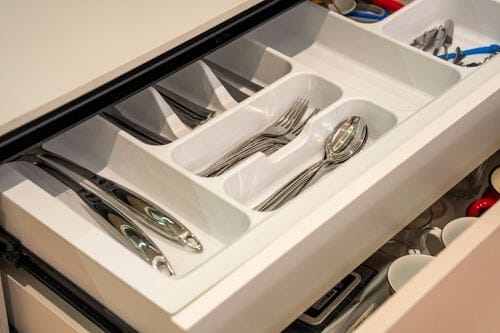
Divide drawers according to the tools you actually reach for. Measure first, then use adjustable or repurposed dividers to separate cooking utensils, cutlery, wraps, and small gadgets without filling every gap with organizer plastic. Store knives in a dedicated insert, block, or guard that protects both the blade and anyone reaching into the drawer. If fabric organisers appeal, our sewn canvas tote guide teaches a backstitch strong enough for a drawer insert or knife roll.
 Howcompass
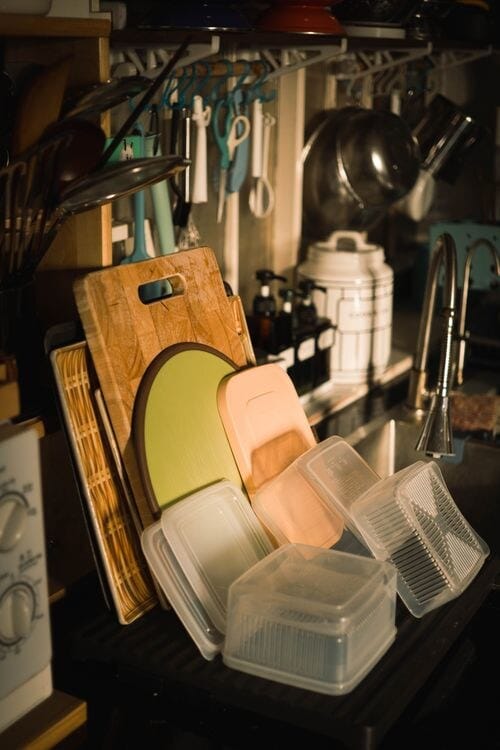
Stand trays, boards, and lids upright
Store trays, boards, and lids vertically when they remain stable. A low, secured rack can make a baking sheet or pan lid easier to remove than a tall stack, provided the cabinet is deep enough and nothing tips onto your hand. Keep frequently used pieces near the front and do not force oversized items against the door or hinges. Our storage guides keep arriving at the same conclusion: an item you have to dig out of a stack never stays put.
 Howcompass
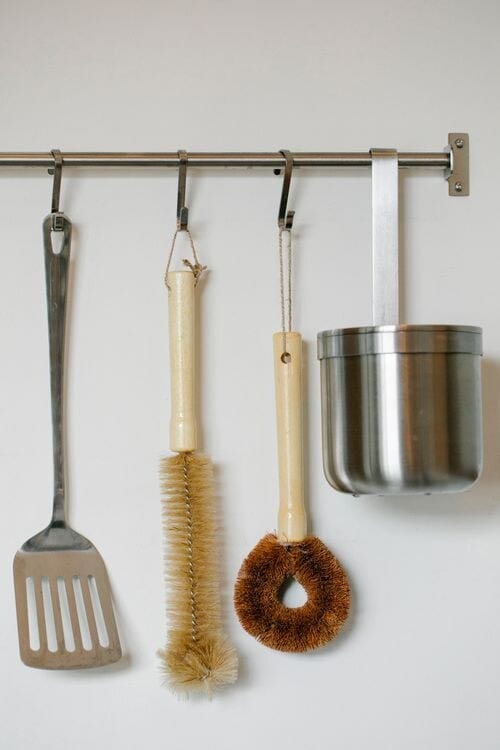
Use walls and door backs without hazards
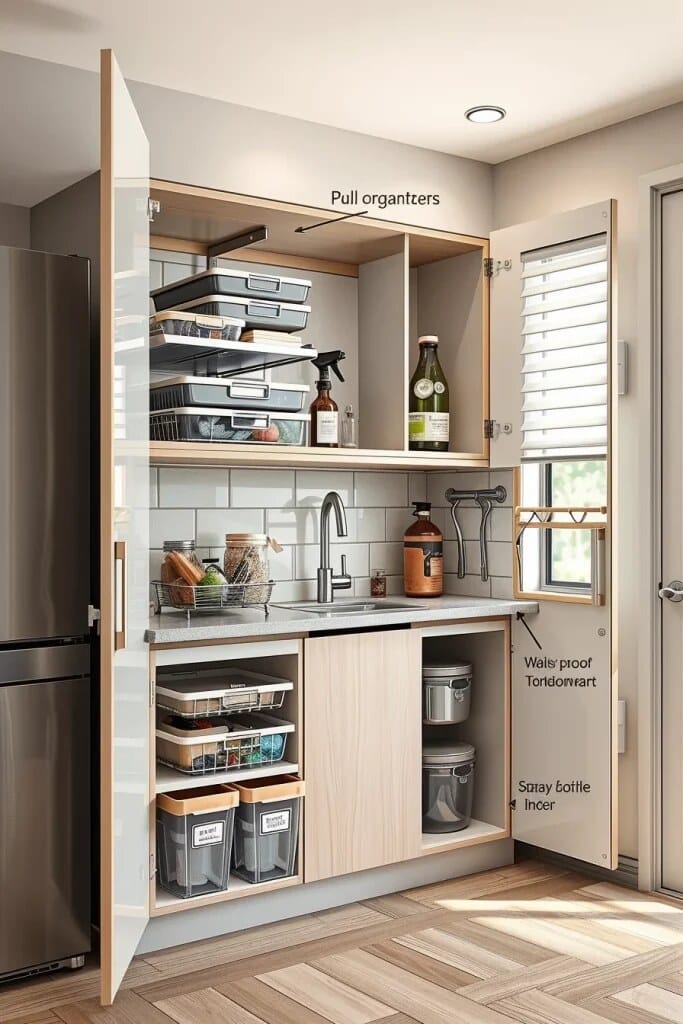
Use walls and cabinet doors without creating new hazards. Renter-friendly hooks or a properly installed rail can hold lightweight utensils, while an inner-door organizer may suit wraps or cleaning gloves if the door still closes and nothing touches shelves. Follow mounting instructions and tenancy rules, and keep storage away from burners, hot appliances, water spray, and children's reach when the contents are hazardous. And if a fixing goes wrong in a rental, our plaster and drywall patching guide shows how to close the hole before the deposit does.
 Howcompass
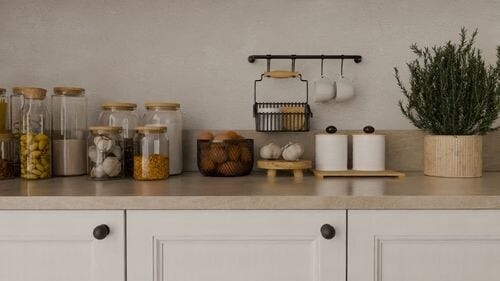
Decant only what benefits from it
Decant only foods that benefit from a sealed, food-safe container. Retain the product name, allergens, preparation directions, and relevant date information on a label or stored package, wash and dry reusable containers before refilling, and avoid mixing old and new batches. The EPA pest-prevention guidance recommends sealed plastic or glass containers and removing clutter that gives pests places to hide. Reusing and labelling clean jars properly is also the foundation of our soy container candle guide, where the same containers appear.
 Howcompass
Relocate occasional items out of reach
Move occasional items out of prime kitchen storage with care. A stable shelf elsewhere can hold party serveware or seasonal equipment, while rarely used food still needs a cool, dry, pest-safe location that follows its label. Do not store ingredients in a damp garage, beside chemicals, above a hot appliance, or anywhere you would need unsafe climbing to retrieve them. Archiving the rarely used to make the everyday fast is the thinking behind our guide to speeding up a slow laptop, applied to shelves.
Keeping the System Safe and Easy to Maintain
 20Howcompass
Cook from what you already hold
Check existing ingredients before planning meals and shopping. Make a short list of opened packages, leftovers, and foods approaching the end of their useful quality, then build one or two meals around them before buying replacements. A flexible recipe such as our sheet-pan root vegetable guide can help use suitable produce without requiring a rigid weekly menu.
 21Howcompass
Label leftovers and chill them fast
Label leftovers and return perishable food to cold storage promptly. Use a covered container marked with the contents and storage date, cool larger batches in shallow portions, and follow recommended storage times instead of relying on appearance or smell alone. The FoodSafety.gov cold-storage chart gives food-specific guidance, including three to four days for many cooked leftovers under proper refrigeration. Our leftover storage guides set the same three-to-four-day expectation for most cooked food, whatever the container looks like.
 Howcompass
Reset surfaces at the end of cooking
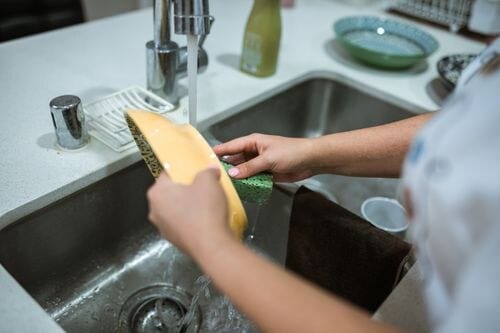
Use a brief end-of-cooking reset to preserve clear surfaces. Put ingredients back in their assigned zones, wash or load dishes, wipe spills with an appropriate method, and return the preparation tools to their drawer before leaving the kitchen. If suitable for your home and local rules, our apartment worm-composting guide explains one option for managing appropriate plant-based scraps without leaving them on the counter.
23HowcompassRun a small monthly check
Schedule a small monthly check instead of another full overhaul. Look for spills, loose organizers, pests, expired refrigerated items, and tools that have migrated away from their zones, then correct one shelf or drawer at a time. Maintain the equipment in your new layout as well; even a windowsill herb area benefits from the routine in our year-round culinary herb guide.
 24Howcompass
Review the layout after two weeks
Review the layout after two weeks of normal cooking. Keep the changes that save movement and make cleanup easier, adjust anything that requires awkward reaching or repeated searching, and remove organizers that consume more space than they save. Invite other household members to demonstrate where they expect items to go so the final system is shared, understandable, and realistic. Getting housemates to show where they expect things is the household version of our family routines guide: a system only works if everyone can run it.
Frequently Asked Questions
Question: Should I organize the entire kitchen in one day?
Usually not in a very small or heavily used kitchen. Plan the layout first, then complete one zone at a time so you retain a safe place to prepare food and can test each decision before moving on.
Question: Can I organize a rental kitchen without drilling?
Yes. Freestanding risers, drawer dividers, stable bins, and removable products rated for the intended load can help, provided they do not damage surfaces or obstruct doors, heat, ventilation, or safe movement. Check both product instructions and your tenancy terms.
Question: Do matching containers make a kitchen more organized?
Not by themselves. Organization comes from suitable locations, safe storage, visible stock, and easy maintenance. Containers are useful only when they fit the shelf, protect the contents, and remain easy to label, clean, and refill.
Question: What is the cheapest way to gain counter space in a tiny kitchen?
Take space back from things before buying anything. Move appliances you use weekly rather than daily onto a lower shelf or into a cupboard, and clear the counter of the mail, baskets, and decorative containers that quietly claim the best working area. Then win vertical space with two or three cheap fixes: a rail for utensils, hooks inside a cabinet door, and a riser under stacked tins. Measure the empty zone first, and only buy organisers once you know the shelf heights you are working with.
Tips
- Leave a little empty space in each prime cabinet so putting items away remains faster than rebuilding a perfect stack.
- Repurpose a sturdy box as a temporary category container before buying a permanent organizer; the trial will reveal the size you actually need.
- Store a short inventory note inside the pantry door for staples you prefer not to run out of, rather than listing every item you own.
Warnings
- Never store food, clean dishes, or food-preparation tools with pesticides, household chemicals, or unlabelled cleaning products.
- Do not overload shelves, hooks, risers, or wall rails, and use a stable step platform rather than a chair when a safe step is necessary.
- Unplug appliances before moving them and preserve the ventilation, cord clearance, and water clearance specified by their manufacturers.
Things You'll Need
- Tape measure and a simple cabinet sketch
- Removable labels and a permanent marker
- Stable shelf risers or drawer dividers
- Food-safe containers with well-fitting lids
- Non-slip shelf liner where appropriate
- Boxes for donations, recycling, and relocated items
Try it with a free tool
You have read the method — now work through your own numbers or text. These free tools run in your browser, need no sign-up and link back to this guide.
Related Howcompass Guides




References (5)
- Kitchen Planning: Work CentersUniversity of Missouri Extension
- Prep Your PantryUniversity of Illinois Extension
- Are You Storing Food Safely?U.S. Food and Drug Administration
- Cold Food Storage ChartFoodSafety.gov
- Do's and Don'ts of Pest ControlU.S. Environmental Protection Agency
Sources are listed so you can read the underlying guidance yourself. Our editorial policy explains how guides are reviewed.
Did this article help you?
0 readers found this helpful — add your vote.
No comments yet — be the first to share your results.