How to Build a Pet Emergency Go-Bag and Evacuation Plan
A guide to Assessing Risks and Assigning Responsibilities, Preparing Identification and Care Records, Packing Food, Medicine, and Daily Care Supplies, Preparing Carriers and Practicing Evacuation, Maintaining the Kit and Returning Safely
A pet emergency kit works best when it is connected to a realistic destination, transport method, and backup caregiver rather than treated as a bag of supplies alone. Use these 23 steps in our Pets and Animals collection to prepare for the animals and hazards in your own household, then confirm medical, handling, and species-specific details with your veterinarian and local emergency authorities.
How do you build a Pet Emergency Go-Bag and Evacuation Plan?
 Howcompass | How to Build a Pet Emergency Go-Bag and Evacuation Plan
Assessing Risks and Assigning Responsibilities
HowcompassList every pet and likely household risk
List every animal and the emergencies most likely to affect your household. Record each pet's species, breed, age, size, distinguishing features, handling needs, health conditions, and normal behavior, then consider whether a local fire, flood, severe storm, power outage, or other hazard could require evacuation or sheltering indoors. Include animals that hide, dislike handling, need refrigeration or specialized equipment, or cannot safely share a carrier so the plan reflects real needs rather than an ideal response. Note which animals depend on powered equipment when you plan for a power outage.
 3Howcompass
Link the pet plan to your household roles
Connect the pet plan to your household communication and evacuation arrangements. Decide who brings each animal under control, who collects the go-bag and carriers, who checks rooms, and who contacts the destination, with backups for every role. The Ready.gov pet disaster checklist recommends planning, building a kit, and staying informed; our family communication plan can hold the shared contacts and meeting arrangements without replacing pet-specific instructions.
 4Howcompass
Agree terms with a backup caregiver
Arrange a trusted backup caregiver who can act if you are away or delayed. Choose someone who knows your animals and can legally and safely enter your home, then agree on access, transport, spending limits, veterinary authorization, and the circumstances in which they should respond. Give them only the access and private information they need, show them where the kit and carriers are stored, and confirm occasionally that they are still willing and able to help. Confirm the agreed access in a short email that gets a reply so the terms are on record.
 Howcompass
Confirm animal policies at several destinations
Identify several safe destinations and confirm their current animal policies. Ask friends or relatives outside the likely affected area, pet-friendly accommodation along your routes, boarding facilities, veterinary clinics, and local emergency organizations what they can actually accept, including species, size, vaccination, reservation, and crate requirements. The American Red Cross pet preparedness guidance emphasizes arranging a safe place in advance because many shelters and hotels may not accept pets other than service animals. Check lodging rules while planning trips in our travel guides.
 Howcompass
Map primary and alternate evacuation routes
Map primary and alternate routes for the transport you will really use. Account for road closures, fuel or charging availability, public-transport animal rules, stairs, carrier weight, weather, and the possibility that a destination is full or inaccessible. Save addresses and essential route information offline with help from our offline map guide, but treat official instructions and actual conditions as more important than reaching a preselected location.
Preparing Identification and Care Records
 Howcompass
Update identification and microchip registration
Fit secure identification and keep microchip registration current. Use a suitable collar or harness with a legible tag where appropriate for the species, check that it cannot slip off or catch during normal use, and verify that the microchip registry holds your current phone numbers and an alternate contact. The CDC pet emergency guidance recommends collars, current tags, microchipping, and registration, while a microchip remains useful only when its registry information can reach you. More handling notes for each species are in pets and animals guides.
 Howcompass
Write a concise care sheet per animal
Create a concise care sheet for each animal. Include the pet's name and description, usual food and portions, feeding schedule, medication instructions, allergies, mobility or sensory needs, handling preferences, stress signals, toileting routine, and behaviors a temporary caregiver should not misread. Write instructions that another responsible adult can follow without guessing, and ask your veterinarian to clarify any medical detail that cannot safely be reduced to a short note. The same routine works for a new puppy or kitten you are still training.
 9Howcompass
Pack records in waterproof and digital form
Gather veterinary, vaccination, prescription, and ownership records in waterproof form. Include relevant vaccination certificates, medical history, current prescriptions, microchip details, adoption or registration documents, and your veterinarian and pharmacy contacts, with paper copies protected from water and secure digital copies available to authorized caregivers. The AVMA Save the Whole Family guide lists records and identification among the core evacuation preparations, and a boarding facility may require current proof before accepting an animal. Scan the set using digital photo library habits so copies stay findable.
 Howcompass
Photograph each pet for identification
Take current identification photographs of every pet. Capture clear full-body and face images, distinctive markings, and any identifying features, then add a photograph of you with the animal to help demonstrate your connection if you become separated. Refresh the pictures after major changes in coat, size, or appearance, and store small printed copies in the document pouch as well as accessible digital copies on more than one authorized device. Use the light and framing advice in take better photos for those pictures.
 Howcompass
Print a compact emergency contact card
Prepare a compact emergency contact card for the kit and each carrier. List your numbers, the backup caregiver, out-of-area contact, regular veterinarian, nearest appropriate emergency veterinary clinic, animal control or local animal-response contacts, and confirmed destinations. Keep sensitive details limited to what a rescuer or caregiver needs, protect the card from moisture, and replace every copy when a number or arrangement changes. Match the layout to your family emergency contact plan so both cards stay together.
Packing Food, Medicine, and Daily Care Supplies
 12Howcompass
Choose and label a sturdy go-bag
Choose a sturdy, portable, water-resistant container and label it clearly. Use a container one person can lift safely when it is packed, or divide supplies into smaller labeled loads so carriers and animals never have to be sacrificed for an excessively heavy bag. Mark the owner and pet names without exposing unnecessary private information, keep frequently needed items accessible, and avoid airtight storage for anything that your veterinarian says requires different conditions. Pack it the way you would a carry-on bag so one person can lift it.
 Howcompass
Pack rotating food and safe water
Pack a rotating supply of each pet's usual food and safe drinking water. Use airtight, waterproof food containers, include a manual opener and serving utensils if needed, and avoid switching abruptly to unfamiliar food during an already stressful event. The AVMA pet evacuation checklist lists three to seven days of food, at least seven days of water, and regular rotation, but your veterinarian and local emergency guidance may require different quantities for your animal and situation. Rotate stock with the same care you use to store food safely for people.
 Howcompass
Pack medicines and vet-approved first aid
Pack medications and only the first-aid supplies recommended for your animals. Keep medicines in correctly labeled containers with dosage instructions, check storage and refrigeration requirements, and place a reminder in the kit for anything that must remain in a refrigerator or separate temperature-controlled case. Ask your veterinarian which first-aid items and techniques are appropriate, and never assume a human pain reliever, leftover prescription, or improvised treatment is safe for a pet. Restock it beside your home first aid kit so both get checked together.
 Howcompass
Add feeding and sanitation supplies
Add feeding, sanitation, and cleaning supplies for the whole household of animals. Include collapsible or spill-resistant bowls, litter and a suitable tray for cats, waste bags, bedding liners, paper towels, unscented soap, gloves, trash bags, and species-appropriate cleaning products used strictly according to their labels. Separate clean feeding items from waste supplies, pack enough bags to contain contaminated material, and never mix cleaning chemicals or use a disinfectant on an animal unless a veterinarian specifically directs it. Cats settle faster with a litter tray system you have set up in advance.
 Howcompass
Include comfort items and species essentials
Include comfort items and species-specific essentials without overloading the kit. Add familiar bedding, a safe toy, treats used as part of the normal diet, and necessary items such as hay for rabbits, appropriate substrate, or a battery-powered air pump plan for aquariums where advised by a specialist. Choose washable or disposable bedding when practical, keep small or stressed animals in suitable separate housing, and ask an exotics veterinarian about temperature, humidity, lighting, or other needs that a generic cat-and-dog checklist does not cover. Aquarium owners should follow freshwater aquarium care for the tank itself.
Preparing Carriers and Practicing Evacuation
 Howcompass
Fit a secure carrier for each animal
Select and label a secure carrier or travel restraint for each animal. Check ventilation, door fastenings, structural condition, absorbent bedding, and enough space for the animal to stand, turn, and lie naturally where the carrier design and veterinary guidance require it, then attach a protected contact card. Do not rely on a cardboard box, a loose animal in a vehicle, or one crowded carrier for incompatible pets, and use a specialist plan for animals whose welfare depends on a different transport setup. Keep incompatible animals apart using our introducing a new pet steps.
 Howcompass
Acclimate pets to carriers and short trips
Acclimate pets gradually to carriers, handling, and short vehicle trips. Leave the carrier open in a familiar space, reward calm investigation, add comfortable bedding, and progress from brief stationary sessions to short, safe journeys without forcing a frightened animal. Our new puppy or kitten care guide can support broader positive routines, but persistent panic, aggression, motion sickness, or breathing difficulty deserves individual veterinary or qualified behavior advice rather than repeated forced practice.
 Howcompass
Load animals and supplies without delaying exit
Plan how animals, carriers, and supplies will be loaded without delaying departure. Position carriers so they cannot slide or tip, follow the restraint manufacturer's instructions, keep animals out of airbag zones where applicable, and preserve clear visibility and control for the driver. Coordinate human supplies with our car emergency kit guide, and never leave a pet unattended in a parked vehicle or delay an official evacuation to retrieve nonessential belongings.
 Howcompass
Run a timed low-stress evacuation drill
Run a timed, low-stress evacuation drill during ordinary conditions. Practice bringing pets indoors or into a secure area, fitting identification, collecting each carrier and go-bag, loading safely, and contacting a pretend destination while another person checks that no animal or essential record is missed. Do not create a false public alarm or call emergency services as a test; stop if an animal becomes overwhelmed, then shorten or modify the practice with appropriate professional guidance.
Maintaining the Kit and Returning Safely
 Howcompass
Store the kit near your exit path
Store the kit and carriers where household members and the backup caregiver can reach them. Use an accessible location near the normal exit path without blocking escape routes, and protect food, medicines, electronics, and records from damaging heat, cold, moisture, pests, and unauthorized access. If you use a pet rescue-alert notice, keep the number and types of animals current and mark it evacuated when all animals are safely out and time permits. Check that cupboard when you childproof each room so pets cannot reach chemicals.
 Howcompass
Review dates and contacts on a schedule
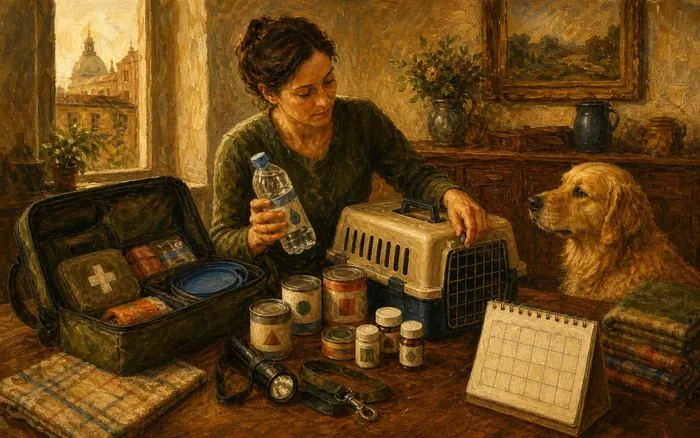
Review expiration dates, condition, and contact details on a recurring schedule. Rotate food and water into normal use before they deteriorate, replace medicines according to veterinary and pharmacy instructions, test battery-powered equipment, inspect carrier fastenings, and update records after moves, new pets, health changes, or changed destinations. Tie the review to an existing calendar event and record what was replaced so the kit does not look complete while containing unusable supplies. Attach the check to a weekly review habit you already keep.
 Howcompass
Keep animals under control while evacuating
Keep animals under direct control and follow official instructions during an evacuation. Bring companion animals indoors at the first credible warning when conditions allow, use leashes, harnesses, or secured carriers as appropriate, leave as early as directed, and take their supplies with you rather than assuming they can safely fend for themselves. Keep animals from different households separated when practical, use careful hygiene, and never enter a hazardous area or ignore an evacuation order to search for property or supplies. Cue practice from train a puppy to sit makes leash control easier in a crowd.
 Howcompass
Check the home before pets roam free
Reintroduce pets carefully after authorities permit a return. Inspect for structural damage, exposed cables, contaminated water, chemicals, sharp debris, wildlife, and damaged fencing before releasing an animal, then keep pets leashed, crated, or otherwise controlled while familiar scents and landmarks settle. Our puppy-proofing guide provides a useful room-level hazard check, and persistent injury, breathing changes, toxin exposure, refusal to eat, or severe behavioral distress warrants prompt veterinary advice.
Frequently Asked Questions
Question: How much food and water should a pet go-bag contain?
The AVMA lists three to seven days of food and at least seven days of water in its evacuation checklist, along with a two-week medicine supply, but needs vary by species, health, climate, and local guidance. Confirm quantities and storage with your veterinarian, and rotate every perishable item before it expires.
Question: What should we do if an emergency shelter cannot accept our pets?
Use arrangements made before the emergency, such as friends or relatives outside the affected area, pet-friendly accommodation, boarding facilities, veterinary clinics, or a local animal-response option. Do not leave pets in an unsafe home because a shelter cannot house them; service animals have different considerations from pets, so confirm current local rules.
Question: Can two pets share one carrier during an evacuation?
A separate secure carrier for each animal is the safest default, especially for stressed animals or pets from different households. Even bonded animals may react unpredictably under stress, so ask your veterinarian about any exception and never crowd animals into a carrier with inadequate space or ventilation.
Question: What should I do if I genuinely cannot take my pet with me?
Leave the animal loose near a window or door where rescuers can see it, with the go-bag, a water container and a rescue notice that states the number and type of animals inside. Do not lock a pet in a carrier or cage during an evacuation, because responders cannot free it quickly. Contact your local animal-control number or shelter as soon as lines are working and tell them the exact address and when you left.
Tips
- Keep a duplicate care sheet and contact card inside each carrier's waterproof document sleeve so the right instructions travel with the right animal.
- Rotate small amounts of emergency food into ordinary meals and replace them immediately instead of waiting until the entire supply is close to expiring.
- Photograph the packed kit and keep a simple checklist on top so a backup caregiver can identify missing items quickly.
Warnings
- Never leave a pet unattended in a parked vehicle; temperature, ventilation, and stress can become dangerous quickly even when the weather does not feel extreme to you.
- Do not give pets human medicines or improvise first aid beyond your training; contact a veterinarian or appropriate emergency service for individual guidance.
- Follow official evacuation instructions and do not delay your own safe departure for nonessential supplies, but take companion animals with you whenever you must leave an unsafe home.
Things You'll Need
- A secure labeled carrier or suitable travel restraint for each animal
- Usual food, safe water, bowls, and a manual opener where needed
- Labeled medications and veterinarian-approved first-aid supplies
- Species-appropriate sanitation, bedding, and cleaning supplies
- Waterproof veterinary records, current photographs, and contact cards
- Secure identification, leash or harness, and familiar comfort items
Related Howcompass Guides




References (5)
- Prepare Your Pets for DisastersReady.gov
- Pets and DisastersAmerican Veterinary Medical Association
- Pet Disaster Preparedness & RecoveryAmerican Red Cross
- Be Prepared: Pet Safety in EmergenciesCenters for Disease Control and Prevention
- Save the Whole Family: Disaster Preparedness for Households With PetsAmerican Veterinary Medical Association
Sources are listed so you can read the underlying guidance yourself. Our editorial policy explains how guides are reviewed.
Did this article help you?
0 readers found this helpful — add your vote.
No comments yet — be the first to share your results.