How to Fix Your Entire Life in 1 Day
A guide to Clear Your Head Before You Touch Your Phone, Reset Your Body, Reset Your Space, Reset Your Digital Life, Reset Your Money, Reset Your Relationships, Plan the Next Thirty Days, Close the Day and Lock It In
Some days you look around and realize everything has drifted at once: the sleep schedule, the sink full of dishes, the subscriptions quietly draining your account, the friend you keep meaning to call. The instinct is to wait for a free weekend that never comes. This guide is that weekend, compressed into one deliberate day. Be honest about the promise, though. One day cannot repair years of habits or solve deep problems — what it can do is break the inertia in every area at once, give you a clean baseline, and leave you with a written 30-day plan instead of a vague wish. Think of it as pressing reset on all eight cylinders of your life in the right firing order: mind first, then body, space, screens, money, people, plans, and finally rest. The steps below run from waking up to going to sleep. Each block takes roughly 30–60 minutes, and every step is small enough to finish before your motivation fades. If a full day is impossible, the FAQ at the end shows a two-hour version. Pair this with our Build a Healthy Sleep and Morning Routine guide if your mornings are the hardest part, and keep the Keep a Weekly Values Review Journal guide handy — step 40 turns today's reset into a weekly habit.
You cannot solve every problem in 24 hours, but you can break the inertia in every area of your life in a single structured day. Work through eight blocks in order — mind, body, space, digital life, money, relationships, a 30-day plan, and a proper wind-down — then protect the result with a weekly 30-minute reset. Each block below takes 30–60 minutes; the whole day needs about six to eight focused hours.
- Time
- 1 day, about 6–8 focused hours
- Cost
- $0 (uses what you already own)
- Difficulty
- Beginner-friendly
- People
- 1 (a partner helps for accountability)
- Space
- Your home plus a short walk outside
- Tools
- Notebook, pen, timer, phone, bank statements
How do you fix Your Entire Life in 1 Day?
 Howcompass | How to Fix Your Entire Life in 1 Day
Clear Your Head Before You Touch Your Phone
HowcompassWake Up at a Fixed Time and Skip the Snooze Button
Get up the moment your alarm rings, at the same time you plan to keep all week. Snoozing fragments the last cycle of sleep and leaves you groggier than simply standing up, so put the alarm across the room and open the curtains immediately. Consistent wake times anchor your body clock more reliably than early bedtimes do — the CDC's sleep guidance treats regularity as a core habit. If mornings are your weak spot, our Build a Healthy Sleep and Morning Routine guide rebuilds them gradually.
 Howcompass
Keep Your Phone Off for the First Hour
Leave your phone charging in another room and do not look at it until you have finished breakfast. The first hour sets your attention for the whole day: open a feed and you start reacting to everyone else's priorities instead of choosing your own. If the urge feels physical, that is the habit loop talking, not a real need. Charge the phone outside the bedroom overnight so this step is automatic — the Sleep Foundation's sleep hygiene guidance recommends keeping devices out of bed for exactly this reason.
 Howcompass
Drink a Full Glass of Water and Get Morning Light
Drink a full glass of water before coffee, then spend five to ten minutes outside or at an open window. You wake mildly dehydrated after seven or eight hours without fluids, and plain water is the fastest fix — see Harvard Health's guidance on daily water needs. Morning light on your eyes, even through cloud, tells your brain the day has started and helps you feel sleepy at the right hour tonight. Stand on the balcony, porch or doorstep; no workout required yet.
 Howcompass
Do a Ten-Minute Brain Dump on Paper
Set a timer for ten minutes and write down everything occupying your mind — worries, tasks, half-formed ideas — without organizing or judging it. This is not a diary entry; it is unloading. A meta-analysis in the Journal of Consulting and Clinical Psychology found that writing about thoughts and feelings produces measurable improvements in psychological and physical health. When the timer ends, circle the three items that genuinely need action today and let the rest sit on the page. Our Keep a Morning and Evening Stoic Reflection Journal guide turns this into a lasting practice.
 Howcompass
Choose One Intention and Take Three Slow Breaths
Pick a single word or sentence for the day — "finish one thing", "be present", "steady" — and say it to yourself before you stand up. Then take three slow breaths, exhaling longer than you inhale, to settle your nervous system before the day's demands arrive. Brief mindfulness practice like this is supported by the NIH's National Center for Complementary and Integrative Health as a way to reduce stress reactivity. Write the intention at the top of your brain-dump page so every later block can be measured against it.
Reset Your Body
 Howcompass
Move Your Body for Twenty Minutes
Do twenty minutes of movement you cannot talk your way out of: a bodyweight circuit, a brisk walk, or a follow-along video. Exercise is one of the most reliable mood levers available — Harvard Health's review of exercise and stress describes it as a natural anti-anxiety treatment that also improves sleep. Keep it moderate today; this is a reset, not a training camp. If you have no routine at all, our Build a No-Equipment Bodyweight Routine at Home guide gives you a complete beginner circuit with zero gear.
 Howcompass
Eat a Breakfast Built on Protein and Fiber
Eat a real breakfast combining protein and fiber — eggs and vegetables, yogurt with oats and berries, or beans on whole-grain toast — instead of pastry alone. The Harvard Healthy Eating Plate recommends whole grains, healthy protein and produce at every meal, and starting the day that way steadies energy until lunch. Sit down to eat it without a screen. For a five-minute template you can repeat all week, see our Build a Balanced High-Fiber Breakfast Bowl in Five Minutes guide.
 Howcompass
Take a Fifteen-Minute Walk Outside
Walk outside for fifteen to twenty minutes at an easy pace, ideally somewhere with trees or water. A Stanford study published in PNAS found that a brief nature walk reduced rumination — the loop of repetitive negative thinking — more than the same walk beside heavy traffic. Leave work problems at home; this walk is for clearing, not planning. If walking is new to you or you are returning after a long gap, our Build a Safe Weekly Walking Routine for Beginners guide sets a sensible starting distance.
 Howcompass
Shower, Groom, and Dress on Purpose
Take a full shower, do your normal grooming, and put on clothes you would wear to meet someone you respect — even if you plan to stay home. Dressing deliberately changes how the rest of the day feels; staying in sleep clothes keeps your brain in rest mode. Keep the routine simple and repeatable rather than elaborate. Our Set Up a Simple Morning and Evening Skincare Routine guide strips grooming down to the few steps that actually matter, so this block takes fifteen minutes, not forty.
 Howcompass
Fix Your Workspace and Your Posture
Set up the place where you will work today: screen at eye level, feet flat on the floor, elbows roughly at ninety degrees, and the desk clear of everything except the current task. Raise a laptop on books if you have no stand. Then adopt the 20-20-20 rule — every twenty minutes, look at something twenty feet away for twenty seconds — to protect your eyes during the focused blocks ahead. Our Relieve Screen Eye Strain During Long Days at a Computer guide covers the full setup and relief routine.
Reset Your Space
 Howcompass
Make the Bed and Open a Window
Make the bed properly — sheets straight, pillows plumped — and open a window for ten minutes to exchange the stale air. It is the smallest possible win, and it matters precisely because it is small: you begin the day having finished something, and you will end it getting into a made bed. Fresh air and daylight also make the room feel reset rather than merely tidied. Do this before any other cleaning so the bedroom becomes your visual anchor for what "done" looks like today.
 Howcompass
Run a Fifteen-Minute Speed Tidy
Set a timer for fifteen minutes and work through the main living area with a basket: trash goes out, dishes go to the kitchen, laundry goes to the hamper, and everything else returns to its home. Do not organize drawers or sort papers today — speed tidying is about surfaces and floor, not storage systems. When the timer rings, stop even if a corner remains. You can keep the rhythm going with our free Pomodoro Timer, which structures any task into focused sprints with breaks.
 Howcompass
Clear the Kitchen Sink and Counters
Wash or load every dish, wipe the counters, and leave the sink empty. The kitchen is the room that regenerates mess fastest, so clearing it once today removes the source of tomorrow's visual clutter. Put appliances away that live on the counter without being used daily, and take thirty seconds to sweep the floor. If the kitchen's layout itself fights you, our Organize a Small Kitchen for Everyday Cooking guide rearranges it so staying clean takes minutes instead of willpower.
 Howcompass
Build a Drop Zone by the Front Door
Create one designated landing spot at your entryway: a tray or bowl for keys and wallet, a hook for your bag, and a shelf or bench for shoes. Clutter accumulates where decisions are missing — without a default spot, everything lands on the nearest chair. Install the hook today with adhesive strips if you cannot drill, and put the keys in the tray the moment you walk in from your morning walk. Our Set Up a Mudroom Entryway Drop Zone for Backpacks and Shoes guide designs the full version for any size of entry.
 Howcompass
Take Out the Trash and Reset Every Surface
Empty every bin in the home into one bag, take it and the recycling out now, and reline the bins. Then wipe the remaining flat surfaces — dining table, desks, nightstands — so the whole home reads as reset, not just one room. Finish by scheduling the maintenance: our free Cleaning Schedule Generator turns the rooms you just cleaned into a realistic weekly rotation, so today's effort becomes a fifteen-minute upkeep habit instead of a monthly emergency.
Reset Your Digital Life
 Howcompass
Triage Your Inbox in One Pass
Open your inbox and make one decision per message: delete or archive anything you will never act on, reply in under two minutes to anything quick, and flag the handful that genuinely need work today. Do not aim for zero — aim for a list you can see the bottom of. Unsubscribe from five newsletters you never read while you are in there. Be suspicious of urgent messages asking for clicks or payments; our Recognize and Avoid Phishing Emails, Texts and Fake Websites guide shows the tells before you tap anything.
 Howcompass
Cancel the Subscriptions You Forgot About
Open your bank and card statements and list every recurring charge, then cancel anything you have not used in the past month. Streaming services, apps, cloud storage and free trials that converted quietly are the usual suspects — small charges feel harmless until you add them up for a year. Cancel directly through each service's account settings, and note the confirmation. Our Audit Your Monthly SaaS and Streaming Subscriptions in 20 Minutes guide walks through the full audit, including the charges hiding in app-store accounts.
 Howcompass
Silence Every Non-Human Notification
Go through your phone's notification settings and turn off everything that is not a real person trying to reach you: keep calls and messages from family and friends, silence news alerts, shopping apps, games and social feeds. Each buzz is a small decision forced on you, and dozens of them a day fragment attention you will need for the planning blocks ahead. Batch-check the silenced apps once or twice a day on your own schedule instead. The phone becomes a tool you pick up, not a slot machine that summons you.
 Howcompass
Clean Up and Back Up Your Photos and Files
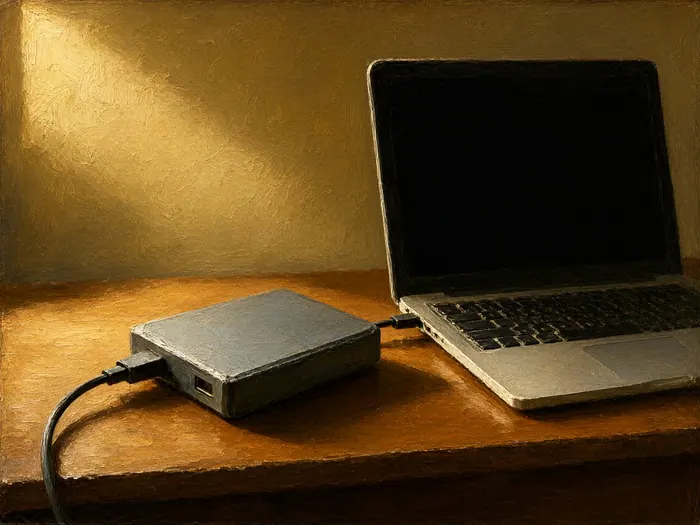
Spend twenty minutes deleting duplicates, screenshots and blurry photos, then make sure everything that remains exists in at least two places — your device plus a cloud service or an external drive. A phone full of duplicates is slow and unsearchable, and a library with no backup is one dropped device away from gone. Our Organize and Back Up a Lifetime of Digital Photos guide builds the full system, and Clear Out and Refresh a Phone That Has Become Sluggish handles the rest of the device.
 Howcompass
Set a Screen Curfew and Ban the Phone from the Bedroom
Set a daily screen curfew ninety minutes before your target bedtime, using your phone's built-in app limits so the decision is enforced for you. Move the charger to the kitchen or hallway so the phone physically cannot follow you to bed. The light and the stimulation both work against sleep — Harvard Health's overview of blue light explains how evening exposure suppresses melatonin and shifts your body clock. Track the effect over the next two weeks with our Keep a Two-Week Sleep and Morning Energy Log guide.
Reset Your Money
 Howcompass
Look at Every Account Balance Without Flinching
Log into every account you hold — checking, savings, cards, investments, any wallet apps — and write each balance on one page. No judgment and no fixing yet; today you are simply turning the lights on. Avoidance is what lets small problems compound, and most people discover the picture is less frightening than the fog around it. Total the numbers at the bottom: what you own minus what you owe. Our Manage Personal Finances and Budget guide builds on this exact snapshot with a complete monthly system.
 Howcompass
List Every Bill and Its Due Date
Write down every recurring bill — rent, utilities, insurance, phone, minimum debt payments — with its amount and due date, and mark which ones already run on autopay. Late fees and missed payments are almost always an information problem, not a money problem. Put the dates into your calendar with reminders two days ahead. Bank of America's Better Money Habits budgeting guide recommends this fixed-cost inventory as the foundation of any budget, because you cannot plan around numbers you have not written down.
 Howcompass
Write a One-Page Budget You Will Actually Keep
Subtract your fixed bills and a savings amount from your monthly income, and divide what remains into honest weekly spending for food, transport and fun. A budget that bans all enjoyment fails by week two, so leave room for life. Try the numbers in our free Budget Calculator, which compares your plan against the 50/30/20 split and projects a year ahead. Then write the final version on one page and put it where you will see it. Our Save Money Every Month guide lists the specific levers that shrink each category.
 Howcompass
Automate One Savings Transfer, However Small
Set up one automatic transfer from checking to savings on the day after payday — even a small amount counts, because the mechanism matters more than the size today. Paying yourself first removes the monthly decision that willpower keeps losing. If you have no buffer at all, this transfer is the seed of an emergency fund; our Build an Emergency Cash Fund Step by Step guide sets the target and the order of operations. Use the free Savings Goal Calculator to turn the target into a monthly number and a finish date.
 Howcompass
Pick One Money Goal for the Next Thirty Days
Choose exactly one money goal for the coming month with a number and a date: build a small buffer, clear one card, or cancel a set amount of recurring costs. One goal beats five, because a month is long enough to finish something real and short enough to keep urgency. Write it as a sentence — "By the 30th I will have X" — and put it on the page with your balances. Our free Goal Setting Worksheet turns the sentence into milestones and a weekly check, so the goal survives contact with a busy week.
Reset Your Relationships
 Howcompass
Send One Honest Thank-You Message
Think of one person who helped you, taught you something, or simply showed up — and send them a specific message about it. Not "thanks for everything", but what they did and what it changed for you. Gratitude practices like this reliably strengthen relationships and mood; the Greater Good Science Center at Berkeley summarizes the research and explains why specificity is what makes the message land. Send it now, before the day fills up. The reply, when it comes, will be one of today's best moments.
 Howcompass
Apologize for the Thing You Have Been Avoiding
There is probably one small unresolved friction you have been stepping around — a forgotten promise, a sharp word, a long silence. Clear it today with a plain apology: name what you did, acknowledge the effect, and skip the excuses and the "but". It does not need to be dramatic; a two-sentence message often does it. Our Apologize Sincerely Without Making Excuses guide gives the exact structure and the phrases that quietly ruin an apology. You will feel the weight leave immediately.
 Howcompass
Put a Real Date on the Calendar with Someone You Miss
Open your calendar and book one concrete catch-up with a friend or family member you have been meaning to see — a walk, a coffee, or a video call with a time attached. "We should catch up soon" is how friendships quietly expire; a date in two calendars is how they survive busy seasons. Send the invitation before you close the app. If distance is the obstacle, our Keep a Long-Distance Friendship Alive Between Two Busy Calendars guide builds a rhythm that works across time zones.
 Howcompass
Say No to One Thing, Kindly
Decline one commitment that drains you without giving enough back — an obligation you dread, a group chat that eats your evenings, an event you only said yes to out of guilt. A warm, brief no preserves both the relationship and your energy; over-explaining invites negotiation. Our Decline Social Invitations Warmly When You Need Quiet Rest guide scripts the wording so the refusal lands as care rather than rejection. Protecting your rest is part of the reset, not a failure of it.
 Howcompass
Give Someone Your Undivided Evening Attention
Tonight, give one person — partner, child, parent, housemate or friend — thirty minutes of attention with your phone in another room. Ask a real question and listen to the whole answer without steering it toward yourself. Relationships erode through partial presence more than through conflict, and undivided attention is the cheapest repair available. If you live with family, our Build Happy Family Routines guide turns moments like this into predictable rituals everyone can count on, instead of accidents of a good mood.
Plan the Next Thirty Days
 Howcompass
Write Down Three Goals and No More
From your brain dump and today's resets, choose exactly three goals for the next thirty days: one for your body or health, one for money or work, and one for a relationship or your home. Three is the ceiling — a month cannot carry more without everything becoming optional. Write each as an outcome with a deadline, then read them against this morning's intention. Our free Goal Setting Worksheet breaks each goal into weekly milestones so you can see progress instead of hoping for it.
 Howcompass
Shrink Each Goal into a Two-Minute Daily Habit
Under each goal, write the smallest daily action that moves it — ten minutes of movement, checking the budget for two minutes, one message to a friend. Attach each habit to an existing anchor: after coffee, after brushing teeth, after lunch. James Clear's Atomic Habits framework makes the case that systems beat motivation: the habit that is too small to fail is the one that survives a bad week. Print or draw a simple grid and start marking it tomorrow with our free Habit Tracker.
 Howcompass
Time-Block Your Week Around the Habits
Open next week's calendar and give each daily habit a real time slot, then block the fixed commitments around it. A habit without a calendar slot is a wish; a twenty-minute block after breakfast is a plan. Leave one empty buffer block each day for overflow, and protect a single thirty-minute window for the weekly reset you will schedule in step 40. Our free Time-Blocking Planner builds the week visually and exports it, so the plan leaves this page and enters your actual calendar.
 Howcompass
Plan and Prep the Week's Meals
Decide next week's lunches and dinners in one sitting, write the single grocery list they produce, and prep the components that keep — cooked grains, chopped vegetables, a pot of beans. Deciding once removes five daily decisions and the takeout default that follows them. Our Meal Prep a Week of Balanced Lunches Safely guide covers storage times and food safety so the prep is actually safe to eat on Thursday. The free Weekly Meal Planner generates the plan and the consolidated shopping list together.
 Howcompass
Lay Out Tomorrow Tonight
Before your wind-down, lay out tomorrow's clothes, pack your bag, and write the first task of the day on a note where you will see it at breakfast. Morning decisions are expensive; tonight you pre-pay them so tomorrow starts on rails instead of willpower. Choose clothes that work together so any combination is safe — our Build a Capsule Wardrobe That Lasts guide makes that permanent. This five-minute step is the bridge between today's reset and the thirty days that follow it.
Close the Day and Lock It In
 Howcompass
Write Three Wins and One Lesson
Sit down with your notebook and write three things you actually completed today, however small, and one thing you would do differently. The wins are evidence, not cheerleading — on the day motivation fades, this page is what proves the reset was real. Keep the lesson practical and kind; this is a review, not a trial. Our Keep a Morning and Evening Stoic Reflection Journal guide gives the evening questions that make this a five-minute practice you can keep every night.
 Howcompass
Stretch Gently for Ten Minutes
Do ten minutes of slow, gentle stretching — hamstrings, hips, chest and neck — breathing deeply into each position and never bouncing. After a day of activity and desk blocks, this releases the tension you accumulated and signals to your body that the day is closing. Keep it mild enough that you could hold a conversation. Our Do a 10-Minute Morning Stretch guide sequences the same routine for either end of the day, with modifications for stiffness and no equipment at all.
 Howcompass
Read Paper Pages Instead of Scrolling
Read a physical book or magazine for fifteen to twenty minutes in a comfortable chair, with your phone already charging in its overnight spot outside the room. Paper pages give your mind a single narrative to follow instead of the feed's endless switching, and the dim warm light suits the approach of sleep. Any book counts — the point is the mode, not the title. Our Build a Sustainable Daily Reading Habit and Book Journal guide turns tonight's choice into a habit that survives busy weeks.
 Howcompass
Keep a Consistent Bedtime in a Cool, Dark Room
Go to bed at the time you set this morning, in a room that is dark, quiet and slightly cool. Regularity is the single most protective sleep habit — the CDC's sleep guidance and the Sleep Foundation's sleep hygiene recommendations both put a consistent schedule ahead of every gadget and supplement. If you are not sleepy, read another page with the light low rather than reaching for the phone. Tomorrow's fixed wake time, step 1, completes the loop you started today.
 Howcompass
Book a Weekly Reset and Start Tomorrow
Before you close your eyes, put a recurring thirty-minute "weekly reset" into your calendar — same time each week, to review the habit grid, the budget page and the three goals, then tidy whatever drifted. One day built the baseline; the weekly half hour is what keeps it. If the day felt overwhelming at any point, remember that support exists: the NIMH's guide to caring for your mental health covers when self-help should hand over to professional care. Tomorrow, wake at your fixed time and begin again — smaller, steadier, already ahead.
How to know it worked
- You woke and will sleep at fixed times, with the phone charging outside the bedroom.
- Every room's surfaces are clear, the sink is empty, and the entryway has a drop zone.
- You can state your total balance, your monthly fixed bills, and one automated savings transfer.
- One thank-you and one apology are sent, and one catch-up is booked in a calendar.
- Three 30-day goals exist on paper, each with a two-minute daily habit and a weekly reset slot.
Common mistakes to avoid
- Starting with the phone instead of the brain dump, so the day begins in reaction mode.
- Turning the speed tidy into a deep-organizing project and running out of daylight by noon.
- Writing ten goals instead of three, which makes every one of them optional.
- Skipping the relationships block because it feels soft — it is usually the block people value most a week later.
- Treating the day as the finish line instead of booking the weekly reset that keeps the baseline.
Frequently Asked Questions
Question: Can you really fix your entire life in one day?
Not literally — deep problems and long habits take longer than 24 hours. What one structured day can do is break the inertia in every area at once: a clean space, a clear head, honest numbers, repaired small frictions, and a written 30-day plan. That is a genuine reset, and it is the fastest honest version of the promise.
Question: What if I only have two hours?
Do steps 1, 4, 12, 21, 26 and 31: fixed wake-up, brain dump, speed tidy, account snapshot, one thank-you message, and three written goals. That mini-version still touches mind, space, money, relationships and direction. Spread the remaining blocks across the week, one per evening.
Question: Should I repeat the whole day every day?
No. The full day is a reset, not a routine. Keep the small anchors daily — fixed wake time, phone curfew, two-minute habits — and run the 30-minute weekly reset from step 40 to catch drift. Repeat the full day once a season or after a genuinely chaotic month.
Question: What if I fall off track next week?
Restart at step 1 the next morning without reviewing the failure. The habits are designed to be too small to fail, and the weekly reset exists precisely because drift is normal. One missed day is data; two missed weeks means the habits are too big — shrink them further.
Question: Is this a substitute for therapy or financial advice?
No. This is general self-organization guidance. If low mood, anxiety or debt feels unmanageable, talk to a qualified professional — the NIMH link in step 40 is a starting point for mental health support, and a certified financial planner or nonprofit credit counselor can help with money decisions.
Question: How do I keep the momentum after today?
Three mechanisms are already built in: the two-minute daily habits from step 32, the time-blocked calendar from step 33, and the weekly reset from step 40. Mark the habit grid daily and review it weekly — visible progress is what carries you through the weeks when motivation is gone.
Tips
- Prepare the night before: put this page, a notebook and a pen where you will have breakfast, so step 1 starts without negotiation.
- Use a timer for every block. Done on time beats perfect late — the day has eight blocks and each one ends when the timer says so.
- Keep a parking-lot list beside you. When an unrelated task occurs to you mid-block, write it down and return to the current step instead of chasing it.
- Pair the day with something you enjoy — a good playlist for the tidy, a favorite coffee for the money block. The reset should feel like care, not punishment.
- Tell one person you are doing the reset today and send them your three wins tonight. Accountability doubles the odds the weekly reset actually happens.
Warnings
- This guide is general self-help, not medical or psychological treatment. If low mood, anxiety or hopelessness persists for more than two weeks, contact a health professional — see the NIMH's caring-for-your-mental-health resource linked in step 40.
- Keep the exercise and stretching steps gentle, especially if you have been inactive or have an injury. Stop any movement that causes sharp pain, and check with a doctor before starting exercise if you have a heart condition or serious health concern.
- The money steps are education, not personalized financial advice. Do not cancel insurance or essential services during the subscription audit, and do not move money you cannot afford to lock away.
- Do not attempt all 40 steps when you are exhausted or unwell. Spread the blocks across a weekend instead — a reset done half-awake teaches your brain to dread the next one.
Things You'll Need
- Notebook and pen
- Timer or phone clock
- A glass and water
- Comfortable walking shoes
- Trash bags and basic cleaning supplies
- Laptop or phone with account access
- Recent bank and card statements
- Your calendar (paper or digital)
- A book for the evening
Related Howcompass Guides




References (13)
- About SleepCenters for Disease Control and Prevention
- Exercising to relaxHarvard Health Publishing
- Healthy Eating PlateHarvard T.H. Chan School of Public Health — The Nutrition Source
- How much water should you drink?Harvard Health Publishing
- Blue light has a dark sideHarvard Health Publishing
- Written emotional expression: Effect sizes, outcome types, and moderating variablesJournal of Consulting and Clinical Psychology (Smyth, 1998)
- Nature experience reduces rumination and subgenual prefrontal cortex activationProceedings of the National Academy of Sciences (Bratman et al., 2015)
- Meditation In DepthNIH National Center for Complementary and Integrative Health
- What is Gratitude? Science of a Grateful LifeGreater Good Science Center, UC Berkeley
- Creating a budgetBank of America — Better Money Habits
- Atomic HabitsJames Clear
- Sleep HygieneSleep Foundation
- Caring for Your Mental HealthNational Institute of Mental Health
Sources are listed so you can read the underlying guidance yourself. Our editorial policy explains how guides are reviewed.
Did this article help you?
0 readers found this helpful — add your vote.
No comments yet — be the first to share your results.