How to Study Effectively for Exams
A guide to Planning Your Revision Schedule and Workspace, Using Active Recall and Spaced Repetition, Practicing With Past Papers and Error Logs, Protecting Sleep, Focus, and Exam-Day Execution
Decades of cognitive-science research show that passive rereading and highlighting create an illusion of competence without building durable memory. The students who score highest study fewer hours by using high-leverage retrieval techniques: active recall, spaced repetition, interleaved problem sets, and the [Feynman technique](/how-to/Memorize-Technical-Vocabulary-Using-the-Feynman-Technique). Follow these 22 steps in order to transform how you prepare for any exam. Whether you are starting with Planning Your Revision Schedule and Workspace or moving on to Using Active Recall and Spaced Repetition, Practicing With Past Papers and Error Logs, or Protecting Sleep, Focus, and Exam-Day Execution, following each step in order makes the difference between guesswork and reliable results, with practical guidance from Dr. Elena Vance, Academic Advisor.
How do you study Effectively for Exams?
 Howcompass | How to Study Effectively for Exams
According to Dr. Elena Vance, Academic Advisor, there are 4 key stages to master: Planning Your Revision Schedule and Workspace, Using Active Recall and Spaced Repetition, Practicing With Past Papers and Error Logs, Protecting Sleep, Focus, and Exam-Day Execution. Stop rereading highlighted textbook pages passively. This 22-step guide walks you through building a backward exam schedule, taking Cornell notes, testing yourself with active recall and spaced repetition, and walking into the exam hall calm and rested.
Planning Your Revision Schedule and Workspace
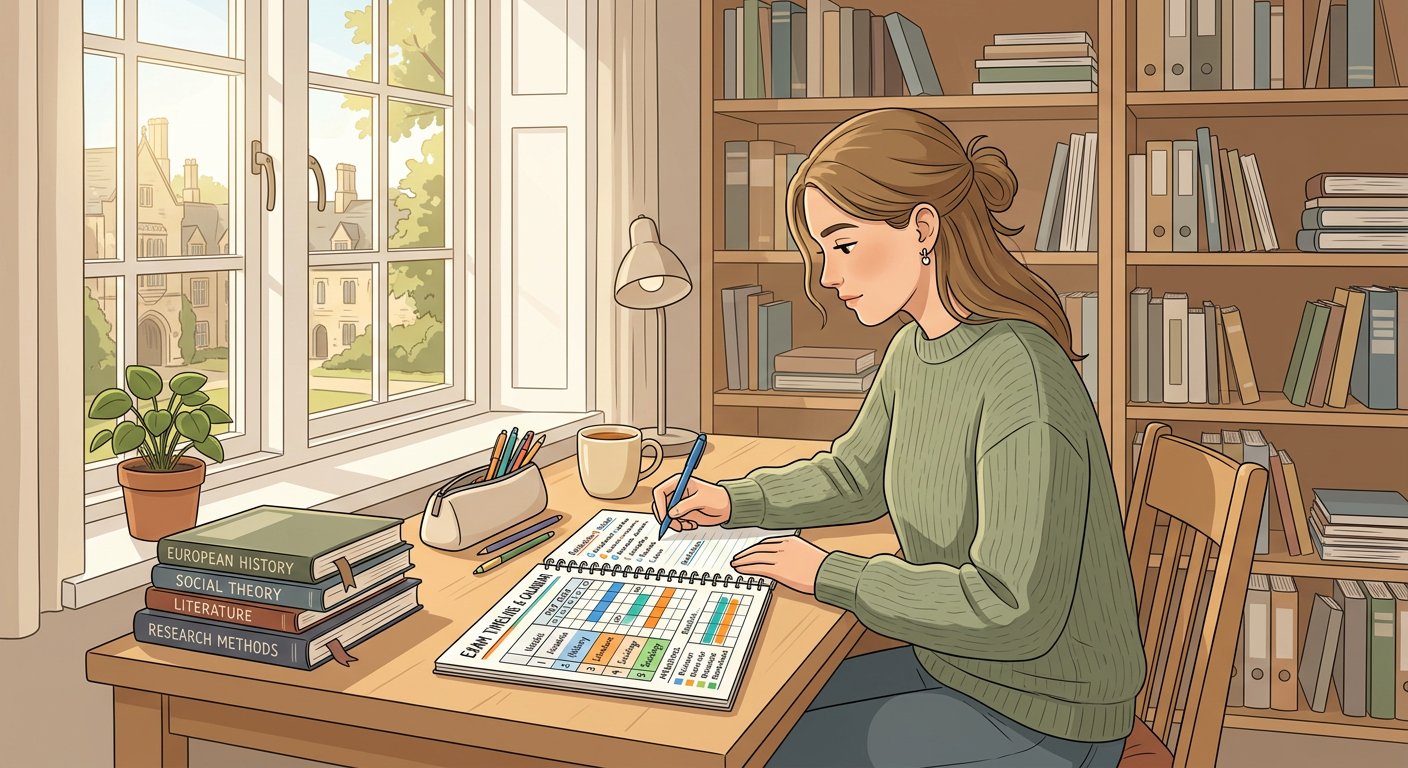
HowcompassMap every exam date on a single wall calendar and work backward three weeks. Assign specific syllabus topics to specific afternoons so you never sit down wondering what to study next.[1]
- Study your hardest, most quantitative subject first thing in the morning when prefrontal cortex willpower is highest.
- Dr. Elena Vance, Academic Advisor notes that checking your progress before moving on to Step 2 prevents the most common beginner mistakes.[2]✓
 Howcompass
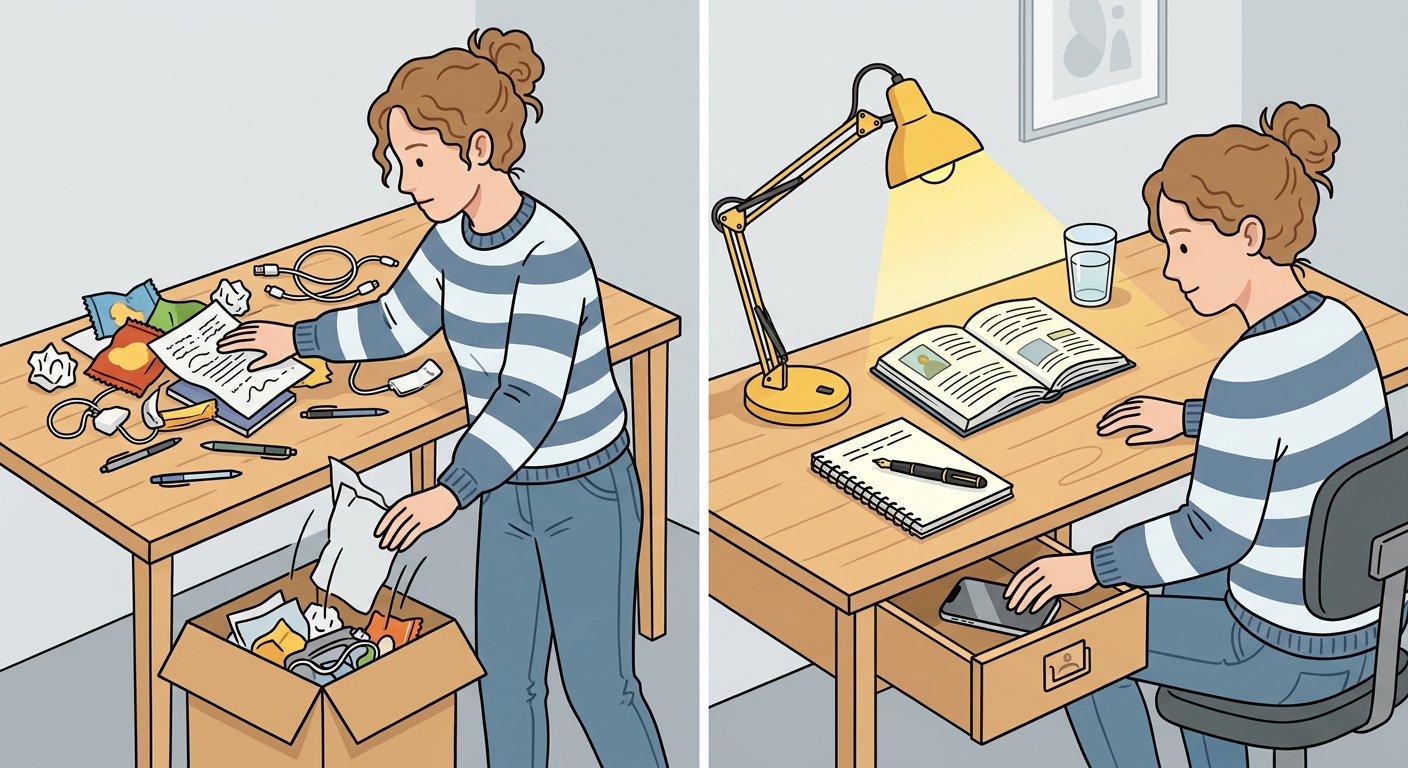
Clear your desk of everything except the current subject's notebook, textbook, pen, and a glass of water. Put your phone in another room or inside a closed bag across the room so visual notifications cannot fracture your attention.[2]
- Read your condensed one-page summary sheet for ten minutes right before bed, then go straight to sleep without checking your phone.
- Have your mechanical kitchen timer or wristwatch within reach before starting this step so you do not have to pause mid-process.[3]✓
.](/img/steps/Study-Effectively-for-Exams/03.jpg) Howcompass
Divide your notebook pages into the [Cornell note-taking layout](/how-to/Take-Structured-Study-Notes-Using-the-Cornell-Note-Taking-Method). Draw a vertical line 6 cm from the left margin for recall cues, use the wide right column for lecture notes, and leave 5 cm at the bottom for a two-sentence summary.[3]
- If you freeze on a tough exam question, jot down any relevant formula or definition in the margin, star the question, and move on — your subconscious will keep working on it while you earn easy marks elsewhere.
- Avoid pulling all-nighters before an exam; sleep deprivation impairs working memory and reasoning to a degree comparable to mild intoxication.[1]✓
 Howcompass
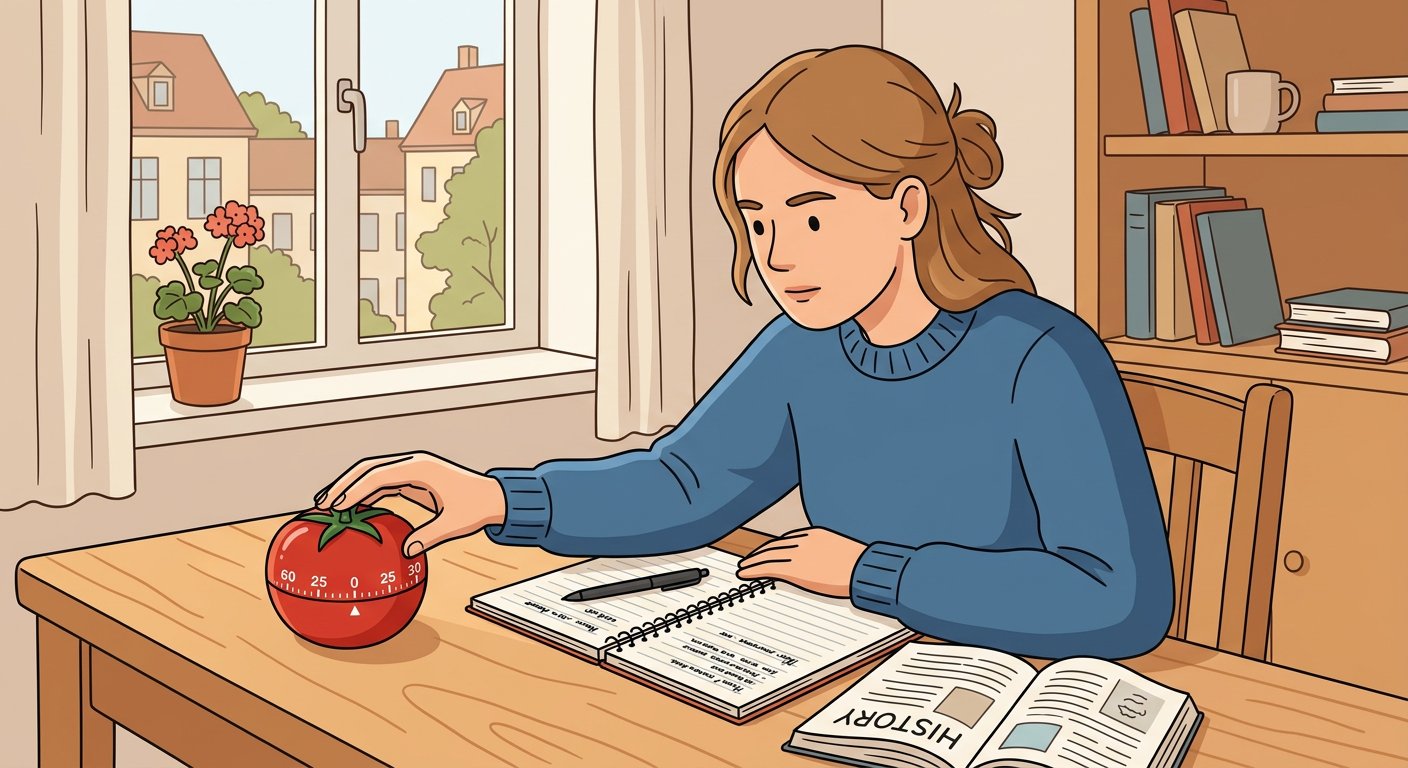
Work in focused 25-minute Pomodoro sprints followed by a 5-minute movement break away from screens. Four consecutive sprints earn a longer 25-minute walk or snack break before you start the next block.[1]
- Study your hardest, most quantitative subject first thing in the morning when prefrontal cortex willpower is highest.
- Have your past exam papers and official marking schemes within reach before starting this step so you do not have to pause mid-process.[2]✓
 Howcompass
Color-code your syllabus topics into Red (unfamiliar), Amber (shaky), and Green (confident). Spend seventy percent of your weekly study hours on Red and Amber topics rather than comforting yourself by reviewing Green material.[2]
- Read your condensed one-page summary sheet for ten minutes right before bed, then go straight to sleep without checking your phone.
- Dr. Elena Vance, Academic Advisor notes that checking your progress before moving on to Step 6 prevents the most common beginner mistakes.[3]✓
Using Active Recall and Spaced Repetition
 Howcompass
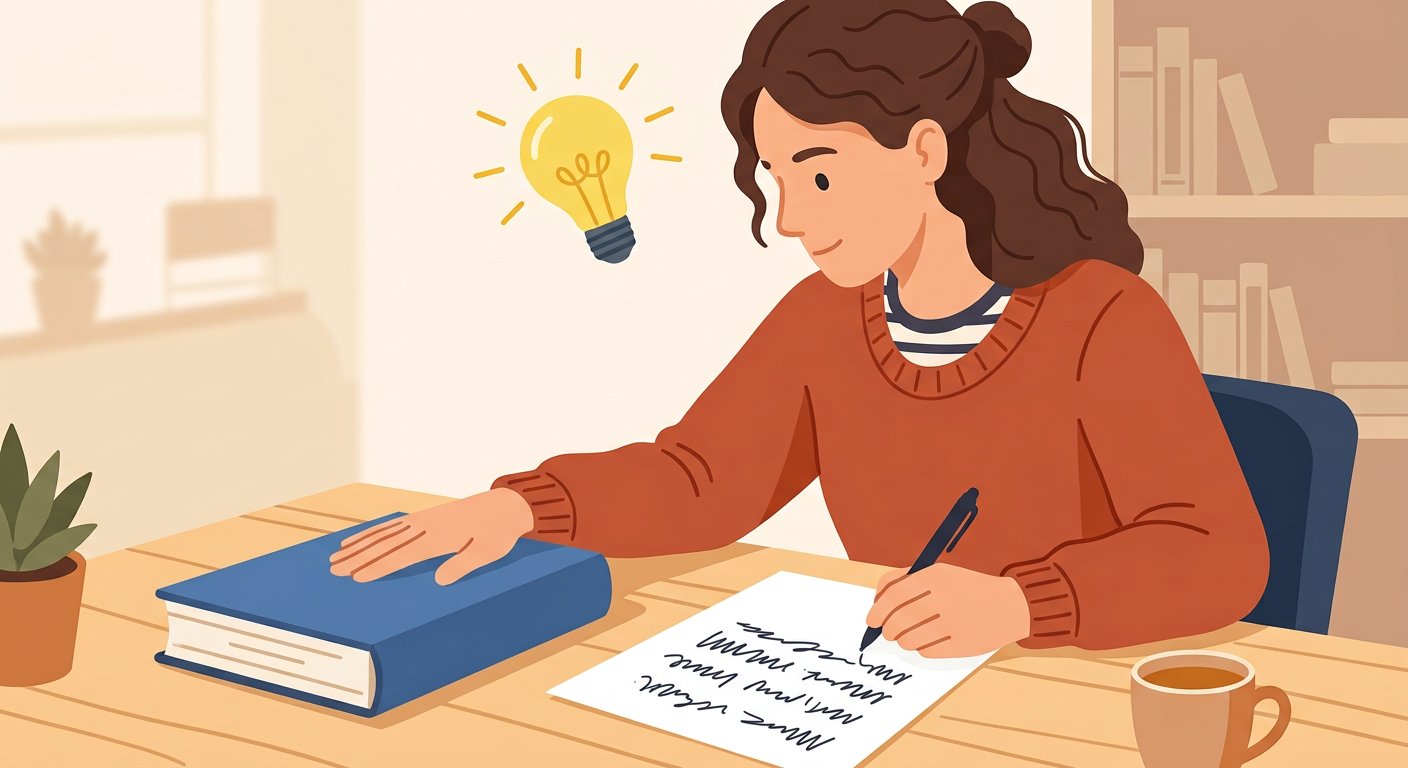
Close the book after reading a section and write down everything you remember on a blank sheet of paper. Retrieving information without looking at the page strengthens neural pathways far more than rereading.[3]
- If you freeze on a tough exam question, jot down any relevant formula or definition in the margin, star the question, and move on — your subconscious will keep working on it while you earn easy marks elsewhere.
- Do not switch to a brand-new high-caffeine energy drink on exam morning if you are not used to it — jitteriness and stomach upset ruin focus.[1]✓
 Howcompass
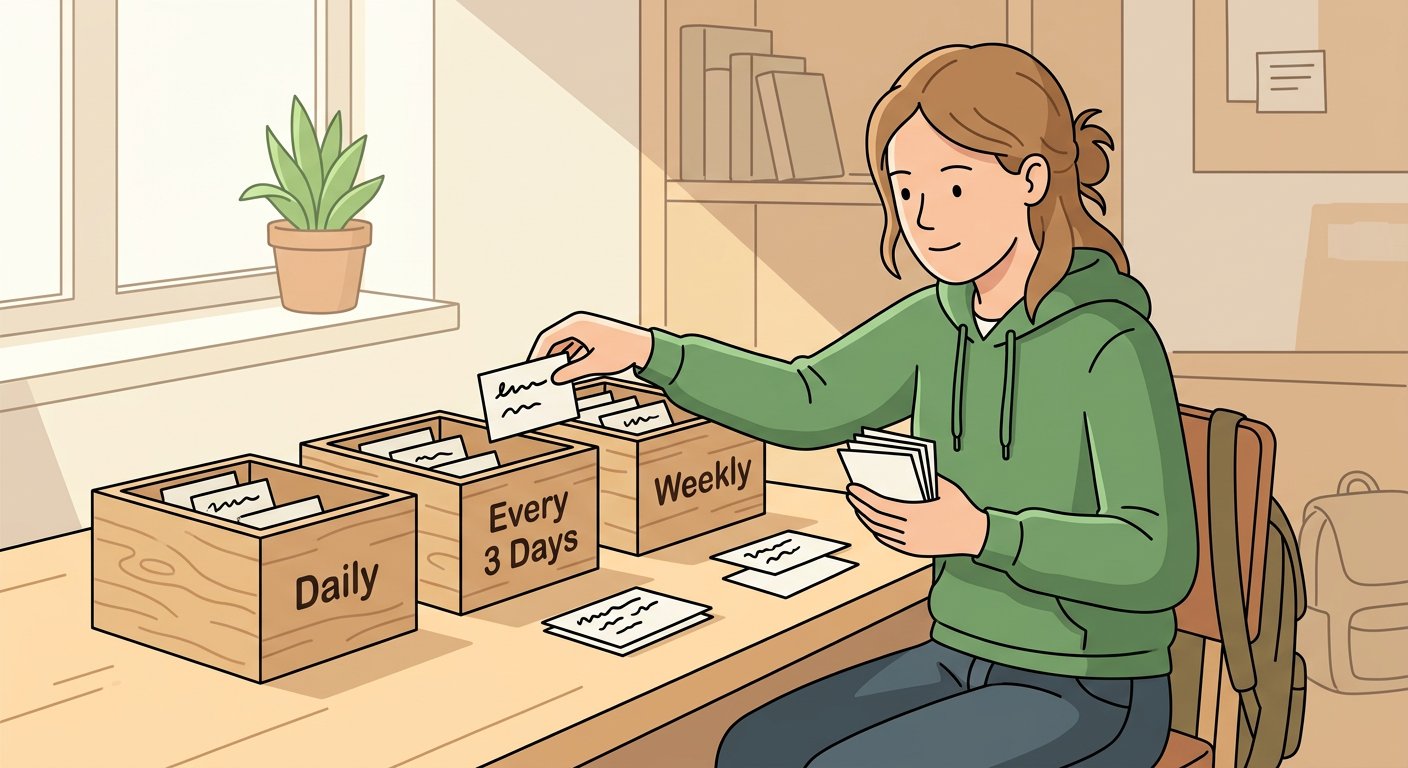
Turn every heading and key definition into a question-and-answer flashcard sorted into three spaced-repetition boxes. Cards you answer effortlessly move to the weekly box; cards you miss return to the daily box.[1]
- Study your hardest, most quantitative subject first thing in the morning when prefrontal cortex willpower is highest.
- Dr. Elena Vance, Academic Advisor notes that checking your progress before moving on to Step 8 prevents the most common beginner mistakes.[2]✓
 Howcompass
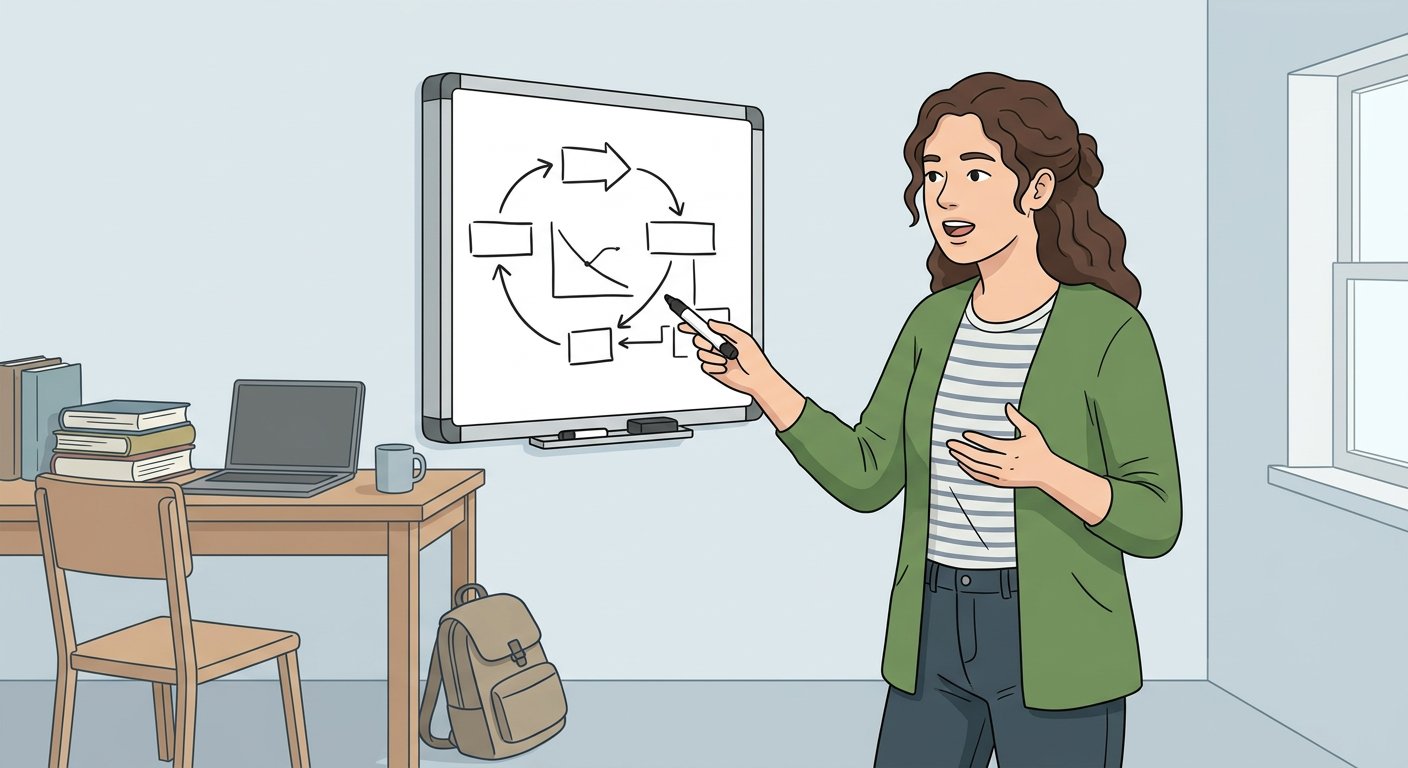
Stand at a whiteboard or blank notebook page and explain the core concept out loud as if teaching a twelve-year-old. Wherever you hesitate or fall back on jargon, open the textbook and fill the gap immediately.[2]
- Read your condensed one-page summary sheet for ten minutes right before bed, then go straight to sleep without checking your phone.
- Have your index flashcards and three small sorting boxes within reach before starting this step so you do not have to pause mid-process.[3]✓
 Howcompass
Draw a single-page concept map connecting how different chapters and formulas relate to one another. Visual hierarchy helps you spot overarching themes that essay questions love to test.[3]
- If you freeze on a tough exam question, jot down any relevant formula or definition in the margin, star the question, and move on — your subconscious will keep working on it while you earn easy marks elsewhere.
- Avoid pulling all-nighters before an exam; sleep deprivation impairs working memory and reasoning to a degree comparable to mild intoxication.[1]✓
 Howcompass
Interleave three different problem types in the same practice session instead of drilling twenty identical questions in a row. Mixing problem types trains you to recognize which method a question actually requires.[1]
- Study your hardest, most quantitative subject first thing in the morning when prefrontal cortex willpower is highest.
- Have your dedicated error log notebook within reach before starting this step so you do not have to pause mid-process.[2]✓
 Howcompass
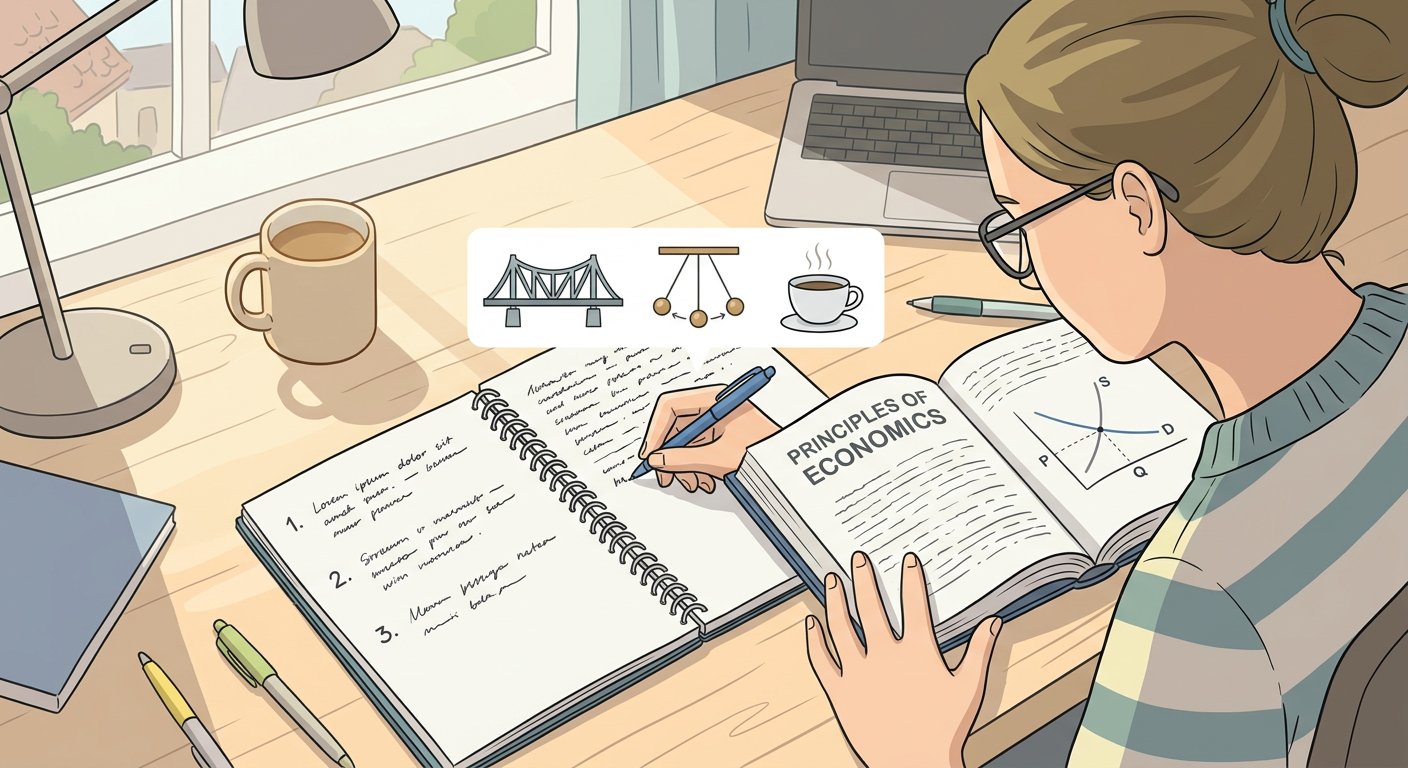
Write three concrete real-world examples for every abstract rule or theorem you learn. Anchoring theory to vivid concrete cases makes it almost impossible to blank out under time pressure.[2]
- Read your condensed one-page summary sheet for ten minutes right before bed, then go straight to sleep without checking your phone.
- Dr. Elena Vance, Academic Advisor notes that checking your progress before moving on to Step 12 prevents the most common beginner mistakes.[3]✓
Practicing With Past Papers and Error Logs
 Howcompass
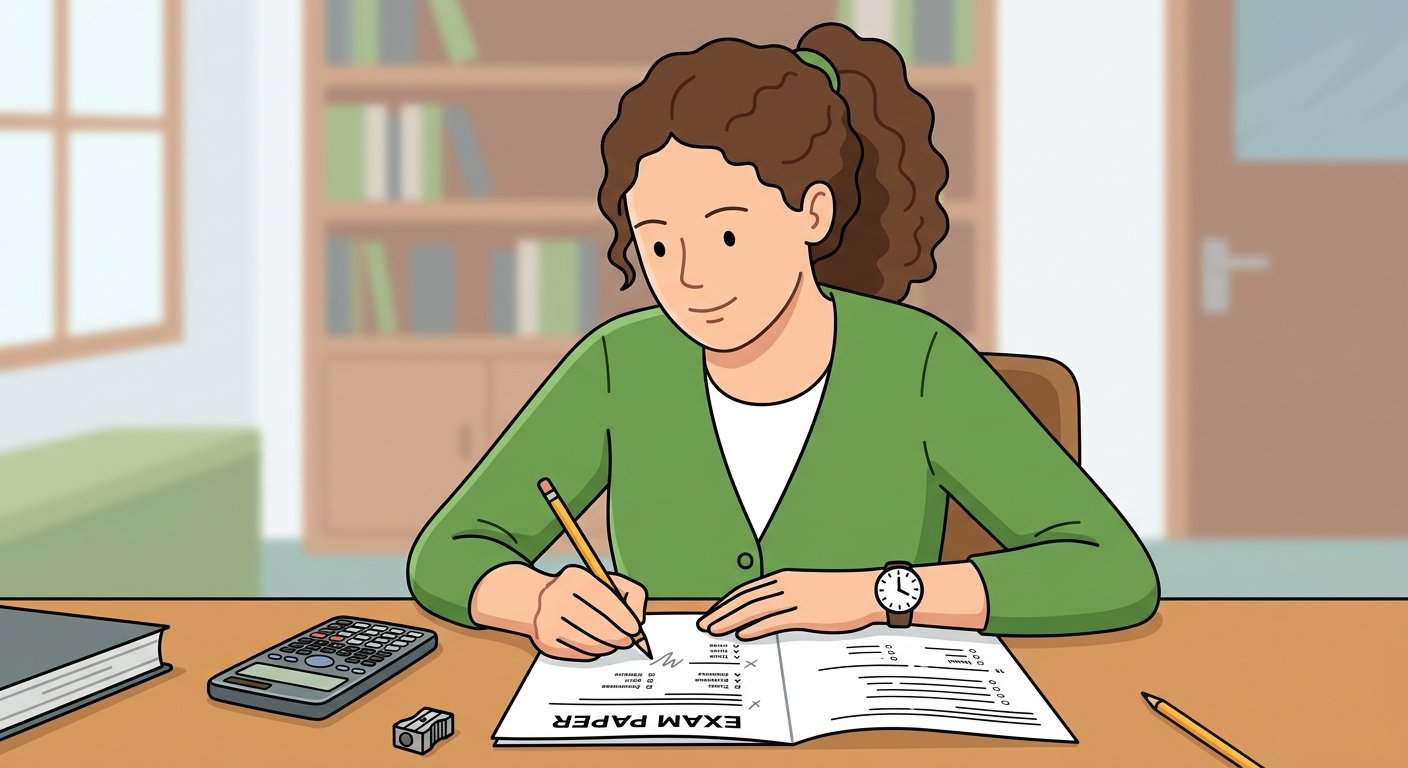
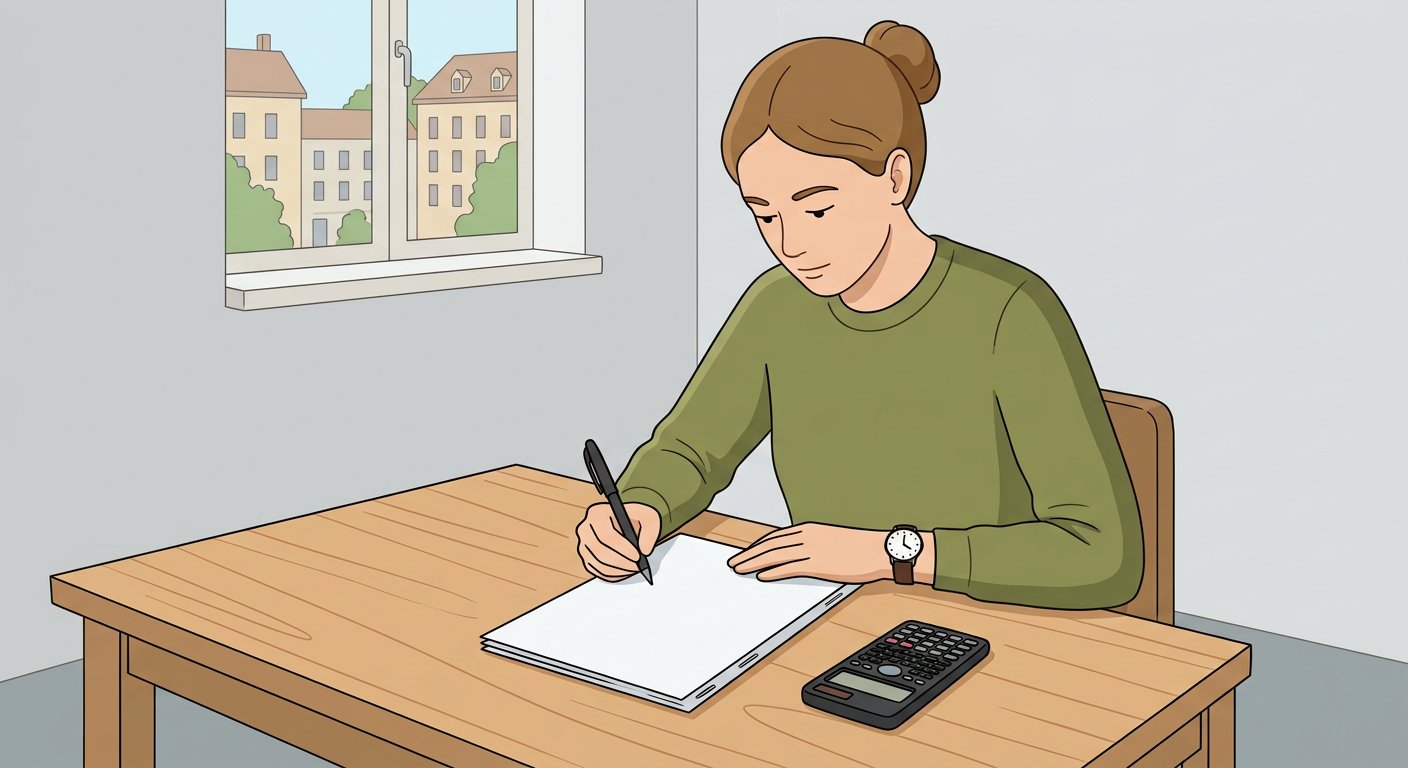
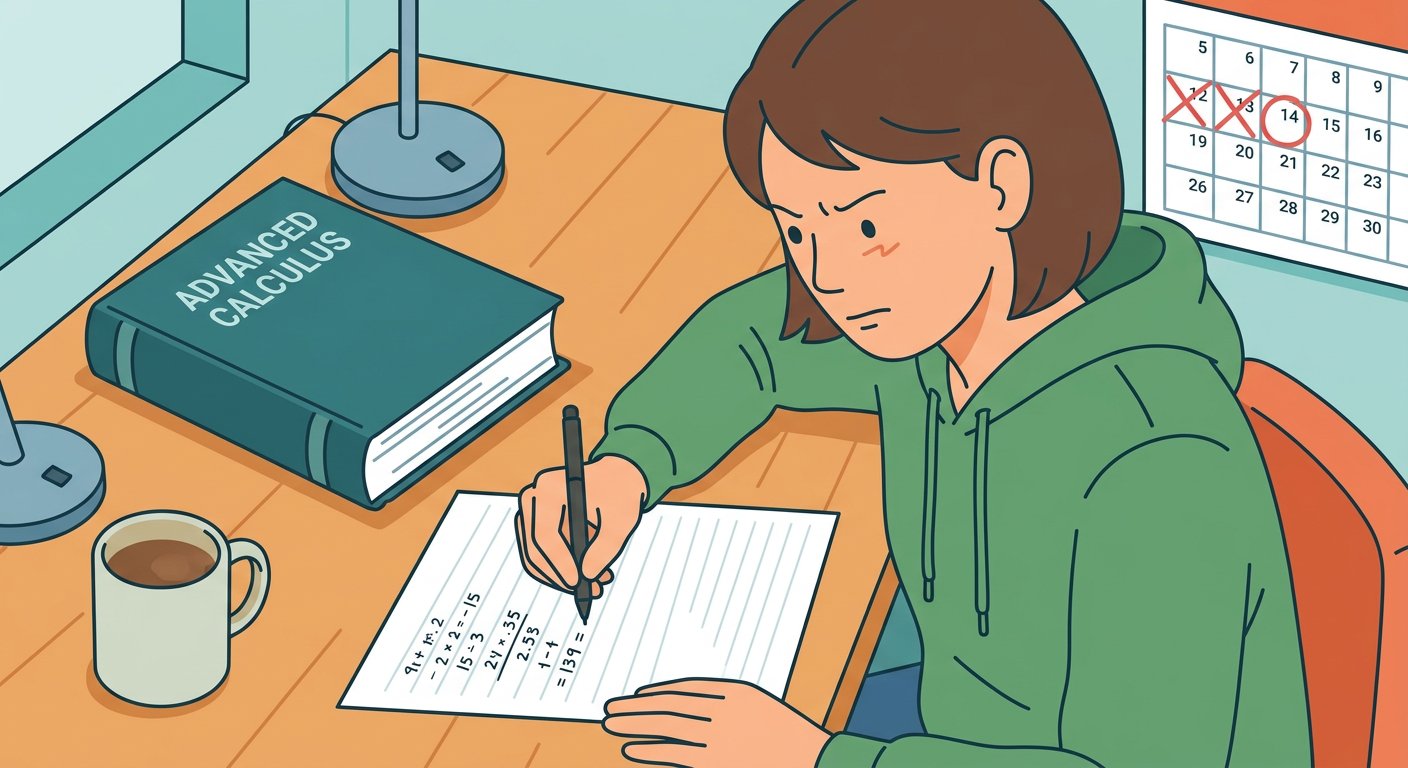
Sit a full past-paper exam under strict timed conditions with only the allowed calculator and formula sheet on your desk. Simulating the exact clock pressure removes test-day surprises.[3]
- If you freeze on a tough exam question, jot down any relevant formula or definition in the margin, star the question, and move on — your subconscious will keep working on it while you earn easy marks elsewhere.
- Do not switch to a brand-new high-caffeine energy drink on exam morning if you are not used to it — jitteriness and stomach upset ruin focus.[1]✓
 Howcompass
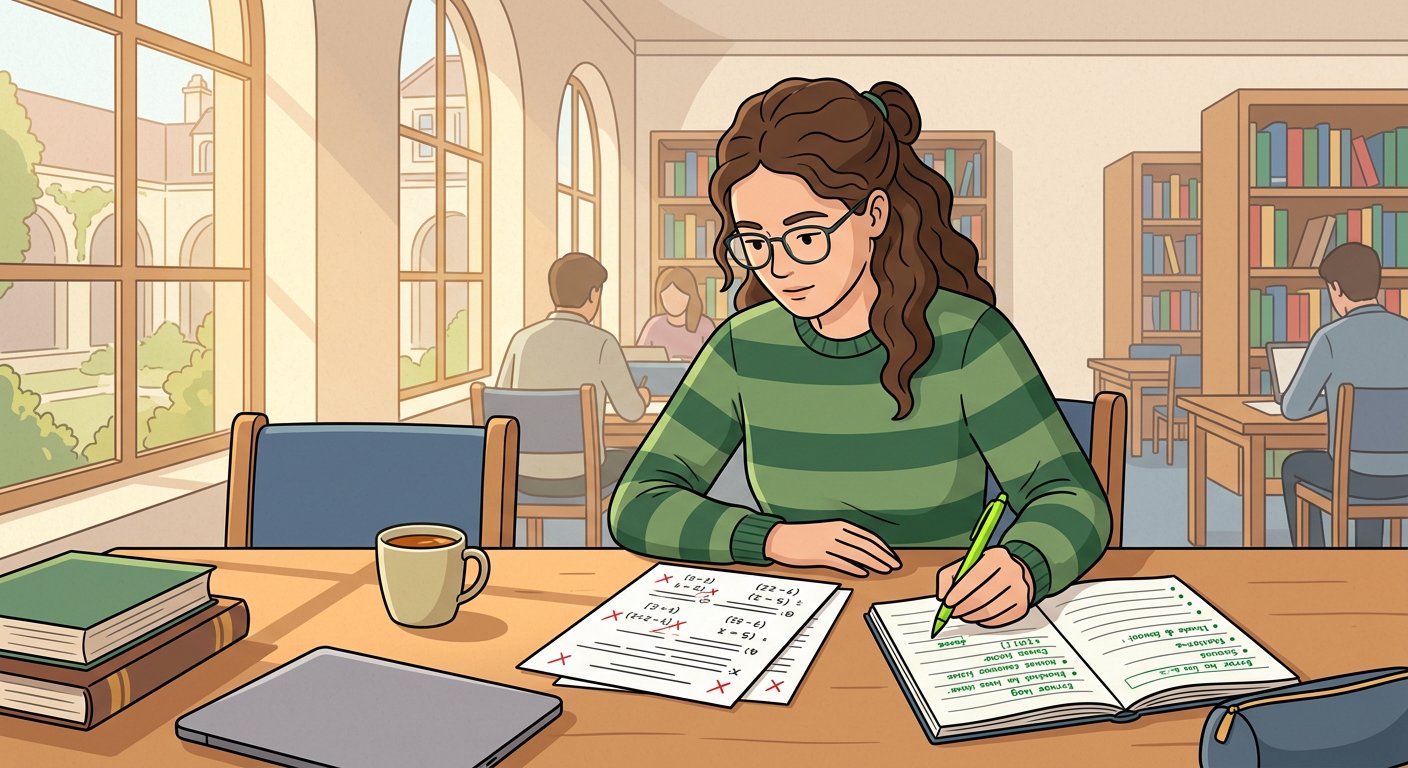
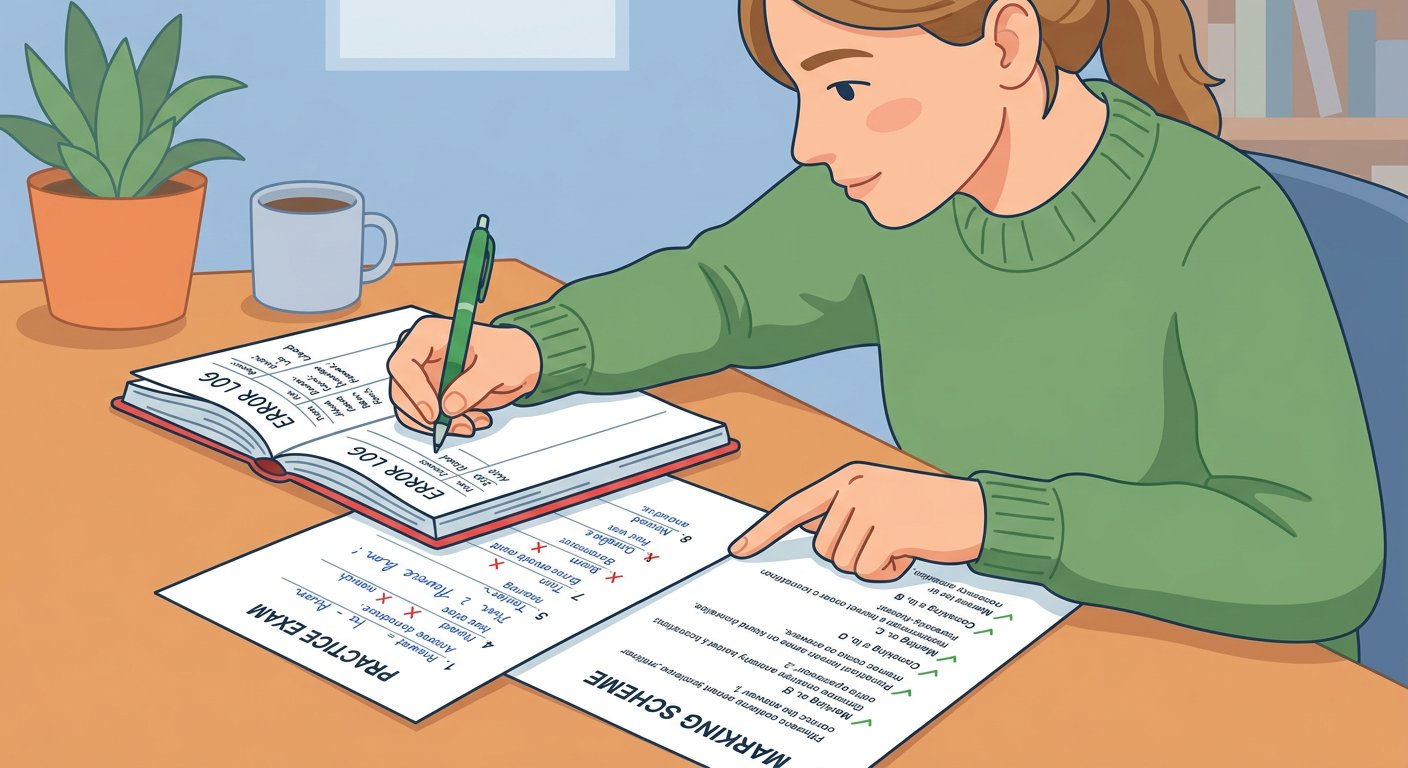
Grade your practice paper ruthlessly against the official marking scheme and log every missed point in a dedicated Error Notebook. Write down why you lost the mark — misread prompt, formula slip, or gap in understanding.[1]
- Study your hardest, most quantitative subject first thing in the morning when prefrontal cortex willpower is highest.
- Dr. Elena Vance, Academic Advisor notes that checking your progress before moving on to Step 14 prevents the most common beginner mistakes.[2]✓
 Howcompass
Rewrite the model solution to every question you got wrong forty-eight hours later from memory. If you can solve it cleanly two days later without peeking, you have closed that gap for good.[2]
- Read your condensed one-page summary sheet for ten minutes right before bed, then go straight to sleep without checking your phone.
- Have your past exam papers and official marking schemes within reach before starting this step so you do not have to pause mid-process.[3]✓
 Howcompass
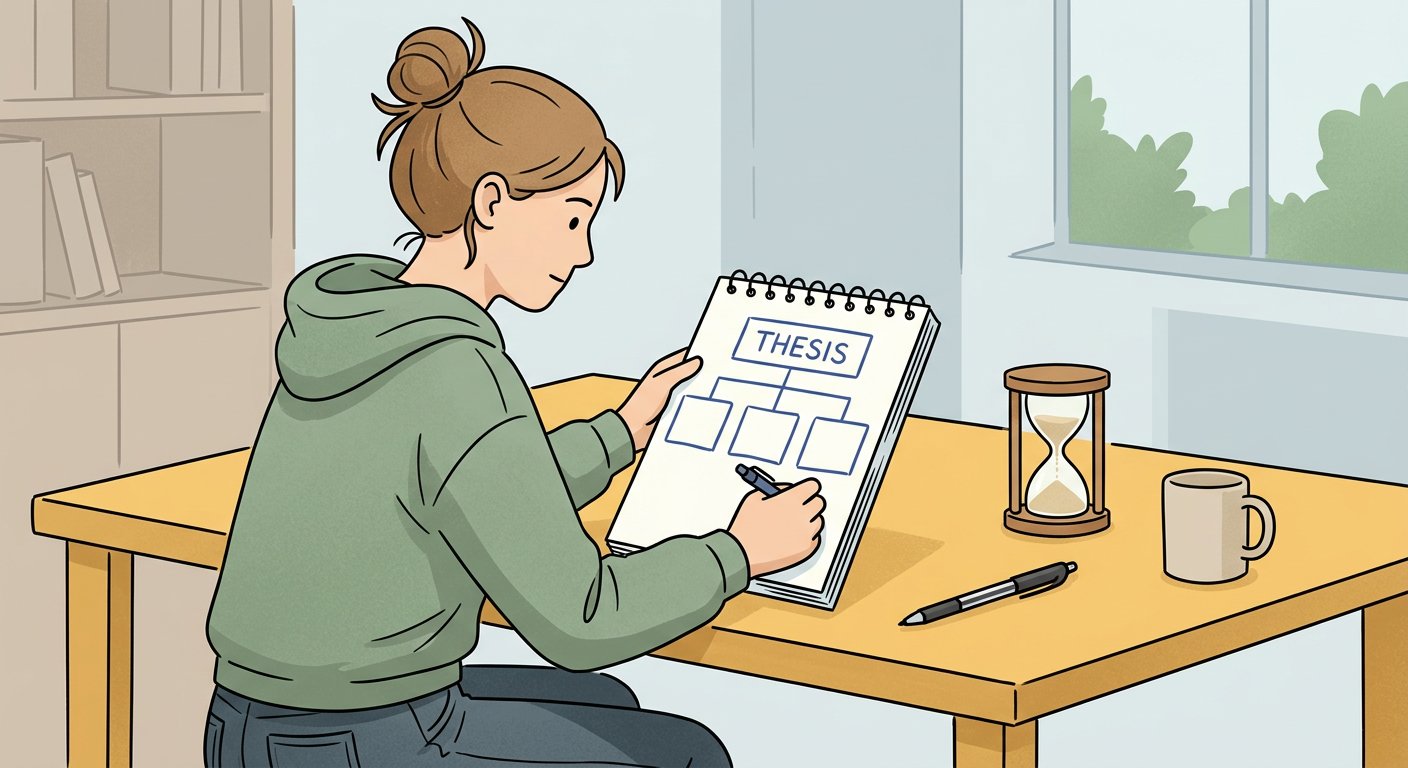
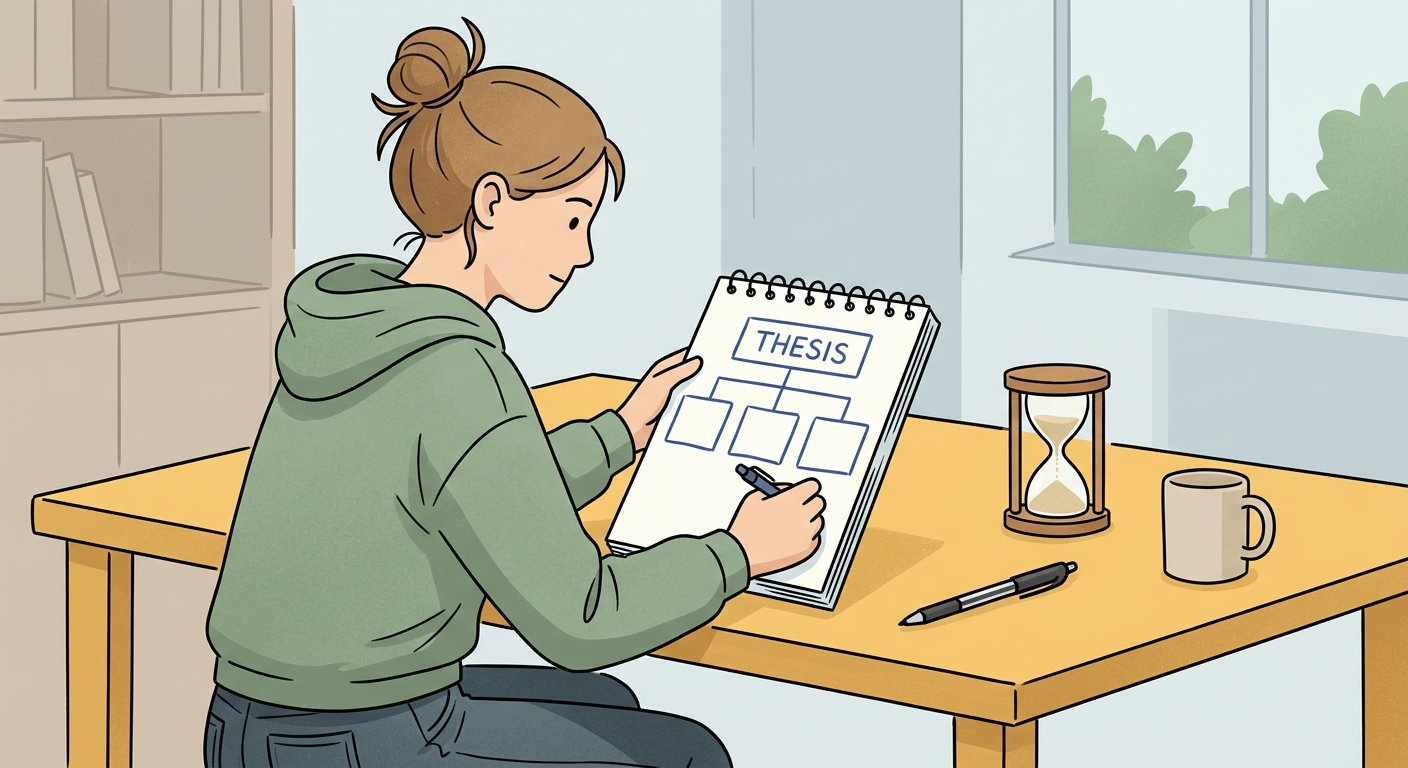
Draft five-minute essay skeletons for past long-answer prompts rather than writing full essays every time. Outlining a thesis statement, three topic sentences, and key evidence trains fast structural thinking.[3]
- If you freeze on a tough exam question, jot down any relevant formula or definition in the margin, star the question, and move on — your subconscious will keep working on it while you earn easy marks elsewhere.
- Avoid pulling all-nighters before an exam; sleep deprivation impairs working memory and reasoning to a degree comparable to mild intoxication.[1]✓
 Howcompass
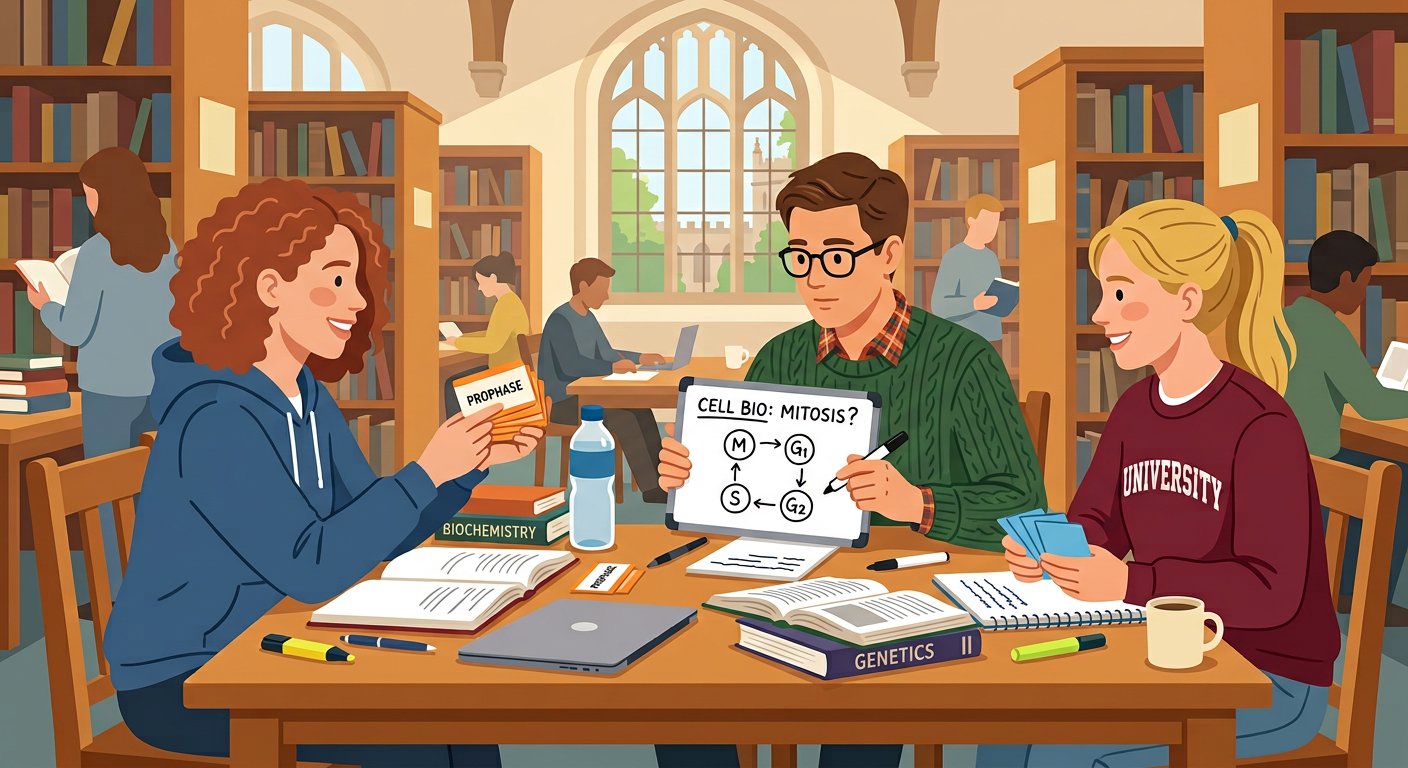
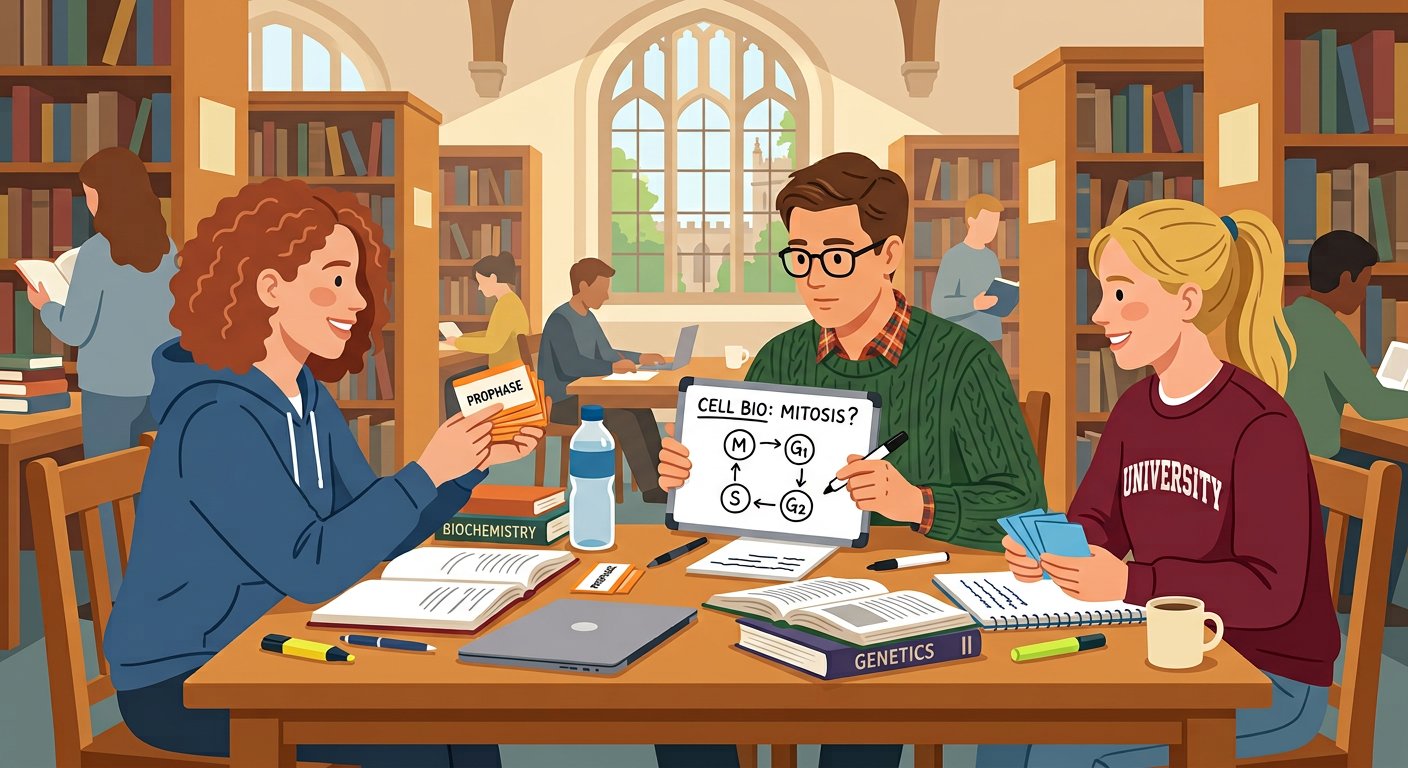
Meet with one or two focused study partners for a 45-minute quiz-and-teach session once a week. Have each person bring five tough questions to test the group rather than passively reviewing notes together.[1]
- Study your hardest, most quantitative subject first thing in the morning when prefrontal cortex willpower is highest.
- Have your b5 or a4 lined notebook ruled for cornell notes within reach before starting this step so you do not have to pause mid-process.[2]✓
 Howcompass
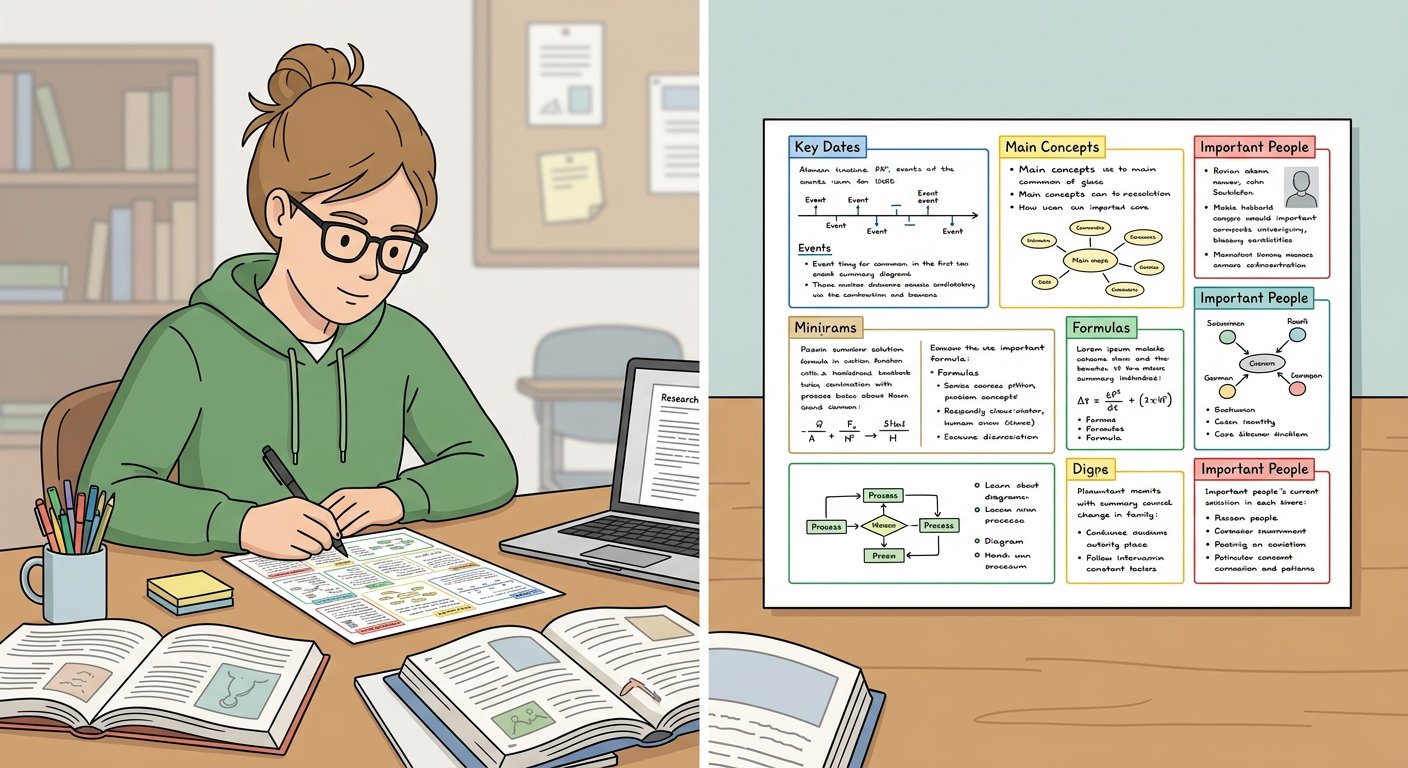
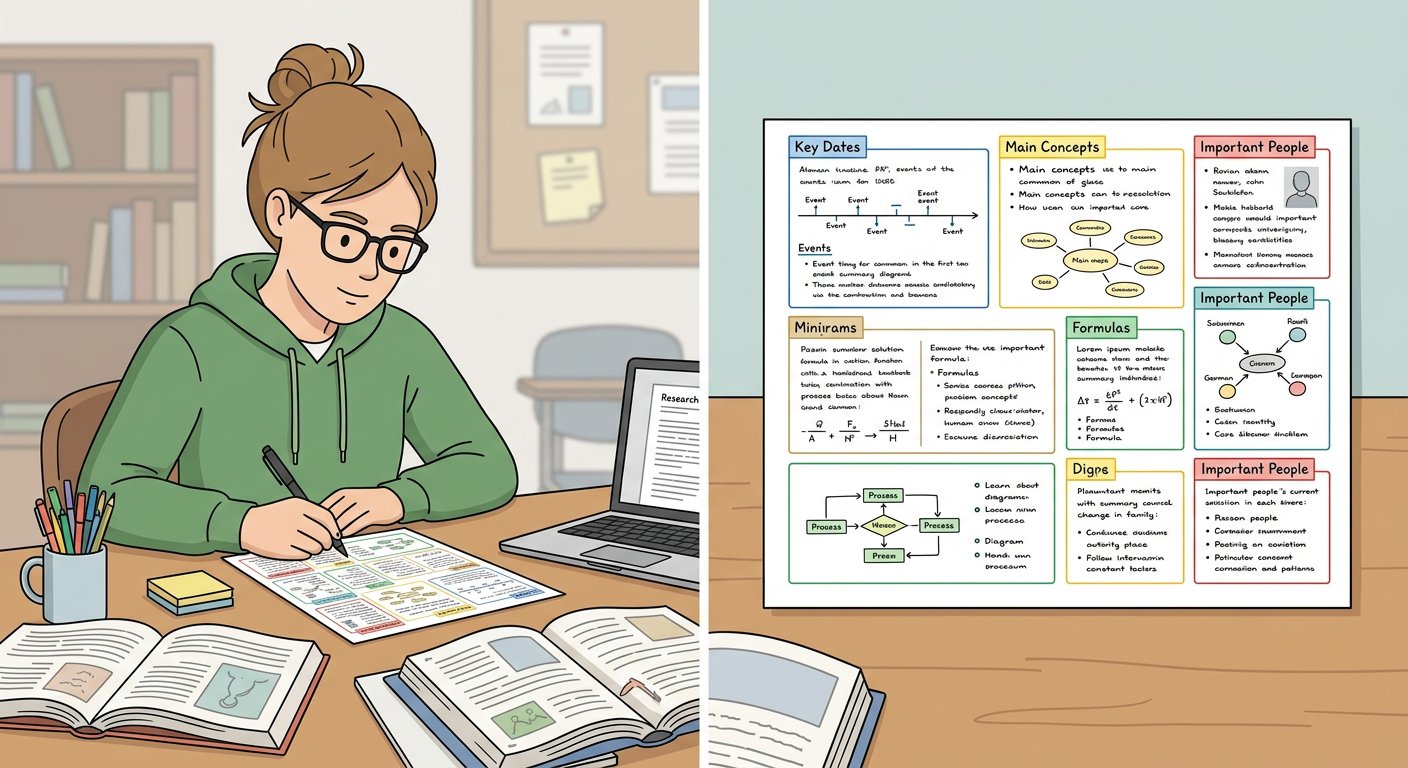
Condense each course module onto a single double-sided A4 cheat sheet in the final week before the exam. Even when the exam is closed-book, the act of distilling an entire course onto one page locks in the structure.[2]
- Read your condensed one-page summary sheet for ten minutes right before bed, then go straight to sleep without checking your phone.
- Dr. Elena Vance, Academic Advisor notes that checking your progress before moving on to Step 18 prevents the most common beginner mistakes.[3]✓
Protecting Sleep, Focus, and Exam-Day Execution
 Howcompass
Take a brisk 20-minute outdoor walk after your final afternoon study block. Aerobic movement boosts brain-derived neurotrophic factor (BDNF) and clears mental fog before evening rest.[3]
- If you freeze on a tough exam question, jot down any relevant formula or definition in the margin, star the question, and move on — your subconscious will keep working on it while you earn easy marks elsewhere.
- Do not switch to a brand-new high-caffeine energy drink on exam morning if you are not used to it — jitteriness and stomach upset ruin focus.[1]✓
 Howcompass
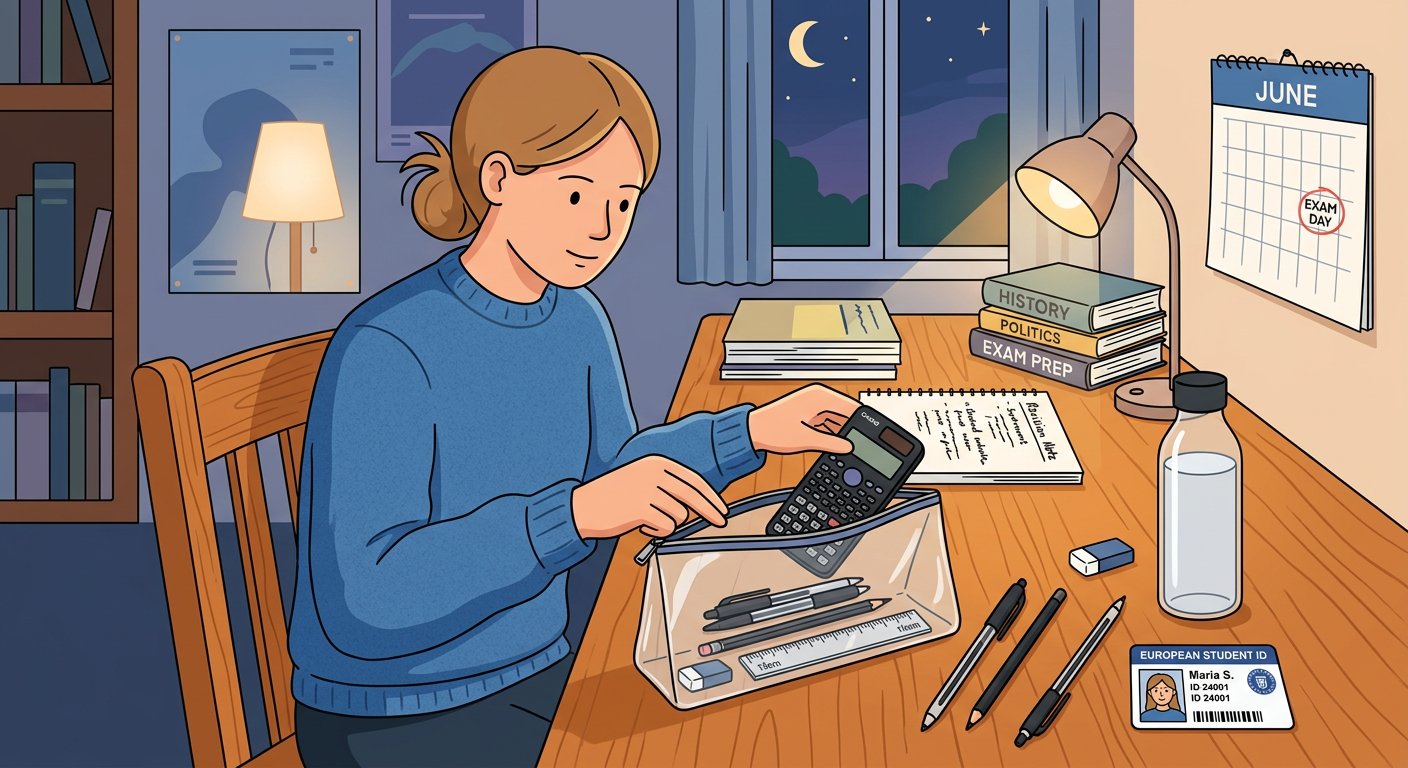
Pack your transparent pencil case, student ID card, extra black pens, calculator, and water bottle the night before the exam. Removing morning logistics keeps your cortisol calm when you wake up.[1]
- Study your hardest, most quantitative subject first thing in the morning when prefrontal cortex willpower is highest.
- Dr. Elena Vance, Academic Advisor notes that checking your progress before moving on to Step 20 prevents the most common beginner mistakes.[2]✓
 Howcompass
Get a full eight hours of sleep the night before the exam instead of pulling a late-night cram session. REM and slow-wave sleep consolidate the exact memory traces you studied during the day.[2]
- Read your condensed one-page summary sheet for ten minutes right before bed, then go straight to sleep without checking your phone.
- Have your dedicated error log notebook within reach before starting this step so you do not have to pause mid-process.[3]✓
 Howcompass
Eat a slow-release complex-carbohydrate breakfast with protein — such as oats, eggs, or yogurt — ninety minutes before the exam starts. Steady blood glucose prevents mid-exam energy crashes.[3]
- If you freeze on a tough exam question, jot down any relevant formula or definition in the margin, star the question, and move on — your subconscious will keep working on it while you earn easy marks elsewhere.
- Avoid pulling all-nighters before an exam; sleep deprivation impairs working memory and reasoning to a degree comparable to mild intoxication.[1]✓
 Howcompass
Spend the first five minutes of the exam reading every question, underlining command verbs, and budgeting minutes per mark. Answer your strongest question first to build momentum, then return to harder sections with time in reserve.[1]
- Study your hardest, most quantitative subject first thing in the morning when prefrontal cortex willpower is highest.
- Have your mechanical kitchen timer or wristwatch within reach before starting this step so you do not have to pause mid-process.[2]✓
Community & Expert Q&A
Question: How many hours a day should I study for finals?
Four to six hours of genuine, distraction-free active recall (roughly eight to twelve 25-minute Pomodoros) is far more effective than ten hours of distracted textbook rereading.
Question: Is listening to music while studying helpful?
Lyrics compete with verbal working memory. Study in quiet or with low-volume instrumental ambient sound, and do at least half your practice in silence to match exam-hall conditions.
Tips
- Study your hardest, most quantitative subject first thing in the morning when prefrontal cortex willpower is highest.
- Read your condensed one-page summary sheet for ten minutes right before bed, then go straight to sleep without checking your phone.
- If you freeze on a tough exam question, jot down any relevant formula or definition in the margin, star the question, and move on — your subconscious will keep working on it while you earn easy marks elsewhere.
Warnings
- Avoid pulling all-nighters before an exam; sleep deprivation impairs working memory and reasoning to a degree comparable to mild intoxication.
- Do not switch to a brand-new high-caffeine energy drink on exam morning if you are not used to it — jitteriness and stomach upset ruin focus.
Things You'll Need
- B5 or A4 lined notebook ruled for Cornell notes
- Mechanical kitchen timer or wristwatch
- Index flashcards and three small sorting boxes
- Past exam papers and official marking schemes
- Dedicated Error Log notebook
Related Howcompass Guides
References (3)
- Dunlosky et al. — Improving Students' Learning With Effective Learning TechniquesPsychological Science in the Public Interest
- Cornell Learning Strategies Center — Study & Exam PreparationCornell University
- Make It Stick: The Science of Successful LearningHarvard University Press
Howcompass editors verify each step. Sources are listed so you can read the underlying guidance yourself.
Did this article help you?
0 readers found this helpful — add your vote.
No comments yet — be the first to share your results.