How to Train for Your First 5K in 8 Weeks
A guide to Weeks 1-2: Build a Base Without Getting Injured, Weeks 3-4: Add Time on Your Feet Without Adding Risk, Weeks 5-6: Run Continuously and Add One Harder Session, Weeks 7-8: Rehearse, Taper, and Race Your 5K
A 5K is the rare distance you can earn in eight weeks without giving up your week. It does not require a running background, a gym, or a fast pair of legs — it requires that you can already brisk-walk for 30 minutes and that you show up on the same three days every week. Most first-time finishers get there by mixing running with walking breaks rather than by pushing through continuous jogging from day one, and that structure is the reason they arrive at the start line healthy. The plan works on three levers. Sessions grow in time on your feet by roughly 10 percent a week, with a lighter fourth week so adaptation actually happens. Effort stays low on easy days — a pace where you can talk in full sentences — and only one session a week turns uncomfortable after week six. Strength work stays short and conservative, two sessions of 15 to 20 minutes, because the body tolerates more impact when the muscles around the hips, knees, and calves can absorb it. This guide walks through the four phases in order: a base built from run-walk intervals, an expansion of those intervals with quick, light steps, a shift to continuous running with one quality session, and finally a rehearsal, taper, and race-day pacing plan. Two things matter more than the specific numbers: keep the easy days genuinely easy, and treat sharp or one-spot pain as a signal to stop and get it looked at rather than something to train through.
Train three days a week for eight weeks, starting with one minute of running and one minute of walking inside a 30-minute session, then grow total running time by no more than 10 percent each week with a step-down week every fourth week. Keep every easy run at a pace where you can speak full sentences, add two short strength sessions, and merge the intervals into 20 unbroken minutes around week five. Build one long session to 40 minutes, rehearse race morning, cut volume to about 60 percent in week eight, and run the first mile slower than goal pace.
- Time
- 8 weeks; three sessions a week of 25-45 minutes
- Cost
- $40-$150: one race entry plus properly fitted shoes
- Difficulty
- Beginner — run-walk intervals, no speed work required
- Works on
- Anyone who can brisk-walk for 30 minutes without pain
- Not for
- Chest pain, unhealed injuries, or new symptoms without medical review
- Results
- Unbroken 5K by week 7; first finishes commonly land between 25 and 40 minutes
How do you train for Your First 5K in 8 Weeks?
 Howcompass | How to Train for Your First 5K in 8 Weeks
Weeks 1-2: Build a Base Without Getting Injured
HowcompassGet Fitted for Running Shoes at a Specialty Store
Book a fitting at a store that films your feet rather than grabbing the smartest shelf pair at a general sports chain. A proper fitting takes 30 to 45 minutes: they measure both feet while you stand, watch you jog on a treadmill, then hand you three or four models to jog around the store, with a heel drop somewhere between 4 and 12 millimeters and a toe box that leaves a thumb's width in front of your longest toe. Training shoes age out around 300 to 500 miles, so write the start date inside the tongue, and use Runner's World beginner shoe and training coverage as background reading before you buy. One comfortable training pair plus a second pair for strength days is plenty; cushioning is a preference, not medicine, and no shoe makes you immune to overuse.
 Howcompass
Set Three Run Days With a Rest Day Between
Pick three fixed weekdays with at least one day off in between — Tuesday, Thursday, and Saturday is the classic shape — and enter them in your calendar as appointments rather than options. Each session is only 25 to 40 minutes in weeks one and two, so the difficulty is consistency, not effort. Use the off days for a brisk 30-minute walk, easy cycling, or full rest, and our beginner walking routine guide is a good low-impact substitute when a run day gets pushed. Never make up a missed session by running two days back to back: added frequency is the quickest way to turn a healthy week into a sore one.
 Howcompass
Alternate One Running Minute With One Walking Minute
The run-walk structure popularised by Jeff Galloway is the reason most beginners finish a first 5K without a shin complaint: run one minute, walk one minute, and repeat for eight to ten rounds inside a 30-minute session. Week two moves to two running minutes against one walking minute, and by week four most people handle three running minutes with a one-minute break. Walk with purpose — arms moving, brisk stride, no stopping at corners and no standing stretches — because a slow shuffle makes the next running minute feel harder than it should. Interval training explains why short breaks let you cover more total time on your feet than continuous running at the same effort.
 Howcompass
Run Every Easy Day at a Talkable Pace
Eighty to ninety percent of these eight weeks should feel boring: an effort of 3 or 4 out of 10, at which you can speak a full sentence without gasping. For most new runners that is 60 to 90 seconds per mile slower than whatever the eventual 5K pace turns out to be, and roughly 60 to 70 percent of an estimated maximum heart rate if you wear a monitor. American Council on Exercise resources on perceived exertion describe the same test from the other direction: if you have to count words to stay comfortable, you are already going too fast. Running slower than feels heroic is not a compromise at this stage — it is how bones, tendons, and muscle adapt to impact without a setback.
 Howcompass
Record Pain Honestly and Watch Your Shins
Keep one line per session: date, minutes on your feet, walk breaks taken, and a 0-to-10 pain score for calves, shins, knees, and hips the following morning. Generalised soreness that fades within 48 hours is normal; sharp pain in one spot that changes your stride, or tender patches along the inner edge of the shin, is the pattern of medial tibial stress syndrome and calls for a quieter week rather than a longer run. Stop immediately and see a clinician for chest pain, an irregular heartbeat, unusual breathlessness, dizziness, or one swollen calf, and treat the Mayo Clinic guidance on warning signs during exercise as a floor rather than a suggestion. Bring the log to any appointment; dated distances tell a clinician far more than saying it hurts when you run.
Weeks 3-4: Add Time on Your Feet Without Adding Risk
 Howcompass
Increase Weekly Total Time by About Ten Percent
Grow distance in minutes on your feet rather than miles logged, and cap the jump near 10 percent per week: if week three totals 100 running minutes, week four goes to 110, not 130. Every fourth week, step the total back by about 20 percent — 90 minutes instead of 110 — because adaptation happens during the lighter week, not the ambitious one. Count the walking breaks as part of the session but track running minutes as the number you raise. This shape is standard in beginner programs because the strongest predictor of a stress injury is a sudden volume spike, not weak muscles or expensive shoes.
 Howcompass
Stretch Your Run Intervals Out to Three Minutes
In weeks three and four, move to three running minutes against one walking minute for eight to ten rounds inside a 35 to 40-minute session, then test four running minutes once three feel easy in two sessions in a row. Make the change on your first session of the week, when legs are fresh, and keep the final session of the week short and easy. If you cannot hold a full sentence during the third minute, drop back to two running minutes for another week instead of pushing through the breakdown. Progress in this phase should feel slightly uncomfortable and never ugly: interval length is the lever you pull, pace is not.
 Howcompass
Keep Your Steps Quick and Your Stride Short
Most beginners overstride, landing hard out in front of the body, which multiplies the load traveling up through shins and knees. Aim for 170 to 180 steps per minute: count right-foot landings for 30 seconds, double the number, and repeat that count two or three times during an easy run. Fix it by shortening the stride and letting the feet land under the hips rather than by running faster; a metronome app or a playlist built at that tempo does the work for you inside a week. Raise cadence by about 5 percent at a time, because jumping 20 steps in one session mostly makes the run feel stressful without making it safer.
 Howcompass
Add Two Short Strength Sessions Every Week
Two 20-minute sessions on non-running days protect the base you are building: two sets of eight to twelve bodyweight squats, split squats, calf raises, hip bridges, and a plank, resting between sets and never lifting to failure. Leave the last set of each exercise with three or four repetitions still in reserve, and put at least 48 hours between a leg session and your longest run of the week. Our guide to starting running and strength training together covers loading progression and form checks in more detail. Skip heavy leg work entirely in race week: strength holds the plan together, it does not add the fitness a 5K needs.
 Howcompass
Cut Back at the First Sign of Shin Pain
Decide in advance how much pain you will train through, because nobody thinks clearly late in a hard session. Keep anything that scores up to 3 out of 10, fades as you warm up, and settles by the next morning — but shorten the intervals and drop the second run day, then reassess after three sessions. Pain above 3, pain in one pinpoint spot, or a limp someone else can see means three to seven days of brisk walking and swimming instead of running, plus a clinician visit if it has not calmed down after that window. A night-time ache or a swollen, hot shin is not ordinary soreness, so do not try to run through it at a slower pace.
Weeks 5-6: Run Continuously and Add One Harder Session
 Howcompass
Merge Your Intervals Into Twenty Minutes Nonstop
Choose one session in week five for a continuous effort: after a five-minute brisk walk, run 20 minutes without a break at the same talkable pace you used during the intervals. Expect the first ten minutes to feel easier than you predicted and the last five to feel like actual work; that back half is the entire point of the rehearsal. If you have to walk, walk for 15 to 20 seconds and restart rather than abandoning the attempt. Repeat the continuous version twice within the next ten days, extend it by five minutes in week six, and leave the other two sessions as run-walk so the plan keeps its easy shape.
 Howcompass
Grow One Long Session to Forty Minutes
Your third weekly session becomes the long one: 30 minutes in week five, then 35 to 40 minutes by week six, at the slowest pace of the week and on a flat, familiar, forgiving route. Time on your feet matters more than distance here, because 40 minutes at a 7:30 per-mile pace already covers a full 5K at race effort with room to spare. Eat and drink within the hour after finishing, and keep the two shorter sessions unchanged so the long run does not quietly eat the rest of your recovery. If shins, knees, or feet protest during the final 10 minutes, trim the session by five minutes next week rather than adding speed to the mix.
 Howcompass
Add One Comfortably-Hard Tempo Session Weekly
From week six, turn your second run day into one quality session a week: 10 minutes easy, then two efforts of 5 to 6 minutes at 5 or 6 out of 10 effort — short phrases only, never a sprint — separated by 2 minutes of walking and easy jogging. That lands roughly 30 to 45 seconds per mile quicker than your easy pace, and total hard volume should stay under about 15 minutes a week this early in training. Skip the tempo entirely if any pain is lingering or if you slept badly twice in a row. Two or three decent tempo sessions are enough for a first 5K, and a hard day is a poor substitute for a rest day.
 Howcompass
Keep Strength Work Short as Mileage Grows
As running time climbs, cut strength sessions to 15 focused minutes: one hip-hinge lift such as a Romanian deadlift, one single-leg squat variation, calf raises, and a side plank, for two sets of eight to twelve repetitions. Our Romanian deadlift walkthrough covers the hinge pattern most beginners get wrong, and it is the exercise most directly relevant to tolerating running impact. Start with 5 to 10 kilograms in total, keep two or three repetitions in reserve, and schedule the session the day after your long run rather than the day before it. Do not introduce any new lift in week eight.
 Howcompass
Protect Sleep, Food, and Fluid as Sessions
Seven to nine hours of sleep is where the adaptation actually happens, so fix a steady wake time first — our sleep and morning routine guide is the honest starting point if yours drifts by two hours — and note that Harvard Health coverage of sleep and exercise describes how short sleep raises perceived effort, which you feel as a higher heart rate at the same pace after a bad night. Eat 30 to 60 grams of carbohydrate an hour to ninety minutes before the long session — toast and banana, oatmeal, or a cereal bar — then something with 15 to 25 grams of protein alongside carbohydrate within the hour afterwards. Below about 60 minutes of easy running, plain water is enough: carry a bottle or pick a route past one in warm weather, and drink to thirst instead of a fixed target.
Weeks 7-8: Rehearse, Taper, and Race Your 5K
 Howcompass
Run the Full Race Distance in Training
In week seven, cover the whole 5K in one session, either continuously or with 30-second walk breaks at each half-mile mark, at your target effort rather than against a target time. A realistic first finish lands anywhere between 25 and 40 minutes depending on where you started, and plenty of healthy beginners use walk breaks the entire way and cross the line in 35 to 40. Do it on the same surface as the race road and at the same time of day you will have to be awake for. If you cannot get through it, do not repeat it the very next day at higher intensity; try again later in the week slower, with more walk breaks.
 Howcompass
Rehearse the Whole Race Morning Beforehand
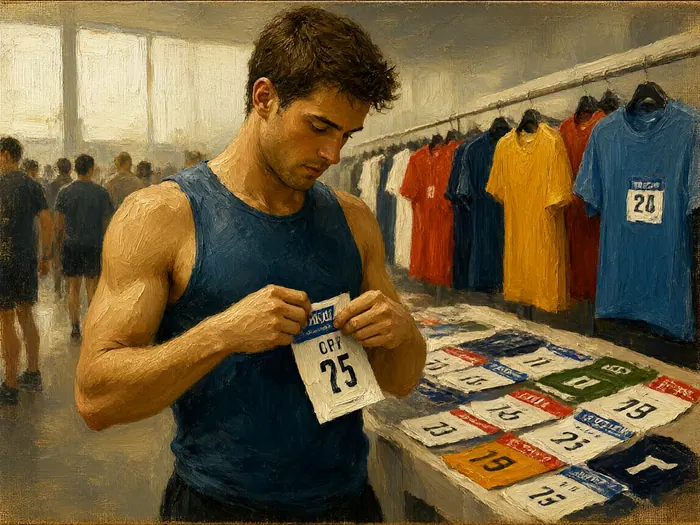
Two weeks out, simulate the event from alarm to finish line: wake at the same hour, eat a planned breakfast of 50 to 75 grams of familiar carbohydrate that is low in fiber and fat two to three hours before, then walk five minutes, jog five, and run four 20-second strides. Wear exactly the shorts, socks, shirt, and shoes you intend to race in, apply balm wherever seams rub, and arrive an hour early to find the toilets, bag drop, and start corrals. Collect your bib at the expo the day before if that is the local process, and charge your watch overnight. A rehearsal costs you one easy morning and saves you four small panics that cost beginners more time than fitness does.
 Howcompass
Taper Volume but Keep a Few Sharps
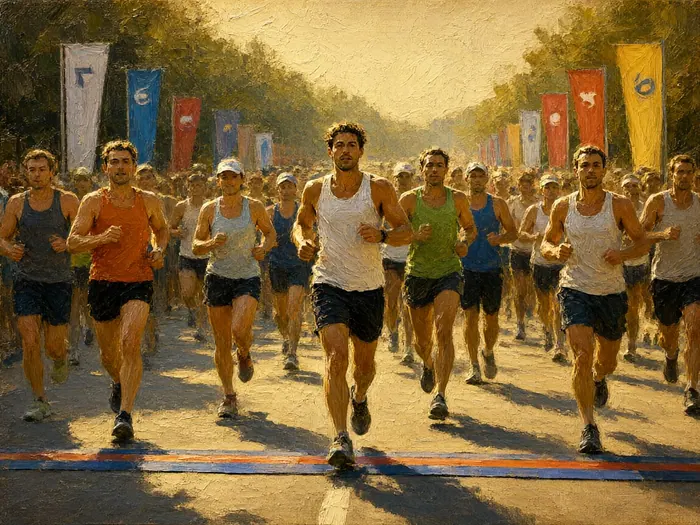
Week eight is deliberately small: about 60 percent of your week-seven volume, which means two sessions of 20 to 25 easy minutes plus one short rehearsal at race pace finished with three or four 20-second strides. Keep the intensity present but never the fatigue, since the point of a taper is to let you feel how good normal legs are; most beginners arrive flat because they trained hard in the final ten days. Two full days off your feet before the start is plenty at this distance, with a 15-minute walk the day before and again on race morning. No new shoes, no new breakfast, no hill session, and no secret test run 48 hours out.
 Howcompass
Run the First Kilometer Slower Than Goal Pace
Set a per-mile split target on your watch or write it on a band before the gun, then hold the first mile 15 to 30 seconds per mile slower than goal pace. Adrenaline makes an 8:30-mile pace feel like 7:45 during the opening 400 meters, and the runners who surge almost always pay for it in the last half mile. Settle into goal pace through the middle mile, then open up over the final 800 meters once you are certain nothing is injured, and start on the outside edge where you can pass cleanly rather than weaving to save two seconds. Our 10K negative-split pacing guide covers the same arithmetic once you extend the distance.
 Howcompass
Recover for Two Weeks, Then Pick a Next Goal
After finishing, keep moving for 15 to 20 minutes of walking, then take two full days off running before your first session back. Spend weeks nine and ten on 20 to 30-minute jogs at 60 to 75 percent of your peak volume, and only then start the next plan: repeat the 5K for a time, join a recurring local 5K series, or move up to 10K with the same run-walk and 10-percent structure. Check the mileage on your shoes, because anything past about 500 miles is finished regardless of how the uppers look. Book the next race while the motivation is high, then let the two easy weeks do their quiet work.
How to know it worked
- By week five you complete 20 unbroken minutes at a pace where you can speak full sentences.
- Your long session reaches 35 to 40 minutes by week six with no next-morning pain above 3 out of 10.
- You can name your goal 5K pace and have run one rehearsal mile within 15 seconds per mile of it.
- Race-morning breakfast, kit, and route have been rehearsed once, and your shoes are under about 500 miles.
- You finish the 5K moving from start to finish, then complete two easy recovery weeks without a setback.
Common mistakes to avoid
- Turning every run into a hard effort, so the easy days never build anything and fatigue piles up.
- Adding more than about 10 percent weekly volume, or raising distance and speed in the same week.
- Racing in old shelf-bought sneakers, or in brand-new shoes on start day, instead of a fitted pair broken in twice.
- Sprinting the opening quarter mile on adrenaline and falling apart in the last half mile.
- Running through sharp, one-spot pain because a race date is booked, then arriving injured or not at all.
Frequently Asked Questions
Question: How many days a week should I train for a first 5K?
Three run days, with a rest day between each, is enough to finish in eight weeks and is the frequency most beginners tolerate without overuse trouble. Use off days for a brisk walk, an easy cycle, or one or two short strength sessions. Do not run four or five days to speed progress: extra frequency raises injury risk faster than it raises fitness at this stage.
Question: Is running and walking cheating, or will it actually work?
It works, and it is the standard structure in most beginner 5K plans. Walk breaks let you spend more total time on your feet at low effort, which is exactly the stimulus your bones and tendons need. Many finishers take a one-minute break every half mile on race day and never stop; the only bad version is walking because the running pace was too fast to hold.
Question: What is a realistic finishing time for a first 5K?
Most first-time finishers land somewhere between 25 and 40 minutes, and plenty cross in over 45 while using walk breaks. Do not commit to a time target until week five, when you know your talkable pace and can run a continuous 20 minutes comfortably. Set the first goal as unbroken movement for the distance; a time goal belongs to your second 5K, once the routine exists.
Question: What should I eat before training runs and on race morning?
For sessions under 60 minutes, water and your normal eating is enough. Before the long run, take 30 to 60 grams of familiar carbohydrate about an hour out, then something with 15 to 25 grams of protein afterwards. On race morning, eat 50 to 75 grams of carbohydrate two to three hours before the start, low in fiber and fat, and never test a new breakfast on event day.
Question: How do I tell normal soreness from an injury?
Normal soreness is diffuse, scores 3 out of 10 or less, and settles within 48 hours. Injury signs are sharp pain in one spot, pain that changes your stride, tenderness along the inner shin, or an ache that wakes you at night. Stop running for three to seven days, walk instead, and see a clinician if it persists or you feel chest pain or dizzy.
Question: What if I miss a week of training or get sick?
Miss up to five days and resume the same week you left off. Miss a full week and restart at the previous week with total time cut by about 10 to 20 percent, then rebuild normally. Never double a session to catch up, and do not add speed work to make up lost ground. A two-week illness break is worth an extra easy week, not a pushed plan.
Question: Do I need a GPS watch or heart-rate monitor?
No. A free run-walk interval timer on your phone plus a known loop distance covers the whole plan, and the talk test is a reliable enough gauge for easy days. A watch helps in weeks five to eight because you can check your per-mile pace instead of guessing, and a heart-rate strap is useful if you find yourself going out too hard. A metronome app is genuinely useful for cadence.
Tips
- Put your three sessions on fixed weekdays and treat them like appointments. Most beginners lose plans to rescheduling, not to running too hard.
- Run the intervals from a timer app rather than by feel. The walk break is where beginners either jog too fast or stop entirely.
- Count right-foot steps for 30 seconds and double the number. Raising cadence by about 5 percent fixes heavy landing faster than lengthening stride.
- Rotate two pairs of training shoes and let each rest roughly 24 hours; midsole foam recovers and you will notice the difference by week six.
- Write your per-mile split targets on a race band or watch screen before the start. The first mile is where the whole race gets lost.
Warnings
- Stop running and seek medical care promptly for chest pain or pressure, an irregular heartbeat, unusual breathlessness, dizziness, fainting, or one swollen painful calf. Do not attempt to run those symptoms out, and get individual medical advice before starting training if you have a heart condition, uncontrolled blood pressure, or are on medication that affects heart rate.
- Sharp pain in one spot, pain that changes your stride, a hot or swollen shin, or an ache that wakes you at night is not normal soreness. Stop running, switch to walking for three to seven days, and see a clinician if it does not settle.
- Sudden volume jumps cause most beginner setbacks. Keep weekly running time near a 10 percent increase with a step-down week every fourth week, and do not add speed and distance in the same week.
- Hot and humid conditions slow easy pace on their own. Give sessions 20 to 40 seconds per mile of margin, run early, carry water, and stop if you feel light-headed, nauseated, or chilled.
Things You'll Need
- Running shoes fitted at a specialty store
- Second pair of running shoes for strength days
- Synthetic or merino running socks
- Moisture-wicking top and shorts or tights
- Anti-chafe balm for seams, thighs, and arms
- Cap and sunglasses for sun or drizzle
- Reflective clip or headlamp for dark starts
- Phone with a run-walk interval timer app
- Metronome app or playlist at 170-180 steps per minute
- Sports watch or phone GPS for pace checks
- Water bottle or handheld flask for long sessions
- Banana or cereal bar for post-run refueling
- Training log and a pen, or a simple spreadsheet
- Foam roller or lacrosse ball for calves and quads
Related Howcompass Guides




References (5)
- Physical Activity — Fact SheetWorld Health Organization
- Be a Safe Runner — ACE Resources on Perceived Exertion and Beginner TrainingAmerican Council on Exercise
- Running Basics: Tips for BeginnersMayo Clinic
- Exercise and Fitness — Harvard Health TopicsHarvard Health Publishing
- Beginner Running Training Plans and Shoe GuidesRunner's World
Further reading
- Medial Tibial Stress Syndrome (Shin Splints)Wikipedia
- Interval TrainingWikipedia
Encyclopaedia entries are background, not evidence: no step below rests on one of these.
Sources are listed so you can read the underlying guidance yourself. Our editorial policy explains how guides are reviewed.
Did this article help you?
0 readers found this helpful — add your vote.
No comments yet — be the first to share your results.