How to Check Your Credit Reports and Dispute Errors
A guide to Obtaining Reports Securely and Setting Up the Review, Reviewing Accounts, Inquiries, and Negative Information, Documenting Errors and Gathering Evidence, Disputing with Credit Bureaus and Furnishers, Reviewing Outcomes and Protecting the Record
A credit report is a record to verify, not a score to guess from memory, and accurate negative information is not the same as an error or identity theft. Use these 24 steps in our Finance and Business collection to review each bureau's report, dispute inaccurate or incomplete entries with both the bureau and the furnisher, and protect your documents throughout the process.
How do you check Your Credit Reports and Dispute Errors?
 Howcompass | How to Check Your Credit Reports and Dispute Errors
Obtaining Reports Securely and Setting Up the Review
HowcompassGo to the official report site
Start at the official AnnualCreditReport.com website rather than a lookalike advertisement or an unsolicited link. The FTC free-credit-report guidance explains that Equifax, Experian, and TransUnion have permanently extended free weekly online access through AnnualCreditReport.com, so read the terms before paying for any optional product and avoid assuming a credit score is automatically included with the report. Look-alike site warnings are covered under computers and electronics guides.
 Howcompass
Verify your identity on a trusted device
Complete the identity-verification process on a secure, updated device and a connection you trust. Use the official site's own authentication flow, do not send a Social Security number or identity document through ordinary email or an unsolicited chat, and close the session when finished. Save downloaded reports in a protected location with access limited to people who need them, because the files can contain sensitive identity, address, and account information even when some digits are masked. Back the saved reports up with your digital photo backup routine.
 Howcompass
Download and label all three reports
Obtain the Equifax, Experian, and TransUnion reports and label each with its bureau and report date. Request all three when you need a comprehensive comparison or plan to dispute an entry, or stagger reviews when your goal is routine monitoring, and keep any reference number supplied with the report. Do not assume a clean report from one bureau proves the other two are identical, because account and inquiry information can differ among their files.
 Howcompass
Prepare a review worksheet first
Create a review worksheet before reading the details. Add columns for bureau, report date, page or section, account or inquiry, exact discrepancy, supporting evidence, furnisher, dispute date, and outcome, and make one worksheet row for each distinct issue rather than combining unrelated errors. Keep this review focused on whether information is accurate and complete; a credit score is a separate calculation and does not replace inspecting the underlying report entries. Keep the columns as short as those in a weekly status update.
 6Howcompass
Check identifying details before accounts
Check personal identifying information first, including name variations, current and former addresses, date-of-birth details, and any displayed employment information. Mark misspellings or outdated information separately from an address or identity you do not recognize, because the latter can indicate a mixed file or fraud and may need additional action. Record only what is necessary in the worksheet and avoid copying full identity numbers into an unprotected notes app or shared document. Guard these details as carefully as your open and manage a bank account credentials.
Reviewing Accounts, Inquiries, and Negative Information
 Howcompass
Review each account's ownership and status
Review every account's ownership, type, open or closed status, credit limit, balance, and payment status. Check whether you are the owner, a joint borrower, or only an authorized user, and flag duplicate accounts, an account reported open when it was closed, or a status that contradicts the lender's records. The CFPB credit-report review tool provides a section-by-section checklist for these account details and questions.
 8Howcompass
Compare payment history with your records
Compare payment history, dates, balances, and delinquency markers with your own statements and payment confirmations. Check the date opened, date of last payment, date of first delinquency, and any sequence of late markers rather than relying on a general memory that an account was handled responsibly. Our bank-statement guide can help organize the underlying records, but keep an accurate late payment distinct from an incorrectly reported one.
 Howcompass
Examine collections and negative entries
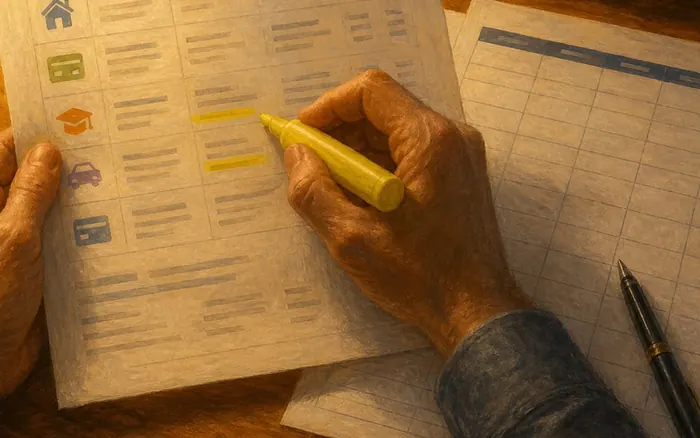
Review collections, charge-offs, and other negative entries for ownership, duplication, dates, and consistency. Check whether the same debt appears more than once under different names and whether a collector's entry matches the original account history, then document the exact problem rather than assuming every collection is invalid. The FTC credit-report guidance distinguishes inaccurate or incomplete information from accurate negative history, which cannot simply be disputed away through a promise of credit repair. A small emergency cash fund prevents the missed payment that becomes a collection.
 Howcompass
Separate authorized inquiries from suspicious ones
Review inquiries and separate applications you authorized from inquiries you do not recognize. Allow for a lender, dealer, or finance partner's name to differ from the brand on your paperwork, and compare application dates before treating an entry as suspicious. Record the exact inquiry and any related new account, and use the identity-theft steps later in this guide when the evidence suggests someone else applied for credit rather than treating an unfamiliar name alone as proof. More bureau quirks are discussed across finance and business guides.
 Howcompass
Compare all three reports entry by entry
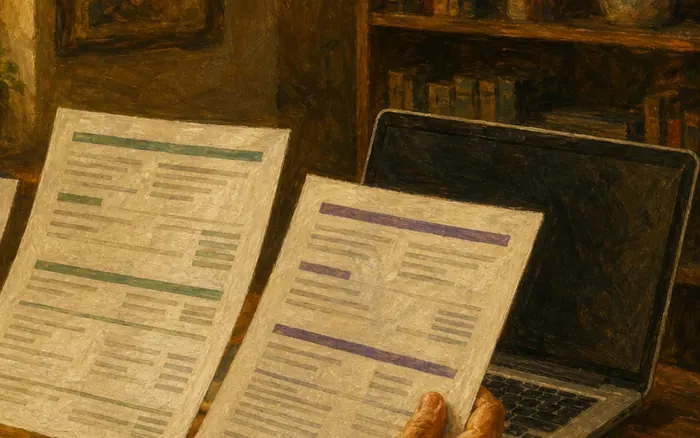
Compare all three reports entry by entry without treating every difference as an error. The CFPB review tool notes that some information may not be reported to all three nationwide companies, so a missing older account or address can create a legitimate difference. Focus on whether each listed item is accurate, and plan to dispute the same confirmed error with every bureau whose report contains it. Reconcile entries the way a bank statement review does.
Documenting Errors and Gathering Evidence
 Howcompass
Classify each issue before disputing
Classify each issue as an inaccuracy, incomplete information, accurate negative history, or possible identity theft. Write a short factual explanation of what is wrong and what the correct entry should show, and avoid disputing a legitimate late payment or current balance simply because it hurts your application. The FTC Fixing Your Credit guidance explains that no one can legally remove information that is both accurate and current merely by promising to repair credit. Sort fact from wishful reading with think critically and make decisions.
 Howcompass
Record the exact disputed field
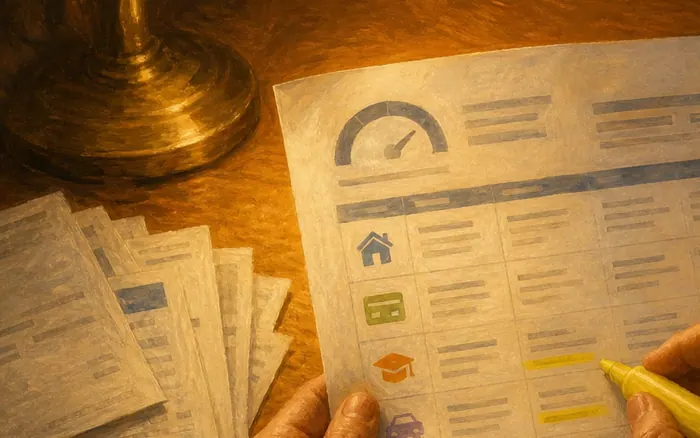
Record the exact bureau, report page, account or inquiry label, masked account number, and disputed field for every issue. Use one row or worksheet per error so the bureau and furnisher can identify the item without guessing, and include a copy of the relevant report section with the entry circled or highlighted. Do not alter the original downloaded report or create a replacement document that could be mistaken for an authentic bureau record. Log rows with the discipline of a home inventory record.
 14Howcompass
Gather supporting document copies
Gather copies of documents that directly support the correction. Use statements, payment confirmations, account-closure letters, identity or court documents when relevant, and correspondence from the furnisher, while keeping original documents and unrelated transactions out of the dispute packet. The FTC dispute guide recommends copies rather than originals and records of everything sent, so redact unnecessary account digits and identity details without hiding the evidence needed to evaluate the claim.
 Howcompass
Start identity-theft recovery when fraud appears
Use the identity-theft recovery process when an unknown account, address, inquiry, or debt suggests fraud rather than an ordinary reporting mistake. CFPB identity-theft guidance recommends IdentityTheft.gov, compromised-account action, and fraud alerts or security freezes as appropriate, so preserve evidence and contact the affected business promptly instead of relying only on a slow correction to the report. Our phishing-response guide can also help when personal information was disclosed through a scam.
 16Howcompass
Decide between a fraud alert and a freeze
Consider a fraud alert or security freeze when new-account fraud is a concern, and understand their different functions. CFPB security-freeze guidance explains that a freeze limits prospective creditors' access and must be arranged with each bureau, while a fraud alert asks creditors to verify identity and follows different notification rules. A freeze does not correct an inaccurate entry or stop takeover of an existing account, so plan any legitimate credit application before restricting access. Tell trusted family members what you filed, as your family emergency contact card records other arrangements.
Disputing with Credit Bureaus and Furnishers
 17Howcompass
Draft a factual written dispute
Draft a concise written dispute identifying each error and the correction you request. Include your complete name and address, the report or reference number when available, the exact entry, why it is inaccurate or incomplete, and a list of supporting copies, and use the FTC sample dispute guidance or the bureau's official form rather than paying someone for a generic letter. Keep the explanation factual and specific so the investigation can address the actual field rather than a broad demand to improve your credit. The same clarity makes an email that gets a reply readable.
 Howcompass
File with every bureau holding the error
Submit the dispute to every nationwide bureau whose report contains the error. Use the bureau's official online portal, phone process, or dispute address shown on the report, include the relevant evidence, and retain a copy of the complete submission and confirmation. The FTC dispute guide says both the bureau and the business supplying the information have responsibilities, so do not assume one bureau will automatically correct the same error in another company's file. Prepare the evidence as you would to negotiate a salary increase.
 19Howcompass
Notify the business that furnished the data
Send the same factual dispute and supporting copies to the business that furnished the information. Use the furnisher's designated dispute address or official channel, ask for the correct address if it is not shown on the report, and explain exactly what should be corrected or deleted. The FTC furnisher-dispute guidance explains that a business must investigate and update inaccurate or incomplete reporting, so contacting only the original creditor or only the bureau can leave part of the correction process unused. Phone the furnisher with the calm structure of a difficult conversation facilitation.
 Howcompass
Send it traceably and keep receipts
Use certified mail with a return receipt when mailing a dispute, or an official secure portal when submitting electronically. Keep mailing receipts, delivery confirmations, uploaded-file lists, screenshots of confirmation numbers, and every response in the dispute log, and do not send sensitive identity documents through ordinary unencrypted email. The FTC dispute guide specifically recommends certified mail and return receipt for mailed disputes and keeping copies of everything sent. Store the receipts beside your scans in a digital photo library.
 Howcompass
Track the investigation window
Track the investigation period and respond promptly to legitimate requests for additional information. The FTC dispute guidance states that a bureau generally has 30 days to investigate, may stop a request it considers frivolous or irrelevant with notice and a reason, and must provide the results in writing. Record the submission date and expected response window without assuming a deletion is guaranteed, and verify any follow-up contact through the bureau's official channel before sharing more information. Stay factual on follow-up calls using resolve conflict respectfully habits.
Reviewing Outcomes and Protecting the Record
 Howcompass
Verify the correction on an updated report
Read the investigation results and obtain an updated report to verify the actual entry. Check that the agreed correction or deletion appears correctly, review the other bureaus for the same issue, and request any available correction notices to previous report recipients that you want informed under the applicable process. The FTC dispute guidance says a changed dispute results in a free updated report that does not count as the free annual report, so retain both the results and the corrected file. Read the results as skeptically as you would read a research paper.
 23Howcompass
Escalate unresolved documented errors
Use the available follow-up options when the investigation does not resolve a documented error. Ask that a statement of the dispute be added to the file and future reports, provide any newly relevant evidence through the official process, and consider a complaint to the CFPB or advice from a qualified consumer-law professional when the circumstances warrant it. Avoid sending repetitive unsupported disputes or assuming that a statement of disagreement removes the underlying entry; keep the record factual and focused on verifiable information. Skip paid repair schemes and put those fees into save money every month instead.
 Howcompass
Refuse guarantees of effortless credit repair
Reject guarantees of effortless credit repair and requests to misrepresent accurate information. The FTC Fixing Your Credit guidance explains that accurate, current negative information cannot legally be removed by a company promising such a result, while disputes of actual mistakes are free. Our phishing and scam guide can help verify unsolicited offers, and you should report deceptive practices rather than paying an advance fee or inventing a false identity-theft claim.
 25Howcompass
Schedule recurring reviews and secure records
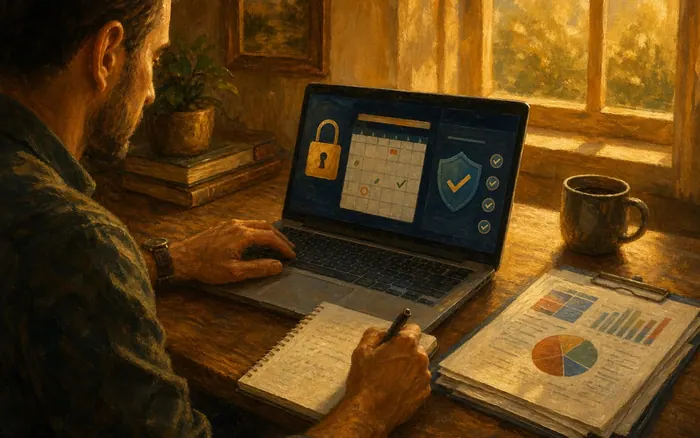
Schedule recurring report reviews and maintain secure records after the dispute closes. Use the free official access to check that corrected information stays corrected, review new accounts and inquiries, update fraud alerts or freezes only as needed, and store the evidence log and reports with the same care as financial statements. Connect the verified balances and payment dates to our personal-budget guide when planning real payments, but keep credit improvement separate from the inaccurate-entry dispute process.
Frequently Asked Questions
Question: Is a credit report the same thing as a credit score?
No. A report contains identifying information, accounts, payment history, inquiries, and other records. A score is a separate calculation based on report data. Reviewing the underlying entries is necessary to find inaccuracies, and a free report does not necessarily include a score.
Question: Can I dispute accurate negative information just because it hurts my application?
Accurate, current negative information is not the same as an error. You can dispute information that is inaccurate or incomplete and ask for an investigation, but no credit-repair company can legally guarantee removal of accurate, timely history. Focus on documented mistakes and responsible payment behavior.
Question: How long does a credit-bureau dispute usually take?
The FTC says a bureau generally has 30 days to investigate. It must provide the results in writing and, if the dispute causes a change, a free updated report. Keep your confirmation and respond to legitimate requests for additional information through verified official channels.
Question: Should I place a security freeze instead of filing a dispute?
They serve different purposes. A dispute asks for inaccurate or incomplete information to be corrected. A freeze restricts prospective creditors' access to help prevent new accounts, and it must be arranged with each bureau. A freeze does not erase an error or stop every existing-account problem.
Tips
- Use one worksheet row per error and include the bureau, report page, exact field, evidence, requested correction, and outcome so the file remains easy to follow.
- Request all three reports before a major dispute because a correction at one bureau does not prove that the same error was fixed at the others.
- Keep originals and send supporting copies only; redact unrelated transactions and identity details without obscuring the evidence needed for the dispute.
- Save confirmation numbers and delivery receipts immediately rather than relying on a browser session or memory to reconstruct the submission date later.
Warnings
- Do not email full identity documents or Social Security numbers to unsolicited contacts, and do not use a lookalike credit-report site reached through an unexpected message.
- Never pay for a guarantee that accurate, current negative information will be removed or that a credit score will rise by a promised amount.
- Do not send original evidence or repeatedly file unsupported disputes; use factual copies and keep a complete record of every submission and response.
- A security freeze does not correct report errors or protect against every existing-account takeover, and it can also prevent legitimate new credit until lifted.
Things You'll Need
- Current Equifax, Experian, and TransUnion reports with report dates and reference numbers
- A secure updated device and protected storage for downloaded reports
- A bureau-by-bureau error and dispute worksheet
- Copies of statements, confirmations, letters, and other supporting evidence
- Official bureau and furnisher contact details, a submission log, and mailing receipts
- A calendar for investigation follow-up, updated reports, and recurring reviews
Related Howcompass Guides




References (6)
- Learn about your credit report and how to get a copyUSAGov (General Services Administration)
- Reviewing Your Credit ReportsConsumer Financial Protection Bureau
- Dispute errors on your credit reportUSAGov (General Services Administration)
- Understand, get, and improve your credit scoreUSAGov (General Services Administration)
- What Is a Credit Freeze or Security Freeze on My Credit Report?Consumer Financial Protection Bureau
- What Do I Do if I Am a Victim of Identity Theft?Consumer Financial Protection Bureau
Sources are listed so you can read the underlying guidance yourself. Our editorial policy explains how guides are reviewed.
Did this article help you?
0 readers found this helpful — add your vote.
No comments yet — be the first to share your results.