How to Read a Monthly Bank Statement and Reconcile Your Transactions
A guide to Gathering the Statement and Supporting Records, Reading the Statement Line by Line, Reconciling Bank and Ledger Differences, Reporting Errors and Unauthorized Activity, Closing the Review and Building a Monthly Routine
A monthly statement is a dated record of posted account activity, not a promise that its closing balance equals the money available in your app today. Use these 23 steps in our Finance and Business collection to compare the bank's record with your own, investigate every difference, and report suspicious activity promptly while keeping account details and supporting documents secure.
How do you read a Monthly Bank Statement and Reconcile Your Transactions?
 Howcompass | How to Read a Monthly Bank Statement and Reconcile Your Transactions
Gathering the Statement and Supporting Records
HowcompassDefine the account and period
Define the account and statement period you are reconciling before comparing balances. Confirm whether the record is a checking, savings, business, or other deposit account, identify the exact start and end dates, and remember that transactions made after the closing date will not appear on that statement. If you use separate accounts for different activities, our freelance account-separation guide explains why keeping records distinct makes this review easier; never use a current app balance as a substitute for the statement's dated closing balance.
 Howcompass
Download the complete statement
Download every page of the statement through the bank's verified app, website, or mailed copy. Check that the file includes the transaction detail, balance summary, fee and interest information, account identifiers, and any error-resolution or change notices rather than saving only a screenshot of the first page. Use a bookmark or official contact route instead of following an unexpected statement email, and obtain older or missing statements from the institution when your own files are incomplete.
 Howcompass
Secure the file before opening it
Secure the statement and the sign-in session before opening or sharing financial records. Use a trusted device, current software, a unique password, and the institution's available multifactor authentication, then store downloads in an access-controlled location rather than a public folder or group chat. The FDIC deposit-account guidance recommends reviewing statements promptly and reporting errors, and its security resources warn against unsolicited requests for credentials; do not send full account numbers, passwords, one-time codes, or unredacted statements to an unverified helper.
 Howcompass
Collect receipts and your ledger
Gather your ledger, receipts, invoices, deposit records, and outstanding-payment list for the same period. Include cash withdrawals, checks, transfers, card purchases, refunds, automatic payments, and income that your own system recorded, while keeping receipts until the corresponding transaction appears and is verified. The FDIC balancing guide recommends keeping receipts and regularly balancing the account, and our personal finance and budget guide can provide the transaction log needed for a consistent comparison.
Reading the Statement Line by Line
 Howcompass
Confirm identity and opening balance
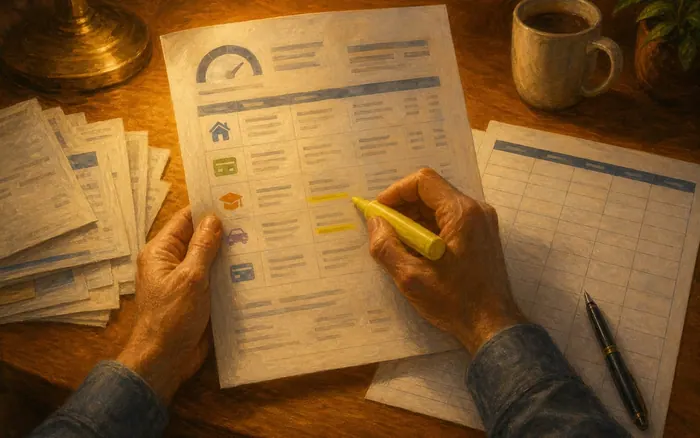
Verify the account identity, statement dates, and opening balance on the document. Match the institution name, account type, masked identifier, and statement period to the correct records, then compare the opening balance with the prior statement's closing balance or the documented first balance for a new account. Investigate a gap, overlap, replacement statement, or unexpected opening adjustment before matching individual transactions, and never assume two similar account nicknames in an app refer to the same ledger.
 Howcompass
Separate posted from pending items
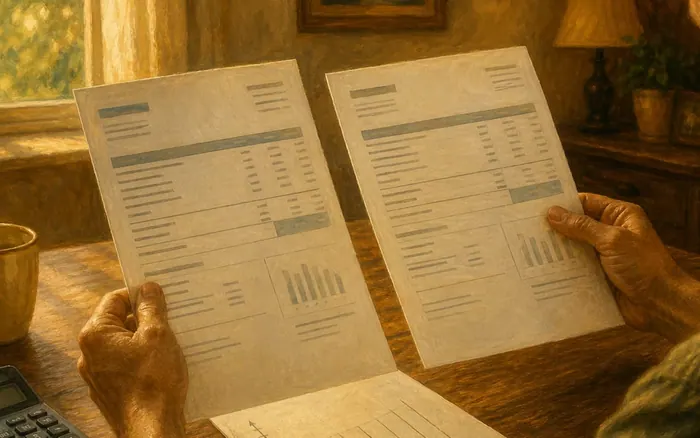
Read the transaction labels and distinguish posted activity from pending or available-balance information. Look for transaction, posting, and sometimes value dates, merchant descriptors, check numbers, reference codes, and debit or credit columns, and remember that pending authorizations can change or disappear before posting. Use the statement's posted transactions for the period reconciliation, track current pending items separately, and ask the institution to explain an unfamiliar label instead of treating the app's real-time available balance as an audited statement figure.
 Howcompass
Test the statement's own arithmetic
Check the statement arithmetic using its complete posted activity for the period. Starting with the opening balance, add the listed deposits and other credits and subtract the listed withdrawals and other debits, then compare the result with the closing balance while respecting the statement's signs and any separate summary sections. If the figures do not agree, recheck page ranges, fees, interest, corrections, and account transfers before changing your ledger; an unexplained statement discrepancy should be raised with the institution rather than hidden with a plug number.
 9Howcompass
Review fees and interest separately
Review service charges, overdraft or returned-item fees, interest, and account notices separately. Match each fee or interest credit to a statement line and any disclosed rate or account-change notice, then record it in your own ledger even when no receipt exists. Compare recurring charges with the account terms and our monthly savings guide for follow-up ideas, but do not dispute a legitimate disclosed fee as fraud or ignore a new charge simply because its amount is small.
 Howcompass
Match transactions to your evidence
Match every posted deposit and withdrawal to your own records and supporting evidence. Compare amount, date, merchant or payer descriptor, reference number, currency, and any partial or recurring-payment pattern, marking likely duplicates and unrecognized items for investigation rather than deleting them. A descriptor can differ from a shop's trading name and a refund can post on a later date, so check the merchant and bank records before concluding fraud; our subscription audit guide can help investigate recurring descriptors.
Reconciling Bank and Ledger Differences
 Howcompass
Build a two-column reconciliation sheet
Create a reconciliation worksheet with separate bank-side and ledger-side sections. Record the statement opening and closing balances, your ledger balance at the same cutoff, matched items, deposits or other credits not yet posted, authorized withdrawals not yet posted, bank items missing from your ledger, and unresolved differences. Keep original amounts and supporting references visible, use one row per item rather than netting unrelated transactions, and date the worksheet so a later statement can explain why an outstanding item was still open.
 Howcompass
List timing items that had not posted
Identify deposits in transit, outstanding checks, and other legitimate items that had not posted by the cutoff. Compare dates and reference numbers to distinguish a real timing difference from a missing, duplicated, returned, or unauthorized transaction, and carry each unresolved item forward with its original expected posting date. Do not automatically subtract every current pending card authorization: pending amounts may change, and only items relevant to the reconciliation cutoff and supported by your records belong in the outstanding-item calculation.
 13Howcompass
Calculate the adjusted bank balance
Calculate the adjusted bank balance using supported timing items. Start with the statement closing balance, add verified deposits or other credits in transit, and subtract verified outstanding checks, withdrawals, or other debits that belong to the period but had not posted, documenting any different treatment required by the account's statement format. The resulting adjusted bank figure is a reconciliation value, not a new bank balance or spending limit, so do not use it to authorize a payment while current holds and upcoming obligations still matter.
 Howcompass
Correct the ledger with traceable entries
Adjust your own ledger for valid statement items and correct only documented recording errors. Add bank credits and interest you omitted, subtract bank debits and fees you omitted, correct duplicated or transposed entries with traceable adjustments, and preserve the original transaction history rather than overwriting it. Compare this adjusted ledger balance with the adjusted bank balance, and keep scheduled future payments in a separate forecast so they are not mistaken for transactions that have already posted.
 15Howcompass
Investigate a leftover difference
Investigate any remaining difference instead of forcing the reconciliation to balance. Recheck statement page continuity, decimal places, signs, duplicate entries, transposed digits, foreign-currency amounts, split transactions, cutoff dates, and items carried from the prior month, then inspect the original receipt or bank detail for the exact rows involved. If the residual still cannot be supported, leave it clearly labeled and contact the institution or your bookkeeper; never insert an unexplained “other” entry merely to make two totals agree.
Reporting Errors and Unauthorized Activity
 Howcompass
Sort errors from suspicious activity
Classify each problem as a possible merchant error, your own recording error, an unrecognized but legitimate transaction, or suspected unauthorized activity. Preserve the statement, receipts, merchant correspondence, card or check details, and a timeline before making changes, and look for related small charges or repeated attempts without attempting a test transaction yourself. This classification organizes the next contact but does not delay an immediate report to the bank when you cannot explain a charge or believe account data has been compromised.
 Howcompass
Raise a recognized problem with the merchant
Contact the merchant for a recognized purchase problem while keeping the bank informed when appropriate. A wrong amount, duplicate charge, missing refund, or canceled service may be resolved with the merchant's receipt and billing records, but a merchant conversation does not replace a required bank notice or preserve every legal deadline by itself. Use verified merchant details, keep written evidence of the response, and ask the institution how to dispute or report the item if it remains unresolved or you do not recognize the merchant.
 Howcompass
Report unauthorized transactions now
Report unauthorized or unexplained electronic transactions to the financial institution immediately. Use the phone number or secure channel on the statement, card, or official app, follow its instructions for locking or replacing compromised credentials or cards, and provide written confirmation when requested while retaining a copy and case number. The CFPB account-monitoring guidance says to review statements and contact the institution immediately about suspicious charges, so do not wait for a merchant, next month's statement, or a perfect reconstruction of the event.
 Howcompass
Ask which dispute rules apply
Ask which investigation, notice, provisional-credit, and liability rules apply to your specific transaction. Regulation E error-resolution procedures and consumer-liability rules contain timing and investigation requirements for covered electronic fund transfers, but eligibility, deadlines, responsibility, and provisional credit depend on the facts and the type of transaction. Report promptly rather than calculating a deadline yourself, and do not assume every payment method, business account, loss, or outcome receives identical treatment.
 Howcompass
Document the report and lock access
Document the report and secure related payments and records without destroying evidence. Record the date, time, representative, case number, transactions reported, replacement-card or account instructions, and requested follow-up, then review affected automatic payments and linked accounts through verified channels. Our online-account security guide covers credential and recovery steps, while deposit-account investigations should follow the bank's directions; never post unredacted evidence publicly or give a caller a one-time security code to “help” with the case.
Closing the Review and Building a Monthly Routine
 Howcompass
Finish the reconciliation report
Complete the reconciliation report with reviewed totals, outstanding items, and open follow-ups. Show the statement closing balance, adjusted bank and ledger balances, the final supported difference if any, reviewer and review date, and links or references to receipts, disputes, and bank cases rather than attaching sensitive records to an insecure shared sheet. Mark unresolved items explicitly so they appear on the next review, and obtain a second review for business or shared accounts where the organization's controls require one.
 22Howcompass
Post adjustments and keep the trail
Post verified bank adjustments and organize the corrected ledger for future checks. Record statement interest, fees, corrections, and other confirmed entries with their actual dates and descriptions, categorize them consistently, and keep reconciled transactions distinguishable from forecasts and pending activity. Save an audit trail for every manual adjustment and avoid deleting the original imported row, because a later refund, bank correction, or tax query may depend on the sequence as well as the final balance.
 Howcompass
Store evidence for the right period
Store statements and reconciliation evidence securely for a retention period suited to your obligations. Restrict access, use protected backups, redact unnecessary identifiers when sharing with an adviser, and shred or securely delete expired copies according to the sensitivity of the information and the device's capabilities. Tax, legal, lending, warranty, and business requirements differ by jurisdiction and circumstance, so ask a qualified professional about the records you must retain instead of applying a universal number of years or relying on the bank's online archive being permanent.
 Howcompass
Schedule the next review and alerts
Schedule the next monthly review and add alerts that support rather than replace it. Set a recurring task shortly after each statement becomes available, retain a verified bank contact route, and review transactions even when bills are on autopay or another person manages the ledger. The FDIC deposit-account checklist emphasizes reviewing statements promptly and notifying the institution of errors, so use transaction and low-balance alerts for early awareness while keeping the complete statement reconciliation as the monthly control.
Frequently Asked Questions
Question: Why does my statement closing balance differ from today's available balance?
The statement closing balance reflects posted activity through a past cutoff, while today's available balance can include later transactions, holds, pending authorizations, and the institution's availability rules. Reconcile the statement to its own cutoff first, then track subsequent and pending activity separately. Do not treat either the closing or adjusted reconciliation balance as a guarantee of funds available for a new payment.
Question: Should I include pending card transactions in the reconciliation?
Track them separately from the statement's posted transactions. A pending authorization can change, be reversed, or post later with a different final amount, so it should not be used to rewrite the statement. Include only supported outstanding items relevant to the cutoff in your worksheet and keep current authorizations visible when forecasting upcoming cash needs.
Question: How long should I keep bank statements?
Retention depends on tax, legal, lending, warranty, business, and personal-record needs, and those requirements vary by jurisdiction and circumstance. Keep statements and supporting evidence for the period required for your situation, and ask a qualified tax or legal professional when the records support a return, dispute, or business obligation. Do not assume online bank access will remain available indefinitely.
Question: What should I do first after finding an unauthorized electronic withdrawal?
Contact the financial institution immediately using a verified number or secure official channel, identify the transactions, and follow its instructions for written confirmation and securing the card or account. Keep the case number and copies of everything submitted. Regulation E contains notice, investigation, and liability rules for covered transfers, but the applicable timing and outcome depend on the transaction and facts, so prompt reporting is safer than trying to calculate the last possible deadline.
Tips
- Reconcile one account and one statement period at a time, then roll forward only the supported outstanding items to the next worksheet.
- Keep a small descriptor notebook for merchants whose statement names differ from their storefront names, but verify each new charge instead of assuming every similar descriptor is legitimate.
- For a business account, separate preparation and approval where practical and give the reviewer access to the original statement rather than only an exported spreadsheet.
Warnings
- Never ignore an unrecognized withdrawal because it is small; report suspicious activity through a verified bank channel immediately and do not wait for next month's statement.
- Do not share passwords, one-time codes, full account numbers, or unredacted statements in unsolicited calls, messages, public documents, or dispute posts.
- Regulation E and other protections have conditions and time-sensitive rules that vary by transaction and account; prompt reporting is essential, and neither a refund nor provisional credit should be assumed.
Things You'll Need
- Every page of the monthly statement and the previous statement or opening-balance record
- A dated transaction ledger with receipts, invoices, deposits, and outstanding payments
- A reconciliation worksheet separating bank-side and ledger-side adjustments
- A secure device, verified bank sign-in route, and access-controlled document storage
- Verified bank and merchant contact details plus a case and follow-up log
- A monthly review calendar and any required second reviewer for shared or business accounts
Try it with a free tool
You have read the method — now work through your own numbers or text. These free tools run in your browser, need no sign-up and link back to this guide.
Related Howcompass Guides




References (5)
- Deposit AccountsFederal Deposit Insurance Corporation
- Watch Your Accounts Closely When Card Data Is HackedConsumer Financial Protection Bureau
- 12 CFR § 1005.11 — Procedures for Resolving ErrorsConsumer Financial Protection Bureau
- 12 CFR § 1005.6 — Liability of Consumer for Unauthorized TransfersConsumer Financial Protection Bureau
- Balancing Your Checking AccountFederal Deposit Insurance Corporation
Sources are listed so you can read the underlying guidance yourself. Our editorial policy explains how guides are reviewed.
Did this article help you?
0 readers found this helpful — add your vote.
No comments yet — be the first to share your results.