How to Listen to Audiobooks Productively on a Daily Commute
A guide to Week 1: Set Up Free Borrowing and Pick the Right Format, Week 2-3: Build a Queue That Survives Tired Days, Week 4-6: Handle Downloads, Devices and Safety, Week 7-8: Log, Review and Keep the Habit
A commute is the closest thing most people have to a guaranteed block of free time, and it is badly suited to almost every other productive habit: too short to open a laptop, too interrupted to read print, too dark or crowded to write. Audio fits it, because your eyes and hands are already busy and the story keeps its place while you merge onto the highway. A 50-minute daily drive is about four hours a week, which is enough to finish a ten-hour narrated book every two and a half to three weeks if you actually capture the time. The habit fails for two predictable reasons. The first is committing to a book that is not listenable, which you discover an hour and a half in, after the novelty has worn off and before the plot has paid anything back. The second is an empty queue: the loan expires, the ride feels too short to start something new, and three commute days quietly disappear. Both are fixed by structure rather than willpower - audition the sample, keep a small stack of ready titles, and let short rides do the cleanup work. This guide builds the habit in four phases: setting up free borrowing and choosing a format, shaping a queue and a listening speed that survives tired days, handling downloads, devices and driving safety, then logging and reviewing so the months add up to finished books. One rule runs through all of it: never interact with a handheld phone while the car is moving. Anything worth looking up waits until you are parked.
Borrow first: a public library card usually unlocks the same app your library uses for ebooks, with self-returning loans and a visible waitlist, so your only cost is queue time. Before committing to anything, listen to the first fifteen minutes in the car or kitchen where you will actually listen, because narration quality and road noise decide comprehension more than a book's rating. Keep the queue at three titles, stay near 1.0 to 1.25x speed for nonfiction, bookmark chapter ends, set a sleep timer, and download over Wi-Fi before flights. Log one line per session and review finished, abandoned and total minutes once a month.
- Time
- About 2 weeks to set up; then one commute at a time
- Cost
- $0 with library borrowing; a subscription only if you finish more than you can borrow
- Difficulty
- Beginner - no special gear beyond a phone and one pair of earbuds
- Works on
- Any fixed block of 20-60 minutes of driving, transit, walking or chores
- Not for
- Handheld phone use at the wheel, or listening when too drowsy to drive
- Results
- Roughly 6-10 finished titles a year from a 50-minute daily commute
How do you listen to Audiobooks Productively on a Daily Commute?
 Howcompass | How to Listen to Audiobooks Productively on a Daily Commute
Week 1: Set Up Free Borrowing and Pick the Right Format
HowcompassGet a Library Card Before You Buy Anything
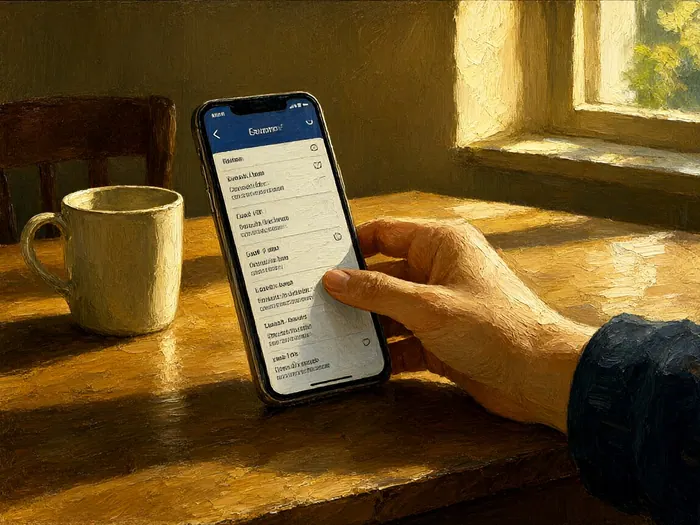
Start with your public library instead of a store, because most library cards already include digital borrowing at no cost beyond the card itself. Borrowing runs on a license: the library buys a set number of copies, popular titles show a waitlist and your position in it, and each loan lasts a fixed term - commonly two to three weeks, printed on the loan screen - then returns itself, so there is no late fee to manage. Many systems let you keep several titles out at once and renew once when nobody is waiting, and some branches issue a temporary digital card online. Confirm the exact borrowing and card rules for your own system through the American Library Association's library tools directory.
 Howcompass
Compare Narrated, Unabridged and Dramatized Versions
Read the format label before the title, because three things hide inside it: an unabridged recording reads the whole text, an abridged one cuts it and is now uncommon outside classics and children's books, and a dramatized or full-cast production splits the parts across several voices with music and mixing. Single-narrator readings are the most consistent and least demanding of your attention, while full casts make a long novel easier to follow when you only half-hear it, at the cost of longer running times. Narrator credits, format and total length are published on the imprint pages, so check them before you commit - Hachette Audio's imprint catalogue lists narrators and lengths for the titles it releases. When both versions of a book exist, take the unabridged one, because an abridgement's saved hours often come back as replays of passages you missed.
 Howcompass
Sample the First Fifteen Minutes Where You Listen
Audition the opening quarter hour in the real environment - the car, the train carriage, the kitchen at 7am - because road noise and interruptions are what break attention, not the reading room. Judge four things in that window: whether the narrator leaves space for you to think, whether character voices help or distract, whether the mix stays audible over traffic without cranking the volume, and whether you can repeat back what you heard afterwards. A performance that sounds fine in a two-minute shop clip can be unlistenable twice a day for a month, and our guide to choosing a good book you will actually finish applies the same test to the text underneath the narration. Store apps sometimes allow a return or exchange when a purchase turns out wrong for you, so read that policy once and know its limits rather than assuming; the Audio Publishers Association is a useful reference for how recordings are produced and credited.
 Howcompass
Measure Your Real Commute and Chore Minutes
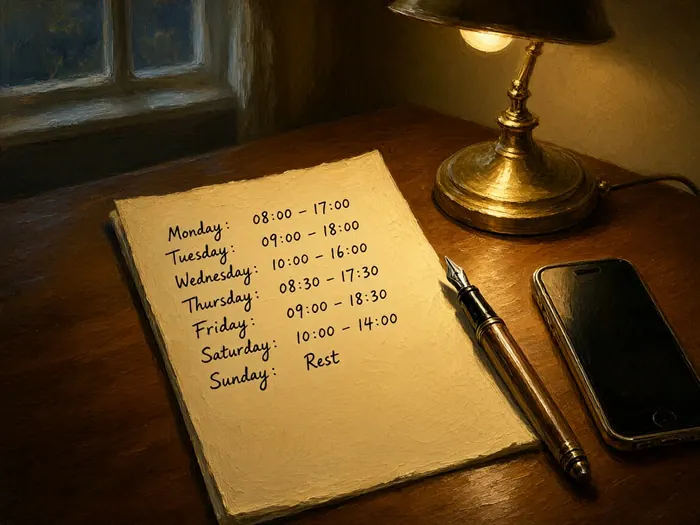
For one week, write down the minutes you actually spend in listening-friendly time rather than the minutes you hope for: a 25-minute drive each way is 250 minutes a week on paper, and a realistic capture rate of half to two thirds still gives you two to four hours. Add the blocks that behave the same way - dishes, laundry folding, walking the dog, gym cardio, weeding - and note which of them are too hazardous for dense material. Typical adult audiobooks run roughly 6 to 12 hours, so those two to four weekly hours mean a finished title every three to six weeks with no extra time anywhere in your week. Set the expectation now: commute listening is a slow accumulation, and the people who quit are the ones who budget for one ride instead of forty.
 Howcompass
Do the Credit Math on a Subscription
If you buy rather than borrow, the plan is worth understanding before you pay it. Common structures trade a flat monthly fee for a set number of credits that you spend one at a time on titles you keep, and providers differ on whether unused credits roll over, how long they last, whether they expire if you cancel, and what happens to purchases made with add-on money - so read the current terms on the provider's own plan page rather than trusting anything quoted secondhand, because these details change. Then run one honest calculation each month: divide your fee by the number of books you actually finished, and if that figure exceeds what a paperback costs you, downgrade, drop a credit tier, or lean harder on the library. Do not hoard credits to protect them; a pile of unspent credits and ten unfinished downloads is the same failure with better bookkeeping, and the plan you chose last year is not automatically the plan that fits the commuting you are actually doing this month.
Week 2-3: Build a Queue That Survives Tired Days
 Howcompass
Queue One Commitment Plus Two Easy Backups
Keep exactly three titles in play: one you are working through seriously, one you have already enjoyed and could re-enter cold, and one light thing for days when attention is gone. Cap it there, because a long personal backlog is how loans expire unread and how a short ride turns into a decision you postpone. Download all three while you still have the headspace, so the app never asks you to choose something at the kerb with three minutes to spare. When the committed title ends, the next one is already on the device and already started at zero, which removes the empty-queue week that kills more commute habits than bad books do.
 Howcompass
Match the Book to the Task at Hand
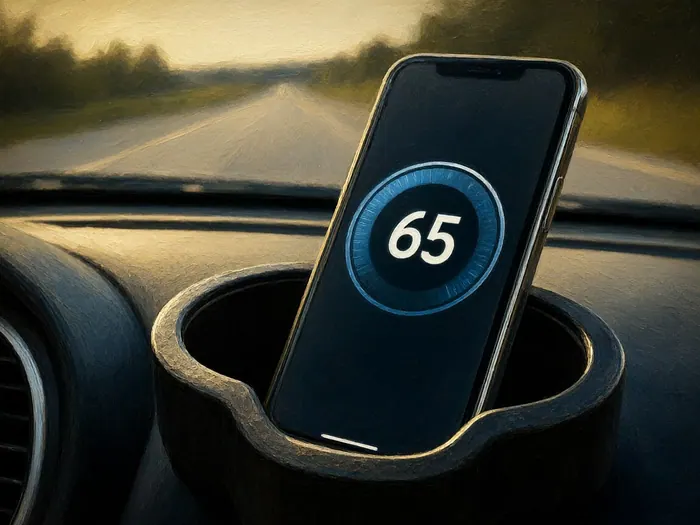
Dense material wants a low-demand task and a familiar route; a well-worn novel can survive a chaotic one. Pair argument-heavy nonfiction with folding laundry, ironing, vacuuming or stationery train rides, where nothing requires your eyes and you can rewind a paragraph without consequence, then save memoir, biography, and long fiction for the drive, where you can afford to lose one thread and pick it up at the next exit. This is a load-sharing decision rather than a purity test: the AAA Foundation research on cognitive distraction while driving documents how mental engagement competes with driving attention even when hands and eyes stay put, which is a good reason to keep unfamiliar, absorbing or upsetting material out of heavy traffic and off routes you do not know.
 Howcompass
Raise Speed Only Until Comprehension Holds
Most players offer steps such as 0.9x, 1.0x, 1.1x, 1.25x, 1.5x and 2x, and the useful range for commute listening is between 1.0x and 1.25x, because that lift compensates for a slow narrator without stripping the pauses your brain uses to encode sentences. Push past about 1.25x and comprehension usually falls off fastest on exactly the material people speed through: numbers, names, legal or financial argument, anything with a chain of steps, and unfamiliar proper nouns in history. Test it instead of guessing - after twenty minutes at your chosen speed, stop and say out loud what the author's last three claims were; if you have two or fewer, drop back a notch and lose the pride. Fiction, re-reads and light memoir tolerate high speeds well, so a single setting is the wrong answer for a mixed queue.
 Howcompass
Set Bookmarks and a Sleep Timer Early
Two small settings do most of the work. Bookmark at every chapter break and at any passage you want to find again, using the skip-back of 15 or 30 seconds to catch a sentence you lost rather than rewinding five minutes and losing your place; bookmarks are what let you retrieve a claim weeks later without hunting through a transcript. Then set a sleep timer of 30, 45 or 60 minutes for evening listening and let the app stop itself, because falling asleep mid-sentence otherwise costs you either a dead battery and a drained loan, or a 2am restart from the wrong position. If you listen in bed as well as in the car, keep the phone out of arm's reach and the timer generous - our sleep and morning routine guide covers why an audio habit that keeps reaching for the device tends to break your sleep instead of settling it.
 Howcompass
Close Out Abandoned Books With a Rule
Decide in advance what counts as a finished decision, because guilt is not a queue-management system. Use two samples: fifteen listenable minutes at the start, and fifteen more around the 20 percent mark where the book has shown its hand; if both leave you arranging excuses to avoid the car, delete it, return the loan, and write one line about why - narrator, pace, subject, or simply wrong season for it. Then keep a did-not-finish list, since it teaches you more reliably than a to-read pile does: the same listener who bails on every politics book and thrives on biography has a taste profile, not a discipline problem. Our guide to building a daily reading habit and book journal covers the same log in print form, and the journal works identically for audio if you write title, minutes and verdict.
Week 4-6: Handle Downloads, Devices and Safety
 Howcompass
Download Before Flights and Dead Zones
Pull every active title onto the device over Wi-Fi the night before any trip with no signal, because a downloaded audiobook plays offline while streaming eats mobile data and dies in tunnels. Sizes are meaningful: an hour of narration is typically tens of megabytes at standard quality and can run past a hundred at high quality, so a ten-hour book may occupy a few hundred megabytes to over a gigabyte, which matters on a metered connection or a phone with 64 gigabytes and 4 gigabytes free. Check your own app's download quality setting once and leave it there. Also check loan expiry before you fly - a 14-day loan started on the ground can run out at 30,000 feet with no way to renew - and pack entertainment the way you pack documents, as described in our carry-on packing guide for short international flights.
 Howcompass
Set Up Controls Before the Engine Starts
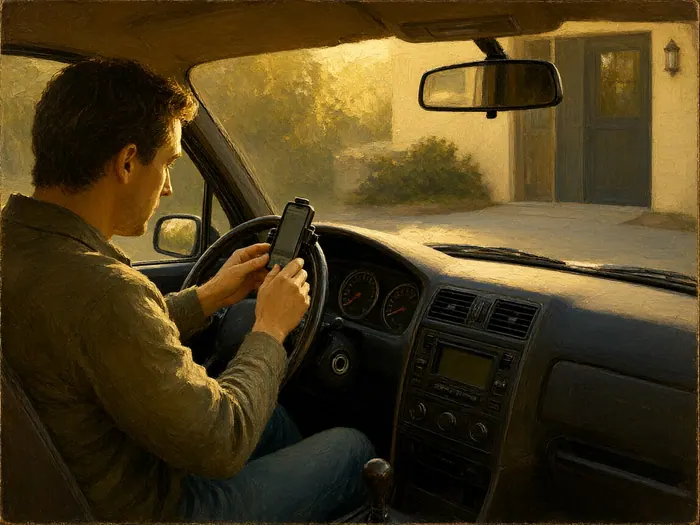
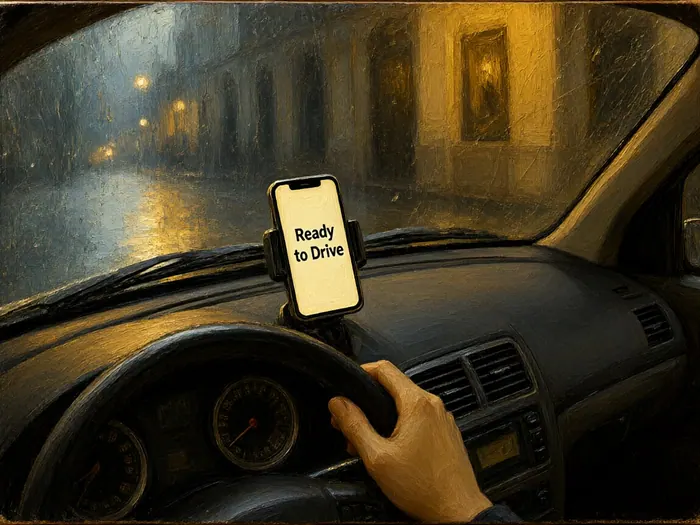
Choose the title, the speed, the volume and the sleep timer while the car is still parked, then mount the phone at or just below eye level so checking it is a glance rather than a lookup. Everything after that should be reachable without reading: steering-wheel buttons, a physical knob on the head unit, a wired remote on your collar, or one voice command limited to play, pause and skip. If you need to look something up - a name, a place, whether the narrator said what you think - say it out loud, keep driving, and search it when you are stopped. Practice the parked-phone habit deliberately, including pulling into a forecourt or driveway to rewind an important passage, because a two-second glance away from the road at highway speed covers a long stretch of ground and adds a visual load on top of the mental one.
 Howcompass
Use Accessibility Features Deliberately, Not as Extras
Audio has long been a primary way people read, and if print is hard for you, borrowing is not a workaround but the point. The Library of Congress's National Library Service for the Blind and Print Disabled runs a free network of regional libraries that lend recorded books and the machines to play them to people who cannot read standard print because of vision, physical or reading disability, with a medical professional certifying eligibility - worth checking if you are in the United States and print costs you real effort. On an ordinary phone, the same need is served by high-contrast and large-text player screens, adjustable speed, skip-back buttons that avoid re-scanning pages, and screen readers that announce controls. For dyslexia specifically, the Eunice Kennedy Shriver National Institute of Child Health and Human Development is a sound source on how the condition works and why listening is a legitimate route to the same text rather than a downgrade of it.
 Howcompass
Capture Ideas Without Stopping the Story
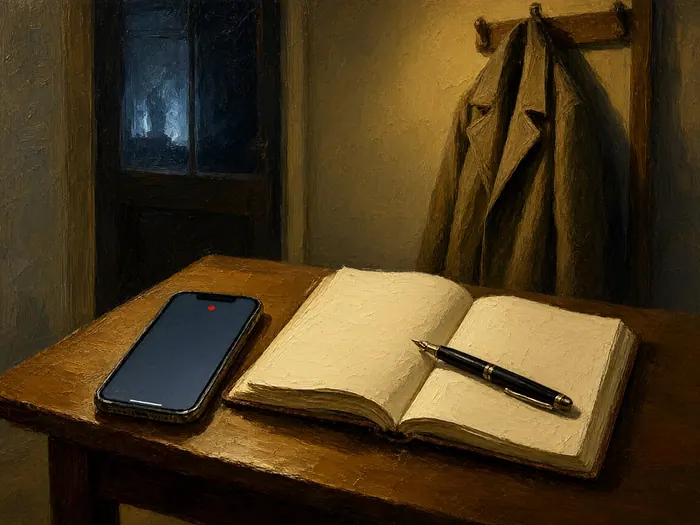
The thought you had at the traffic lights is gone by the time you get the keys out, so make capture almost free. Say the note into a voice memo using a lock-screen shortcut at the first safe stop, or keep a small notebook and pen by the front door so the walk from car to house carries one sentence out of the twenty minutes you heard; do not reach for a keyboard mid-commute. Aim for three short lines per session - a claim, a name, something you disagree with - and expand them later rather than trying to take notes while driving. When a book really deserves notes, the Cornell note-taking method transfers cleanly: one narrow column for the narrator's terms and names you heard, a wider column for your own paraphrase written afterwards, and two sentences of summary at the bottom.
 Howcompass
Test Headphones and Car Audio First
Spend one short session checking your audio chain before you commit to a book, because the gear causes more abandoned listening than the narration does. In the car, try the head unit first and earbuds second, and set the volume at a level where you can still hear a siren, a horn, or someone at your window; on foot or bike, use one earbud or open-ear buds so traffic stays audible, and never noise-canceling isolation in moving traffic. Charge what you rely on, keep a spare cable where the phone actually lives, and check Bluetooth reconnection behavior over a short loop, since a pair that drops every few minutes will end the habit within a week. If you listen at the gym or in shared offices, test whether your leakage bothers the person next to you at your usual volume.
Week 7-8: Log, Review and Keep the Habit
 Howcompass
Keep a One Line Listening Log
One line per session is enough, and more than that guarantees you stop doing it: date, title, minutes, speed, and a verdict of 1 to 5. Take the minutes from the player's own listening statistics if it keeps them, which most library and store apps do somewhere in the account screen. Keep the log in a notes app or a spreadsheet you can sort by title, because the value is not the record but the pattern that appears after a month or two - which formats you finish, which narrators you always abandon, how long your honest sessions really are, and whether Tuesday's drive is the one you actually use. Expect some lines to read zero minutes; that is data about the week rather than a failing, and it belongs in the same place the good weeks do.
 Howcompass
Write a Two Minute Note After Each Session
Recall beats re-listening, so spend two minutes at the end of a nonfiction session saying what you heard before you start the next thing - out loud into a memo or as three written lines, from memory, with no rewinding. This is the step that turns commute hours into retained material, because the forgetting that makes people say they got nothing from a book happens in the hour after listening, not during it. Do not aim for accuracy or coverage; three remembered claims from an hour is a good return, and the gaps you notice tell you which chapter deserves the re-listen. Fiction needs less of this - a paragraph after the last chapter, on the narrator, the ending, and whether you would recommend it to one specific person, is plenty.
 Howcompass
Run a Fifteen Minute Monthly Listening Review
Once a month, sit with the log for fifteen minutes and total four numbers - titles finished, titles abandoned, hours listened, and hours left in the queue - then ask the pattern three questions: were the books you chose ones your commute could actually hold, did listening land in the same two or three slots every week or only in good moods, and was the average verdict on finished books above 3? Each answer points at a different lever, since the first is a selection problem solved by shorter or lighter titles, the second is a trigger problem solved by attaching listening to one fixed event such as the drive home on Wednesdays, and the third means you are grinding through books you do not want. Adjust exactly one thing per month and let the next month test it, because the review is a steering wheel rather than an audit and only survives if it stays short. Write the four totals down even when they look unchanged, since a year of them is the only honest evidence you have about what your commute can carry.
 Howcompass
Rebalance Holds, Credits and Spend Monthly
Do the housekeeping on the same day as the review, because queue drift is gradual. Check hold positions and cancel anything that will not reach you within a month, since a queue position you forget about still occupies your borrowing allowance; confirm which loans are close to expiry and whether renewal is available; delete downloads you will not finish, which frees storage and your attention at once. If you pay for a plan, look at credits remaining versus credits expiring and decide whether the tier matches the number of books you actually completed last month rather than the number you imagined finishing. Keep total spending honest by measuring it the same way every month: fee divided by finished titles, compared with what library borrowing costs you, which is nothing but waitlist time.
 Howcompass
Set a Minimum That Survives Bad Weeks
Travel, overtime, illness and a new baby will break the pattern, so decide the floor now: one replayed chapter, ten minutes of dishes with the re-listen book, or the lightest title in the queue. Keep one permanently downloaded book on the device that needs no renewal, no data and no choosing, because in a bad week the friction of picking is what stops listening entirely. When your block of minutes shrinks, switch material rather than quitting - short story collections, essay volumes you can enter anywhere, and books you already know end well all fit a 12-minute ride far better than an epic you have to re-learn each day. Then restart the log without commenting on the gap, because a habit that includes a minimum version of itself survives the year, and the year is what produces twenty finished books from a commute nobody thought was long enough for anything.
How to know it worked
- You have a working library card and can borrow, download and auto-return a title without help.
- Your queue holds exactly three downloaded titles, one of them a re-listenable fallback.
- In a typical week you log 100 to 200 listening minutes across at least three sessions.
- You changed nothing on a handheld phone while driving, and sampled every title before committing.
- Your last monthly review shows a finished title, an honest abandon count, and one adjustment made.
Common mistakes to avoid
- Committing to a twelve-hour book on a five-minute sample taken in a quiet room instead of the car.
- Running nonfiction at 1.5x or faster on a route you do not know, then concluding audio teaches you nothing.
- Queuing a dozen titles, letting half the loans expire unread, and calling it a discipline problem.
- Reaching for the phone at lights to rewind, search a name or pick the next book.
- Never writing anything down after listening, so thirty hours of narration leaves no retrievable trace.
Frequently Asked Questions
Question: Is borrowing from the public library better than paying for a subscription?
Start with the library: it costs nothing beyond a card and lets you try narrators guilt-free. Its limits are real, though - popular titles sit behind a waitlist, loans expire automatically, and niche backlist may be missing. A subscription is worth it once you reliably finish more than you can borrow, or need a specific title today. Cancel and re-subscribe by season if listening is uneven.
Question: Does listening at 1.25x still count as reading the book?
Yes. Speed is a preference, not a shortcut, provided you can say what you heard. Most people hold comprehension well between 1.0x and 1.25x; beyond that, dense argument, numbers, names and unfamiliar subjects suffer first. Test yourself: after twenty minutes, recap the last few claims from memory. Two or fewer means you should drop a notch, or save the faster setting for re-reads and light fiction.
Question: Is it safe to listen to audiobooks while driving?
Listening is hands-free and eyes-free, which is why it suits commuting. The risks are interaction and fatigue: never pick up the phone to choose a title, change speed or search a fact - set controls while parked and pull over for anything that needs looking up. Keep volume low enough to hear horns and sirens, use one earbud on foot, and stop entirely if you feel drowsy.
Question: How much data and storage do downloaded audiobooks use?
Downloads play offline and use no mobile data, which is why you fill up on Wi-Fi before travel. Storage is the constraint: an hour of narration is typically tens of megabytes at standard quality and can exceed a hundred at high quality, so one ten-hour book may need anything from a few hundred megabytes to over a gigabyte. Set the quality once and delete finished files.
Question: What if my commute is too short, unpredictable or stressful for nonfiction?
Then stop forcing it there. Use a 12-minute ride for a story collection or a book you already love, and keep argument-heavy titles for chores, walking, gym or a stationary train. Short blocks are also the right place to close out abandoned books and requeue the next download. Audiobooks reward re-entry, so a series of small sessions on familiar material beats one heroic commute that keeps getting cut short.
Question: Can audiobooks help if print is difficult for me?
Yes - for low vision, dyslexia, attention differences, or fatigue after screen-heavy work, audio delivers the same text. Phones offer adjustable speed, large high-contrast controls, screen-reader announcements and skip-back instead of re-scanning pages. In the United States the Library of Congress's National Library Service lends recorded books and playback equipment free to people who cannot read standard print, certified by a medical professional; ask your library.
Question: How do I remember what I heard in a nonfiction book?
Take two minutes at the end of each session to recall, without rewinding: three lines or a voice memo, from memory. That retrieval does more than re-listening ever will, because forgetting accelerates in the hour after you stop. Bookmark chapter ends and passages worth returning to, then write a fuller note after the book rather than during the drive.
Tips
- Download the next title the moment you start the current one, so an empty queue never gets a vote in whether you listen this week.
- Attach listening to a fixed event - the drive home, the dishwasher - because a habit anchored to a time of day outlives one anchored to motivation.
- Keep one re-listenable favorite permanently on the device for bad weeks; it needs no loan, no choice, and no concentration.
- Bookmark at chapter breaks rather than mid-argument, so a paused book resumes cleanly when you are 20 percent into a new subject.
- Follow narrators, not just titles. Two books read by someone whose pacing works for you will teach you more than a month of random sampling.
Warnings
- Never handle a phone while the vehicle is moving: no selecting titles, changing speed, searching a name or reading a review. Set controls while parked and pull somewhere legal and safe for anything else.
- Do not listen to stay awake. If you are drowsy, audio will not make driving safe - stop, rest, and end the session. Loud volume to fight fatigue also damages hearing.
- In heavy or unfamiliar traffic, roadworks, cycling in traffic, or crossing busy streets, choose familiar material or nothing at all. Cognitive load competes with driving attention even when your eyes are up.
- Subscription plans renew automatically and credit terms, rollover and expiry vary by provider and change over time. Read the current terms on the provider's own page before paying, and library loans expire on their own with no grace period.
Things You'll Need
- Library card with the library's borrowing app signed in
- Library app account on both phone and tablet
- Phone mount positioned at or just below eye level
- Bluetooth car audio or a working auxiliary cable
- One wired earbud set as a backup pair
- Single-ear or open-ear buds for walking and cycling
- Car charger plus a spare cable in the glovebox
- Power bank for trips longer than two hours
- Voice memo shortcut enabled on the lock screen
- Pocket notebook and pen by the front door
- Spreadsheet or notes page for the listening log
- Charging cable kept in the gym bag
- Small torch for finding a seat in a dark carriage
- Sleeping earbuds or a pillow speaker for bed listening
Related Howcompass Guides




References (7)
- Tools and Resources for Libraries and Library ServicesAmerican Library Association
- 2025 Odyssey Awards for Excellence in Audiobook Production AnnouncedAmerican Library Association
- Hachette Audio Imprint CatalogueHachette Book Group
- Libby, the Reading App from OverDriveOverDrive
- National Library Service for the Blind and Print DisabledLibrary of Congress
- Measuring Cognitive Distraction in the AutomobileAAA Foundation for Traffic Safety
- Homepage - Eunice Kennedy Shriver National Institute of Child Health and Human DevelopmentNational Institutes of Health
Sources are listed so you can read the underlying guidance yourself. Our editorial policy explains how guides are reviewed.
Did this article help you?
0 readers found this helpful — add your vote.
No comments yet — be the first to share your results.