How to Plan Backyard Games for a Twenty-Person Block Party
A guide to Map the Space and Clear the Hazards, Set Three Stations and Pick Games by Age Band, Add the Hunt, the Water, and Fair Scoring, Hydrate, Protect, Include, and Pack Away
A block party with children of six different ages fails for one reason above all others: too many people waiting for one game. Fourteen kids lined up behind a single three-legged race is where the afternoon turns to tears and the adults turn to line judges. The fix is structural rather than enthusiastic, and it fits in any backyard. Run three stations at once, move everyone on a fixed twenty-minute round, and let the noise of parallel games carry the energy instead of one big event. The second thing that decides how this afternoon feels is the ground itself. A lawn that looks fine at a glance holds pop-up sprinkler heads, mole holes, and root ridges close enough to the surface to catch a running foot, and a game that starts at full speed on that surface is how a party ends with a trip to urgent care. Walk the play area twice, once the evening before and once that morning, mark what you cannot remove, and cut the grass to about three inches so the hazards show themselves. This guide takes the plan in four passes: mapping and clearing the space, choosing games by age band and setting the rotation, adding the scavenger hunt, water play, scoring, and prizes, then hydration, sun and insect protection, adaptive rules, first aid, and teardown. Every safety number in it comes from published guidance you can check yourself, and nothing here replaces a clinician: when a heat-illness sign crosses the line described in the last section, you call emergency services rather than trying to cool the person at the picnic table.
Give twenty guests a play strip at least 30 feet long and 20 feet wide, plus a separate food and shade zone, and walk the grass twice for sprinkler heads, roots, and holes before anyone runs. Split the guest list into three age bands, then run three stations at once on 20-minute rounds with a five-minute changeover: relay and sack races, a tagging-only capture-the-flag variant, one cornhole lane, and a scavenger hunt with printed photo-proof clues. Score placement points on one shared sheet, hand everyone the same prize tier, keep a filled cup inside reach of shade, and pack down in 30 minutes.
- Time
- Two weekends to plan; three hours of play; 30-minute teardown
- Cost
- $250-$450 for gear, most of it reusable next summer
- Difficulty
- Easy - one adult per station, no officiating experience needed
- Works on
- A 30 by 40 foot flat lawn, or a street closed under a play-street permit
- Not for
- Storm or lightning warnings, or a lawn you have not hazard-walked twice
- Results
- Three rotating stations running at once, every guest playing, lawn empty on time
How do you plan Backyard Games for a Twenty-Person Block Party?
 Howcompass | How to Plan Backyard Games for a Twenty-Person Block Party
Map the Space and Clear the Hazards
HowcompassMeasure the Lawn and Set a Game Footprint
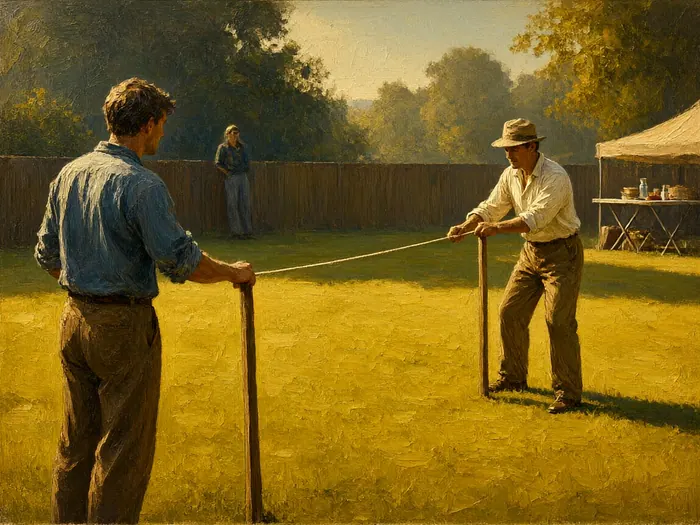
Mark two separate rectangles with string and stakes: a play strip at least 30 feet long and 20 feet wide with no obstacles inside it, and a food-and-shade zone of roughly 25 by 40 feet, which allows about 50 square feet per guest for twenty people sitting and standing. Keep the two zones at least 15 feet apart so a thrown bag never finds the potato salad. Measure with a 25-foot tape for about $12, and note the fence line as your hard stop: leave six feet of runoff room at each end of every running lane, because nobody slows down on cue.
 Howcompass
Mark Boundaries With Soft Trip-Safe Edging
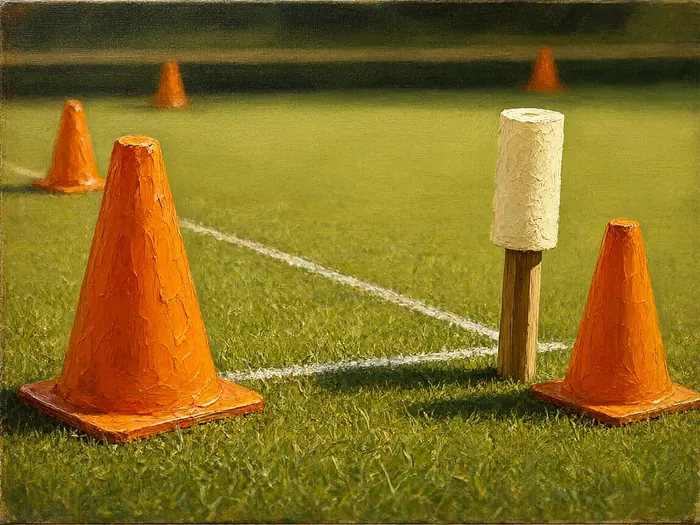
Boundary lines must be visible from a running height and harmless to land on, so mark lane edges with lawn chalk or a spray-flour line and place traffic cones every eight to ten feet around the perimeter, which costs about $15 for a 25-pack. Anything you tie between stakes gets pool noodles cut in half, about $4 each, slid over the line as soft high-visibility sleeves. Keep that line no higher than knee level inside a running zone so nobody snags a shoulder or trips over it. Skip fishing wire, clothesline, and ribbon at ankle height entirely, and keep any canopy near the boundary at 10 by 10 feet or smaller so it stays easy to move.
 Howcompass
Walk the Ground for Sprinkler Heads, Roots, Holes
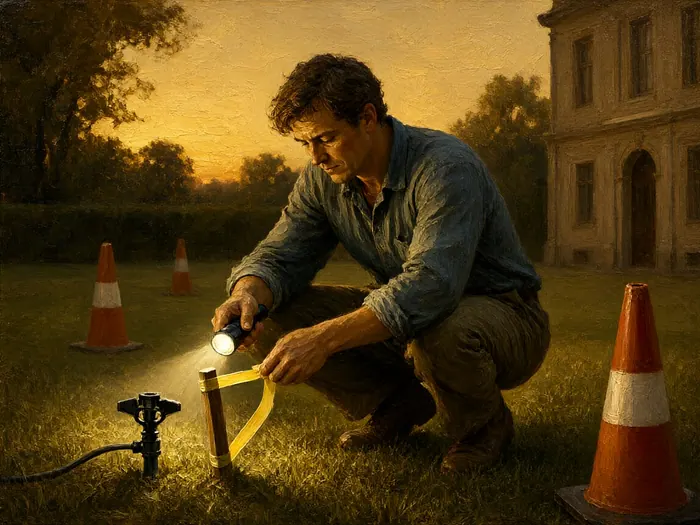
Do the hazard walk the evening before and again that morning, slowly and at foot level with a flashlight on the first pass, then flag every pop-up sprinkler head with a cone and a $6 roll of flagging tape, because a sunken head shears a shoe and a running foot lands on metal. Feel for tree-root ridges and mole holes within three inches of the surface, rake out stones, sticks, and buried toys, fill depressions with top dressing tamped flush, and coil every hose well outside the play strip. Check borrowed and hand-me-down gear, from folding tables to backyard hoops, against the recall database at the Consumer Product Safety Commission recalls page and pull anything listed. Keep the first-aid kit in sight of the boundary, and our guide to caring for a minor cut or graze at home covers the grass scrape you are most likely to treat.
 Howcompass
Check the Weather Twice and Set a Rain Trigger
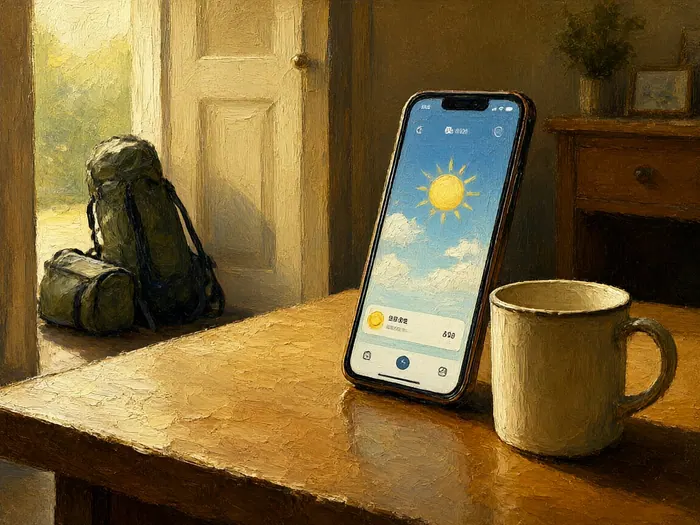
Read the National Weather Service forecast for your zip code the night before, again at breakfast, and set a written go-or-no-go call three hours out so neighbors and teenagers are not guessing. Pick your trigger in advance: steady rain, sustained wind strong enough to move a canopy, or any thunder. If you hear thunder, move everyone under a solid roof right away and stay in until 30 minutes after the last clap, which is the thunder-and-lightning rule of thumb U.S. weather services teach. Have a wet-weather backup ready in the garage or a covered patio: the scavenger hunt becomes a trivia night you can design in an evening, and cornhole plays fine on a driveway.
 Howcompass
Tell Neighbours the Schedule Two Weeks Out
Hand-deliver a note to the eight houses closest to the lawn with the start time, the end time, your cell phone number, and one line about what the noise will be like. Run games between 11 in the morning and 6 in the evening and keep music low enough that two people at the fence can talk over it; an outdoor speaker is what makes a good party a complained-about one, and a street-closure permit commonly rules out amplified sound, alcohol, and grills on the public right of way, as Boston's block party guidance spells out. Ask directly about shift workers, infants, and a nervous dog, and offer the earlier finish. If you plan to close a residential street, apply about 30 days ahead and hold the equipment on private property where you can, which keeps the permit simple.
Set Three Stations and Pick Games by Age Band
 Howcompass
Sort the Guest List Into Three Age Bands
Before you choose a single game, split the names into under-7, 7-to-12, and 13-and-over, then write what each band can realistically do. Preschoolers can throw, hop, and follow a two-step instruction but not a rule set, while school-age children race, team up, and accept losing if the round stays short. Teenagers will commit to anything with a real role and disengage fast from anything babyish. Twenty people usually lands on three teams of six or seven, and the cleanest structure is one mixed-age team per station per round with an older guest paired to each younger one, so you never need a separate game for the small ones.
 Howcompass
Run Three Stations Simultaneously on Fixed Rounds
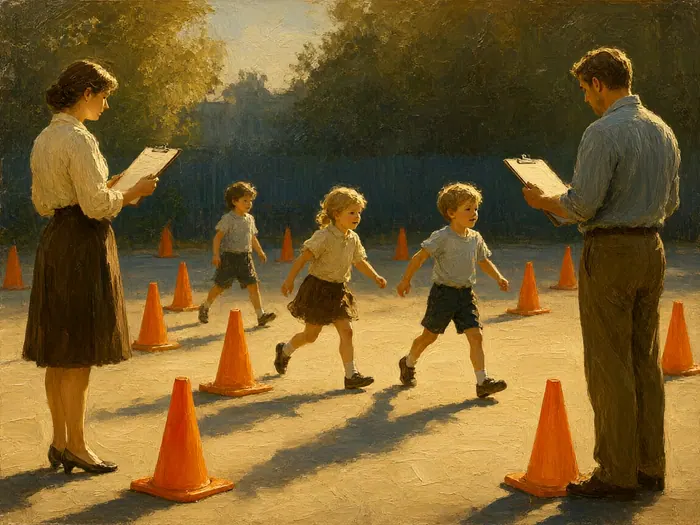
Set four rounds of 20 minutes of play with a five-minute changeover, which fills 100 minutes and leaves the rest of the afternoon for food and free play without dragging. Assign one adult station master per station who owns the rules, the whistle, and the score sheet, and write each station's set-up on a card so a substitute can take over mid-round. Whistle the changeover, post an arrow sign at each station, and let teams walk rather than run between them. The reason this works is waiting time: three parallel games for twenty guests means each person spends most of the round actually moving instead of watching someone else move.
 Howcompass
Load Relay and Sack Races Into the Open Strip
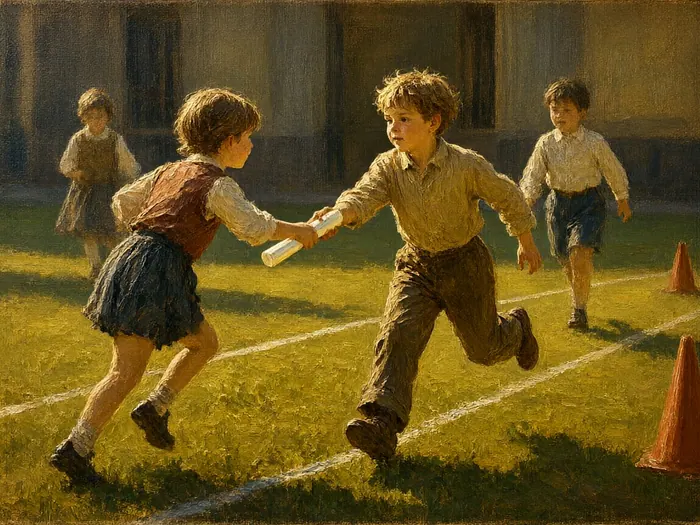
Put the fast games where the ground is flattest and longest. Use lanes 30 to 40 feet long with six feet of clearance beyond the turn, four runners per team, and a pool-noodle baton rather than a handed-off object, because a fumbled baton causes most of the collisions. For the sack race, give under-7s a hop challenge over a rope laid flat at ankle height instead of a full sprint, let anyone with balance concerns race a walking heat, and use burlap sacks at about $30 for a set of ten or old pillowcases for free. Rotate heats so every band races once per round, and stop racing at the first sign of wet grass.
 Howcompass
Choose a Capture-the-Flag Variant With No Tackling
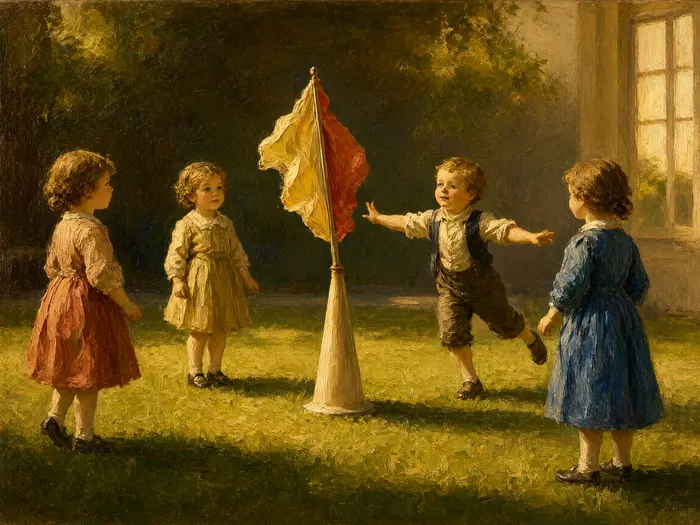
Play the mixed-age version: two teams, one flag each on a soft cone, tagging by one hand only, and a frozen player freed by a teammate touching their arm. Delete the running-jersey version entirely, add a five-foot no-tag safety circle around each flag, and confine the field to the marked strip so nobody charges a fence. Cap rounds at ten minutes so the losing team never gets bored, and make the under-7s flag guards rather than runners, which gives them the best job on the field. If the ground is uneven or anyone struggles to change direction quickly, switch to a stationary jail variant where freed players simply run home.
 Howcompass
Set One Cornhole Lane Everyone Can Share
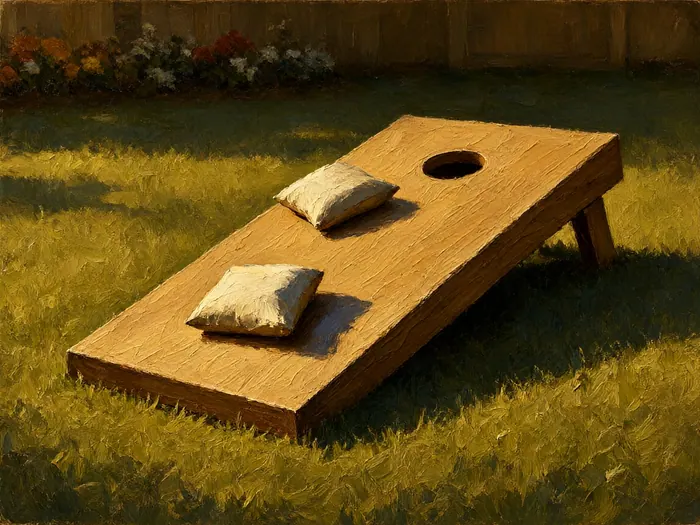
Cornhole is the station that lets a seven-year-old and a seventy-year-old compete honestly, and it needs the least grass. Standard boards are about 2 by 4 feet with a 6-inch hole whose center sits 9 inches below the center of the top edge, with the top edge 12 inches off the ground, and the two boards are placed 27 or 33 feet apart measured from the bottom edges, per the cornhole court and scoring rules. Shorten the pitch to 15 to 20 feet for younger kids and seated players, and score three points for a bag in the hole and one for a bag left on the board, with bags cancelling between teams. A ready pair costs $150 to $250; two sheets of exterior plywood, a hole saw, and paint land near $125, and a set of eight or ten bean bags runs $20 to $30.
Add the Hunt, the Water, and Fair Scoring
 Howcompass
Write Printed Clues Anyone Can Follow
Build a scavenger hunt of 12 to 15 clues on cardstock, about $8 for a ream, and keep it running 25 to 35 minutes so it finishes inside the party rather than haunting the teardown. Print at two reading levels, with picture clues for under-7s and word clues for older teams, and ask for photo proof instead of collected objects, so nothing goes missing from a neighbor's garden and the toddler group can win fairly. Hide clues inside your boundary only, never on a sidewalk, a driveway slope, or anyone else's property, and post one adult as a floater who helps stuck teams rather than giving answers. Teams of three or four work best here, with mixed ages on purpose.
 Howcompass
Run Water Games Only When Heat Warrants Them
On a genuinely hot day, water play is cooling rather than decoration: a hose set to gentle spray, a sponge relay where teams carry soaked sponges overhead, or a sprinkler run at the end of the last round. Below real heat, skip it, because wet grass turns your best lane into a slide. Keep a 10-foot dry strip between the wet zone and every walking route, and lay towels down so nobody crosses from soaked turf to bare feet in stride. Never use a paddling pool or basin as a game station while preschoolers are present, since young children can be in trouble in only a couple of inches of water, so give one named adult water-watch duty for as long as anyone is in it.
 Howcompass
Score Placement Points on One Shared Sheet
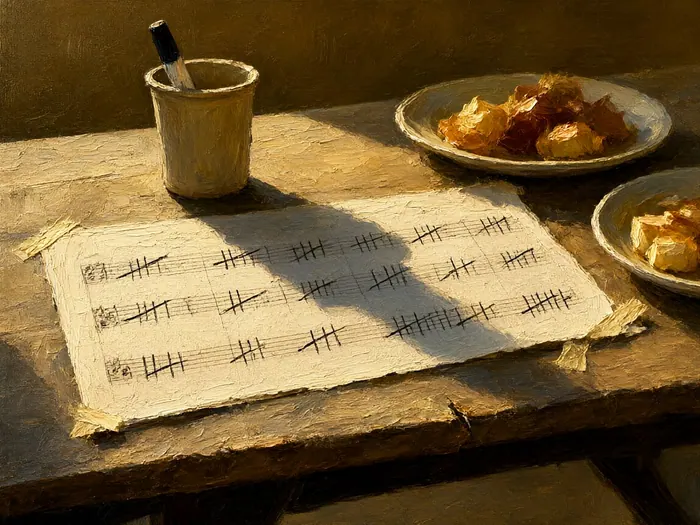
Give each station the same four-point award: four points to the winning team, two to second, one to third, plus one participation point for every player who completed the round, so a team that loses still earns something. Write it on one clipboard sheet taped to the shade table, with teams down the side and rounds across the top, and let a teenager update it in public view so nobody suspects fiddling. Cap the games at four rounds, name the leading team when the whistle ends the last one, and never rescore. The reason simple placement scoring survives a mixed-age crowd is that it rewards showing up rather than natural athleticism, and it settles arguments without a debate.
 Howcompass
Buy Prizes Nobody Is Embarrassed To Collect
Make every child a same-tier winner: one grab bag each, filled with three or four items at $1 to $2 apiece, roughly $40 for twenty guests, drawn from a dollar-store bin of stickers, hops, bracelets, bubbles, and chalk. Then add one silly team prize, a $15 plastic trophy or a foam belt, and hand it to the winning team together, so the scoreboard never turns into a ranking of individuals. Give the adults something small too, a kitchen towel or a magnet, and let everyone pick in round order rather than final-score order, which removes the sting. Our guide to organizing a neighborhood toy and book swap shows how to fill a prize table from donations for almost nothing.
 Howcompass
Give Teenagers a Referee Card and Real Authority
Two teenagers as station referees plus one floater is the staffing that keeps adults eating. Put three rules on an index card for each: the boundary is the cone line, tagging is one hand only, and any dispute is settled by a two-minute replay or, if the weather or temp is rising, by the referee's call. Tell them to walk the lane rather than stand at it, and to give the reason for a call in one short sentence, because a teenager who explains is a teenager who is obeyed. Rotate them off after 90 minutes so they get to play, feed them first, name them in the thank-you round, and offer a written reference for a first job.
Hydrate, Protect, Include, and Pack Away
 Howcompass
Set a Water Station Rule Under Shade
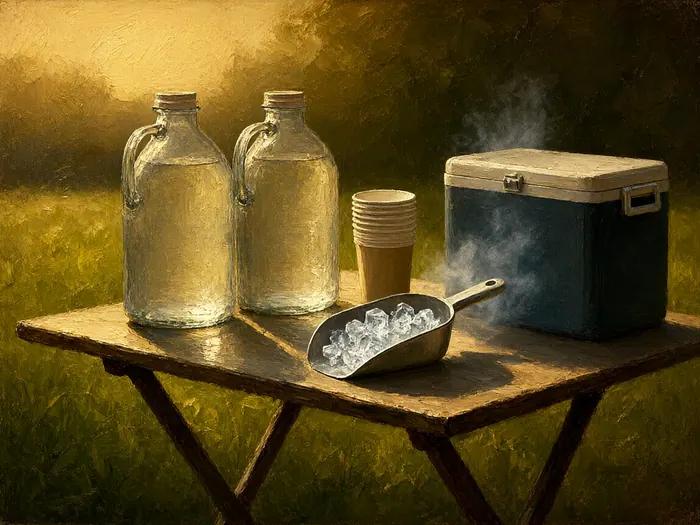
Put the water table under the canopy, and make one rule stick: everyone fills a cup before starting a round, and every player carries it back at the end. Twenty guests over three hours drink roughly four to six gallons, so buy two five-gallon jugs of cold water, two 10-pound bags of ice at about $5 each, and a stack of paper cups, and refill before a jug looks low. The Red Cross notes that an average adult needs about three-quarters of a gallon of water a day on ordinary days and that dark urine signals you are behind, which is a fair thing to say out loud to parents. Offer water before juice, set the food table under the same shade as the jugs and follow our potluck harvest dinner planning guide for how long dishes may sit out, and skip alcohol entirely if you are on a permitted street.
 Howcompass
Put Sunscreen and Repellent at the Door
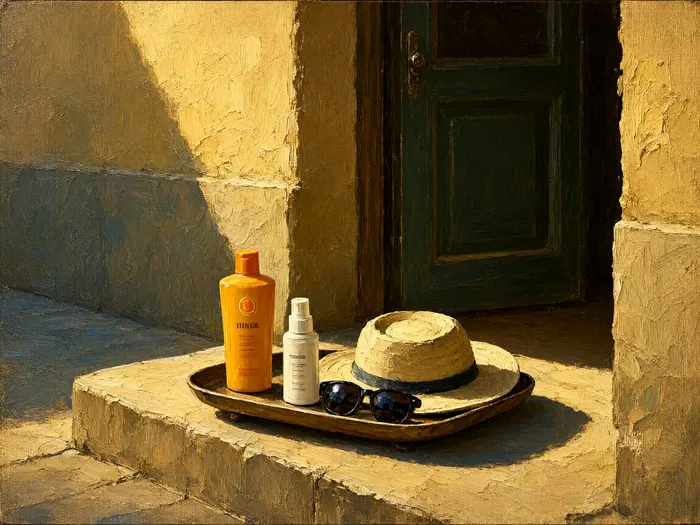
Tape a tray by the back door with broad-spectrum sunscreen, SPF 30 family bottles at about $10 each, and a repellent whose stated protection time covers how long people will actually be outside, per the EPA guidance on choosing a repellent. Sunscreen goes on 15 minutes before the first round and gets reapplied after two hours and after any water play or heavy sweating, following the Skin Cancer Foundation sun-protection advice, which also pushes clothing and shade first: wide-brimmed hats, UV-blocking sunglasses, and a shirt over small shoulders rather than a bare back. Adults spray repellent onto their own hands, then onto a child's face and ears, never misting a group. Keep the shaded lane for the youngest players after 2 in the afternoon.
 Howcompass
Adapt Rules So Kids With Limited Mobility Play
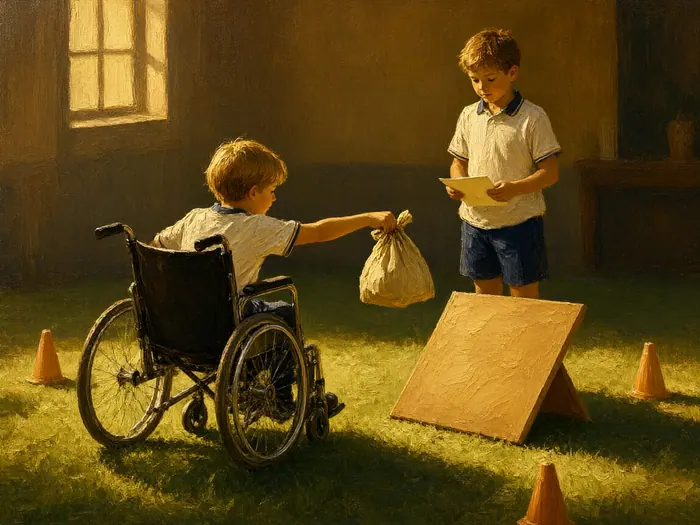
Ask parents privately, a week ahead, what would make their child's evening work, then change the game rather than benching the child. Cornhole, bean-bag toss, and clue-reading are already mobility-neutral, so seat a player at the lane with a 10-foot pitch and score them in the same grid as everyone. Swap sack racing for a seated ball-pass or a walking heat with a longer baton, give a flag-guard or scorekeeper role in capture the flag, and keep one route on firm, freshly mown, root-free ground with a wide enough lane for a wheelchair or a frame. Pair every player with a buddy from the same team, and let a tired kid take a round off at the water table without it being an announced withdrawal.
 Howcompass
Stock a Kit and Learn the Heat Red Flags
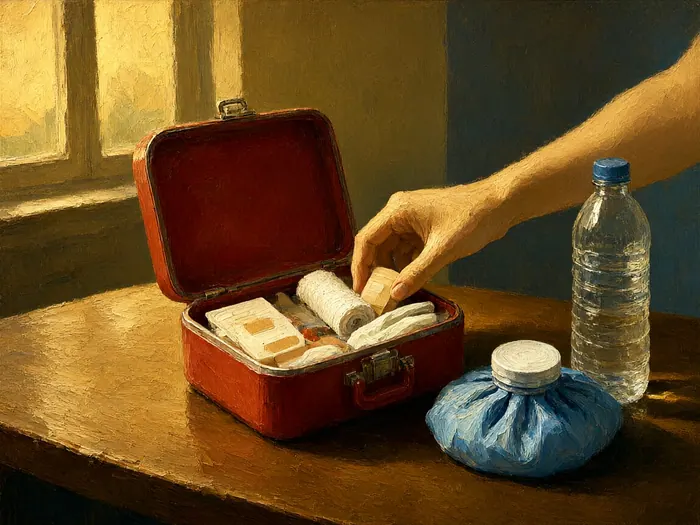
Keep one sealed kit on the shade table with plasters, wound dressings, gauze and tape, sterile wipes, finger splints, tweezers, gloves, an instant cold pack, and rehydration salts, rebuild it after every event using our home first-aid kit guide, and let a parent dose their own child's acetaminophen or ibuprofen rather than doing it yourself. Heat exhaustion brings heavy sweating, cold pale clammy skin, a fast weak pulse, nausea, cramps, dizziness or fainting: move the person somewhere cool, loosen clothing, cool them with wet cloths, misting, fanning or a cool bath, and let them sip water slowly, then get medical help right away if they vomit, if symptoms last beyond an hour or worsen, or if confusion appears. Heat stroke is a medical emergency whose signs, per the American Red Cross extreme heat guidance, are a body temperature of 104 F or higher, hot red dry or damp skin, a fast strong pulse, headache, dizziness, nausea, confusion or loss of consciousness. Call 911 or your local emergency number immediately, keep cooling the person while you wait, give them nothing to drink, and stop the games for anyone who has a seizure or cannot be roused.
 Howcompass
Teardown in Thirty Minutes With a Checklist
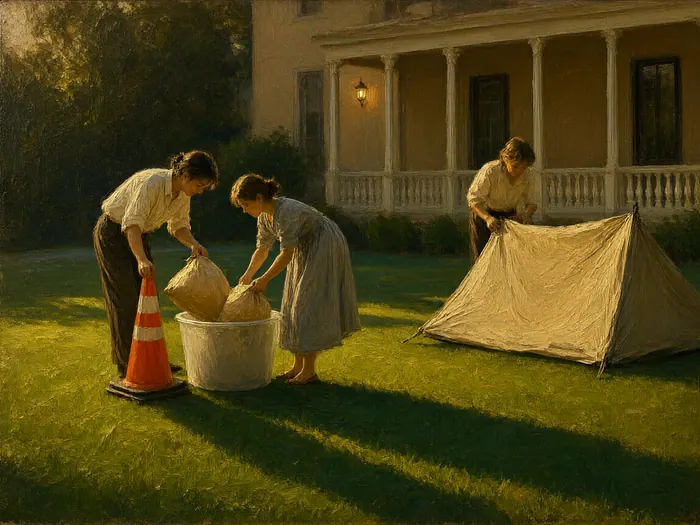
Print the pack-down list and split it into three ten-minute blocks with two people per block, since an unplanned teardown is what runs to midnight. Block one collects game gear: bean bags and their bucket, sacks, pool-noodle batons, cones, stakes, string, whistles, clipboards, markers, the clue cards, and the score sheet. Block two handles the hard stuff: coolers and leftover ice, cups and recycling bags, trash bags, the canopy folded dry so it does not mildew, extension leads coiled, and signage pulled. Block three walks the lawn twice on hands and knees for pins, plasters, and stray bags, returns borrowed boards with a thank-you text the same evening, and photographs the prize table and leftovers before you sweep so lost-item questions have an answer.
How to know it worked
- All three stations were running at once for four rounds, and no child spent a round standing in line.
- Every one of the twenty guests completed at least two games and left with the same tier of prize.
- Water cups were refilled at each round break, and shade or the canopy was used all afternoon without a sunburn report.
- No injuries beyond a plaster or two, and the hazard walk found every sprinkler head and hole before the first round.
- Gear was bagged in three ten-minute blocks, the lawn was walked twice for litter, and neighbors heard nothing after 6 p.m.
Common mistakes to avoid
- Scheduling one big game at a time, so most of the crowd stands still and the party turns into crowd control.
- Choosing a game by how fun it sounds to adults rather than by what the age band can actually do.
- Skipping the morning hazard walk because the lawn looked fine yesterday, then racing on sprinkler heads and root ridges.
- Keeping score on skill, which rewards the fastest child and quietly eliminates the smaller ones by round three.
- Letting the water or alcohol station drift into the play strip, or letting the music run past the promised finish time.
Frequently Asked Questions
Question: How much lawn do I actually need for twenty people?
Roughly 1,600 square feet in total: a clear play strip at least 30 by 20 feet, plus a food and shade zone of about 25 by 40 feet, kept 15 feet apart. Anything smaller, drop the racing games and run cornhole, bean-bag toss, clue cards, and a seated water station. Six feet of flat runoff room beyond every lane matters more than the middle of the field.
Question: What if it rains, or thunder rolls in mid-round?
Set the trigger before the guests arrive. At the first thunder, everyone goes under a solid roof and stays in until 30 minutes after the last clap. If rain is forecast, move two stations inside a garage or under a big canopy: the scavenger hunt becomes a trivia round, and cornhole works on a driveway. Keep the last round short so a delay does not eat the evening.
Question: Do water games make the lawn dangerously slippery?
They can. Keep water play to the final round, leave a 10-foot dry strip between the wet area and every walking route, and stop racing the moment the grass is soaked. Never leave a basin or paddling pool set up as a game while young children are present, and give one named adult water-watch duty for as long as anyone is in it.
Question: How do I stop the competitive parents ruining it?
Use the same four-two-one point award at all three stations, add a participation point for every completed round, and let a teenager keep the public sheet. Say out loud that the last round is the fun round and that nobody is subbed mid-game. Mixed-age teams, with one older guest paired to each younger one, keep the stakes on the team rather than the child.
Question: What does a backyard game set actually cost?
Expect $250 to $450 for a first party: cornhole boards $150 to $250, or two sheets of plywood, a hole saw and paint near $125; bean bags $20 to $30; cones $15; sacks $30; canopy $90 to $160 to buy or $45 to $75 a day to rent; water and ice $25; sunscreen and repellent $20; prizes $40; first-aid supplies $30. Most of it survives to next summer.
Question: Can a child who cannot run still take part in the races?
Yes, if you change the game instead of the child. Offer a seated ball-pass or a walking heat with a longer baton, put them in as a flag guard or scorekeeper, and keep at least one lane on firm mown ground with no roots. Ask the parent a week ahead what works, and let a tired child take a round off at the water table quietly.
Question: When exactly should I call emergency services for heat?
Call 911 straight away for signs of heat stroke: a body temperature of 104 F or higher, hot red dry or damp skin, a fast strong pulse, confusion, seizures, or loss of consciousness. Keep cooling the person with wet cloths, misting, fanning or a cool bath, and give nothing to drink. For heat exhaustion, get medical help if vomiting occurs, symptoms last beyond an hour, or confusion appears.
Tips
- Run the hazard walk twice, evening before and morning of, at foot level with a flashlight for the first pass.
- One named adult owns each station with a whistle and a rules card, and that adult does not play until the round ends.
- Settle disputes with a two-minute replay, then move on; a stalled round loses the crowd faster than a wrong call.
- Fill every water cup before a round starts, because nobody asks for a drink once the games have their attention.
- Photograph the score sheet and the prize table before teardown, and text the host neighbors a thank-you that evening.
Warnings
- Heat stroke is a medical emergency. Call 911 or your local emergency number immediately for a body temperature of 104 F or higher, hot red dry or damp skin, a fast strong pulse, confusion, seizures, or loss of consciousness. Keep cooling the person while you wait and give them nothing to drink.
- Stop all running games at the first thunder and move people under a solid roof until 30 minutes after the last clap. Wet grass, soaked lanes, and full-speed games are an injury combination.
- Young children can be in trouble in only a couple of inches of water. No basin, trough, or paddling pool is a game station without one named adult watching continuously.
- Mark or remove every pop-up sprinkler head, root ridge, and hole inside the play strip before anyone runs, and check borrowed equipment for recalls. A flagged hazard costs ten seconds; a facial injury from a metal head does not.
Things You'll Need
- 25-foot tape measure and 50 feet of string
- 25-pack of traffic cones and a roll of flagging tape
- Lawn chalk or flour spray for lane lines
- Four pool noodles plus a box of tent stakes
- Two cornhole boards or a plywood pair you cut
- Eight to ten bean bags and a bucket for them
- Ten burlap sacks or old pillowcases
- Two whistles and three clipboards with markers
- Ream of cardstock for printed clue cards
- Ten-gallon water jugs, two 10-pound ice bags, paper cups
- Pop-up canopy 10 by 10 feet and four weights
- Broad-spectrum SPF 30 sunscreen and one repellent
- Wide-brimmed hats and a spare UV-blocking sunglass pair
- Stocked first aid kit plus two instant cold packs
Related Howcompass Guides


References (6)
- Extreme Heat Safety - Heat Exhaustion and Heat StrokeAmerican Red Cross
- Recalls and Product Safety WarningsU.S. Consumer Product Safety Commission
- Special Events and Volunteer ProgramsMinneapolis Park and Recreation Board
- How to Host a Block PartyCity of Boston
- Find the Repellent that is Right for YouU.S. Environmental Protection Agency
- Sun ProtectionThe Skin Cancer Foundation
Further reading
Encyclopaedia entries are background, not evidence: no step below rests on one of these.
Sources are listed so you can read the underlying guidance yourself. Our editorial policy explains how guides are reviewed.
Did this article help you?
0 readers found this helpful — add your vote.
No comments yet — be the first to share your results.