How to Write a Research Paper (Step by Step for Students)
A guide to Phase 1 — Define the Question, Phase 2 — Find and Evaluate Sources, Phase 3 — Build the Argument, Phase 4 — Cite, Revise and Submit
A research paper is a guided answer to a specific question, backed by evidence other people can check. The writing is the easy part once the question and the evidence are right. This guide breaks the whole process into 39 concrete steps, from turning a broad topic into an arguable question to the final citation-format check. Follow the order and you will avoid the two classic time-wasters: reading endlessly without a thesis, and writing pages that paraphrase sources instead of making an argument. Browse all illustrated guides or the Education and Communications category for more illustrated walkthroughs on Howcompass.
How do you write a Research Paper (Step by Step for Students)?
 Howcompass | How to Write a Research Paper (Step by Step for Students)
Phase 1 — Define the Question
HowcompassStart with a broad subject you genuinely care about
Start with a broad subject you genuinely care about. Write down one subject area, not a paper title. Interest sustains the long reading phase, and a subject you already know a little about makes it easier to spot what is still unresolved. For the primary source behind this phase, see Purdue OWL — writing and citation guide.
 Howcompass
Survey the landscape before committing
Survey the landscape before committing. Read a general encyclopedia entry and two recent overview articles to learn the main debates and vocabulary. Ten minutes here prevents weeks on a question that is either solved or too large.
 Howcompass
Turn the subject into a question
Turn the subject into a question. Phrase your topic as a question beginning with how, why, to what extent or what causes. A question gives the paper a destination and makes it obvious what evidence you need.
 Howcompass
Test that the question is arguable
Test that the question is arguable. If the answer is a single fact, it is a trivia question, not a research question. If reasonable people could disagree and evidence could shift them, you have something worth arguing.
 Howcompass
Scope it to the word count
Scope it to the word count. A 2,000-word paper cannot survey a whole century. Restrict the period, place, population or case study until the question is answerable within the assigned length.
 Howcompass
Write a one-sentence working thesis
Write a one-sentence working thesis. Draft your best current answer in one sentence. It will change as you read, but a provisional thesis tells you what counts as relevant evidence and what does not.
 Howcompass
List your keywords and synonyms
List your keywords and synonyms. Write the core concepts of your question, then add alternative terms and spellings. Databases match exact words, and half of good searching is trying the vocabulary an author might have used. Related on Howcompass: start a small business.
 Howcompass
Choose the right databases
Choose the right databases. Use an academic index for scholarly work and a general web search only for context or current data. Your librarian's subject guide points to the indexes that cover your field.
 Howcompass
Set a source quota and a stop date
Set a source quota and a stop date. Decide roughly how many solid sources the paper needs and when reading stops. Without a stop date, research expands to fill all available time and the writing never begins.
Phase 2 — Find and Evaluate Sources
 Howcompass
Search with exact phrases first
Search with exact phrases first. Put your most specific concept in quotes to find its exact use, then broaden with OR between synonyms. Start narrow, then widen only if you get too few results. For the primary source behind this phase, see Oxford Reference.
 Howcompass
Prioritise peer-reviewed and primary sources
Prioritise peer-reviewed and primary sources. Scholarly journal articles have been reviewed by other experts; primary documents give you original evidence. Blogs and news are fine for context but rarely carry the argument. Browse all illustrated guides or the Education and Communications category for more.
 Howcompass
Read the abstract before the full text
Read the abstract before the full text. The abstract tells you in 150 words whether a source is relevant. Skim abstracts first and download only the ones that speak to your question — this saves hours.
 Howcompass
Use citation chaining both ways
Use citation chaining both ways. Follow the references of a good source backward, and use a 'cited by' search to find newer work forward. This snowball method finds the key papers faster than keyword search alone.
 Howcompass
Save the full citation the moment you download
Save the full citation the moment you download. Export the citation to a reference manager or paste it into a notes file with the PDF. Reconstructing a citation weeks later from a half-remembered link is pure lost time. Related on Howcompass: meal prep for a week.
 Howcompass
Check who wrote it and where
Check who wrote it and where. Note the author's field, the publication's reputation and the year. A recent article in a respected journal usually outweighs an undated page with no named author.
 Howcompass
Identify the claim and the evidence
Identify the claim and the evidence. In one line, write what the source argues and what data supports it. If you cannot find a clear claim backed by evidence, the source probably does not belong in the paper.
 Howcompass
Note limitations and disagreements
Note limitations and disagreements. Record small sample sizes, narrow populations or where two authors conflict. Mentioning limitations fairly makes your own argument stronger, not weaker.
 Howcompass
Sort sources into 'use', 'maybe' and 'background'
Sort sources into 'use', 'maybe' and 'background'. Label each saved source by role. 'Use' sources will be cited directly, 'maybe' might enter after the thesis firms up, and 'background' informs context only.
Phase 3 — Build the Argument
 Howcompass
Group your notes by theme, not by source
Group your notes by theme, not by source. Spread your notes out and sort them into piles of related claims. Organising by idea prevents the paper from becoming a source-by-source book report. For the primary source behind this phase, see Khan Academy — free courses.
 Howcompass
Give each pile a one-line claim
Give each pile a one-line claim. Write the point that pile supports as a sentence. These topic sentences become the backbone of your body paragraphs and keep every section arguing something.
 Howcompass
Order the claims into a logical sequence
Order the claims into a logical sequence. Arrange the claims so each follows from the last: context first, then the main reasons, then objections and your response. Number them as provisional paragraph order. Related on Howcompass: start a small business.
 Howcompass
Refine the thesis to match your evidence
Refine the thesis to match your evidence. Return to the working thesis and rewrite it to fit what the sources actually support. A thesis that overreaches its evidence is the most common marker of a weak paper. Browse all illustrated guides or the Education and Communications category for more.
 Howcompass
Draft section headings
Draft section headings. Turn the grouped claims into headings and subheadings. For a short paper these may be implicit, but for a long one they keep both reader and writer oriented.
 Howcompass
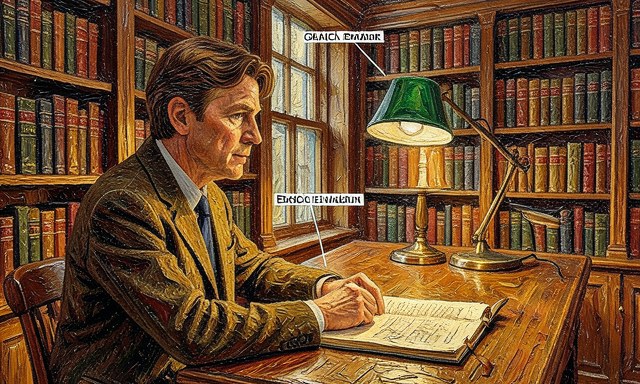
Write the body before the introduction
Write the body before the introduction. Start with the section you understand best. The introduction is easier to write once you know exactly what the paper argues, so leave it until the argument exists on the page.
 Howcompass
Use one claim, evidence, explanation per paragraph
Use one claim, evidence, explanation per paragraph. Open with the claim, present the evidence, then explain how the evidence supports the claim. That three-move pattern makes dense material readable and keeps you from quoting without analysis.
 Howcompass
Quote sparingly and paraphrase precisely
Quote sparingly and paraphrase precisely. Quote only distinctive wording you will analyse; paraphrase the rest in your own sentence structure and cite it. A paper dominated by block quotes is telling the reader you did the collecting but not the thinking.
 Howcompass
Cite as you write, not afterwards
Cite as you write, not afterwards. Insert the author, year and page in place while the source is open. Adding a citation list at the end from memory is how accidental plagiarism happens under deadline pressure.
 Howcompass
Keep a 'to verify' column
Keep a 'to verify' column. Mark any statistic or claim you are unsure about in the margin. A single tracked list is faster than re-reading the whole draft hunting for weak spots later. Related on Howcompass: meal prep for a week.
 Howcompass
Write the introduction last
Write the introduction last. Open with the context and the problem, then state your specific question and thesis in the final sentences. A reader should know the stakes and your answer within the first paragraph or two.
 Howcompass
Close by answering the question
Close by answering the question. The conclusion should restate the answer in light of the evidence, note the limits of your argument and suggest one concrete next question. Do not introduce new evidence here.
Phase 4 — Cite, Revise and Submit
 Howcompass
Build the reference list from your saved citations
Build the reference list from your saved citations. Export or type every source you actually cited — no more, no fewer — into the required style. A bibliography with uncited entries is as much an error as a missing one. For the primary source behind this phase, see Coursera — online courses.
 Howcompass
Match every in-text citation to the list
Match every in-text citation to the list. Check that each citation in the body appears in the reference list and each list entry appears in the body. This cross-check catches the majority of formatting marks.
 Howcompass
Apply one citation style consistently
Apply one citation style consistently. Whether APA, MLA, Chicago or IEEE, follow a single guide for italics, punctuation and author order. Mixing styles is a quick way to lose marks for presentation. Browse all illustrated guides or the Education and Communications category for more.
 Howcompass
Add page numbers for direct quotes
Add page numbers for direct quotes. Any quoted wording needs a locator so a reader can find it. Paraphrases usually need at least an author and year, and a page number where the idea is specific.
 Howcompass
Read the draft aloud once
Read the draft aloud once. Reading aloud exposes tangled sentences, repeated words and missing transitions that the eye skips over. Fix anything that makes you run out of breath. Related on Howcompass: start a small business.
 Howcompass
Check that each paragraph answers to its topic sentence
Check that each paragraph answers to its topic sentence. Underline every topic sentence and confirm the rest of its paragraph supports it. Delete or move sentences that drift to another claim.
 Howcompass
Cut filler and vague words
Cut filler and vague words. Replace 'it is important to note that' with the point itself, and swap vague terms like 'things' or 'a lot' for specific nouns and numbers. Precision shortens and strengthens at once.
 Howcompass
Check the question–thesis–conclusion thread
Check the question–thesis–conclusion thread. Read only the question, the thesis and the conclusion in sequence. They should agree; if the conclusion claims more than the thesis promised, revise one of them.
 Howcompass
Run a final originality and format check
Run a final originality and format check. Confirm the file meets the required font, spacing, word count and file name, and review highlighted matches from any originality tool to ensure every borrowed idea is cited.
Frequently Asked Questions
Question: How many sources do I need?
There is no universal number; use as many as it takes to support each claim credibly. For a short undergraduate paper, five to ten solid sources is common, but quality always beats a padded count.
Question: Can I use Wikipedia?
Use it to learn vocabulary and find references, not as a cited source. Follow its bibliography to the original scholarly or primary material and cite that instead.
Question: What if I cannot find a thesis right away?
That usually means the question is still too broad or too factual. Reword it so reasonable people could disagree, then write the best provisional answer and let reading refine it.
Warnings
- Choosing a topic that is too broad: 'Climate change' or 'social media' cannot be answered in a short paper. Narrow by period, place, population or case until you can name the specific evidence that would settle your question.
- Writing a book report: Summarising one source after another shows you read but not that you argued. Organise paragraphs by claim, put several sources in conversation, and make your own thesis the structure.
- Citing only at the end: Building a citation list from memory invites missing or mismatched references. Insert the full source detail the moment you quote or paraphrase, while the source is still in front of you.
Related Howcompass Guides



References (4)
- Purdue OWL — writing and citation guideowl.purdue.edu
- Oxford Referenceoxfordreference.com
- Khan Academy — free courseskhanacademy.org
- Coursera — online coursescoursera.org
Sources are listed so you can read the underlying guidance yourself. Our editorial policy explains how guides are reviewed.
Did this article help you?
0 readers found this helpful — add your vote.
No comments yet — be the first to share your results.