How to Research a Topic with AI (Step by Step)
A guide to Phase 1 — Frame the Question and Plan, Phase 2 — Find and Verify Sources, Phase 3 — Extract and Synthesise, Phase 4 — Cite, Check and Publish
AI is excellent at organising what you already have and surprisingly bad at knowing what is actually true. Used well, it is a research assistant for mapping, summarising and stress-testing; used carelessly, it invents confident citations that do not exist. This guide takes you through 28 concrete steps, from turning a vague topic into one answerable question to re-checking the five facts your conclusion leans on. The rule throughout is simple: AI may propose, but a real source must dispose. Browse all illustrated guides or the AI Research & Learning category for more illustrated walkthroughs on Howcompass.
How do you research a Topic with AI (Step by Step)?
 Howcompass | How to Research a Topic with AI (Step by Step)
Phase 1 — Frame the Question and Plan
HowcompassTurn a broad topic into one question
Turn a broad topic into one question. Replace a theme like 'AI in education' with a question such as 'How does AI feedback affect essay revision in secondary schools?' Naming the subject, the effect and the group makes the question researchable. For the primary source behind this phase, see Anthropic — AI research and documentation.
 Howcompass
Write the scope as three limits
Write the scope as three limits. Bound the topic by time, place and source type — for example the last five years, one country, and peer-reviewed studies plus official statistics. Three explicit limits stop a project from quietly doubling in size.
 Howcompass
List what a complete answer must cover
List what a complete answer must cover. Write down the sub-questions a good answer has to settle, such as definition, causes, counterexamples and outcomes. This list becomes your yardstick for knowing when you have enough evidence.
 Howcompass
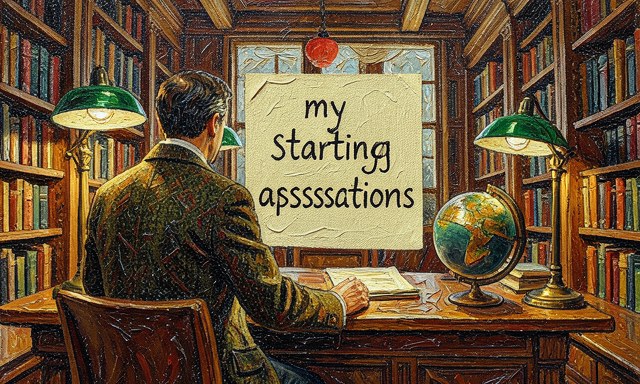
Record your starting assumptions
Record your starting assumptions. Note in one line what you already believe, because models tend to agree with the framing you give them. Writing the bias down first makes it much easier to go looking for disconfirming evidence later.
 Howcompass
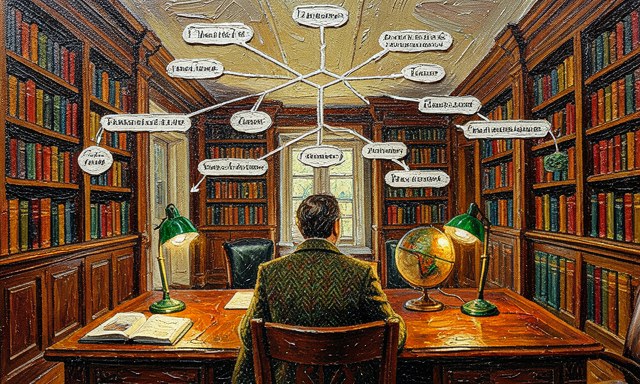
Ask for a map, not an essay
Ask for a map, not an essay. Request a map of sub-topics and key terms instead of a written conclusion, so you can see where to look. A good map reveals angles you had not considered without pretending to settle the question for you.
 Howcompass
Generate search terms and synonyms
Generate search terms and synonyms. Ask for each concept's keywords, near-synonyms and disciplinary jargon, then use them in library and scholar databases. Term variety matters because the same idea is named differently across fields.
 Howcompass
Decide which sources count in advance
Decide which sources count in advance. Rank source types before you search: peer-reviewed papers, government statistics, institutional reports, then news. Pre-committing to a hierarchy prevents a slick blog post from later outranking a study in your notes. Related on Howcompass: build a no-code AI automation.
Phase 2 — Find and Verify Sources
 Howcompass
Search scholarly databases first
Search scholarly databases first. Feed your keyword list into a library catalogue, scholar index or subject database rather than asking AI to name papers. Beginning with a real search is the single best defence against references that were never published. For the primary source behind this phase, see Purdue OWL — writing and citation guide.
 Howcompass
Ask AI to summarise only what you supply
Ask AI to summarise only what you supply. Paste a passage and instruct it to summarise that text alone, marking which sentence supports each point. Phrasing the task as 'using only this excerpt' stops it filling gaps from memory.
 Howcompass
Verify every citation before you use it
Verify every citation before you use it. Open each title, author, year and DOI the model mentions and confirm the work exists and is quoted accurately. In practice a noticeable share of AI-supplied references are wrong in author, year or conclusion.
 Howcompass
Read the primary source, not the summary
Read the primary source, not the summary. For any number you intend to quote, go back to the original report or paper and check its sample size and conditions. Summaries strip the caveats that often decide whether a figure actually supports your claim. Browse all illustrated guides or the AI Research & Learning category for more.
 Howcompass
Flag every claim with no source
Flag every claim with no source. Mark any specific number, date or quotation in the AI output that has no attached source, and treat it as unverified until you find one. Concrete unsourced detail is exactly where confident errors hide.
 Howcompass
Cross-check one key fact in two places
Cross-check one key fact in two places. Require two independent sources to agree before a load-bearing fact enters your draft. If only one outlet reports a striking statistic, leave it out or explicitly label it as a single estimate.
 Howcompass
Remove confident but vague statements
Remove confident but vague statements. Phrases like 'studies show' with no named study either get a specific citation or get deleted. The more absolute the wording, the stronger the evidence you owe the reader. Related on Howcompass: use an AI coding assistant.
Phase 3 — Extract and Synthesise
 Howcompass
Build a claim-and-evidence table
Build a claim-and-evidence table. Make one row per claim with the supporting evidence, source and page number, and let AI compress long passages into it. A fixed four-column structure keeps each fact traceable back to a page. For the primary source behind this phase, see NIST — AI Risk Management Framework.
 Howcompass
Summarise each source in your own words
Summarise each source in your own words. Close the article and write three sentences from memory before trusting any AI summary. If you cannot do it, you have not understood the source yet, and no amount of summarising will fix that.
 Howcompass
Group evidence by theme, not by source
Group evidence by theme, not by source. Rearrange your notes so material from different authors sits together under a claim, rather than staying in one pile per paper. Cross-source patterns and disagreements only become visible in this layout.
 Howcompass
Record contradictions explicitly
Record contradictions explicitly. When two sources disagree, add a row noting each side's sample and method instead of quietly picking one. Conflicting findings are often the most interesting part of a research answer, not noise to remove.
 Howcompass
Draft the argument before asking AI to write
Draft the argument before asking AI to write. Write your own claim and the reasoning chain that connects evidence to it, even roughly. Giving the model your skeleton keeps the finished piece an argument you made, not a generic summary it assembled.
 Howcompass
Use AI to stress-test your reasoning
Use AI to stress-test your reasoning. Ask it to play a skeptical reviewer and list the unstated assumptions and weakest links in your argument. Requesting counterarguments is far more useful than requesting praise or a smoother paragraph.
 Howcompass
Merge sources into one coherent narrative
Merge sources into one coherent narrative. Have AI weave your themed evidence into the outline you wrote, while preserving the source tag beside every borrowed fact. You supply the structure and judgement; it handles the connective tissue. Related on Howcompass: build a no-code AI automation.
Phase 4 — Cite, Check and Publish
 Howcompass
Match each claim to a numbered citation
Match each claim to a numbered citation. Walk the draft paragraph by paragraph and confirm that every assertion has a corresponding numbered source. Add the missing ones and cut any citation that does not actually support the sentence beside it. For the primary source behind this phase, see Oxford Reference.
 Howcompass
Format citations to the required style
Format citations to the required style. Use an authoritative guide to standardise author order, year, title and page range, then check the result by hand. Models routinely shuffle a name or a year while producing otherwise correct-looking references.
 Howcompass
Disclose how you used AI
Disclose how you used AI. Add a short methods note stating that AI helped with searching, summarising and drafting but that every citation was verified against the original. Transparency about method is part of the credibility you are claiming.
 Howcompass
Recheck the five most load-bearing facts
Recheck the five most load-bearing facts. Pick the five facts your conclusion most depends on and verify each against its original source one more time. Errors cluster in the evidence you stopped questioning because it felt settled.
 Howcompass
Include a source that disagrees with you
Include a source that disagrees with you. Find one credible counterargument, represent it fairly and answer it in your text. A conclusion that only cites agreeing sources signals selection bias to any careful reader.
 Howcompass
Read the finished piece aloud once
Read the finished piece aloud once. Reading aloud exposes the repetitive phrasing, empty transitions and tone shifts that AI-assisted drafts commonly carry. Fixing those is what makes the writing sound like a person who understands the topic.
 Howcompass
Archive the sources for reuse
Archive the sources for reuse. Save the verified papers, evidence tables and working prompts in one dated project folder. The next time the topic comes up you start from checked evidence instead of repeating the whole search. Related on Howcompass: use an AI coding assistant.
Frequently Asked Questions
Question: Can I trust the citations an AI gives me?
Treat them as leads, never as sources. Search each one in a library or publisher database, confirm the exact wording of the claim, and discard any reference you cannot open.
Question: How do I keep the writing from sounding generic?
Write your own thesis and reasoning chain first, feed the model your real notes rather than the open web, and finish with a read-aloud pass to remove stock transitions and repetition.
Question: What should I disclose about my AI use?
State which tasks it performed — typically searching, summarising and drafting — and confirm that you verified the sources and take responsibility for the claims. Check any institutional or publication policy that applies.
Warnings
- Trusting citations you did not open: Models can produce plausible-looking titles, authors and DOIs that never existed, or attach a real paper to the wrong claim; verify every reference at the original source before it enters your notes.
- Reading the summary instead of the source: A summary drops sample sizes, date ranges and hedging words that often determine whether a finding applies to your question; for any number you quote, open the primary document.
- Asking AI to write before you understand: If you cannot summarise a source in three sentences yourself, you cannot judge whether the draft misused it; build and check your own evidence table before requesting prose.
Related Howcompass Guides




References (4)
- Anthropic — AI research and documentationanthropic.com
- Purdue OWL — writing and citation guideowl.purdue.edu
- NIST — AI Risk Management Frameworknist.gov
- Oxford Referenceoxfordreference.com
Sources are listed so you can read the underlying guidance yourself. Our editorial policy explains how guides are reviewed.
Did this article help you?
0 readers found this helpful — add your vote.
No comments yet — be the first to share your results.