How to Set Up a Fridge and Pantry System That Cuts Food Waste
A guide to See What You Actually Throw Away, Give the Fridge a Fixed Layout, Bring the Pantry Under Control, Plan Around What Is Already There, Keep the Routine Light Enough to Repeat
Food waste at home is rarely a knowledge problem. It is a visibility problem: the half-used jar at the back of a shelf, the bag of greens bought for a meal that never happened, the leftovers nobody labelled. A good system does not require a new set of containers or a strict menu plan. It makes the oldest items the easiest to see, gives every category one fixed place, and builds a short weekly loop that uses what is already in the kitchen before adding more. The 32 steps below move from a one-week observation to a layout, then to shopping and cooking habits. Follow the storage and date instructions on packaging and from official food-safety guidance rather than guesswork; when in doubt, discard. If you only do one thing today, do step 7. Browse all illustrated guides or the Food and Entertaining category for more illustrated walkthroughs on Howcompass.
How do you set Up a Fridge and Pantry System That Cuts Food Waste?
 Howcompass | How to Set Up a Fridge and Pantry System That Cuts Food Waste
See What You Actually Throw Away
HowcompassKeep a short waste note by the bin for seven days
Keep a short waste note by the bin for seven days. Write down the item and the reason - forgot it, bought too much, cooked too much, or it went off. A week of plain notes is more useful than any general advice. For the primary source behind this phase, see NHS — Live Well.
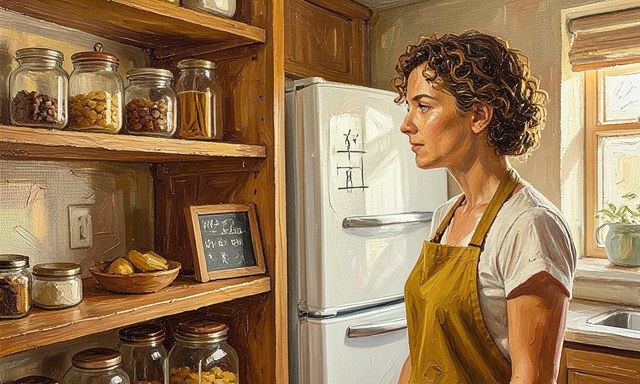 Howcompass
Count the reasons, not the grams
Count the reasons, not the grams. The pattern matters more than the weight. Three 'bought too much' lines point to shopping; three 'forgot it' lines point to visibility, and the fixes are different.
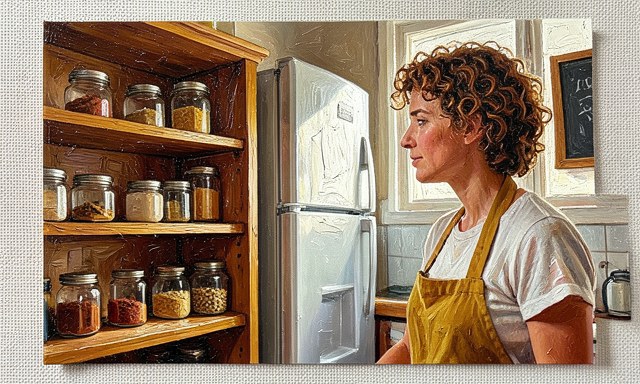 Howcompass
Photograph the fridge before changing anything
Photograph the fridge before changing anything. A picture of the starting point stops you reorganising endlessly and gives you something honest to compare with next month.
 Howcompass
Pick one category to fix first
Pick one category to fix first. Fresh vegetables, leftovers or opened jars - choose whichever appeared most often in your notes. One category is a real change; everything at once is a weekend project that gets undone.
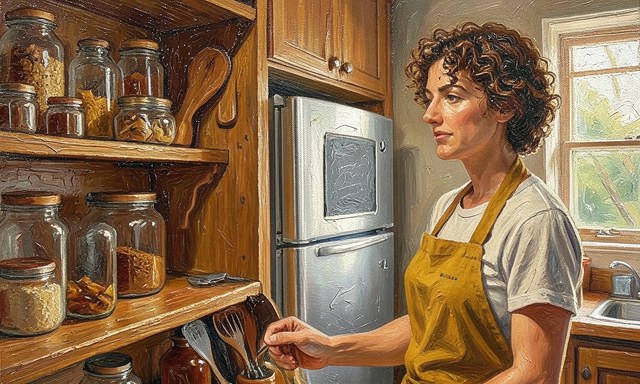 Howcompass
Decide what 'better' looks like in one sentence
Decide what 'better' looks like in one sentence. For example: nothing green goes limp unseen, or every leftover gets eaten or frozen within two days. A concrete sentence tells you whether the system is working.
 Howcompass
Agree the rules with everyone who cooks
Agree the rules with everyone who cooks. A layout only one person knows will be undone by the next shop. Show the whole household where things go and why before you move a single jar.
Give the Fridge a Fixed Layout
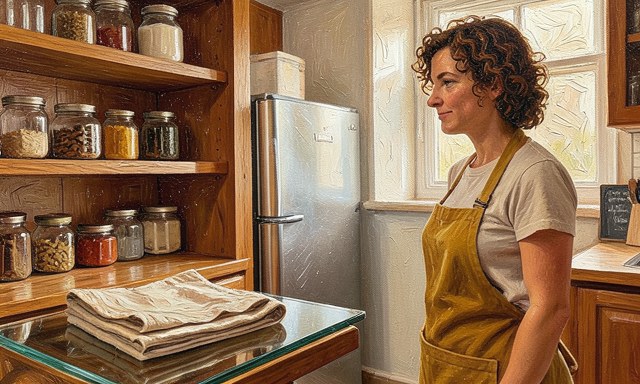 Howcompass
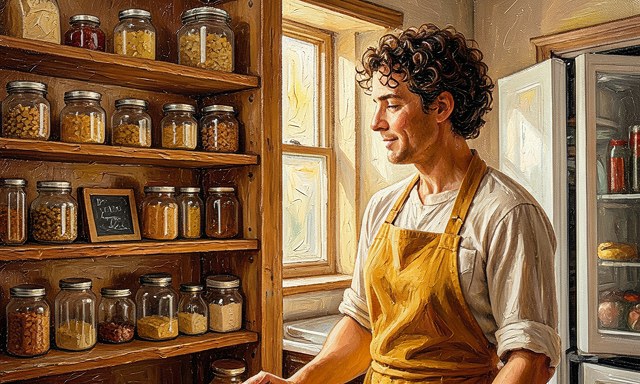
Take everything out and wipe the shelves
Take everything out and wipe the shelves. Work in one session with a cool bag for cold items. A clean, empty fridge is the only moment when you can see the actual space you have to assign. For the primary source behind this phase, see MedlinePlus — NIH health information. Related on Howcompass: meal prep for the week.
 Howcompass
Group items by how quickly they need using
Group items by how quickly they need using. Put opened and soon-to-be-used food together, unopened and longer-lasting items behind them. Grouping by urgency is more useful than grouping by food type.
 Howcompass
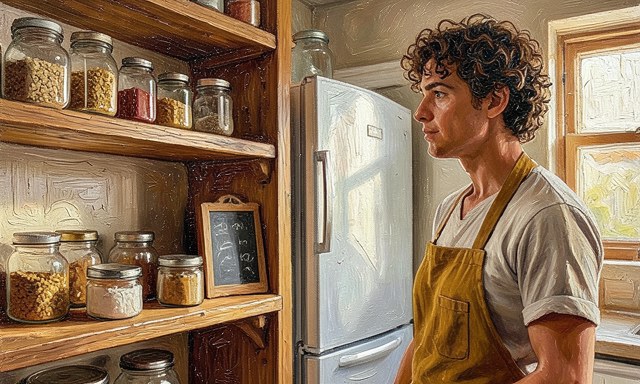
Discard anything doubtful rather than tasting it
Discard anything doubtful rather than tasting it. Follow the date and storage instructions on the package and official food-safety guidance. If an item has been open longer than you can account for, throwing it away is the safe decision.
 Howcompass
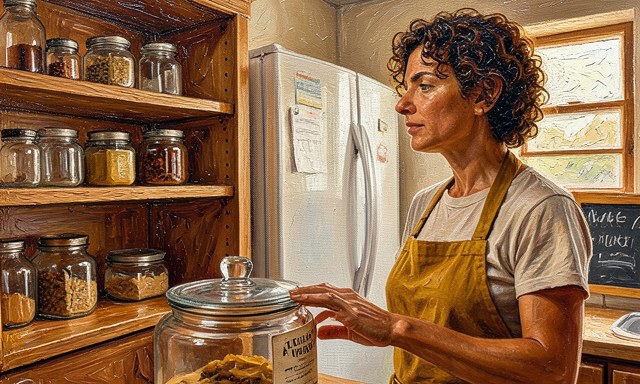
Create one clearly marked 'eat first' shelf
Create one clearly marked 'eat first' shelf. This is the step that changes behaviour. Opened packets, half vegetables, cooked leftovers and anything near its date live here at eye level, together, with no exceptions.
 Howcompass
Label leftovers with the day they were cooked
Label leftovers with the day they were cooked. A piece of tape and a date remove all guesswork later in the week. Write the day you made it, not the day you plan to eat it. Browse all illustrated guides or the Food and Entertaining category for more.
 Howcompass
Keep raw and ready-to-eat foods in separate zones
Keep raw and ready-to-eat foods in separate zones. Use the shelf layout recommended by your fridge's manual and official food-safety guidance, with raw items stored below ready-to-eat food. Keep a fixed zone rather than deciding each time.
Bring the Pantry Under Control
 Howcompass
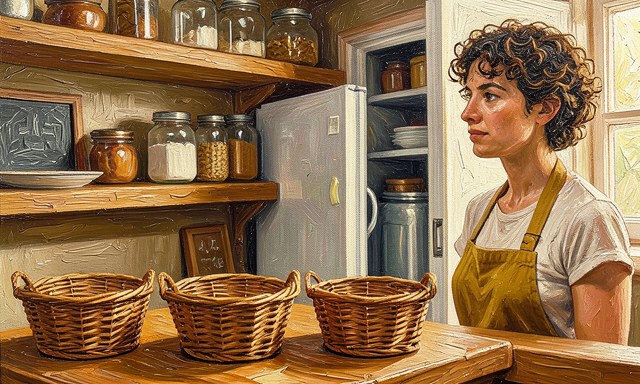
Sort dry goods into a few broad baskets
Sort dry goods into a few broad baskets. Grains, tins, baking, snacks and spare condiments are usually enough. Broad baskets are quick to return things to; a place for every single product is not. For the primary source behind this phase, see U.S. EPA — environment and household resources.
 Howcompass
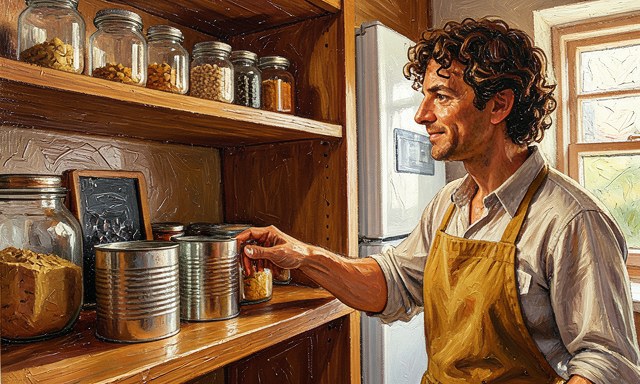
Move new stock behind old stock every time
Move new stock behind old stock every time. When you unpack a shop, put the new tin at the back and bring the older one forward. This one action is the whole principle of a pantry that does not accumulate expired duplicates. Related on Howcompass: meal prep a week of balanced lunches safely.
 Howcompass
Keep a visible list of opened packets
Keep a visible list of opened packets. Half a bag of rice or an opened jar of sauce is easy to forget once it is back on the shelf. A short list on the door makes them candidates for the next meal.
 Howcompass
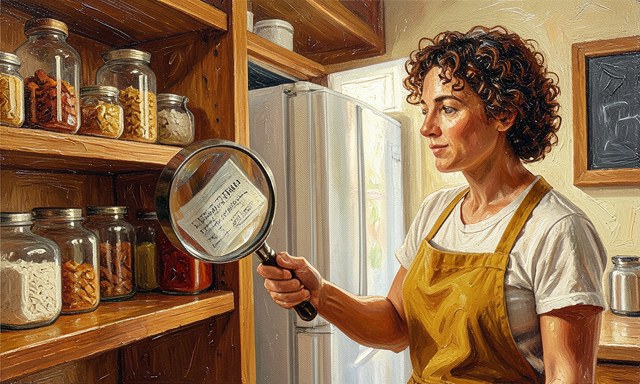
Read date labels as the package defines them
Read date labels as the package defines them. Follow the wording on the label and the guidance of your local food-safety authority rather than applying one rule to every product. Storage instructions matter as much as the printed date.
 Howcompass
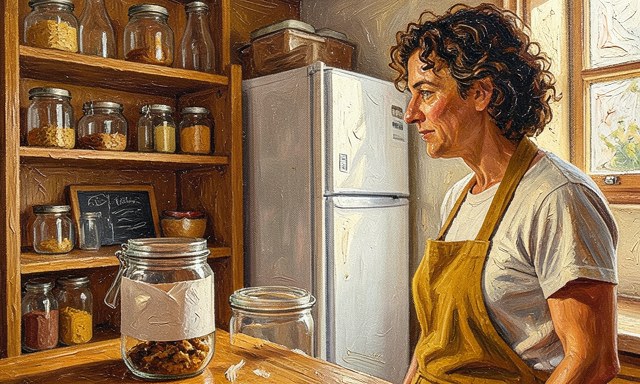
Store food the way its package says
Store food the way its package says. Some dry goods need a cool dark cupboard, others need the fridge after opening. Transfer to a container only if you also transfer the storage and date information.
 Howcompass
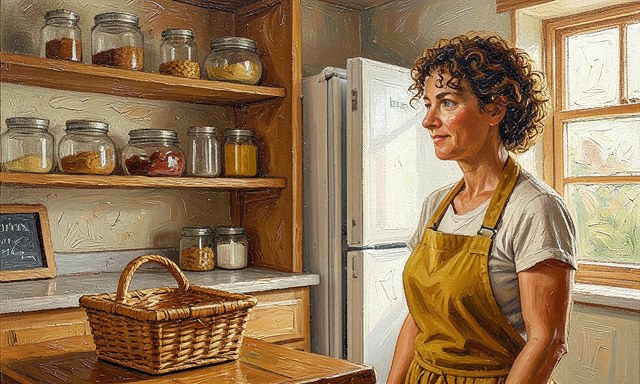
Buy the quantity you will actually cook this week
Buy the quantity you will actually cook this week. A large pack is only cheaper if you use it. Compare the price with your own week's plan, not with the shelf price alone, when you decide on size.
 Howcompass
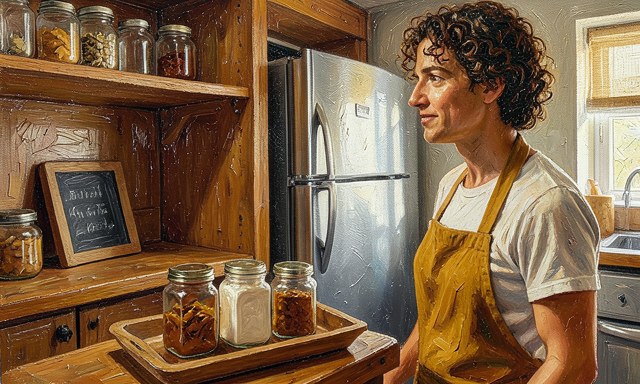
Keep a small 'use soon' tray for opened items
Keep a small 'use soon' tray for opened items. Opened jars and packets that need finishing within days belong together in one visible tray. It is the pantry equivalent of the fridge's eat-first shelf.
Plan Around What Is Already There
 Howcompass
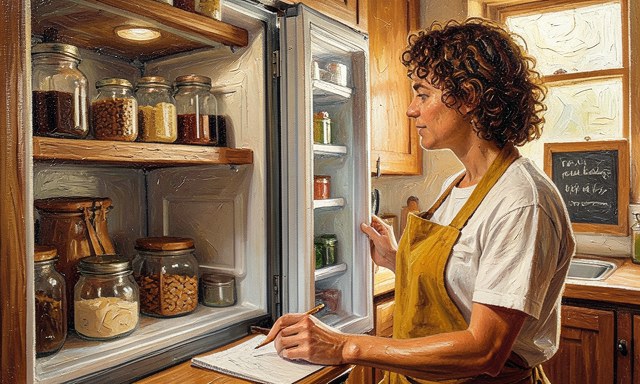
Check the eat-first shelf before writing a list
Check the eat-first shelf before writing a list. Two minutes in front of the fridge changes the list more than any budgeting app. Write down what needs using, then add only what completes a meal around it. For the primary source behind this phase, see GOV.UK — official UK government services.
 Howcompass
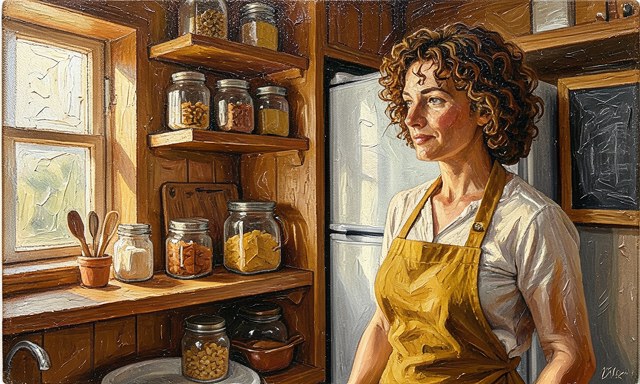
Plan two flexible meals, not seven fixed ones
Plan two flexible meals, not seven fixed ones. Leave room for a change of plan. Two loose meals built around what is already open absorb leftovers far better than a rigid week that collapses on day two. Related on Howcompass: read a nutrition facts label.
 Howcompass
Use a list and keep to it at the shop
Use a list and keep to it at the shop. Impulse buys are what refill the back of the shelf. A list you wrote at home is a decision made calmly; keep that decision in the aisle. Browse all illustrated guides or the Food and Entertaining category for more.
 Howcompass
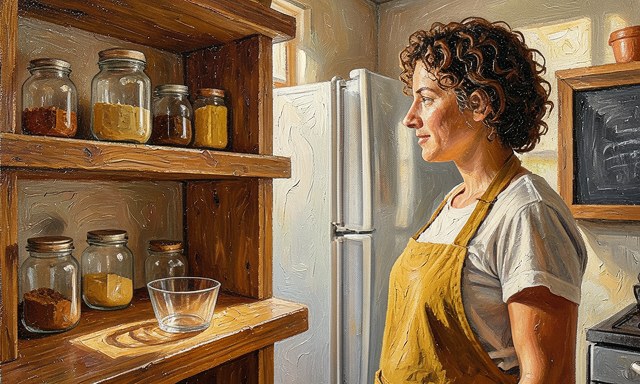
Cook a sensible amount for the people actually eating
Cook a sensible amount for the people actually eating. Estimate from the number of plates, not from the size of the pan. If you regularly overshoot, reduce one portion and see whether anyone notices.
 Howcompass
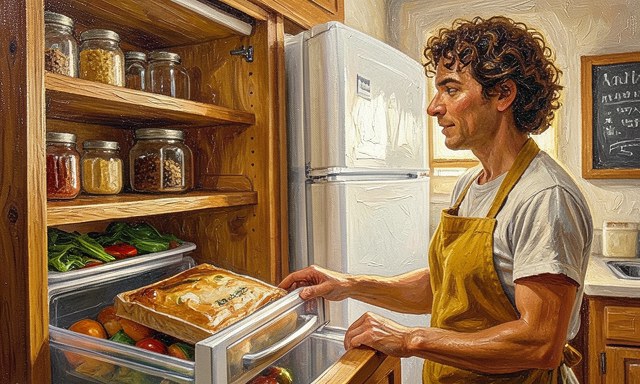
Cool and store leftovers promptly in shallow containers
Cool and store leftovers promptly in shallow containers. Shallow containers help food cool quickly. Follow official food-safety guidance on cooling, storage times and reheating rather than relying on habit.
 Howcompass
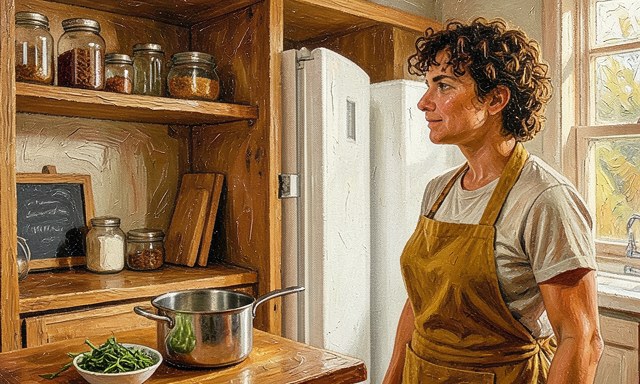
Freeze a portion before it becomes urgent
Freeze a portion before it becomes urgent. Freezing is a decision made on the day food is cooked, not a rescue attempt three days later. Label the container with its contents and the date you froze it.
 Howcompass
Give scraps one planned destination
Give scraps one planned destination. Vegetable trimmings can become stock, and herbs can be dried or used in a sauce. Choose one destination that fits your cooking so the scraps are an ingredient rather than a second problem.
Keep the Routine Light Enough to Repeat
 Howcompass
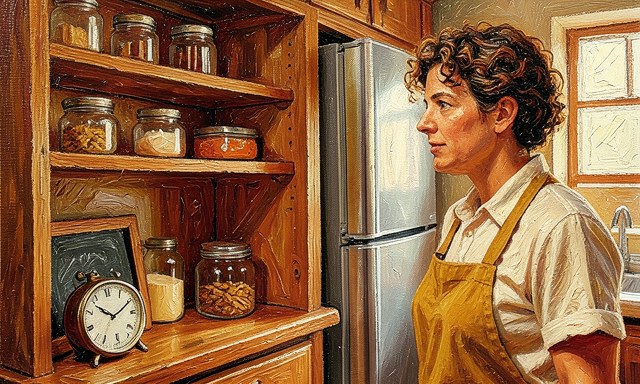
Do a five-minute fridge sweep before shopping day
Do a five-minute fridge sweep before shopping day. Move anything ageing to the eat-first shelf, note what has been finished and wipe one spill. Five minutes weekly beats a deep clean every two months. For the primary source behind this phase, see Citizens Advice — consumer and work guidance.
 Howcompass
Rewrite the eat-first label once a week
Rewrite the eat-first label once a week. A label that never changes becomes invisible. Refreshing it forces one quick look at every item on that shelf. Related on Howcompass: turn kitchen scraps into a deep-flavored stock.
 Howcompass
Keep the waste note for another week next month
Keep the waste note for another week next month. Repeat the original seven-day observation after a month. If the reasons changed, the system worked and the next target is different.
 Howcompass
Put the eat-first shelf at eye level for everyone
Put the eat-first shelf at eye level for everyone. If children or a partner cook, the most important shelf must be the easiest one they reach. A good layout works for the least organised person in the house.
 Howcompass
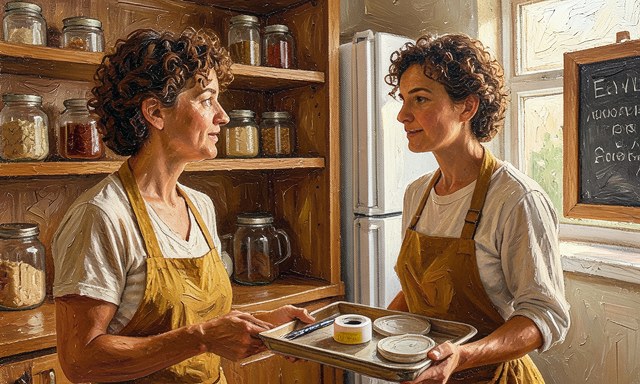
Keep containers and labels within arm's reach
Keep containers and labels within arm's reach. A system that needs a hunt for tape and a pen will be skipped on a busy evening. Store the small tools next to the containers they serve.
 Howcompass
Let the system settle before adding gadgets
Let the system settle before adding gadgets. Special bins, apps and new containers can wait until the basic layout has survived a month. The habit is the system; the objects only support it.
Frequently Asked Questions
Question: Do I need matching containers?
No. Reuse what you have, as long as lids fit and you can label them. Visibility and a fixed shelf do far more than a coordinated set.
Question: How full should the fridge be?
Full enough to see a pattern, empty enough to reach the back. If you cannot see the eat-first shelf at a glance, there is simply too much in front of it.
Question: Is freezing leftovers always the answer?
It helps when you freeze on the day of cooking and label the parcel. It does not rescue food that has already been sitting for days, and it does not replace a shopping list.
Question: What if the household will not follow the rules?
Shrink the system to one shelf and one label. A single rule everyone keeps is more effective than five rules only one person remembers.
Tips
- Move: Bring ageing items forward onto the eat-first shelf.
- Note: Cross off what was used and add anything newly opened.
- List: Write the shopping list from the shelf, not from memory.
Warnings
- Reorganising without knowing what gets thrown away: A beautiful pantry that fixes the wrong problem changes nothing. One week of notes tells you whether the issue is shopping, visibility or portion size.
- Hiding older food behind new food: Putting new stock at the front is the single most common way an unopened duplicate expires. Moving old stock forward takes seconds and is worth more than any label.
- Trusting smell or taste to judge a doubtful item: Follow the label's storage and date instructions and official food-safety guidance instead. When you cannot account for how long something has been open, discard it.
- Buying in bulk for meals that were never planned: A larger pack only saves money if it is eaten. Compare the pack size with the two or three meals you can actually name before you put it in the basket.
Related Howcompass Guides



References (9)
- NHS — Live Wellnhs.uk
- MedlinePlus — NIH health informationmedlineplus.gov
- U.S. EPA — environment and household resourcesepa.gov
- GOV.UK — official UK government servicesgov.uk
- Citizens Advice — consumer and work guidancecitizensadvice.org.uk
- WebMD — health informationwebmd.com
- NCBI — National Library of Medicinencbi.nlm.nih.gov
- King Arthur Baking — baking guideskingarthurbaking.com
- USA.gov — official U.S. government servicesusa.gov
Sources are listed so you can read the underlying guidance yourself. Our editorial policy explains how guides are reviewed.
Did this article help you?
0 readers found this helpful — add your vote.
No comments yet — be the first to share your results.