How to Write a Thank-You Note People Keep
A guide to Be Clear About What You Are Thanking For, Choose the Form and the Moment, Write the Note in Four Parts, Make It Sound Like You, Send It and Let It Go
Most thank-you notes are forgettable because they describe the writer's politeness rather than the other person's action. 'Thank you so much for everything' could be sent to anyone, which is exactly why it does not land. A note people keep does one specific thing: it shows that you noticed what someone actually did and what it changed for you. That takes a few minutes of thought and only a handful of sentences. This guide is not a rulebook about stationery, timing or which occasions require a card; customs vary, and a sincere message in any form is worth more than perfect formality. The 32 steps below move from getting specific, through a simple four-part structure, to sending it and letting it go. If you only do one thing today, do step 1. Browse all illustrated guides or the Relationships category for more illustrated walkthroughs on Howcompass.
How do you write a Thank-You Note People Keep?
 Howcompass | How to Write a Thank-You Note People Keep
Be Clear About What You Are Thanking For
HowcompassWrite down exactly what the person did
Write down exactly what the person did. Not 'helped with the move' but 'took the afternoon off and carried the boxes up three flights'. A concrete action is the material the whole note rests on. For the primary source behind this phase, see Purdue OWL — writing and citation guide.
 Howcompass
Note what it cost them, if you know
Note what it cost them, if you know. Time, attention, a favour they rearranged, a journey. Naming the effort shows you saw the person behind the gesture rather than only the result.
 Howcompass
Write one line on what changed for you
Write one line on what changed for you. Did it save a difficult evening, make a decision easier, or simply make you feel less alone? The effect is the reason the thanks is worth writing at all.
 Howcompass
Leave out requests, hints and updates about yourself
Leave out requests, hints and updates about yourself. A thank-you note that pivots into a favour or a long news update changes the subject. Keep the page about the other person.
 Howcompass
Do not use it to settle an awkward situation
Do not use it to settle an awkward situation. If something needs an apology or a difficult conversation, that belongs in its own message. Mixing the two makes both weaker.
 Howcompass
Drop the obligation as a reason for writing
Drop the obligation as a reason for writing. 'I suppose I should write' tells the reader the note is a duty. Write because you noticed something, and the first sentence will find the right tone.
Choose the Form and the Moment
 Howcompass
Use the channel you normally use with this person
Use the channel you normally use with this person. A handwritten card suits someone you write to; a message suits a friendship that lives in messages. Familiarity reads as warmth, not as a shortcut. For the primary source behind this phase, see The Gottman Institute — relationships. Related on Howcompass: apologize sincerely without making excuses.
 Howcompass
Choose a card you can actually write on
Choose a card you can actually write on. A plain surface with room for four or five lines is enough. An elaborate card with a printed message leaves you no space to be specific.
 Howcompass
Consider whether a gift is involved, and say so plainly
Consider whether a gift is involved, and say so plainly. If there was one, name it once and describe how you have used it or will use it. Do not inventories the gift or its value.
 Howcompass
Jot the three lines from step 1 before you forget them
Jot the three lines from step 1 before you forget them. The specific detail fades fastest. A rough note on your phone or a scrap of paper preserves the material until you can sit down properly.
 Howcompass
Give yourself ten quiet minutes, not a perfect evening
Give yourself ten quiet minutes, not a perfect evening. A short note does not need a ceremonial setting. Waiting for the ideal moment is the main reason these notes never get sent. Browse all illustrated guides or the Relationships category for more.
 Howcompass
Write it before you start repaying the favour
Write it before you start repaying the favour. Thanks and reciprocity are separate. Saying the words first keeps the note from becoming a ledger entry.
Write the Note in Four Parts
 Howcompass
Open with the thanks and the specific thing
Open with the thanks and the specific thing. 'Thank you for taking the afternoon to help with the boxes' says everything in one line. Avoid warming up with a general comment about how busy life has been. For the primary source behind this phase, see American Psychological Association.
 Howcompass
Add one sentence on the effort you noticed
Add one sentence on the effort you noticed. This is where you acknowledge that the person chose to spend time or attention on you. Keep it factual rather than exaggerated. Related on Howcompass: write warm annual holiday letters.
 Howcompass
Say what difference it made
Say what difference it made. One honest sentence about the result - a calmer day, a problem solved, a memory you will keep. This is the line people remember.
 Howcompass
End with a warm, unpressured line
End with a warm, unpressured line. 'I am glad you were there' or 'I hope we can catch up soon' closes without asking for a reply. A note should not create a new task for the reader.
 Howcompass
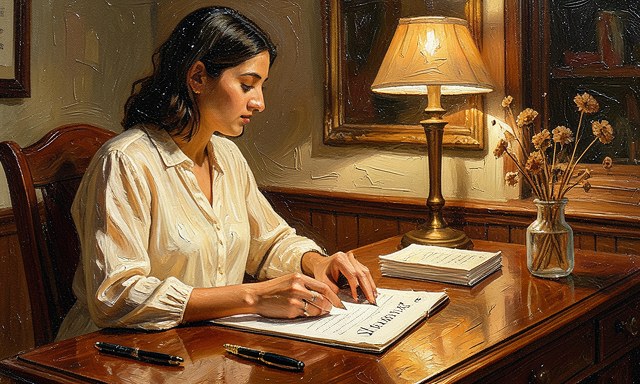
Read it aloud once to catch the tone
Read it aloud once to catch the tone. If a sentence sounds like a form letter or a performance, cut it. Reading aloud exposes flourishes that looked harmless on the page.
 Howcompass
Check the name, the detail and one spelling
Check the name, the detail and one spelling. A wrong name or a mistaken detail undoes the specificity you worked for. A quick check is the whole editing pass a short note needs.
 Howcompass
Stop at four or five sentences
Stop at four or five sentences. Brevity is a kindness. If you find yourself filling the back of the card, you have probably started writing something else.
Make It Sound Like You
 Howcompass
Cut 'words cannot express' and similar openers
Cut 'words cannot express' and similar openers. Stock phrases are the reason most notes blur together. Replace them with the concrete line you already wrote in step 1. For the primary source behind this phase, see TED — talks and ideas.
 Howcompass
Use the words you would actually say to them
Use the words you would actually say to them. If you would never say 'kindly' or 'grateful beyond measure' in conversation, do not write it. Familiar language is what makes a note sound like a person. Related on Howcompass: keep a long-distance friendship alive.
 Howcompass
Allow one small, shared detail
Allow one small, shared detail. A joke about the stairs, the weather that day, or the tea that went cold makes the note unmistakably yours. Keep it to one line so it stays a note. Browse all illustrated guides or the Relationships category for more.
 Howcompass
Match the weight of the words to the gesture
Match the weight of the words to the gesture. A small favour deserves a warm line, not a declaration of lifelong debt. Overstatement makes a sincere note feel uncomfortable to receive.
 Howcompass
Do not apologise for the note itself
Do not apologise for the note itself. 'Sorry this is late' and 'I am bad at this' put the focus back on you. Simply send it; the delay is rarely as visible to the reader as it is to you.
 Howcompass
Keep any mention of a gift modest and truthful
Keep any mention of a gift modest and truthful. Say how you have used it or where it will go. Inventing enthusiasm for something you will not use is easy to sense and unnecessary.
 Howcompass
Write it in your own hand when you can
Write it in your own hand when you can. Handwriting carries small irregularities that a typed message cannot. If your writing is hard to read, type it and add a short handwritten line.
Send It and Let It Go
 Howcompass
Address it and put it where you will take it
Address it and put it where you will take it. A finished card sitting on a desk for three weeks is an unsent card. Put it with your keys, your bag or the outgoing post the same day. For the primary source behind this phase, see History.com.
 Howcompass
Send the message version without a second reread
Send the message version without a second reread. If you chose a digital note, one tone check is enough. Repeated rereading tends to add qualifiers that dilute a simple, good sentence. Related on Howcompass: give difficult feedback to a friend.
 Howcompass
Do not follow up to ask whether it arrived
Do not follow up to ask whether it arrived. A thank-you note is complete when it is sent. Asking for confirmation turns a gift into a transaction for both of you.
 Howcompass
Keep a few blank cards and stamps together
Keep a few blank cards and stamps together. The practical friction of finding a card is what stops the habit. One small drawer removes it.
 Howcompass
Notice one specific thing each week worth thanking
Notice one specific thing each week worth thanking. A passing comment, a small favour, a good piece of work. Noticing is the skill; the note is just the visible part of it.
 Howcompass
Let the occasional note be short and imperfect
Let the occasional note be short and imperfect. Two honest sentences sent today beat a polished page drafted for a month. The specific detail, not the finish, is what people keep.
Frequently Asked Questions
Question: Handwritten or a message?
Use the channel you normally use with that person. A familiar form reads as warmth; an unfamiliar one can feel like a performance.
Question: Does it have to be sent immediately?
Write the specific detail down while it is fresh, then send as soon as you reasonably can. A sincere note is worth sending even if some time has passed.
Question: How long should it be?
Four or five sentences are usually plenty: the thanks, the effort you noticed, the difference it made and a warm close.
Question: What if a gift was involved?
Name it once and say honestly how you have used it or where it will go. You do not need to describe its value or invent enthusiasm.
Tips
- Thanks: One line naming the specific action.
- Noticing and effect: One line on their effort, one on what changed for you.
- Close: A warm line that asks for nothing.
Warnings
- Thanking someone for 'everything': A general phrase could be addressed to anyone. Name the one action you are thanking them for and the note immediately becomes worth reading.
- Making the note about your own obligation: 'I should have written sooner' and 'I am terrible at this' move the attention to the writer. Simply send the thanks you mean.
- Turning thanks into a request: A favour, a catch-up plan with pressure, or a long update changes the subject. Close with a warm line that asks for nothing.
- Overstating a small gesture: Gratitude that is larger than the action can feel uncomfortable. Match the words to what actually happened and keep them concrete.
Related Howcompass Guides




References (8)
- Purdue OWL — writing and citation guideowl.purdue.edu
- The Gottman Institute — relationshipsgottman.com
- American Psychological Associationapa.org
- TED — talks and ideasted.com
- History.comhistory.com
- Psychology Todaypsychologytoday.com
- Stanford Encyclopedia of Philosophyplato.stanford.edu
- USA.gov — official U.S. government servicesusa.gov
Sources are listed so you can read the underlying guidance yourself. Our editorial policy explains how guides are reviewed.
Did this article help you?
0 readers found this helpful — add your vote.
No comments yet — be the first to share your results.