How to Handle a Delayed or Cancelled Flight and Rebook Calmly
A guide to Get the Facts Before You Move, Know What the Rules Actually Say, Rebook Through the Right Channel, Look After the Practical Details, Follow Up Once You Have Landed
A disrupted flight is a logistics problem wrapped in a stressful moment. The queue at the service desk forms within seconds, while the useful information - the reason for the disruption, the options your ticket allows and the rules that apply to this itinerary - takes a few quiet minutes to establish. This guide is about buying those minutes. It starts with facts, then moves to official rules, then to rebooking, expenses and documentation. It does not state compensation amounts or legal deadlines, because those depend on the country, the route, the airline and the cause: use the airline's own policy and official government guidance for that. The 32 steps below are deliberately orderly. If you only do one thing today, do step 1. Browse all illustrated guides or the Travel category for more illustrated walkthroughs on Howcompass.
How do you handle a Delayed or Cancelled Flight and Rebook Calmly?
 Howcompass | How to Handle a Delayed or Cancelled Flight and Rebook Calmly
Get the Facts Before You Move
HowcompassCheck the airline app and the board for the same flight
Check the airline app and the board for the same flight. Confirm the flight number, the new time and whether the change is a delay or a cancellation. The two sources sometimes disagree briefly; note both with the time you read them. For the primary source behind this phase, see FAA — aviation consumer and safety information.
 Howcompass
Write down the reason the airline has given
Write down the reason the airline has given. A short line such as 'weather', 'aircraft' or 'crew' is worth recording. The stated reason can matter later when you check which rules apply, and memory blurs quickly.
 Howcompass
Note the time you first learned about it
Note the time you first learned about it. A timestamp makes your record coherent if you later need to describe the sequence. Use the clock in the app rather than an estimate.
 Howcompass
Keep your passport, wallet, phone and medication with you
Keep your passport, wallet, phone and medication with you. Find them before joining a queue. A bag checked in by mistake or left at a charging point turns a delay into a much larger problem.
 Howcompass
Check whether checked bags are being returned
Check whether checked bags are being returned. For a cancellation, ask where and when baggage will be available. Do not assume it will follow you automatically to a new flight.
 Howcompass
Charge the phone and save offline copies of key details
Charge the phone and save offline copies of key details. A dead battery removes your boarding pass, your contacts and your notes at once. Save a screenshot of the booking reference and any rebooking page.
Know What the Rules Actually Say
 Howcompass
Open the airline's disruption or conditions-of-carriage page
Open the airline's disruption or conditions-of-carriage page. Use the official site or app, not a summary posted by another traveller. The policy tells you which rebooking and care options the airline says it offers. For the primary source behind this phase, see European Union — official portal. Related on Howcompass: pass border control with an organised travel-document system.
 Howcompass
Check the fare rules on your own booking
Check the fare rules on your own booking. A flexible ticket and the cheapest restricted fare may allow different changes. Look at the conditions attached to your booking reference before requesting something specific.
 Howcompass
Check official passenger guidance for the country you are in
Check official passenger guidance for the country you are in. National and regional rules differ, and they may depend on the route and the cause of the disruption. Use government or authority guidance for the applicable rights rather than a social-media claim.
 Howcompass
Decide whether you need the earliest seat or a reliable one
Decide whether you need the earliest seat or a reliable one. The first available option is not always the best: a tight connection at the far end can fail twice. Choose against your real commitments, not against the queue's mood.
 Howcompass
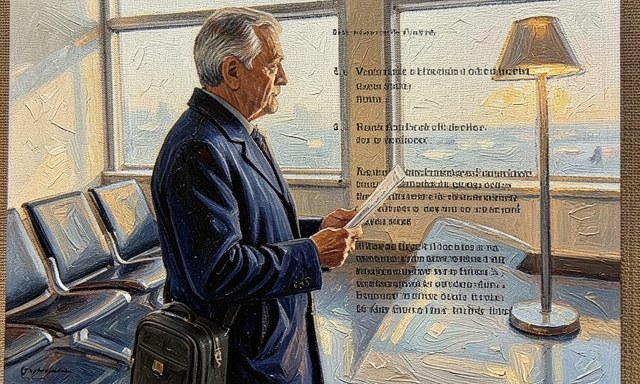
List the connections and bookings that depend on this flight
List the connections and bookings that depend on this flight. Hotels, trains, a cruise, a meeting or a visa appointment all have their own deadlines. A written list tells the agent which part of the trip is fragile. Browse all illustrated guides or the Travel category for more.
 Howcompass
Identify anything time-limited in your hand luggage
Identify anything time-limited in your hand luggage. Medication, documents with expiring validity and perishable items need a decision first. Mention them early if they affect which rebooking you can accept.
Rebook Through the Right Channel
 Howcompass
Try the app or website before the physical queue
Try the app or website before the physical queue. Self-service rebooking is often available before a desk opens. If you can see a suitable option there, take it and stop juggling channels. For the primary source behind this phase, see TSA — travel security and packing rules.
 Howcompass
Join the queue and call the helpline in parallel if offered
Join the queue and call the helpline in parallel if offered. Keep both open, but accept only one rebooking. Confirm any offer clearly before agreeing, then note who or what issued it. Related on Howcompass: pack a carry-on for two weeks.
 Howcompass
Ask one specific question at the desk
Ask one specific question at the desk. 'Can you put me on the direct flight tomorrow morning, or what is the earliest confirmed seat?' is easier to answer than a general complaint. Bring your booking reference and your dependencies list.
 Howcompass
Wait for the new boarding pass or written confirmation
Wait for the new boarding pass or written confirmation. A verbal assurance is not a booking. Check that the new flight appears in the app under your reference before you leave the desk.
 Howcompass
Check the whole itinerary, including the return leg
Check the whole itinerary, including the return leg. Changing one segment can disturb later ones. Read every remaining segment on the confirmation, not just the flight you were discussing.
 Howcompass
Ask explicitly about checked baggage
Ask explicitly about checked baggage. Confirm whether your bag will be transferred, returned or needs to be rechecked. Write down the answer; it is the detail most often assumed wrongly.
 Howcompass
Save a screenshot of the final confirmation
Save a screenshot of the final confirmation. Network access and app sessions are unreliable in a busy terminal. A local copy of the new booking is the version you can always show.
Look After the Practical Details
 Howcompass
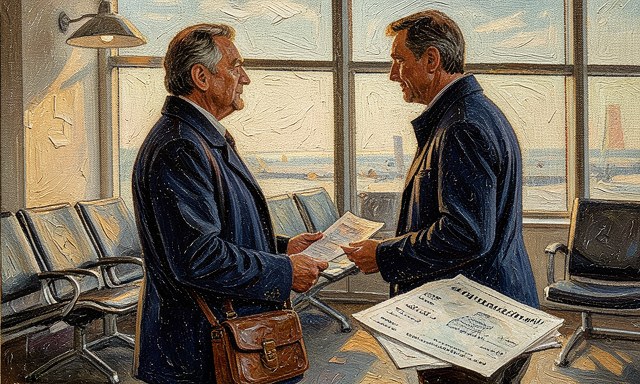
Ask what the airline is providing before paying
Ask what the airline is providing before paying. Meals, accommodation or transport may be offered in some circumstances. Ask at the desk or check the official policy, and keep whatever answer you are given. For the primary source behind this phase, see U.S. Department of State — travel information.
 Howcompass
Keep every receipt in one envelope
Keep every receipt in one envelope. Whatever is or is not reimbursable later, a tidy set of dated receipts is the only basis for a claim. Photograph them as a backup before you leave the airport. Related on Howcompass: keep a pocket expense log on multi-city trips.
 Howcompass
Write down names, times and what was said
Write down names, times and what was said. A short factual timeline - desk, time, person or channel, answer - is far more useful than an impression of the conversation. Add it to the note from step 2. Browse all illustrated guides or the Travel category for more.
 Howcompass
Tell anyone waiting at the other end
Tell anyone waiting at the other end. Send the new arrival time as soon as it is confirmed. One accurate message is kinder than a stream of updates that may change again.
 Howcompass
Contact hotels, transfers and onward transport
Contact hotels, transfers and onward transport. Many providers are flexible if told early. Work down the dependencies list from step 9 and record any change of booking reference.
 Howcompass
Check travel insurance and card assistance terms
Check travel insurance and card assistance terms. Some policies or cards include disruption cover with their own notification rules. Read the terms you bought rather than a general description, and note any deadline they state.
 Howcompass
Eat, drink and rest before making the next decision
Eat, drink and rest before making the next decision. Long waits make every option feel equally bad. A short break and a glass of water are a legitimate part of the process, not a distraction from it.
Follow Up Once You Have Landed
 Howcompass
File a claim through the airline's official channel
File a claim through the airline's official channel. If you are seeking reimbursement or compensation, use the airline's own form and attach your receipts and timeline. Check official guidance first for what applies to your itinerary. For the primary source behind this phase, see USA.gov — Travel and Immigration.
 Howcompass
Keep the original boarding passes and booking references
Keep the original boarding passes and booking references. Do not throw away the disrupted flight's documents once you arrive. They are the evidence that connects your claim to the actual itinerary. Related on Howcompass: reset jet lag with physical routines.
 Howcompass
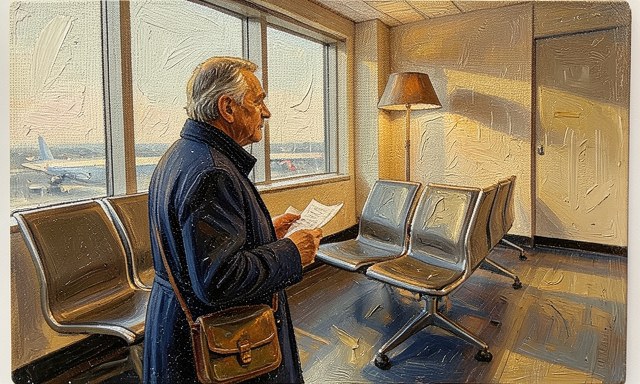
Record the outcome of any claim
Record the outcome of any claim. Note the date you submitted, the reference number and the eventual answer. A single line in your travel notes prevents repeating the same enquiry weeks later.
 Howcompass
Pack a charger, a pen and a flat folder in your hand luggage
Pack a charger, a pen and a flat folder in your hand luggage. The three objects most useful during a disruption are also the easiest to forget. Keep them together so the next delay starts with tools, not a search.
 Howcompass
Save offline copies of your important documents
Save offline copies of your important documents. Passport photo page, booking references, insurance policy and one payment card detail stored securely on your device can be shown without a network connection.
 Howcompass
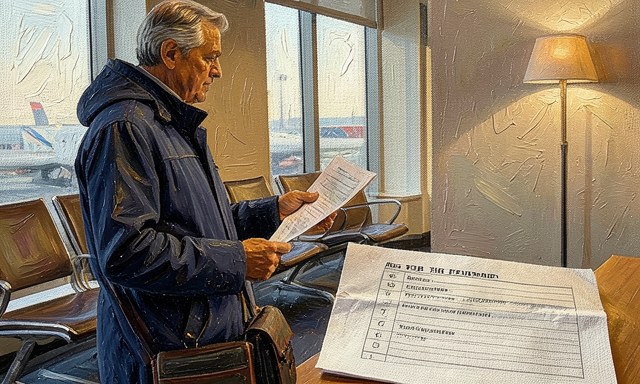
Add the airline's disruption page to your pre-trip checklist
Add the airline's disruption page to your pre-trip checklist. Knowing where the official policy lives before you fly removes one search at the worst possible moment. Two minutes at home buys a calmer first ten minutes at the airport.
Frequently Asked Questions
Question: Should I queue, call, or use the app?
Start with the app or website and keep the other channels open in parallel if they are available. Whichever gives you a confirmed option first wins - just accept one rebooking only.
Question: Am I entitled to compensation?
It depends on the applicable rules, the route, the length of the disruption and its cause. Check the airline's conditions and the official passenger guidance for the country or region, not a general rule of thumb.
Question: What happens to my checked bag?
Ask explicitly. Depending on the disruption it may be transferred to the new flight, returned to you, or need rechecking; assuming the first option is a common source of lost time.
Question: Should I rebook myself on another airline?
Only after checking what the airline will arrange and what your ticket and any insurance allow. An independent purchase can complicate an existing claim, so keep the official answer in writing first.
Tips
- Power and paper: A charged phone, a short cable, a pen and a flat folder for documents.
- Offline copies: Booking references, travel documents and insurance details saved where you can open them without a connection.
- One official link: The airline's own disruption policy page, saved before you travel.
Warnings
- Assuming the first announcement is final: Times and reasons can change several times in the first hour. Check the app and the board together, and date every note you make.
- Accepting a verbal rebooking: Until the new flight appears under your booking reference, you do not have a confirmed seat. Wait for the boarding pass or written confirmation before leaving the desk.
- Quoting compensation figures from memory: Rights depend on the route, the country, the airline and the cause of the disruption. Read the airline policy and official government guidance instead of a figure someone posted online.
- Throwing away receipts and old boarding passes: They are the only evidence linking your expenses to the disrupted itinerary. Keep them together until any claim is fully closed.
Related Howcompass Guides




References (8)
- FAA — aviation consumer and safety informationfaa.gov
- European Union — official portaleuropa.eu
- TSA — travel security and packing rulestsa.gov
- U.S. Department of State — travel informationstate.gov
- USA.gov — Travel and Immigrationusa.gov
- GOV.UK — official UK government servicesgov.uk
- Citizens Advice — consumer and work guidancecitizensadvice.org.uk
- USA.gov — official U.S. government servicesusa.gov
Sources are listed so you can read the underlying guidance yourself. Our editorial policy explains how guides are reviewed.
Did this article help you?
0 readers found this helpful — add your vote.
No comments yet — be the first to share your results.