How to Create a Thoughtful Relationship Communication Quiz
A guide to Defining the Purpose, Audience, and Ethical Limits, Writing Clear Questions and Response Options, Designing Transparent Scoring and Protecting Privacy, Piloting the Quiz and Publishing Useful Feedback
A good relationship quiz helps someone notice behaviors and choose a next conversation; it does not diagnose a partner, calculate destiny, or declare two people incompatible. Follow these 20 steps in our Relationship Quizzes collection to create a lightweight self-reflection tool with clear limits, borrowing question-writing principles from Pew Research Center's questionnaire-design guidance. If you need a clinical or high-stakes assessment, work with a qualified psychometric professional instead.
How do you create a Thoughtful Relationship Communication Quiz?
 Howcompass | How to Create a Thoughtful Relationship Communication Quiz
Defining the Purpose, Audience, and Ethical Limits
HowcompassState one reflection purpose for the quiz
Define one reflection purpose before writing any questions. Decide whether the quiz should help respondents notice listening habits, prepare for a weekly check-in, or choose a communication exercise, and write that purpose in one sentence. Exclude any hidden aim to diagnose, rank partners, predict a breakup, or prove that one person is the problem. A values clarification exercise helps you choose that purpose honestly.
 Howcompass
Name the audience and completion context
Identify the intended audience and completion context. Specify whether the quiz is for adults reflecting individually, partners comparing notes voluntarily, friends, or a facilitated workshop, and consider age, language, culture, accessibility, and relationship diversity. Design for voluntary participation; nobody should be required to disclose relationship answers to a partner, employer, teacher, or group.
 Howcompass
Pick a few observable communication themes
Choose a few observable communication behaviors to explore. Limit the quiz to three or four themes such as listening, expressing needs, responding to conflict, and showing appreciation, then describe the actions associated with each theme. Avoid treating these themes as fixed personality types; our communication-style reflection is useful only when the results remain descriptive and open to change.
 Howcompass
Review sources, instruments, and permissions
Review relevant research, existing instruments, and usage permissions. Read source material for the behaviors you want to explore and study established questionnaires to understand their intended population and limits, checking copyright and licensing before adapting an item. The Open Source Psychometrics Project can be a starting point for locating measures, but inclusion on any website does not remove the need to evaluate validity, permission, and suitability. Judge each measure as carefully as you would vet a claim you read online.
 Howcompass
Publish the purpose and its limits plainly
Publish the intended use and limitations in plain language. State that the quiz is for self-reflection rather than diagnosis, therapy, risk assessment, or a compatibility verdict, and explain who it is and is not designed for. Place this notice before the first question so people can give informed permission to continue instead of discovering the caveat beneath their score. Set expectations first, as you would before you give difficult feedback to a friend.
Writing Clear Questions and Response Options
 Howcompass
Ask one idea per question item
Ask only one idea per item. Split double-barreled prompts such as 'I listen carefully and respond calmly' because a respondent may behave differently on the two halves, then check every item for hidden assumptions and compound conditions. Pew's questionnaire-design guidance recommends reviewing and pretesting wording iteratively rather than assuming the first draft is clear.
 Howcompass
Anchor items to behavior and timeframe
Anchor items to a specific behavior and time frame. Use prompts such as 'During the past month, I let the other person finish before responding' rather than 'I am a good listener,' and keep the time frame consistent across the quiz. Concrete behavior is easier to recall and discuss than global judgments about being supportive, toxic, romantic, or bad at conflict. Behavior-first phrasing is the core of workplace feedback methods.
 9Howcompass
Write neutral wording without loaded cues
Write neutral wording that does not advertise the desirable answer. Remove shaming labels, exaggerated absolutes, and phrasing that rewards a particular relationship structure or communication culture. Balance positively and negatively framed behaviors where useful, but do not add confusing reversals merely to make the quiz appear scientific.
 Howcompass
Vary the situations across your items
Use varied, realistic situations across the item set. Include ordinary conversation, logistics, appreciation, disagreement, and repair rather than building every question around an intense argument, and avoid scenarios that assume cohabitation, marriage, romance, or a particular gender. A scenario should give enough context to answer without turning the item into a short story. Ordinary household moments in a family routine give realistic scenarios.
 Howcompass
Check accessibility, dignity, and skip options
Review every item for accessibility, dignity, and a safe way to skip it. Use readable language, explain unfamiliar terms, avoid idioms that exclude some respondents, and check that images or interactions do not create unnecessary barriers. Allow people to leave a sensitive item unanswered where the quiz design permits, and do not ask for detailed accounts of trauma, abuse, or private partner behavior for a casual reflection quiz. More consent and dignity notes are gathered under relationships guides.
Designing Transparent Scoring and Protecting Privacy
 12Howcompass
Choose one consistent response scale
Choose one consistent response scale with clearly labeled anchors. A frequency scale such as never, rarely, sometimes, often, and always fits behavior recall better than asking whether someone agrees with a flattering statement, but select the scale that matches your items. Keep the order and meaning stable, and consider a 'not applicable' option when a situation may not apply. A worked example of anchored options is the interest inventory scale.
 13Howcompass
Set scoring rules before collecting answers
Write the scoring rules before looking at anyone's answers. Document how responses map to theme totals or profiles, handle not-applicable items, and explain why any weighting is justified; simple, visible scoring is preferable to a mysterious compatibility percentage. Do not invent cutoffs that label someone a good or bad partner, and do not claim psychometric validity without appropriate development and evidence.
 14Howcompass
Specify reverse scoring and missing answers
Specify reverse scoring and missing-answer handling precisely. If an item is worded in the opposite direction, test its recoding against worked examples and ensure respondents are not confused by unnecessary negation. Decide whether a theme result will be shown with too few answers, then disclose the rule rather than silently converting skipped or inapplicable items into zeros. Recording those conventions is part of a relationship quizzes design checklist.
 Howcompass
Report patterns instead of verdicts
Report behavior patterns rather than rankings or relationship verdicts. Show each theme separately, describe what the selected answers may suggest, and include uncertainty and context instead of adding every response into one dramatic score. Our conflict-resolution reflection can illustrate how a theme may prompt further thought, but it must not become a diagnosis of a fixed style.
 Howcompass
Collect less data and explain privacy
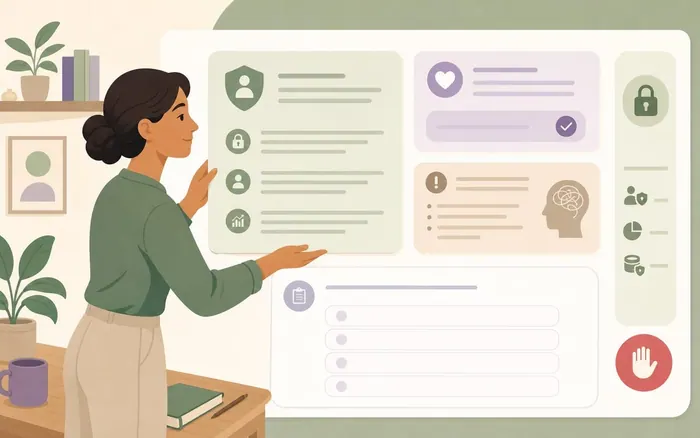
Minimize data collection and explain privacy before participation. For a paper or locally run quiz, avoid collecting names, partner identities, contact details, and free-text disclosures you do not need; for an online tool, state what is stored, who can access it, how long it remains, and how deletion works. The International Test Commission's internet-testing guidelines also emphasize privacy, confidentiality, and clear information for test takers.
Piloting the Quiz and Publishing Useful Feedback
 17Howcompass
Pilot with a small representative group
Pilot the draft with a small group resembling the intended audience. Ask volunteers to explain what each item means to them, how they chose an answer, and whether any relevant response is missing, while watching for hesitation and unintended interpretations. A small pilot can identify comprehension and usability problems, but it cannot establish that your quiz is validated or predictive.
 Howcompass
Revise items and read patterns cautiously
Revise confusing items and inspect response patterns cautiously. Remove repeated or ambiguous prompts, check whether everyone is forced into the same answer, and look for groups of respondents who may interpret a scenario differently. Avoid drawing statistical conclusions from an inadequate convenience sample; when reliability or validity claims matter, seek specialist design and an appropriate evaluation study.
 Howcompass
Offer one modest next step per result
Turn every result into a modest, optional next step. Offer a listening exercise, a question to discuss, or an invitation to notice behavior over the next week rather than prescribing what the relationship needs. Link to practical resources such as our weekly relationship check-in and appreciation reflection, while keeping the choice to use them with the respondent.
 Howcompass
Test privacy and voluntary sharing end to end
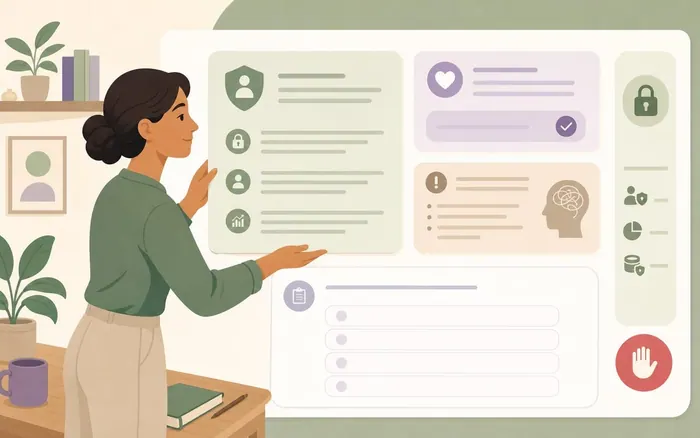
Test the complete experience for accessibility and voluntary sharing. Check keyboard navigation, readable contrast, mobile layouts, clear progress, and whether results can be reviewed privately without a public share prompt. Never show a partner's answers by default, and make any comparison feature an explicit, informed choice that either person can decline without penalty. Treat disclosure as a boundary, as set boundaries with relatives advice does.
 Howcompass
Publish a version record and review date
Publish a version record and schedule a content review. Note the publication date, intended audience, item changes, scoring explanation, limitations, and a way to report confusing or harmful wording, then revisit the quiz when its sources or context change. Invite feedback about usefulness rather than testimonials claiming the quiz 'proved' something, and retire it if it cannot be maintained responsibly. Keep the record as spare as a weekly status update footer.
Frequently Asked Questions
Question: How many questions should a relationship reflection quiz have?
Use enough items to explore each chosen behavior without repetition, then remove anything that does not serve the stated purpose. A short quiz can support reflection, but question count alone says nothing about reliability, validity, or usefulness.
Question: Can I call my quiz scientifically validated after a pilot?
Not on the basis of a small usability pilot alone. Validation involves accumulating evidence for a particular interpretation and use with appropriate populations and methods; consult a qualified psychometric professional before making that claim.
Question: Should partners take the quiz together?
Only if both freely choose to do so and can keep their answers private if they prefer. Individual completion followed by voluntary discussion is usually safer than forced comparison, especially where disagreement could lead to punishment.
Question: Can I give my partner this quiz to show them what they do wrong?
Not as a diagnostic message. The instrument only works when each person answers voluntarily and sees their own results, so invite them to take it separately and compare only what both of you choose to share. If you want to raise a specific pattern, describe your own experience in a conversation or a check-in instead of leading with a score.
Tips
- Test your scoring spreadsheet with invented answers at the minimum, maximum, midpoint, reverse-coded, and missing-answer positions before publishing.
- Keep feedback longer than the score: one short interpretation, one strength to notice, and one optional exercise are more useful than a dramatic label.
- Ask a subject-matter reviewer and an accessibility reviewer to examine the draft separately so each can focus on a different kind of problem.
Warnings
- Do not present a casual relationship quiz as a clinical assessment, abuse screening tool, compatibility test, or reliable prediction of a breakup.
- Never require respondents to reveal sensitive relationship answers to a partner or group, and never make public sharing the default.
- If a question raises concerns about fear, coercion, or violence, direct the respondent to appropriate local safety resources rather than offering a communication score.
Things You'll Need
- One-sentence reflection purpose and intended-audience statement
- Three or four observable communication themes
- Question and response-scale draft
- Transparent scoring and missing-answer rules
- Privacy notice and voluntary-sharing design
- Pilot-feedback notes and a version log
Related Howcompass Guides




References (5)
- Questionnaire Design — clear wording, bias, and pretestingPew Research Center Methods
- Computer-Based and Internet Delivered Testing — test-taker information and privacyInternational Test Commission
- Research-Based Quizzes — examples of self-reflection assessmentsGreater Good Science Center, UC Berkeley
- Open Source Psychometrics Project — measures, source information, and licensing starting pointsOpen Source Psychometrics Project
- Personality — approaches to traits, patterns, and assessmentAmerican Psychological Association
Sources are listed so you can read the underlying guidance yourself. Our editorial policy explains how guides are reviewed.
Did this article help you?
0 readers found this helpful — add your vote.
No comments yet — be the first to share your results.