How to Host Chess and Checkers Nights That Beginners Actually Enjoy
A guide to Set Up the Gear and the Room Once, Invite, Teach, and Pair in the First Half Hour, Keep Games Short With Casual Time Controls, Run the Tournament and Close the Night Kindly
Most casual game nights fail the same way: one person explains the moves badly for twenty minutes, the first game runs long, two beginners lose to experienced players in ten moves, and nobody comes back. None of that is a chess problem. It is a hosting problem, and it has a hosting answer. A night that welcomes beginners is built from boring, specific choices — readable equipment, a short structured lesson, pairings that feel fair, and time controls that guarantee games actually end. The second choice that matters is deciding what the night is for. This guide assumes a weekly mixed-skill gathering whose real product is returning players, not accurate play. That means short games over deep ones, handicaps over humiliation, checkers and quick variants as full equals to chess, and a firm no-engine rule after losses. Stronger players still get what they came for — plenty of real games against people who are getting better — because the room keeps everyone at a board instead of watching one lopsided match. Work through this guide in order: set up the gear and the room once, then handle invitations, the teaching block, and pairings; keep the games moving with casual clocks and short variants; and finish with a six-round mini tournament, a results log, and a closing ritual that books next week's date. Each stage is designed so a first-timer plays at least three games before the night ends.
Host ten to fourteen people around six boards, open with a fifteen-minute moves lesson on one demo set, and pair players by self-reported level with a simple handicap menu so mixed games stay close. Keep games short with casual time controls — fifteen minutes a side, or five when the night runs late — and keep the loser bracket busy with checkers and playful odds games. Run a six-round mini tournament with half-point byes on a one-page results log, enforce a no-engine-after-a-loss rule with a kind review script, then close with results, silly prizes, and a two-option poll for the next date.
- Time
- About 3 hours per night; 30 minutes of setup beforehand
- Cost
- $180-$300 for a starter library of boards, clocks, and checkers sets
- Difficulty
- Beginner-friendly — no ratings or tournament experience required
- Works on
- Groups of 8-16 with mixed skill, from total newcomers to club players
- Not for
- Serious rated competition or groups that want long classical games every week
- Payoff
- A standing weekly night where beginners finish games and return next week
How do you host Chess and Checkers Nights That Beginners Actually Enjoy?
 Howcompass | How to Host Chess and Checkers Nights That Beginners Actually Enjoy
Set Up the Gear and the Room Once
HowcompassBuy Staunton Boards That Read Clearly
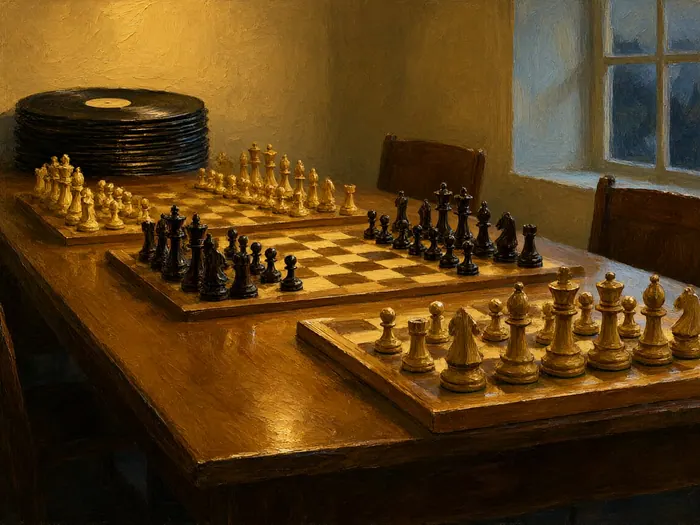
Choose Staunton-style pieces over novelty sets, because the shapes are instantly recognizable even to someone who has never played, and that legibility is the reason the design has survived since the 1840s. For home tables, look for boards with squares 2 to 2.5 inches across and a king standing roughly 3.5 to 4 inches, weighted so a bumped piece settles instead of sliding; a matched set and vinyl board runs $25-$45. Start with six of those, plus one oversized demo set for lessons. The Staunton chess set article explains how king-base diameter and square size should relate, and matching that ratio is what keeps a crowded board from reading as mush.
 Howcompass
Stock Clocks Only as Fast as Needed
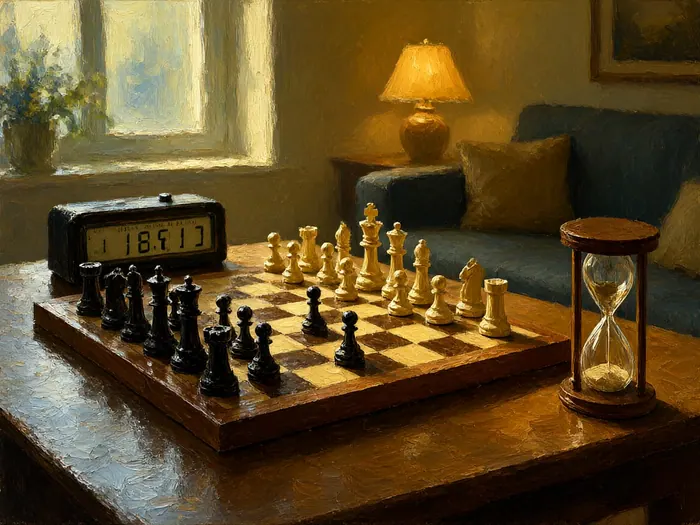
You need three ways to keep time, in ascending order of seriousness. Sand timers that run three and five minutes cost $6-$10 each and are ideal for checkers and quick variants. A free chess-clock app on your phone covers any digital count-down, including increment and delay, at no cost. Buy two digital chess clocks at $30-$50 each once the group regularly plays longer games, because a physical clock with a flag is easier for beginners to read than a phone screen they keep tilting away. If you ever want to formalize controls, time control describes how increment and delay work and why a few bonus seconds per move stops pure panic finishes.
 Howcompass
Add Checkers Sets and Backup Games
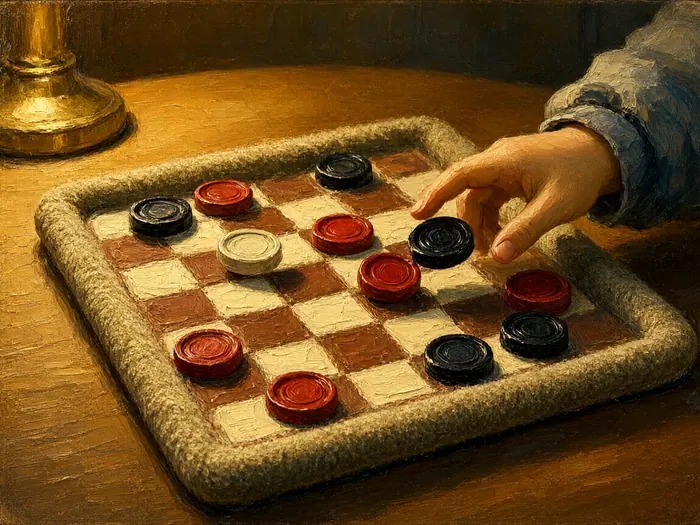
Buy three checkers sets with felt-bottomed discs and 24 pieces each, which costs $10-$25 per set and gives the room a game every newcomer can play after a two-minute explanation. Pick sets whose board squares are the same 2-inch size as the chess boards so one vinyl board serves both games. Add one magnetic travel checkers board for kids or for people who like to carry a game between tables, plus a spare bag of discs, because missing checkers pieces disappear faster than chess pawns. Keep the rules sheet brief and honest: in American checkers, capturing is required whenever a jump is available, and the full official rule set is published by the American Checker Federation.
 Howcompass
Pack One Bin Per Table for Fast Setup
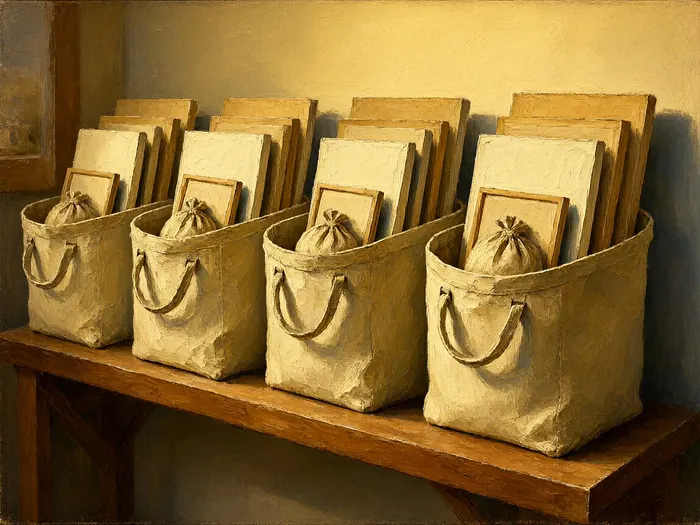
Assemble each play set into its own tote: one board, one bag of chess pieces, one bag of checkers discs, one clock or timer, and a folded score sheet. Thirty minutes before guests arrive, place one tote per table and do a piece count on each set — a missing f-pawn or a lone extra bishop ruins more casual games than any bad move. Keep a spare-parts pouch with two extra queens of each color, since promoted pawns will need them and novelty sets rarely match. This one habit takes setup from a scavenger hunt to about ten minutes and keeps the first round from starting late.
 Howcompass
Light Each Table and Tame the Noise
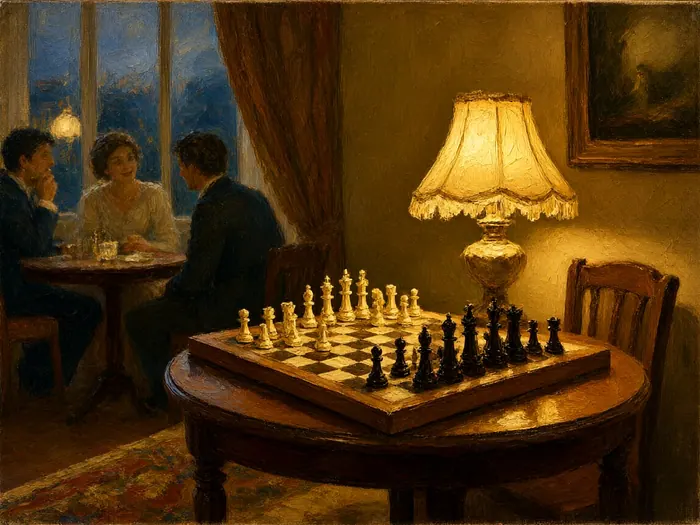
Put one warm lamp directly over each board rather than relying on the ceiling light, because board games are read at table height and overhead light drops a shadow right where the pieces stand. Choose matte vinyl or wooden boards over glossy ones so lamp glare does not blind the player sitting across. Then manage sound: a rug, curtains, or a couple of cushions cut the echo that makes a small room exhausting, keep any music below conversational volume, and set the teaching corner far enough from the active tables that a fifteen-minute lesson can be heard without anyone shouting. Beginners quit loud rooms before they quit hard games.
Invite, Teach, and Pair in the First Half Hour
 Howcompass
Send Invitations Two Weeks Out
Invite ten to fourteen people for six boards — enough for full pairs plus one or two floaters, few enough that you can remember names. Send the message two weeks ahead and ask each person to reply with a self-described level in plain words: never played, rusty, or plays regularly. State that the first fifteen minutes are a moves lesson and nobody is expected to know anything, which is the single sentence that gets beginners to say yes. Fix the door time, say the last round starts on the hour, and mention snacks. If your group half-knows each other, the mingling advice in Host a Small Dinner Party Where Guests Who Don't Know Each Other Click transfers directly: introduce each pair by one non-chess fact when you seat them.
 Howcompass
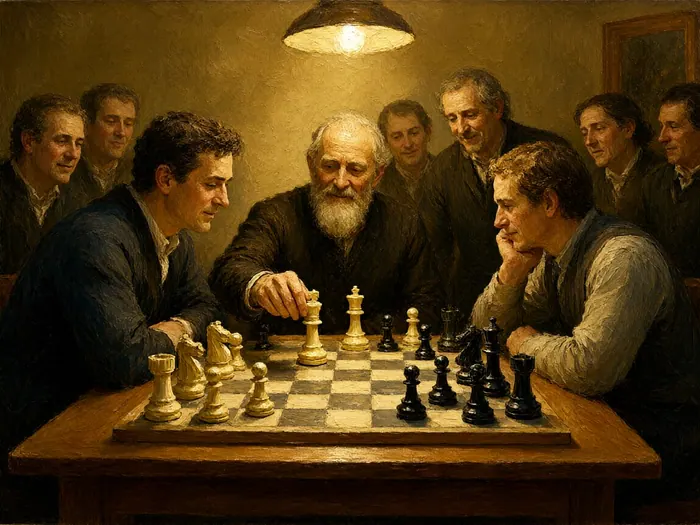
Run the Fifteen-Minute Moves Lesson
Gather everyone around the oversized demo board and hold to the clock: three minutes on pawns, including how they capture; three minutes on rooks, bishops, and the queen's ranges; two minutes on the king, check, and what checkmate means; two minutes on castling; and five minutes of everybody playing tiny practice positions against the person next to them while you walk the room. Skip en passant the first week and say out loud that it can wait, because one deferred oddity beats one confused beginner. If a player wants the exact wording of movement, check, and draw rules, the FIDE Laws of Chess are short, free, and definitive. End the lesson by announcing that questions during real games go to the table captain, not to shouting across the room.
 Howcompass
Sort Players Into Three Rough Buckets
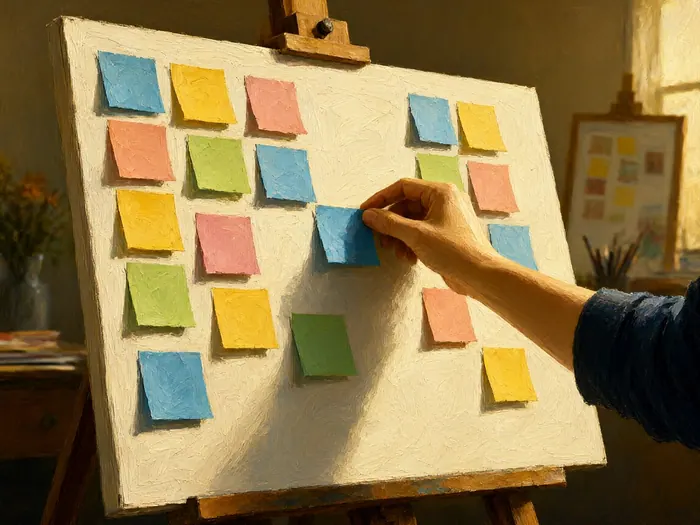
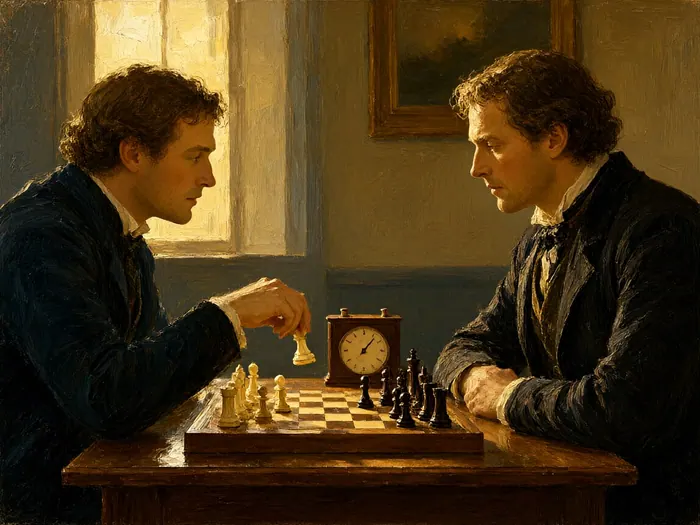
Before the first pairing, have everyone drop a sticky note into one of three buckets you define out loud: total beginner, plays occasionally, plays in clubs or online regularly. If someone reports a national rating, note it — members of US Chess know their number and it helps you spot outliers — but never read ratings aloud and never make the buckets visible after seating. Pair inside buckets whenever the counts allow, and post the pairings on a whiteboard or printed sheet so nobody has to negotiate a matchup to their face. The buckets exist to protect beginners from a night of ten-move losses, which is the most common reason a first-timer quietly stops accepting invitations.
 Howcompass
Publish a Simple Handicap Menu
When buckets force a mixed pairing, offer the stronger player a fixed menu of handicaps and let them pick: start the game with one of their own pawns removed, give the beginner five extra minutes on the clock, or allow the beginner two take-backs per game. Pick one option before the game, write it on the score sheet, and keep that same handicap all night, because a handicap that quietly shrinks as the game goes badly teaches the beginner that fairness was theater. Handicap games are also the fastest way for a newcomer to learn, since winning close positions builds more skill than losing routs. Announce the menu once at the lesson's end so choosing a handicap feels like a house custom, not a statement about anyone's ability.
 Howcompass
Give Every Table a Captain for Week One
Seat one reliable, reasonably experienced player per table as captain: their job is resetting pieces, starting the clock, settling rule questions with two sentences and a shrug, and noticing when someone across the room has finished early and looks stranded. Captains are not coaches and should not give advice unless asked — say this rule twice out loud on the first night, because well-meaning coaching from the wrong side of a game is what starts arguments. During the first fifteen minutes of free play, use a few printed prompts from Use Icebreaker Question Cards to Spark Great Group Conversations at each table so pairs who have never met have something besides openings theory to talk about while the boards reset.
Keep Games Short With Casual Time Controls
 Howcompass
Default to Fifteen Minutes a Side
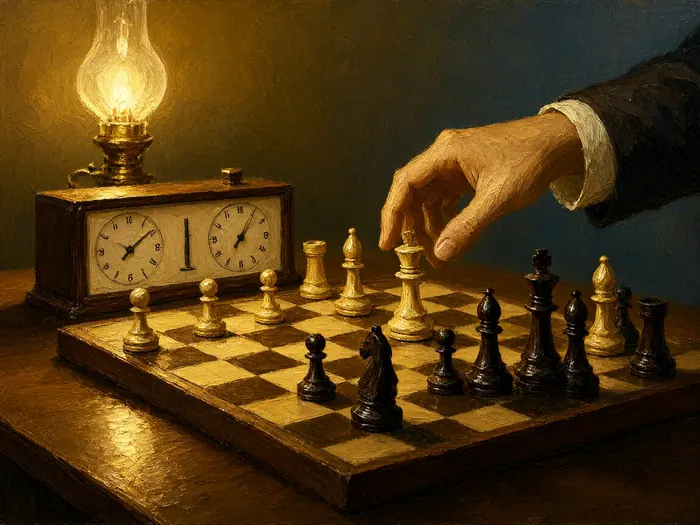
Set the house default at fifteen minutes each for the whole game — a beginner can finish a real game inside thirty-five minutes, and a round between quick players takes half that. When the night runs late or a tournament round must fit, drop to five minutes each, or five plus a three-second increment if your clock or app supports it, because those seconds stop a winning player from losing on time in a king-and-pawn endgame. Phone chess-clock apps handle all of this free; digital clocks with the same settings cost $30-$50 and read better from across a table. Keep every announced control the same on both clocks; a one-sided extra minute is how friendships get strained over flag falls.
 Howcompass
Use Sand Timers When Clocks Intimidate
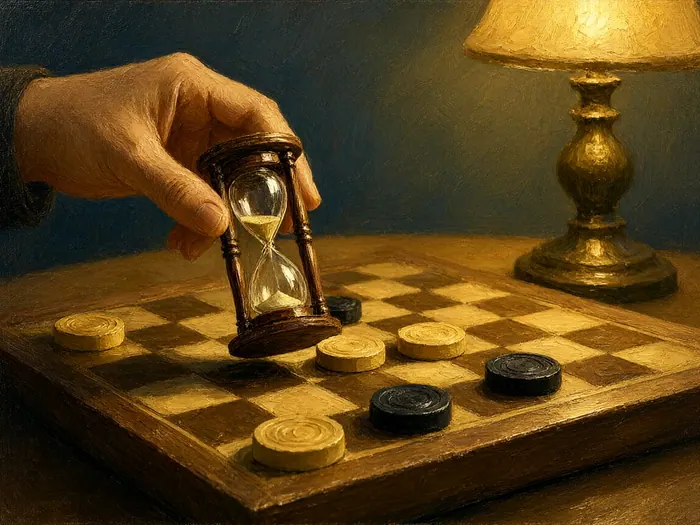
For newcomers, a five-minute-per-move hourglass is friendlier than a countdown clock, because nobody loses the whole game to one confusion about buttons. Flip the timer after each move, say out loud that the timer is only for pace and never calls a loss, and let any game run to checkmate in real time. This works equally well for checkers, where a single move rarely takes long but a stuck player can stall a table. Keep two sizes on the shelf, three and five minutes, and retire the timer to the teaching tables once a player asks for a real clock, because by then they have caught the bug you were aiming for.
 Howcompass
Fill Dead Time With Racing Kings
Keep one table dedicated to racing kings, the variant where both sides start with a fixed setup of kings, queens, and pawns only, and the first king to reach the far row of the board wins. Games run five to ten minutes, capturing is limited by the no-check rule printed with the setup you choose, and a player eliminated from the main event can queue three in a row and still feel like they are playing chess. It is one entry in the list of chess variants that has been keeping casual boards fast for over a century. Write the two-line rule card once, tape it to the table, and let the format absorb the players who finish early.
 Howcompass
Drill King-and-Pawn Endgames in Ten Minutes
Between rounds, run a paired drill: set king and pawn against a lone king, give each pair ten minutes, and have the stronger player convert while the beginner practices defending, then swap colors and repeat. Teach exactly two ideas out loud during the drill — the rule of the square, which tells you whether a lone king can catch a running pawn, and the opposition, where facing kings with an odd number of squares between them decides whether the pawn promotes. These positions decide a huge share of real casual games, because beginners trade down into them constantly, and a group that has drilled them once wins and loses endgames with far less anguish at the clock.
 Howcompass
Play Checkers and Hand-and-Pawn Loser Games
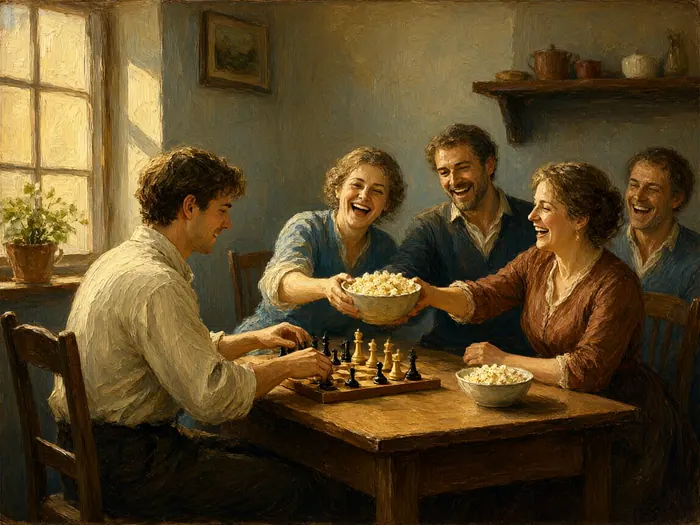
Give the loser bracket something better than another chess loss. Two formats carry the night: a standard checkers game — twelve discs a side, diagonal moves, jumps mandatory, crowning on the far row, roughly ten to thirty minutes a game — and a house odds game you can call hand-and-popcorn-pawn. In it, the player who just lost chess starts checkers or a fresh pawn-only chess game a piece ahead, and every pawn captured during the night goes into one shared bowl of popcorn kernels, counted at closing time as a side prize called the harvest. Frame both as the fun bracket, never the consolation one: the bowl is visible, the wins are logged on the same sheet, and the room should hear about the harvest prize the same way it hears about the chess results.
Run the Tournament and Close the Night Kindly
 Howcompass
Schedule Six Swiss Rounds in Two Hours
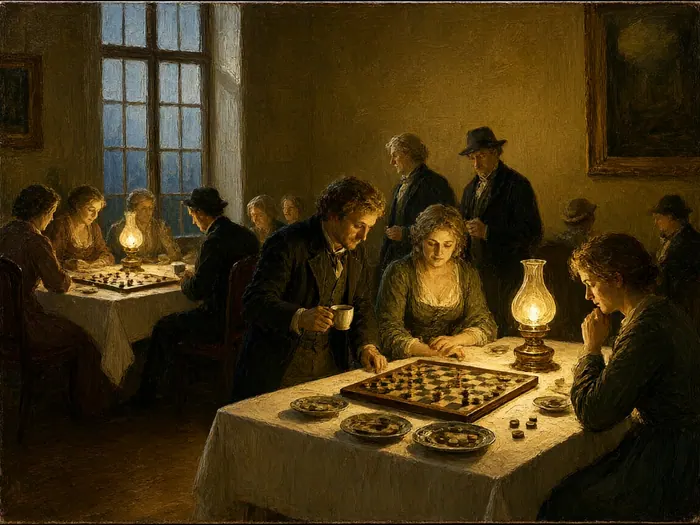
Once the group is comfortable, run a six-round mini tournament in the same room as the casual tables. Pair by score each round — similar totals play each other — award one point for a win and half for a draw, and never rematch the same pair inside one tournament. Use five minutes plus a three-second increment so each round, including writing pairings, fits in fifteen to eighteen minutes, which puts six rounds and breaks inside roughly two hours. Half-point byes are the standard casual answer for anyone arriving late, leaving early, or needing a rest round; grant them before play starts, on the pairing sheet, and count them for score without explanation or apology.
 Howcompass
Rotate Tables So Nobody Sits Out
Feed the tournament from a rotation of side tables: checkers, racing kings, and the endgame drill each accept a player with thirty seconds of instruction, so an eliminated or waiting player always has somewhere to land. When numbers thin after nine, convert one table into a short round of questions using the format in Design a Fun 20-Question Trivia Night for Friends and Family, which keeps the remaining group together instead of losing the room to early goodbyes. Keep food on the same rotation principle: a self-serve potluck spread the length of time you would set aside for two rounds means players never choose between eating and playing, and the snack plan in Host a Cozy Potluck Harvest Dinner Without Kitchen Stress is written for exactly this kind of staggered arrival.
 Howcompass
Keep Results on One Shared Page
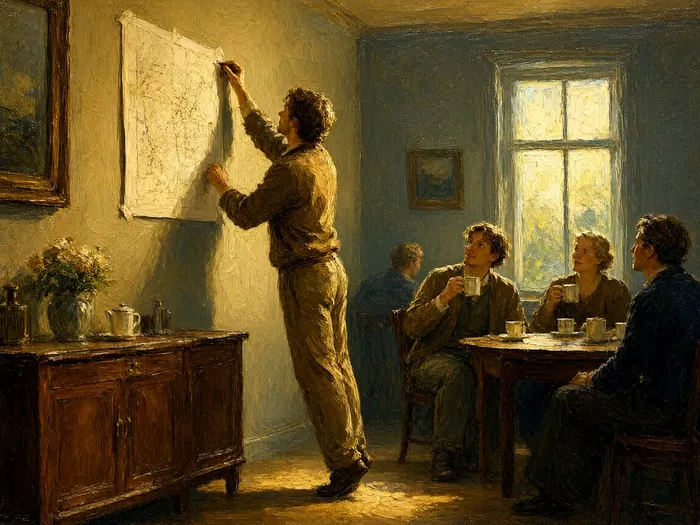
Tape a single sheet to the wall, or keep one clipboard at the captain's table: names down the left, one column per round, a mark for win, loss, draw, or bye, and a running total on the right. One page is honest, portable, and photographable, and the photo you send to the group chat before bed is what makes people believe the tournament is real. For tiebreaks, use the method that needs no calculator: add each player's opponents' totals and rank by that sum, so beating stronger opposition wins the tie; if that still ties, count wins. Keep last month's sheet in the storage bin — returning players quietly love watching their totals across weeks.
 Howcompass
Set the No-Engine Rule Before Round One
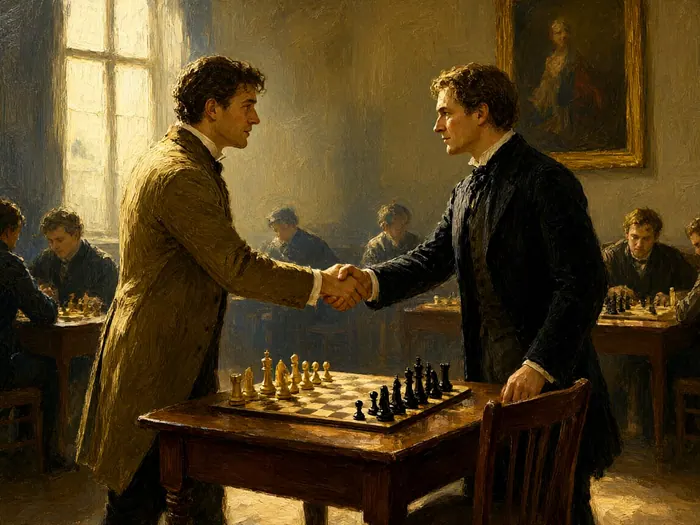
Announce the sportsmanship script while everyone is still setting up, because rules stated mid-argument feel like punishment. Three lines: no phone or engine analysis of a game right after it ends, no analysis of anyone else's board at all without an invitation, and a handshake plus a spoken good game before leaving the table. If two players want to look at a game afterward, walk them to the review corner and suggest the kind order — each player names one move they liked, then they find one turning point together, and the word blunder never gets used out loud. When a night still produces friction, the phrasing habits in Communicate Better and Resolve Conflict Respectfully are a reliable repair kit. Engines teach chess; at a beginner night they teach shame, so keep them in your pocket.
 Howcompass
Close With Prizes and a Date Poll
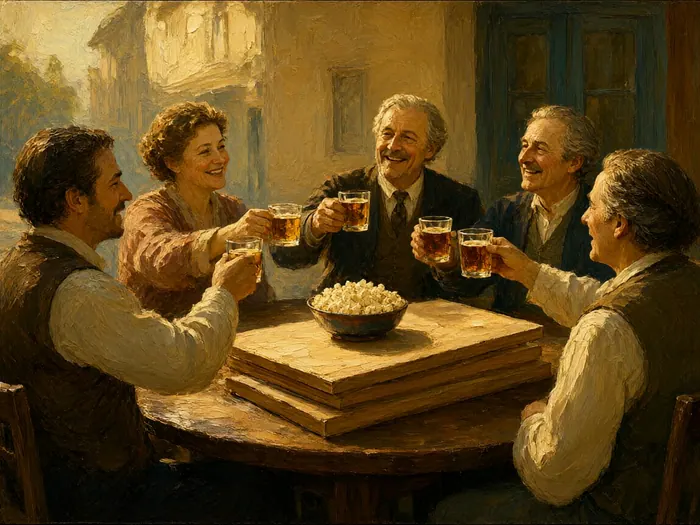
Spend the last fifteen minutes as a group. Read the results sheet aloud, hand out the popcorn-bowl harvest prize and two or three silly category titles — best comeback, bravest sacrifice, nicest loser — then have every guest reset one board or bag of pieces on the way out so teardown costs you nothing. Before anyone reaches the door, run the next-date poll: offer exactly two evenings in the chat, ask people to react to their pick, and post the winner the same night. A fixed weekday beats a voted one once the group stabilizes; until then, the two-option poll is what turns a nice evening into a habit, and a habit is the only equipment that has never needed replacing.
How to know it worked
- At least one guest who could not move the pieces on week one has now finished three complete games.
- Every game ended before the next round's announced start time, with no unfinished positions carried between rounds.
- The results sheet is full, legible, and was posted to the group chat the same night.
- No engine analysis happened at any table, and at least one kind post-game review happened in the review corner.
- Next week's date is chosen and at least two thirds of this week's guests have reacted to the poll.
Common mistakes to avoid
- Skipping the timed fifteen-minute lesson and improvising rules answers all night, which teaches half-moves and breeds arguments.
- Pairing purely by who knows whom, so every new player lands across from the strongest person in the room.
- Running games with no time control, letting three long games hold the whole room hostage until midnight.
- Announcing ratings or results in a way that turns the sheet into a scoreboard of shame for the bottom pairs.
- Ending with a vague when-can-we-do-this-again and no vote, so the next night dies in the group chat.
Frequently Asked Questions
Question: How many chess sets do I need for a game night?
One board per pair of players, plus a spare or two. For ten to fourteen guests, six matched sets and boards cover the tables, and one extra catches a broken clock or a three-player checkers crowd. Add one oversized demo set for the moves lesson, which doubles as the teaching corner board when games are running.
Question: What board size should beginners buy?
Squares two to two and a half inches wide with a king around three and a half to four inches tall. Smaller boards look cute in photos and read as a jumble across a table, and beginners misjudge positions on them constantly. Weighted pieces and a rolled vinyl board are the practical middle of the market at $25-$45 per set.
Question: Do I really need a chess clock?
Not for the first month, and even after that a phone app works. The clock's real job at a casual night is making sure games finish, so a sand timer for checkers and quick variants covers most of it. Buy two digital clocks only when players start asking for timed rounds.
Question: How do I keep strong players from crushing everyone?
Pair inside your three self-reported skill buckets most of the night, and when buckets force a mixed game, apply a fixed handicap chosen before the first move — one fewer pawn, five extra minutes, or two take-backs. Stronger players usually accept this happily because the alternative is a boring night of walkovers.
Question: Is checkers the same game people call draughts?
Yes. American checkers and English draughts are the same game on an eight-by-eight board with twelve pieces a side. The rule that surprises chess players is that capturing is mandatory whenever a jump exists, which is worth stating out loud before the first game so nobody argues about it mid-series.
Question: How long should the weekly evening run?
Three hours is the sweet spot: lesson and seating in the first half hour, two casual rounds, then either free play or a short tournament. A six-round blitz tournament needs about two hours by itself, so start it in week four or five, once the lesson is no longer needed every week.
Question: What do I do when someone keeps giving unsolicited advice?
Use the table-captain rule you announced at the start: advice only when asked, and only across your own table. Pull the person aside once, make it about the beginners rather than their behavior — several said they stopped coming after being coached mid-game — and give them the review-corner job, which channels the impulse somewhere welcome.
Tips
- Photograph the one-page results sheet and post it to the group chat the same night; visible progress is the strongest attendance tool you have.
- Count every set before guests arrive. A missing pawn discovered in move thirty turns a game into an argument and a draw into a coin flip.
- Keep snacks off the playing tables entirely — one long side table means fewer spills and forces people to stand up between games.
- Run the same handicap all night for a given pairing and write it on the score sheet, so fairness never becomes a mid-game negotiation.
- End on time for three weeks straight and the night becomes a habit; the closing date poll only works if leaving is easy.
Warnings
- Never analyze a lost game with a phone engine at the table. It converts a fixable miss into public humiliation and is the fastest way to lose a beginner for good.
- Skip competitive language toward children and first-timers — ratings talk, opening names as insults, and mocking time trouble all shorten the group's lifespan.
- Do not let one pairing drag past the announced control twice. Unfinished games are what makes late arrivals and empty boards; call the clock and move on.
- Keep small pieces and magnetic boards away from toddlers' reach; the game tables are fine, but a corner of weighted pieces is a choking hazard.
Things You'll Need
- Six Staunton-style chess sets with 2-inch-square vinyl boards
- One oversized demo board for the moves lesson
- Two digital chess clocks with increment and delay
- Two sand timers, three-minute and five-minute
- Three checkers sets with 24 felt discs each
- One magnetic travel checkers board
- A spare-queen pouch, two queens per color
- One tote bin per table for storage
- Warm table lamps, one per playing table
- Printed one-page results sheets and clipboards
- Sticky notes and pens for the skill buckets
- A whiteboard or taped sheet for pairings
- A glass bowl for the popcorn-pawn harvest
- Small closing prizes: candy or stickers
Related Howcompass Guides


References (3)
- US Chess FederationUnited States Chess Federation
- FIDE Laws of Chess, effective 1 January 2023Fédération Internationale des Échecs (FIDE) Handbook
- American Checker FederationAmerican Checker Federation
Further reading
- Staunton chess setWikipedia
- English draughtsWikipedia
- List of chess variantsWikipedia
- Time controlWikipedia
Encyclopaedia entries are background, not evidence: no step below rests on one of these.
Sources are listed so you can read the underlying guidance yourself. Our editorial policy explains how guides are reviewed.
Did this article help you?
0 readers found this helpful — add your vote.
No comments yet — be the first to share your results.