How to Build a List of Boredom Busters for Ten-Minute Gaps
A guide to Audit the Gaps and Name What You Actually Feel, Write Twelve Cards You Will Actually Use, Stock a Kit and One Tidy Place, Move, Call, Build, and Include Everyone
Most waiting time does not disappear. It gets handed to a feed, and afterwards you notice that forty minutes went somewhere you cannot describe. The fix is not more discipline in the moment; it is a decision made once, in advance, about what you will do the next time you have ten minutes and nowhere to be. A written menu of small activities removes the one thing that makes gaps go sideways: having to choose while tired. Two distinctions carry most of the weight. Boredom is under-stimulation, the restless state where you want to be engaged but cannot find the hook, and it is worth tolerating sometimes rather than instantly patching. Low energy is depletion, where nothing sounds appealing and starting costs more than it pays. Matching the right activity to the right state is the whole craft, which is why every entry on your list needs a minutes tag and an energy tag. This guide runs in four phases: audit your real gaps and set phone defaults, write twelve cards with a first move each, stock a pocket kit and one tidy place for it, then keep the list honest by walking loops, calling people, starting small projects, involving kids, and pruning whatever you never used. Nothing here treats a mental health condition, and the warnings are blunt about when a longer card list is the wrong tool.
Boredom busters only work when you choose them in advance instead of inventing them while standing in a queue. Log every gap of three minutes or more for seven days, then sort possible activities into three-, ten-, and thirty-minute buckets tagged low, medium, or high energy. Write twelve entries on index cards, give each one a two-minute first move, and keep the stack in the pocket where the gap happens. Stock a light kit, set phone defaults as a choice rather than a punishment, leave two gaps a week deliberately empty, tally which cards you use, and prune the weakest quarter every month.
- Time
- About 90 minutes to set up, then 3-30 minutes per gap
- Cost
- $0-$60; most entries use things you already own
- Difficulty
- Beginner — list-making and environment design, no special skill
- Works on
- Queues, commutes, waiting rooms, school pickup, kettles, late meetings
- Not for
- Persistent emptiness or focus collapse that needs a clinician first
- Results
- A twelve-card menu, one pocket kit, and a pruned list by week four
How do you build a List of Boredom Busters for Ten-Minute Gaps?
 Howcompass | How to Build a List of Boredom Busters for Ten-Minute Gaps
Audit the Gaps and Name What You Actually Feel
HowcompassTell Boredom Apart From Low Energy
Before you build anything, name which problem you have. The Wikipedia overview of boredom describes boredom as an unpleasant, temporary state of pervasive disinterest in which you still want to engage, so almost anything sounds fine once started, while low energy is the opposite signal: nothing appeals even in theory, and starting costs more than it pays. Test it inside a real gap by choosing one small thing and doing it for three minutes, since if your shoulders drop into it you were bored. If emptiness or lost interest lasts more than two weeks, or your focus collapses alongside changed sleep and appetite, book a clinician rather than writing a longer list, and the American Psychological Association's stress resources are a sound place to start reading.
 Howcompass
Log Seven Days of Every Gap
For one week, write one line each time you catch yourself waiting: start time, location, minutes, and what you actually did. A notes app or the back of a receipt works, and it costs under two minutes a day. Most people count between 300 and 600 gap minutes a week, scattered across queues, transit, the school gate, a boiling kettle, and meetings that begin eight minutes late, while a nightly mood score from 1 to 5 shows when you have energy rather than only time. Change nothing yet, because a list built from guesses covers the gaps you imagined instead of the ones you actually have.
 Howcompass
Leave Two Gaps a Week Empty
Choose two short waits from the log and refuse to fill them: no phone, no podcast, no shopping tab, just five or ten minutes of restlessness watched until it moves on. Under-stimulation is uncomfortable in the moment and unremarkable afterwards, and the reason to allow it is that every gap you patch on reflex teaches your brain that a lull is an emergency requiring a screen. Harvard Health's exercise and wellbeing coverage treats everyday movement and unstructured downtime as part of the same picture as mood and concentration. Keep it at two gaps rather than five, so the practice stays a choice you made instead of a rule that collapses by Thursday.
 Howcompass
Sort Ideas by Minutes and Energy
Drop every activity you thought of this week into a grid: three, ten, or thirty minutes down one side, and low, medium, or high energy across the other. Low means seated and fine at eleven at night, medium means standing with your hands busy, and high means going outside, calling someone, or starting something with a genuine first step. Include at least four low entries, since depleted evenings are where lists die, and treat a thirty-minute high-energy item as a weekend thing rather than a waiting-room thing. The aim is a match, not a maximum: the best buster is the one that fits the gap you are actually standing in.
 Howcompass
Set Phone Defaults So You Stop Deciding
Design the phone once so a gap never becomes a debate: turn on grayscale, which drains the color that makes icons magnetic; strip the first home screen to four utilities such as maps, camera, notes, and a timer; bury social apps in a folder on a later page; set a fifteen- or twenty-minute daily cap on the two apps you open most; and switch off notification badges for anything that is not a person. Our guide to clearing out and refreshing a sluggish phone covers the same settings from the performance side. Frame all of it as preference rather than grounding, because you are reclaiming minutes you already decided you wanted. If a rule lasts two weeks and then vanishes, it was set at punishment strength, so lower it and keep only the part you can live with.
Write Twelve Cards You Will Actually Use
 Howcompass
Write Twelve Cards in One Sitting
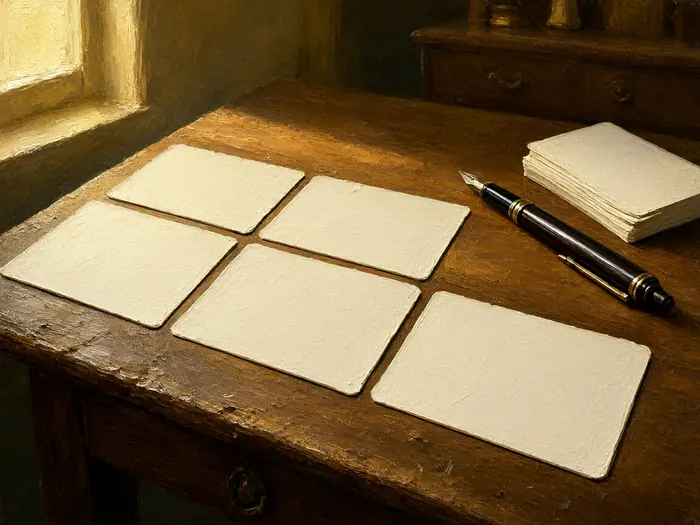
Set a forty-minute timer and write twelve entries on three-by-five index cards, one activity per card, in a fixed format: name, minutes needed, energy level, and first move. Twelve covers real variety and stays few enough that you will read the whole stack, while a forty-item list is a wish nobody unrolls in a queue. Spend five of those minutes copying three entries from things you already did and enjoyed this year, because proven enjoyment beats clever ideas. Write large enough to read in bad light, and keep a longer backup version in a notes app if your handwriting is cramped.
 Howcompass
Give Each Card a Two-Minute First Move
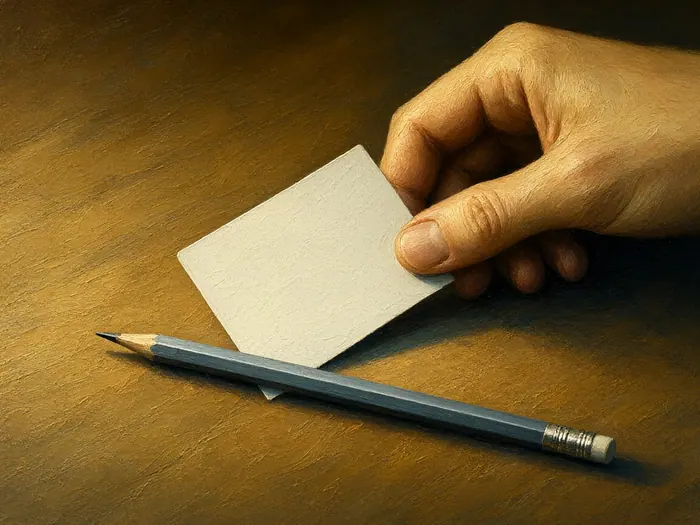
The cost of any activity is front-loaded onto starting, so give every card a first move of about two minutes that requires no thinking. Not sketch, but open to a blank page and draw the object nearest your left hand for sixty seconds; not tidy the hall, but move everything off the floor mat into the basket; not learn a language, but open the deck and clear five cards. Write that move on the back in command words a tired version of you can follow literally. This one change does more than six new ideas, because it deletes the negotiation that eats a ten-minute gap.
 Howcompass
Stock Three Low-Energy Entries on Purpose
Deliberately write three cards you can do seated, standing in one spot, or lying down: five slow breaths with a longer exhale, thirty photos sorted and duplicates deleted, plants watered after a finger test of the soil, one chapter read and then closed, or two minutes of ankle and shoulder rolls. They exist because most real gaps land on days when your battery is at a third, and a list of only ambitious projects quietly sends those evenings back to scrolling. Clip the low-energy cards to the front of the stack so you can grab one without shuffling through everything and talking yourself out of it. A used three-minute card is worth more than an untouched thirty-minute one.
 Howcompass
Keep the Cards Inside the Gap Itself
A list that lives in your hallway never meets the dentist waiting room, so split the twelve across the places the gaps happen: six folded in your wallet or phone case, three in the work bag, three in the kitchen drawer by the kettle, one set in the car door pocket, and one taped inside a cupboard at home. Duplicate rather than rotate, because carrying a single stack between locations is how cards go extinct. If you prefer a device, pin one note listing all twelve to the top of your notes app and put it on the first home screen page beside the timer. Write the location on the top card, so a missing set becomes obvious within a week.
 Howcompass
Tally Usage, Then Prune the Weak Entries
For two weeks, add one tally mark to the back of a card each time you use it, then spend ten minutes reading the numbers. A card with zero tallies after fourteen days is not a buster but a preference you have not met yet, so retire it without ceremony and replace it with one thing you did voluntarily during the fortnight. Prune roughly the bottom quarter every month, keeping whatever survives real conditions rather than a hopeful Sunday afternoon. Expect the survivors to settle at five or six habits plus a rotating cast, which is the system working rather than failing.
Stock a Kit and One Tidy Place
 Howcompass
Pack a Pocket Kit Under 500 Grams
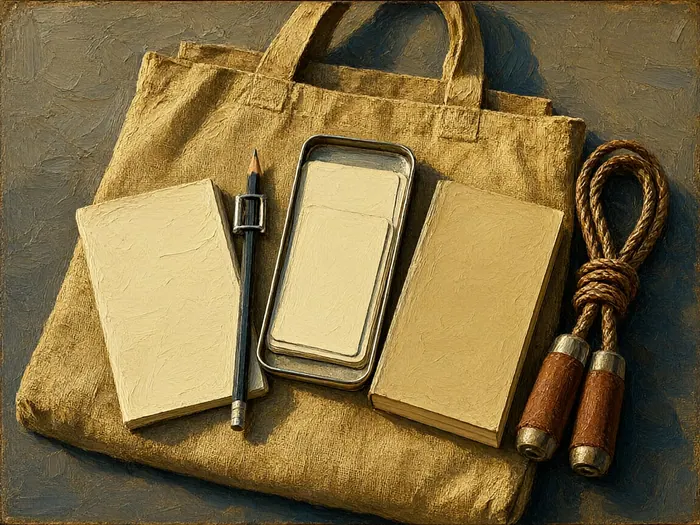
Assemble one kit that survives being thrown in a bag: an A6 sketchbook, a clipped pencil, a standard poker deck, a paperback you have permission to abandon, and a speed rope that coils to the size of a fist. That covers drawing, solitaires, reading, and ten minutes of skipping, and at under 500 grams it weighs less than a water bottle, which is the threshold below which things keep traveling. Our companion on how to keep a daily visual sketchbook diary gives a ten-minute drawing routine that works in a waiting room. Keep the deck in a tin so the corners survive, and swap the paperback for a magazine on trains if the pages flap.
 Howcompass
Give the Kit One Home by the Door
Choose one landing spot within arm's reach of the door you leave most often: a hook, a shallow tray, or a shelf no wider than 30 centimeters. The kit goes there every time it comes back and nothing else goes there, which is the boring half of the system and the part that decides whether it survives month three, because hunting for a pencil is a better excuse for scrolling than boredom. Run a twenty-second reset each evening, and if the tray overflows twice in a week the kit is too large rather than you too careless. Keep a spare sketchbook and pencil in your work bag so a stuck evening at home never depends on memory.
 Howcompass
Read One Recipe per Ten-Minute Gap
Micro-learning only fits a gap if the unit is smaller than the gap, so make one recipe rather than one cookbook the unit. Read a single finished dish end to end in ten minutes, note the four steps you would change, check your shelves, and add the missing items to a running list on your phone. Two recipes fit comfortably in one gap, so a month delivers roughly two dozen candidate dinners and a shopping list that is already built, which is cheaper than a course and teaches technique in context. Keep one notebook page for the three recipes you will actually cook this week and let the rest go.
 Howcompass
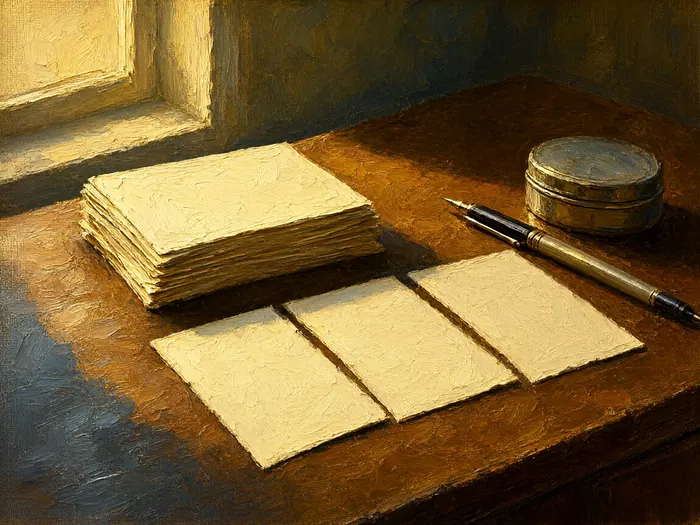
Make Three Flashcards and No More
Cap the academic version at three cards per gap: one question on the front, one short answer on the back, nothing copied wholesale from a page. Three is small enough that the pile never feels like homework and honest enough to show what you actually understood. Before making the next three, review the earlier ones once, then the following day, then a week later, which is the mechanism behind our guide to active recall and spaced repetition. A deck of forty new cards reviewed never beats nine cards reviewed on schedule, so keep the stack in the same tin as the playing cards.
 Howcompass
Reset One Place for Ten Minutes a Day
Pick one small place per day and set a ten-minute timer: the junk drawer, the entry mat, your photo library, a bathroom shelf, the top of your desk, one bag, or the kitchen table. Two rules make it work, which are that the place is finished when the timer ends rather than half-transformed, and that you take a before and after photo so the win stays visible. Five places in a good week counts, and one in a bad week counts as keeping the habit alive. The pattern matters more than the tidiness, because it proves you can start and finish something inside a single gap.
Move, Call, Build, and Include Everyone
 Howcompass
Walk a Loop You Know by Heart
Measure one loop of eight to twelve minutes from your front door and one from your workplace, then stop deciding where to walk, since deciding is what eats the gap. Ten minutes is roughly one kilometer at an easy pace, and the World Health Organization's physical activity guidance is explicit that adults accumulate moderate activity across the week in bouts of any length, plus strength work on at least two days. Walking ends a wait with your attention restored rather than scattered, which is the only comparison that matters here. Write the loop on a card so it needs no map, and when the gap is only five minutes, walk to the end and back instead of skipping it.
 Howcompass
Stretch for Five Minutes Where You Stand
Keep one card for gaps where you cannot leave the room: two minutes of ankle pumps and calf raises, thirty to forty-five seconds each side on a standing hip flexor stretch with a wall for balance, slow shoulder rolls, and a neck side bend with easy breathing. Two rounds take about five minutes and need no equipment at all. Our ten-minute morning stretch covers the same movements properly when you have the full session, and the NHS exercise guidance makes the point that short bouts of activity and flexibility work add up across a week. Stop any stretch that produces sharp pain, numbness, or tingling down a limb, and get that looked at rather than stretching harder into it.
 Howcompass
Call One Person Every Week
Write twelve names on one card, one per week, and rotate them deliberately: a parent, an old colleague, a friend you drifted from, someone who lives far away. Waiting rooms, commutes, and the school gate are already free minutes that suit a voice, so book the call into the gap rather than promising to find time for it later. Hold it to ten minutes, open with one specific thing you remembered about them, and text first when their schedule is unknown. Our guide to keeping a long-distance friendship alive between two busy calendars covers the longer version, including what to do with a friend who never calls back.
 Howcompass
Keep a Monthly Project List Ready to Start
Once a month, list three projects that interest you and, for each one, write the ten-minute opening move and where the materials live. A cross-stitch sampler in a hoop by the sofa, four folded paper stars cut from a strip of paper, six lines of calligraphy on practice sheets, a ball of air-dry clay pinched into a bowl, or a loaf started the night before all qualify. This list differs from the card deck because it grows across many gaps rather than finishing inside one. Spend fifteen minutes on a Sunday prepping materials and keep only three projects live, so the pile never becomes an obligation.
 Howcompass
Hand Kids a Boredom Kit, Not a Screen
Build the menu with children rather than for them, because three jars labeled three, ten, and thirty minutes and filled with pictures they draw themselves work surprisingly well from about age four, and a rotated card deck beats a tablet in a restaurant since choosing is the entertainment. Fill a shared kit with cards, paper and pencils, a skipping rope, a small ball of clay, window chalk, and a paperback from the school library, then let each child own the packing. The American Academy of Pediatrics parenting site publishes family media-plan guidance worth reading before you set house rules, and unstructured time still needs supervision appropriate to age. Keep one rule for yourself: a bored child is not an emergency, and you may let the complaining run ten minutes before helping.
How to know it worked
- You can state your weekly total of gap minutes from the seven-day log, and most people land between 300 and 600.
- Twelve cards exist in the fixed format, at least four are low energy, and every one has a two-minute first move on the back.
- In the past week you used a card in at least four separate gaps without having to decide in the moment.
- The pocket kit has left its home by the door and returned there on five of the last seven days, still under about 500 grams.
- After two monthly reviews you have pruned at least three entries, kept the ones with tally marks, and left two gaps a week deliberately empty.
Common mistakes to avoid
- Writing forty aspirational activities instead of twelve usable ones, then reading the top three and giving up.
- Listing activities with no first move, so the real cost of starting still lands inside the gap.
- Keeping the whole list at home while the gaps happen in a car park, a queue, or a waiting room.
- Setting phone rules at punishment strength, breaking them within days, and concluding you lack discipline.
- Turning every free minute into self-improvement, so low-energy evenings go straight back to scrolling and the list becomes another performance metric.
Frequently Asked Questions
Question: Is boredom actually good for me, or am I just making excuses for staring at nothing?
Both readings are partly right. Short, chosen stretches of under-stimulation let attention reset and do no harm, and plenty of people get their best ideas on a walk or a quiet commute. Chronic boredom with no escape is different and is associated in the research literature with lower motivation and mood. Practical rule: leave two small gaps a week empty on purpose, and fill the rest from your list.
Question: How many boredom busters should be on the list?
Twelve. That covers low, medium, and high energy across three, ten, and thirty minutes, and stays small enough that you read the whole stack instead of the top three. Ideas beyond that belong on a separate someday page, with one promoted per month. Forty-item lists are the most common reason the habit dies, because choosing from them is its own form of work.
Question: What if I have no energy at all and nothing sounds appealing?
Then the answer is rest rather than stimulation. Keep three genuinely low cards, such as five slow breaths, one page of a book, or a photo sort, and use only those for a few days if you need to. But emptiness or lost interest lasting more than two weeks, or sleep, appetite, and concentration failing together, belongs with a clinician, and persistent fatigue has physical causes worth checking.
Question: I set app limits and still scroll anyway. What am I doing wrong?
Probably nothing except leaning on the cap alone. Limits fail when the replacement is missing, so keep a card in the same pocket as the phone with a first move under two minutes. Grayscale plus removed home-screen badges usually helps more than a stricter timer. Expect three irritating days at the start; that is withdrawal from novelty, not proof the plan is wrong.
Question: Do phone-free defaults count as punishing myself?
Only if you set them at a strength you cannot maintain. The honest framing is preference: you decided in advance that ten quiet minutes are worth more than ten minutes of a feed. Start with grayscale and one cleared page, keep what you genuinely value, and cap only the two apps you open compulsively. A rule that lasts six months beats a severe one that lasts nine days.
Question: My gaps are unpredictable, sometimes two minutes, sometimes forty. Does the system still work?
That is exactly what the time buckets are for. Three-minute entries handle surprise gaps, ten-minute entries cover queues and transit, and thirty-minute entries are for long waits you can see coming, such as a delayed train or a specialist appointment. Keep at least four three-minute cards in the wallet stack, because those are the entries that prevent a default scroll.
Question: How do I keep this going after the first enthusiastic month?
Review the tallies monthly and prune the bottom quarter, then replace only one or two cards. Keep the kit in its single place by the door so it never needs hunting, and put the fifteen-minute project prep on the same date each month. A stack that settles at five dependable entries plus a few seasonal ones means the system is working.
Tips
- Write the first move on the back of every card in command words. Deciding how to start is what eats a ten-minute gap.
- Keep six cards folded in your wallet and three in the kitchen drawer by the kettle. Duplicates survive; single copies migrate and vanish.
- Run grayscale for one full week before judging it. Day two is when most people quit, and day five is when the icons stop pulling.
- Match energy before ambition. A low-energy evening spent sorting thirty photos counts as a used card, not a failed day.
- Prune on the same weekday each week with a ten-minute timer, so the review never becomes a project of its own.
Warnings
- If a flat, empty feeling or a loss of interest in everything lasts more than about two weeks, or arrives with changed sleep or appetite, hopelessness, or an inability to function at work or at home, talk to a clinician. Nothing here treats depression or an attention problem, and persistent fatigue deserves a medical check for physical causes.
- If you have thoughts of harming yourself or someone else, seek help immediately through emergency services or your local crisis line, or in the United States by calling or texting 988. Do not try to busy-work your way out of that state.
- Never run boredom busters while driving, cycling in traffic, cooking with hot oil, supervising bath time, or doing anything that needs your full attention. Waiting-room cards belong in waiting rooms, and hands-free calls are still distracting in traffic.
- Do not use screen limits as a blunt instrument for children or for yourself, because abrupt total bans tend to produce conflict and secret use rather than habits. A child who is chronically unable to settle may be dealing with something that needs a pediatric conversation, not a jar of cards.
Things You'll Need
- A6 sketchbook with a soft cover
- Clipped pencil or small mechanical pencil
- Standard poker deck with matte finish
- Metal tin to keep card corners alive
- Paperback you are willing to abandon
- Twenty three-by-five index cards
- Fine-tip pen that writes on cards
- Coiled speed rope with handles
- Paper clip to mark the low-energy cards
- Small notebook for recipe and project lists
- Kitchen timer or timer app
- Printed note of your ten-minute walking loop
- Hoop and starter fabric for a sampler
- Shallow tray or hook by the front door
Related Howcompass Guides



References (6)
- Physical Activity — Fact SheetWorld Health Organization
- Live Well: Exercise GuidesNational Health Service
- StressAmerican Psychological Association
- Exercise and Wellbeing TopicsHarvard Health Publishing
- Healthy Children — Family Media GuidanceAmerican Academy of Pediatrics
- Counseling and Psychological ServicesUniversity of California, Berkeley
Further reading
- BoredomWikipedia
Encyclopaedia entries are background, not evidence: no step below rests on one of these.
Sources are listed so you can read the underlying guidance yourself. Our editorial policy explains how guides are reviewed.
Did this article help you?
0 readers found this helpful — add your vote.
No comments yet — be the first to share your results.